
Review · CENTRAL PARK TOURS
Central Park Pedicab Guided Tours
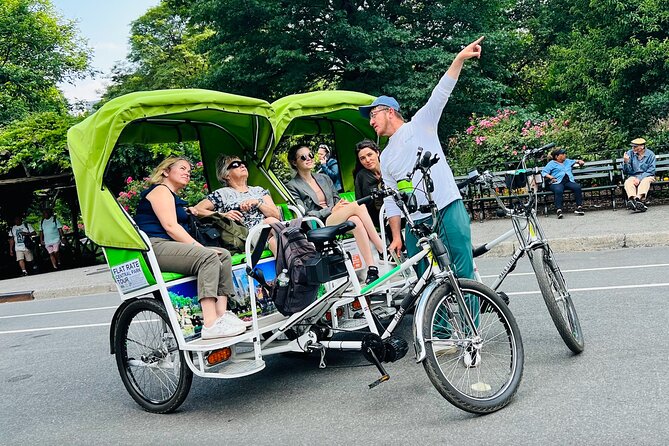
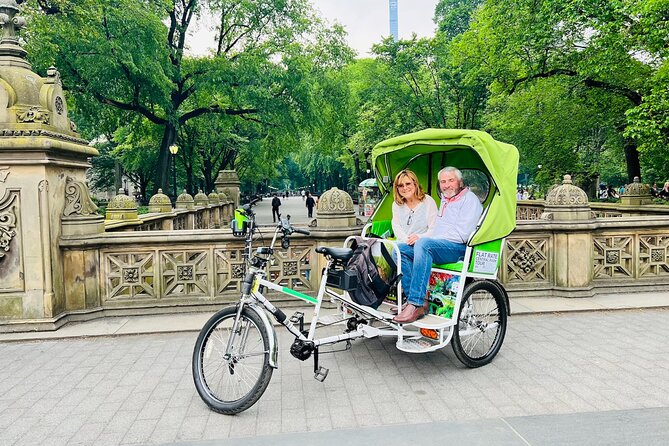
Pedicabs cut Central Park to size. I love the private ride feel, because your guide can keep you close to the action without the shuffle of big groups. I also like the photo-friendly stop-and-explain style, where you get context for places you would miss on your own. One thing to consider is that the tour needs good weather, so you should be ready for schedule changes if conditions turn ugly.
Central Park is huge, so a bike-powered cab makes the day make sense. You also get a warm blanket in cold weather, plus a guide who helps turn landmarks into stories, whether you’re there for first-timer classics or movie spots. Still, if you prefer long walks and independent wandering, you may want to leave extra time after the ride to roam freely on your own.
Key Highlights at a Glance
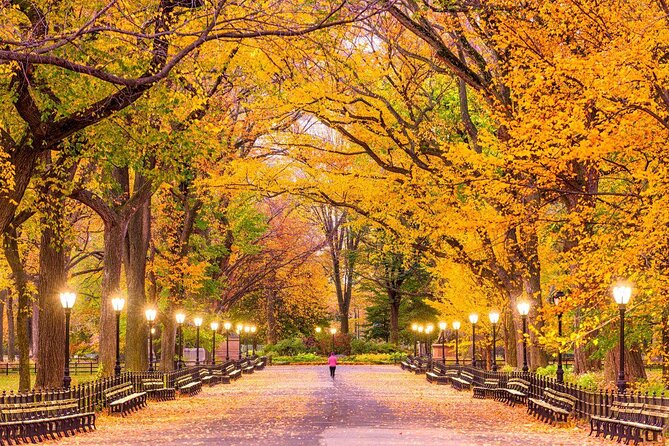
- Private Central Park pedicab for your group only, so the pace can stay comfortable
- Guide-led storytelling at major stops, including iconic bridges, fountains, and monuments
- Built-in photo opportunities, with the driver guiding you to the best angles
- Warm blanket included for cold-weather rides
- 1 to 3 hours to match your energy, with extra sights on longer options
Central Park by Pedicab, Starting at 1411 6th Ave
Central Park looks simple on the map, then you try to walk it. This pedicab tour solves that by using a bicycle-powered cab to move you efficiently across the park’s 843 acres. The result is a guided “greatest hits” day without feeling like you’re racing.
Your tour starts at 1411 6th Ave, New York, NY 10019, and ends back at the same meeting point. From there, you’ll spend the ride with a local guide who keeps the day organized, then pauses often enough for pictures and short looks around.
I like that the experience is designed as a private tour for your party only. That matters in Central Park, where noise, crowds, and long lines can quickly drain your energy. With a dedicated guide and driver, you spend less time guessing where to go next and more time seeing the park’s best-known corners.
You can also read our reviews of more guided tours in New York City



What You Really Get in 1 to 3 Hours
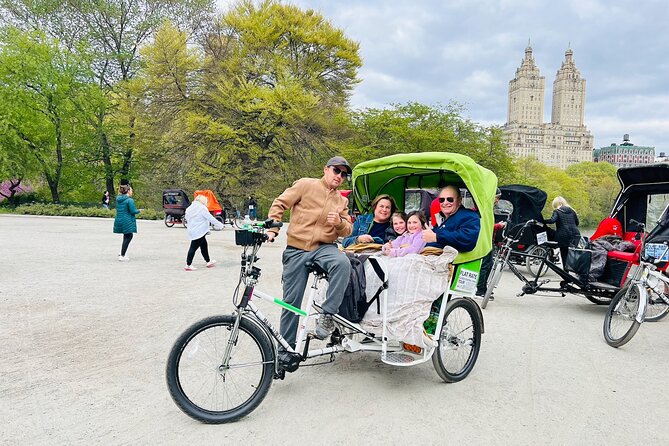
This tour runs about 1 to 3 hours, and the length changes what you’ll cover. A shorter ride is ideal when you want the key landmarks and a calm overview. A longer ride is smarter if you’d like time at the big visual moments like Bethesda, bridges, and the southern memorial spaces.
The tour is offered in English, and it’s built for “most travelers can participate.” That said, you’ll still want to dress for park conditions. Central Park can feel windier than the city blocks around it, and in winter the cold can hit fast, which is why the warm blanket inclusion is such a practical win.
One more small but meaningful detail: the experience is priced at $38 per person, and that price includes “the big ticket hassle items” like taxes and fees. You’re paying mainly for guidance plus the pedicab time, not for a pile of separate admission surprises.
The Classic Central Park Opener: Carousel, Chess, Balto, and More
The tour’s early stretch sets you up for the park the way many people hope they could on day one. You enter Central Park and quickly move through a mix of playful, historic, and photo-ready stops, with your guide explaining what you’re looking at and why it matters.
You’ll pass major icons like the historic carousel and the Chess and Checkers House, built as a game space for visitors of all ages. The oldest carousel in the city is the kind of stop that feels small at first, then makes sense once you understand its age and continued role in the park. It’s a great reset if you’re arriving with “I think I know Central Park” energy and need it grounded fast.
A highlight for many first-timers is the Balto statue, a bronze memorial tied to the famous sled dog story. If you like a quick story you can remember later, Balto is a strong anchor. You’ll also roll past areas connected to popular culture, including filming locations tied to shows like Gossip Girl and scenes linked to familiar movies.
In cold months, you may also hear about the Victorian Garden and how it connects to the park’s winter ice-skating setup. Even if you don’t spend time on the ice itself, it helps you understand Central Park as something that changes with the seasons, not a single static scene.
What you should watch for on this opener: you’re moving efficiently, so the guide may keep the tempo up. This is excellent for coverage, but if you’re the type who wants extra time lingering in one place, plan to ask for a longer stop when something grabs you.
Mid-Park Moves: Wollman Rink, Gapstow Bridge, and the Pond Views
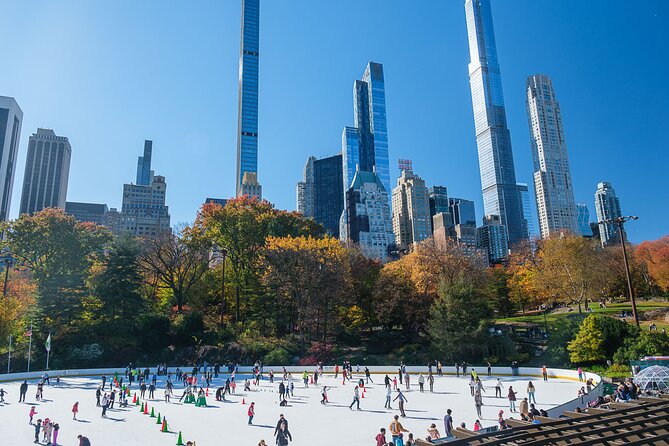
As you continue, the tour leans into Central Park’s most cinematic “walking routes” even though you’re not walking much. You’ll glide past the Wollman Rink, a public ice rink in the southern part of the park that operates roughly from late October to early April. On a non-skating day, it still works as an orientation point for the area.
Then comes Gapstow Bridge, a rustic stone bridge covered in vines that blends into the scenery. It’s a classic photo pause, especially if you enjoy bridges as viewpoints. Your guide ties it to movie moments, but the real value is learning where it sits, how it frames the water, and why it looks the way it does from different angles.
You’ll also hear about the Pond area and how it was planned for changing scenery. That’s Central Park in a nutshell: it’s designed to feel like you’re discovering something new around each bend. Even during a short stop, it helps you notice the design logic instead of just snapping a picture.
If you like playful details, the tour includes references to the remote control boats at Conservatory Water, linked to movie imagery like Stuart Little. Those connections are fun, but they also give you an easy way to remember where the water area is and what to look for nearby.
Bethesda Terrace, Bethesda Fountain, and the Cherry Hill Moment
This is where Central Park shifts from “famous sights” to “this feels like a set piece.” Bethesda Fountain is the central feature on the lower terrace, with the Angel of the Waters statue designed by Emma Stebbins, unveiled in 1873. If you only know it from photos, being there lets you understand the scale and symmetry up close.
Right nearby is Bethesda Terrace, known for its arcade ceilings and iconic tile work. The tour’s guide explanation can help you spot how restoration and preservation shaped what you see today. That adds value for anyone who likes the behind-the-scenes story of landmark features.
Then you’ll move to Cherry Hill, where the historic Cherry Hill Fountain sits just west of Bethesda. It was originally designed as a watering trough for horses, and that origin makes the fountain feel more connected to the park’s everyday life in earlier eras. It’s also one of those stops where you can take a few quick photos without needing a lot of time.
A practical note: these terrace and fountain areas are photo magnets. The pedicab keeps you from walking long distances between stops, but you’ll still want to be ready to take pictures in short bursts.



Bridges, Bow Bridge, and the Lake Area Connections
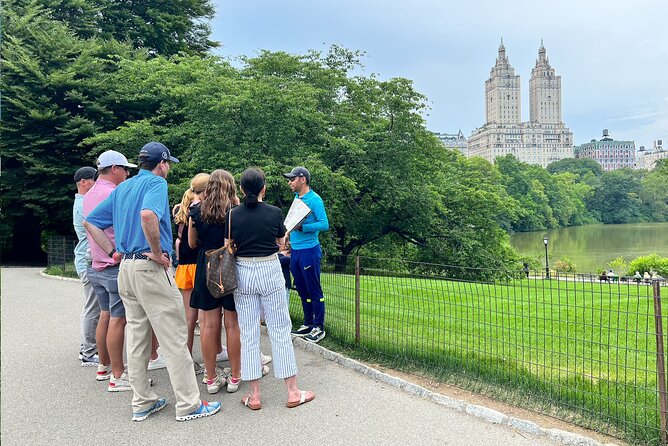
Central Park’s best viewpoints often show up at bridges. Bow Bridge is one of them, designed by Calvert Vaux and Jacob Wrey Mould and completed in 1862. You’ll learn that it was restored in 1974 and that it can be temporarily closed for renovation periods, including a closure mentioned in late 2023.
From Bow Bridge, the viewpoint gives you that classic Central Park “bridge over water” feeling, and your guide can help you understand the sightlines so you don’t just shoot one angle. It’s also the kind of stop where movie connections show up, but the main win is the visual framing.
You’ll also pass through the Lake area, a 20-acre water body that connects sections of the park. If you want to understand the park’s layout, the Lake is a key piece, connecting areas like the Ramble and Bethesda Terrace. It’s also a spot where boat rentals exist at the Loeb Boathouse, so the water isn’t just scenic, it’s active.
These mid-park water stops are ideal for short photo breaks plus a moment to relax. You’re not trudging across the park, yet you’re still getting those “pause and look around” scenes.
Strawberry Fields to the Dakota, plus the Southern Lawn Life
Then you roll into the southern half where Central Park’s identity gets emotional. Strawberry Fields is a landscaped section dedicated to the memory of John Lennon, named for Strawberry Fields Forever. Even if you’re not a Beatles superfan, it’s hard not to feel how carefully the space has been maintained for reflection.
From there, you’ll see the Dakota building, with a strong connection to Lennon’s life and death. Your guide’s explanation helps you connect the dots between the landmark you’ve seen on screen and the real-world story tied to the location.
You’ll also head toward Sheep Meadow, a popular lawn for relaxing, sunbathing, reading, and picnicking. It’s one of the places where locals and visitors overlap in a natural way, and knowing the spot’s role helps you understand why Central Park isn’t just architecture and monuments. It’s also where people come to slow down.
Depending on the length you choose, the southern stretch can also include stops like Tavern on the Green area and other park classics. Even when you don’t enter buildings, the story gives you a sense of continuity, from historic park functions to modern use.
The 2-Hour Extra Wins: Alice in Wonderland, the Obelisk, The Met, Reservoir, and Belvedere Castle
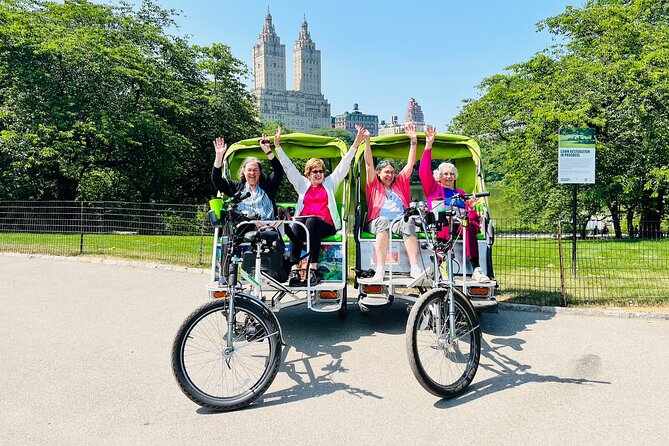
If you book the longer option, the tour adds several high-impact icons near the park’s edges. These are the stops that tend to feel like “bonus Central Park” because they sit right at the boundary between the park and the city around it.
You may include the Alice in Wonderland statue, a gift from George Delacorte intended for the children of the city and a memorial for his wife. You’ll also see Cleopatra’s Needle, the Obelisk dedicated in Central Park in 1881 and described as the oldest outdoor monument in New York City.
Another potential highlight is the Metropolitan Museum of Art area in the park, included only on the longer option. Admission is not included, but the tour can position you so you understand why the museum belongs visually in the Central Park setting.
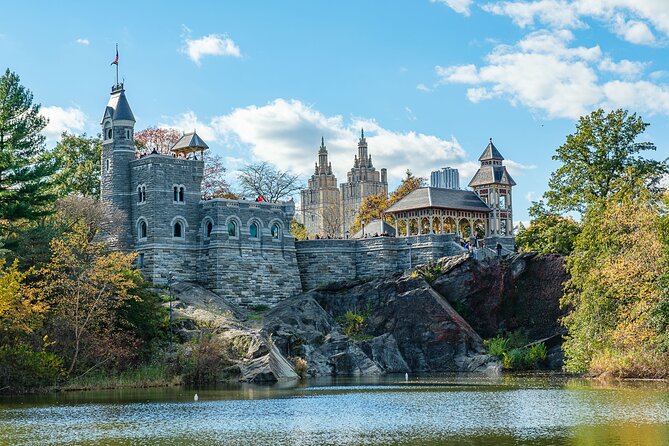
Then you may reach Jacqueline Kennedy Onassis Reservoir, designed to harmonize with the park, and Belvedere Castle, a folly with observation space and a weather station. It’s a lot of iconic hits in one ride window, which makes the 2-hour option feel like better value if you’re trying to see more than the “big fountain and bridges” set.
Movie Locations Are the Secret Sauce, If You Like Pattern-Spotting
This tour uses film references as a practical navigation tool. When your guide says a bridge showed up in a scene, it’s not just trivia. It helps your brain remember where you are in the park so the sights stop feeling random.
You’ll hear connections to movies and TV shows across the route, from Home Alone 2 to Gossip Girl to Elf and more. For me, that’s a fun way to keep attention during transitions. Instead of wondering what’s coming next, you get a mini game: can you spot the angle the camera loves?
And it works for different interests. If you’re a history person, the guide ties landmarks to design and purpose. If you’re a pop-culture person, the references give you a fast reason to care about the exact spot where you stop.
Price and Value: Is $38 a Good Deal for Central Park?
At $38 per person, the value comes from three things working together. First, you’re paying for guided planning across an enormous park, so you avoid the “walk and miss half the icons” problem. Second, the tour includes taxes and fees, which helps keep the budget tidy.
Third, the pedicab time is doing real work. Central Park is too big for a quick day to feel complete on foot. The pedicab compresses the park experience so you can fit more iconic stops into a shorter timeframe, which matters if you’re on a tight schedule in New York.
If you’re comparing this to DIY exploration, I’d frame it like this: DIY can be cheaper, but it usually costs you time, energy, and a plan. This tour tries to buy you time back, with a guide to explain what you’re seeing while you’re relaxing.
Who benefits most:
- First-time visitors who want a strong orientation fast
- Families who want fewer navigation headaches and more comfort
- Couples or solo travelers who want a guided Central Park highlight tour without heavy walking
- Anyone who likes photo pauses and learning quick, memorable stories
Small Tips to Make Your Ride Feel Smooth
Wear layers. Central Park weather can swing fast, and even with a warm blanket included, you’ll feel better if you’re not fighting cold hands and numb legs. Bring a phone and charge it. The stops are packed with photo moments, and you’ll want your camera ready without scrambling.
Use your guide for personalization. The tour is designed so your itinerary can be tailored to your preferences, so if you’re more into fountains or more into film locations, ask. Guides like Sam, Aj, Ricky, and Peter show up in recent experience as friendly, engaging drivers who help people feel comfortable, even in intense weather.
One last tip: if you’re sensitive to accents, give yourself a moment to settle in. In real life, accents and English clarity can affect how fast you follow the stories. Once you’re dialed in, the narration usually clicks and the ride becomes an easy flow.
Should You Book This Central Park Pedicab Tour?
If your goal is to see major Central Park landmarks with less walking and a guide who turns sights into stories, I think this is a very smart book. The private format, the warm-blanket practicality, and the mix of iconic landmarks plus movie-friendly wayfinding make it a good fit for first-timers.
I’d skip it if you want a long, unstructured park day with lots of wandering and slow discoveries. Also keep an eye on weather, because the tour requires good conditions and can be rescheduled if needed.
If you’re visiting for a short time, choose the longer option when you can. The extra stops near the park edges help you feel like you got more than the fountain-and-bridge version of Central Park.
FAQ
How much does the Central Park pedicab guided tour cost?
It costs $38.00 per person.
How long is the tour?
The ride is about 1 to 3 hours, approximately.
Is the tour private?
Yes. It is a private experience for your group only.
What language is the tour offered in?
The tour is offered in English.
Are admission tickets included?
Some parts include admission ticket access (for example, the first stop includes an admission ticket), and many other stops are listed as free. The Metropolitan Museum of Art is included in the 2-hour tour, but admission is not included.
Where does the tour start?
The meeting point is 1411 6th Ave, New York, NY 10019, USA.
Do I need good weather for the tour to run?
Yes. The experience requires good weather, and if it is canceled due to poor weather you will be offered a different date or a full refund.
Is there a minimum number of travelers?
Yes. There is a minimum of 2 travelers required, except Tuesday.
What happens if I cancel?
Free cancellation is available up to 24 hours in advance for a full refund.
More Guided Tours in New York City




More Tours in New York City




More Tour Reviews in New York City
Not for you? Here's more nearby things to do in New York City we have reviewed









More Central Park Tours to consider.
 ★ 5.0Private Central Park Pedicab TourTickets from $386,981 traveller reviews
 ★ 4.2Central Park Bike RentalsTickets from $92,528 traveller reviews
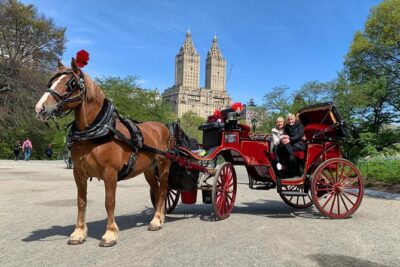 ★ 5.0Official NYC Horse Carriage Rides in Central Park since 1979 ™Tickets from $992,365 traveller reviews
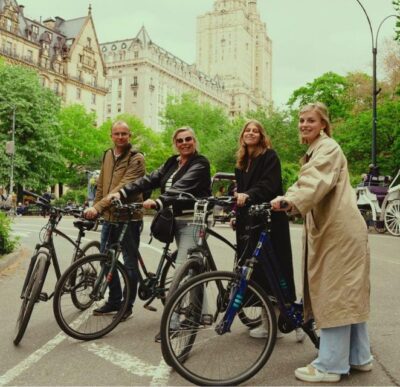 ★ 4.1Central Park Bike RentalTickets from $81,651 traveller reviews
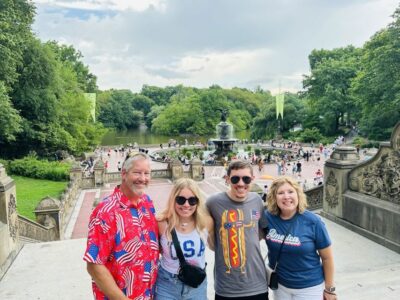 ★ 4.9Private Central Park Pedicab TourTickets from $401,637 traveller reviews
 ★ 4.7Central Park Bike RentalTickets from $91,509 traveller reviews
 ★ 4.0Carriage Ride in Central Park (VIP – PRIVATE) Since 1964™Tickets from $141,074 traveller reviews
 ★ 4.8Guided Central Park Horse Carriage RideTickets from $155877 traveller reviews
More useful New York routes