
Review · HARLEM TOURS
Harlem and Gospel Tour with Transportation on Sundays
Harlem hits different on a Sunday morning. This 4-hour bus tour strings together big landmarks like Morris-Jumel Mansion and the Apollo Theater, then adds a church service so you get context, not just photos.
I especially like two things: the tour gives you a clear route through spots many visitors skip, and it’s guided by someone who knows how to connect the dots between past and present. One local guide name that comes up strongly in feedback is Martine, praised for turning Harlem clichés into real street-level understanding.
The main thing to think about is time. Several stops are brief, and some sites note that admission is not included, so you are mostly looking from the outside unless the stop explicitly includes entry.
Key highlights worth your attention
- Gospel church on Sunday (Mt Olivet Baptist Church) with admission included and about 1 hour inside
- Apollo Theater stop with free admission and a quick, memorable look at an iconic stage
- Revolutionary-era landmarks: Morris-Jumel Mansion (1765) and Hamilton Grange National Memorial
- Striver’s Row style street viewing plus a pass-by of Columbia University for scale and perspective
- A full Harlem window with about 2 hours to walk and absorb the neighborhood with the guide
Why Sunday Gospel Beats a Normal Harlem Walk
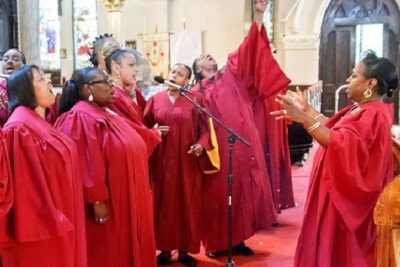
If you only visit Harlem on a regular afternoon, you miss a huge part of the neighborhood’s rhythm. This tour does the opposite. It is built around Sunday, with a stop at Mt Olivet Baptist Church for a gospel mass where you get welcomed by the choir.
That one choice changes the whole tone of the day. You hear the community’s energy, you see how the church functions as more than a building, and you can connect that lived culture to the landmarks you see next or earlier. For many first-timers, it is the moment everything clicks.
One more practical plus: you are on a bus for the longer hops. That matters in NYC, where distance is one thing and street noise plus navigation is another. You get guidance on where to look and what to notice, without having to plan every turn yourself.
You can also read our reviews of more tours and experiences in New York City.



Start at 810 8th Ave, then St. John the Divine (outside art and scale)
The tour starts at 810 8th Ave at 9:00 am and loops back to the same meeting point. From there, the first stop is the Cathedral Church of Saint John the Divine.
This is a “see it, don’t rush it” kind of stop. It is the largest cathedral in the world, and also the seat of a bishop. The tour time is about 15 minutes, with the emphasis on looking at interesting art from the outside. Even if you do not go in, the scale hits fast, and it helps set the setting for a Harlem-focused morning. Churches are not just religious anchors here, they are community hubs, and St. John’s reminds you what that can look like on a big scale.
A quick heads-up for your expectations: this stop is mostly exterior viewing. If your idea of a cathedral day is interior tours, you may need to build extra time elsewhere. But for a 4-hour tour that keeps moving, this opening works well.
Morris-Jumel Mansion: where Revolution meets Harlem storytelling
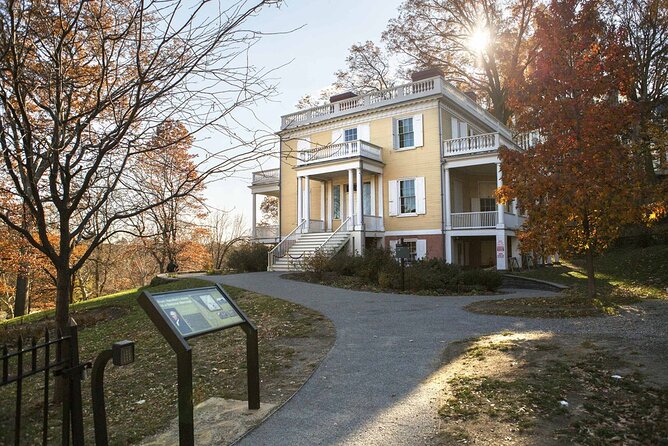
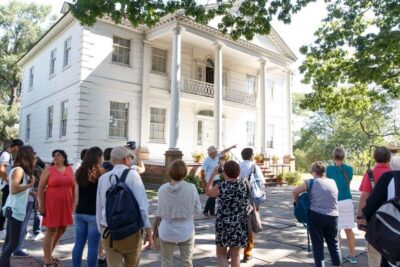
Next up is Morris-Jumel Mansion, scheduled for about 20 minutes. The mansion was built in 1765 for Roger Morris, a British military officer, and later it served as headquarters for General George Washington during the American Revolutionary War.
That combination is why this stop helps. You are not just looking at a landmark. You are learning how early American power, architecture, and politics show up in the neighborhood story. And yes, the mansion is also connected to the creative world: it is where the play Hamilton was written.
What I like about this stop is how it gives you something to “place” Harlem in a wider timeline. Many first-time visitors think Harlem history starts later, with the Harlem Renaissance. This stop nudges you earlier, then your guide can carry that thread forward.
One consideration: admission is listed as not included for this stop. With only about 20 minutes, you should plan for a mostly short, guided look rather than a deep interior visit.
Hamilton Grange National Memorial: architecture with big-name context
After Morris-Jumel Mansion, you head to Hamilton Grange National Memorial, also about 20 minutes. This stop is described as a faithful testament to early American architecture and a tribute to Alexander Hamilton, the first Secretary of the Treasury of the United States.
This is a strong stop for two types of travelers. If you like history, Hamilton’s role gives immediate context. If you like design, the early-American architecture angle gives you something to pay attention to beyond plaques and dates.
Like the previous site, admission is not included. So treat this as a quick, guided orientation moment. You can still get a lot from it if you focus on what the guide points out, rather than assuming you will have time for a longer museum-style visit.
In a tour packed into about 4 hours, these 20-minute landmark windows can feel quick. But they are also efficient. You leave with names and connections, which is often what you want before you spend your own time exploring deeper later.
Striver’s Row street viewing and the Columbia pass-by
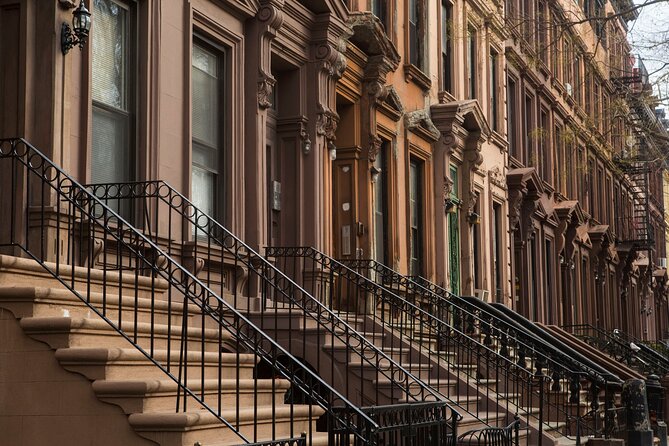
The tour includes a stop for two beautiful streets built by renowned New York architects, which lines up with what many people recognize as Striver’s Row. This is scheduled as a short viewpoint moment, not a long walking detour.
Then you get a pass-by of Columbia University. Columbia is described as one of the most prestigious universities in the world, ranked 7th overall in the US, and the guide notes the campus as large and impressive. Even though you are not going inside, the pass-by can be useful. It gives you scale and helps explain how institutions shape neighborhoods around them.
This section is valuable because it adds a “how the city changes” lens. Harlem is often presented as one story, but the neighborhood has multiple layers at once. The guide can connect architecture, institutions, and economic shifts so you understand why you see both preservation and change in the same morning.
If you are the type who wants lots of time on foot, this part may feel too brief. But for most visitors, it is a smart way to get orientation without losing the bigger gospel anchor of the day.



Mt Olivet Baptist Church: the Sunday gospel mass stop (and why it matters)
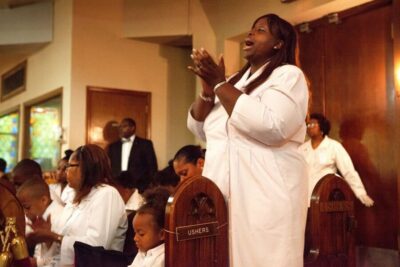
The centerpiece of the tour is the stop at Mt Olivet Baptist Church, with about 1 hour scheduled, and admission included. The church stop can be subject to change, so you should be flexible if the exact church location differs on the day.
On a practical level, plan to dress respectfully. You are stepping into a service, not a show. If you are unsure how to behave, watch what locals do. The guide’s job here is likely to help you understand what is expected, but your best move is to keep it simple: quiet, respectful attention, and go in with an open mind.
This is the kind of experience that can turn “I’ve heard of Harlem” into “I understand why Harlem matters.” The tour description calls out a jubilant choir welcome, and that is the right framing. The emotional tone of a gospel service is hard to fake, and it connects to the broader neighborhood story in a way a photo stop cannot.
One small drawback: if you are hoping for lots of landmark time inside museums, this hour is your big trade-off. But in my opinion, that is the point. The tour is built to make you feel the neighborhood, not just read about it.
Apollo Theater and the 2-hour Harlem walk: putting faces to the story
After the church, you visit the Apollo Theater, scheduled for about 15 minutes with free admission listed. This is a quick look at an iconic performance space, and it is perfect timing because your brain is already tuned to the “performance and community” theme from the service.
Then you get about 2 hours in Harlem for more exploring. The tour frames this as “More to see about Harlem,” and that time is usually where a guide’s real talent shows up. A good guide helps you notice what tourists walk past, and they can point out how specific streets and buildings connect to the themes you just heard about.
This section is also where you can shift from listening to looking. You can slow down, ask questions, and get a better sense of what feels familiar or different. It is not a full day on your own, but it is a solid block to start building your internal map.
Price and value: is $95 fair for a 4-hour Sunday tour?
At $95 per person, this tour is trying to buy you three things: time, guidance, and one paid entry experience (the gospel mass). In NYC, that combination can be good value, especially because transportation is included via the bus, and the route covers multiple major stops in one go.
Here’s what you do get:
- A 4-hour bus tour with a licensed guide
- Admission to the gospel mass included
- Apollo Theater stop with free admission
- Additional viewing and walking time, including about 2 hours in Harlem
And here’s what to keep in mind:
- Some historic stops list admission as not included, which means you are usually spending your money on the guided look plus the gospel experience, not on full museum entries.
- The group has a maximum of 45 travelers, which is large enough to keep costs down but small enough that you are not lost in a sea of strangers.
- The tour requires good weather, so plan to go with the flow if conditions change.
My honest take on value: if you want a guided “starter map” of Harlem plus that Sunday church visit, $95 feels reasonable. If you want a museum-heavy day with lots of included entrances, you might feel like you paid mostly for bus time and short stops. Your best decision comes down to which kind of experience you want more.
Who should book this, and who might skip it?
This tour fits best if you:
- Want a first-timer Harlem orientation with major landmarks in a single morning
- Like the idea of combining history and lived culture through a Sunday gospel service
- Appreciate a guide who helps you see beyond the surface, including myth versus reality
It might be less ideal if you:
- Want lots of extended time at each site, since several stops run around 15 to 20 minutes
- Prefer fully ticketed museum visits at most stops, since some admissions are not included
- Are sensitive to the changeable nature of Sunday church logistics, where the church stop can be subject to change
If you are flexible and curious, it is a strong format. You get an efficient route, plus a human moment that makes the landmarks mean something.
Should you book the Harlem and Gospel Sunday Tour?
Yes, if your priority is understanding Harlem, not just checking boxes. The Sunday gospel mass stop is the differentiator, and it pairs well with quick landmark context like Morris-Jumel Mansion, Hamilton Grange, and the Apollo Theater.
Book it if you want:
- A guided start with a local perspective (including the kind of enthusiasm and clarity praised from guides like Martine)
- A morning that blends storytelling with what you can feel in a church setting
- A practical bus-based route that saves you from the logistics of jumping between far-flung spots
Skip or consider a different option if you want mostly museum time and long entrances at every stop. This tour is designed for movement, listening, and a memorable church experience that does not treat religion as a sightseeing prop.
If you can handle short stops and you are open to the Sunday energy, this is a smart way to spend your morning in Harlem.
FAQ
How long is the Harlem and Gospel Tour?
It runs for about 4 hours (approx.).
What is the meeting point and start time?
The tour starts at 810 8th Ave, New York, NY 10019, USA, and it begins at 9:00 am.
Is the gospel church admission included?
Yes. Admission to the gospel mass at the church stop is included.
Are admissions included for the other stops?
Admission ticket details vary by stop. St. John the Divine and the Morris-Jumel Mansion and Hamilton Grange are listed as not included, while the Apollo Theater is listed as free.
Does the tour include the Apollo Theater?
Yes. There is an Apollo Theater stop scheduled for about 15 minutes, and admission is listed as free.
How much time is spent inside the church?
The Mt Olivet Baptist Church stop is scheduled for about 1 hour.
Is there a limit on group size?
Yes. The maximum group size is 45 travelers.
Does the tour run on Sundays?
Yes, this tour is specifically described as a Harlem and Gospel tour on Sundays.
More Tours in New York City




More Tour Reviews in New York City
Not for you? Here's more nearby things to do in New York City we have reviewed








More Harlem Tours to consider.
 ★ 4.5NYC Highlights Tour: Bronx, Brooklyn, Harlem, Queens & ConeyTickets from $462,846 traveller reviews
 ★ 4.5Contrasts Tour of Harlem, The Bronx, Queens & BrooklynTickets from $392,167 traveller reviews
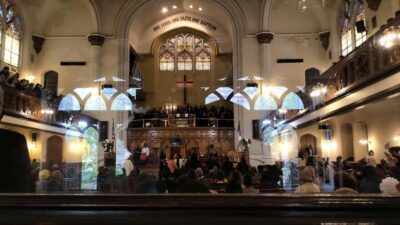 ★ 4.7Harlem Hallelujah! Gospel Wednesday ConcertTickets from $251,638 traveller reviews
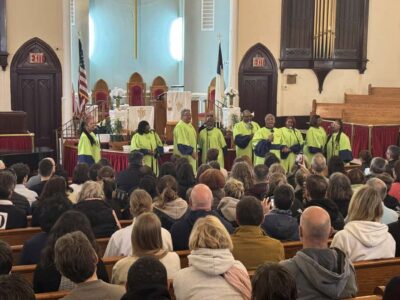 ★ 4.7Harlem Gospel Live Music ConcertTickets from $281,479 traveller reviews
 ★ 4.0Harlem Sunday Morning Gospel TourTickets from $85995 traveller reviews
 ★ 4.04-hour Harlem Gospel Tour in New York CityTickets from $79935 traveller reviews
 ★ 3.9Harlem: Central Harlem Sunday Gospel with LocalsTickets from $25499 traveller reviews
 ★ 4.3Sunday Harlem Gospel Guided TourTickets from $89438 traveller reviews
More useful New York routes