
Review · NEW YORK CITY TOURS
New York Upper West Side Art and Architecture Tour
New York looks different with the right guide. On this small-group walk, I love how the Upper West Side turns into a clear story you can follow, with famous landmarks like Lincoln Center and big design names you would otherwise miss. The main win is that you hear every explanation cleanly thanks to personal headsets, even while street noise swirls around you.
What I also like: the guide, Ivan, handles a mixed crowd well and answers tough questions, even if you come with an architect brain. One possible drawback is timing: some stops are brief, so if you want a deep visit inside venues, you may need a plan for extra time on your own after the tour.
Key Highlights You Should Care About
- Personal headsets for every guest, so you do not strain to hear in busy areas
- Small-group size (up to 15) that makes questions easy, not awkward
- A tight two-hour route linking iconic cultural spaces from Columbus Circle to Hearst Tower
- Architecture and urban planning focus, so you learn how the pieces fit together
- Multilingual in-person guidance (English, Spanish, French, Italian) for a smoother experience
- No extra admission cost noted at the stops, since the included ticketing is listed as free
Why This Upper West Side Walk Feels Like a Shortcut
The Upper West Side can look like a random sweep of grand buildings if you are just wandering. This tour fixes that. You get a guided way to read the streets, the sightlines, and the layout of major institutions, without getting lost in jargon or long lectures.
I like the way the tour stays practical. You are outside for the most part, so you can immediately connect what the guide points out to what you see from the sidewalk. And when the group moves on, you still keep the context, because the explanations connect stop to stop.
Another reason it works so well here: this area stacks art, performance, and design in a compact radius. That makes it ideal for a short, structured outing. You are not forced to commit an entire day to architecture, but you still get a real sense of how the neighborhood functions.
You can also read our reviews of more tours and experiences in New York City.



Price and Value: Why $49 Makes Sense for NYC
At $49 per person for about two hours, the value comes from what is included, not from vague promises. You get:
- An in-person guide
- Professional headsets for each guest
- All fees and taxes
- A maximum group size of 15
Headsets sound like a small perk until you are standing on a noisy Midtown corner trying to hear a guide over traffic and crowds. Here, you start the tour with the advantage of actually catching details. That means you get more out of every stop.
Also, the tour is priced as a manageable commitment. If you are juggling shows, museum time, or dinner reservations, this fits neatly into a busy schedule. It even starts at 12:00 pm, which is perfect when you want something earlier in the day without losing the rest of your daylight.
One more value point: the tour ends at Hearst Tower near transportation. That makes it simpler to move on without backtracking across town.
Group Size, Timing, and Where You’ll Start Moving
The experience runs about 2 hours and includes travel time. You start at Columbus Circle and end at Hearst Tower (300 W 57th St). The tour begins at 12:00 pm.
You are capped at 15 travelers, so the guide can keep the conversation moving without turning it into a one-way presentation. In the feedback you provided, the positive theme is consistency: Ivan keeps things interactive enough that even people who are not deep into architecture still enjoy the walk.
Because the timing is tight, the route favors smart “see and understand” stops. Some segments are quick, like the brief Lincoln Center venue visits, so your best move is to treat this tour as an orientation tool. You will learn enough to know what you want to revisit later, either that afternoon or on another day.
The Route: Columbus Circle to Hearst Tower in a Compact Loop
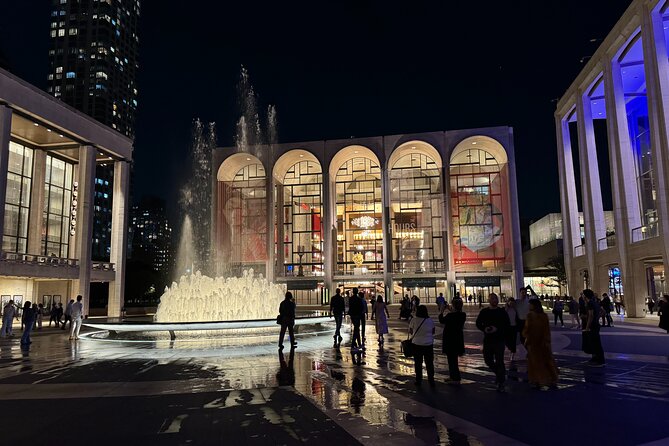
This tour is built around a strong geographic logic. You begin where the streets meet in a dramatic way at Columbus Circle, then follow the cultural and architectural spine of the Upper West Side toward Lincoln Center and beyond.
You also get variety. The route includes:
- Major landmark zones around Columbus Circle
- The Time Warner Center area
- A walk through Central Park edge viewpoints
- The concentration of performance spaces at Lincoln Center
- A finish at Hearst Tower
Here is what that means for you on the ground: the walking feels like a series of “aha” connections rather than a long string of unrelated photos. The guide can show how design and city planning shape what you experience at street level.
Stop-by-Stop: What You’ll Actually See and Learn
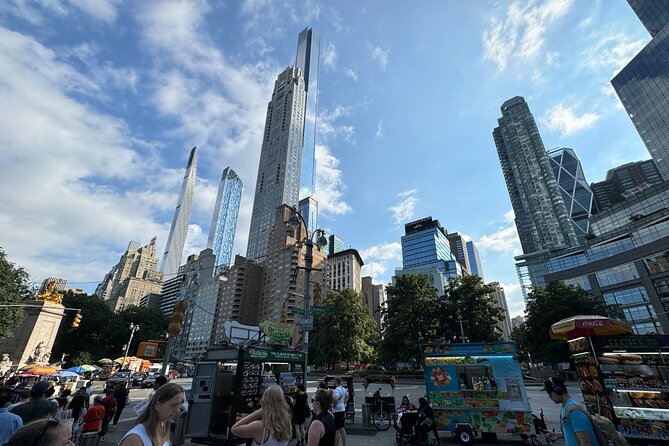
Below is the heart of the tour, described in a way that helps you mentally map what will happen and what each stop contributes.



Columbus Circle: Statues, Midtown Scale, and Big Building Neighbors
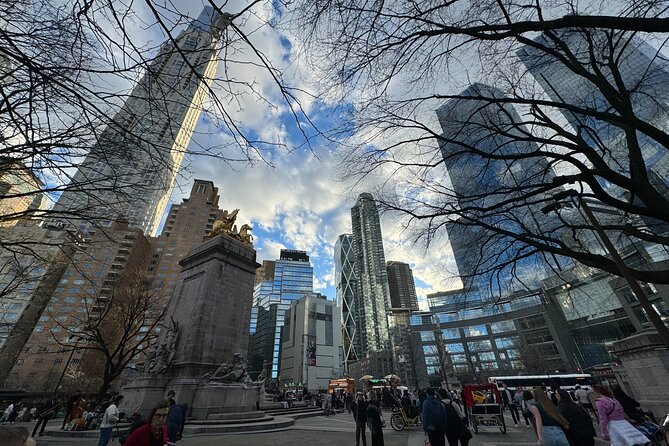
You kick off at Columbus Circle, where you can see the Columbus statue and the immediate cluster of landmark architecture. The tour also points out the surrounding city giants, including the Time Warner Building and the Central Park Tower.
What I like about starting here is scale. Columbus Circle is busy, but it is also readable. The guide uses that starting point to get you thinking about how public space, traffic flow, and monumental buildings relate.
Possible consideration: because this area is high-visibility and crowded, it can feel fast. If you dislike standing in dense crowds, you may want to arrive a few minutes early and keep your comfort in mind.
Time Warner Center: Seeing a Complex Without Getting Overwhelmed
Next comes the Time Warner Center, where you visit and discuss what you are seeing. This is one of those stops that helps you shift from individual buildings to “how a district works.”
You will also hear discussion around nearby institutional design features, and the guide’s explanations are meant to make the place feel less like a backdrop and more like part of a plan.
Drawback to be aware of: you are not getting long, seated time here. The value is in the guided noticing, not in extended time on-site.
Museum of Arts and Design: Art and the City’s Visual Grammar
You then head toward the Museum of Arts and Design. Even though the time here is short, the stop is meant to connect creative institutions with the architectural environment around them.
For me, this works because it keeps you from treating art spaces as isolated boxes. You start to see how design choices show up in how neighborhoods present themselves.
Central Park Edge: A Break from Architecture Purely for Breathing Room
You walk by and discuss Central Park. Even if you are not going deep into the park, this segment is valuable. It changes the pace and gives you a different kind of “architecture” to think about, meaning the shape of city space itself.
You get about 10 minutes here, enough to reset your focus and then re-enter the built environment with better context.
Lincoln Center for the Performing Arts: Where City Planning Becomes Culture
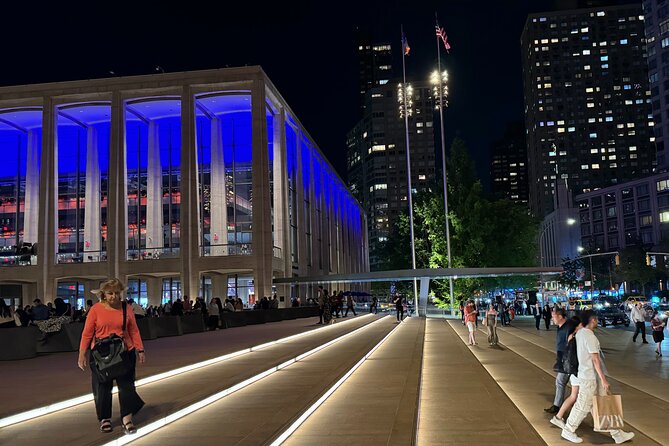
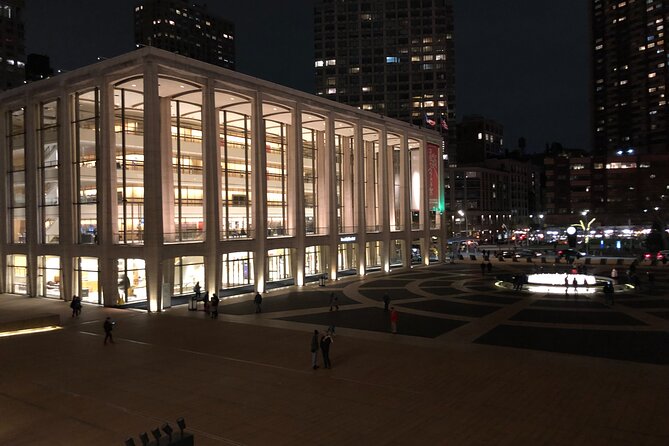
At Lincoln Center for the Performing Arts, you visit the main complex and move through several key venues.
Why this portion matters: it is not just about famous names. The guide ties performance spaces into the larger idea of what the neighborhood is designed to do. You start to understand Lincoln Center as an urban center, not only a place to attend shows.
Stops include:
- David Geffen Hall
- New York City Ballet
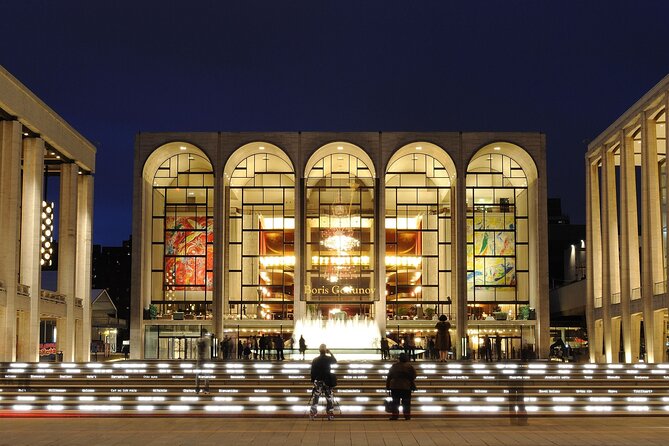
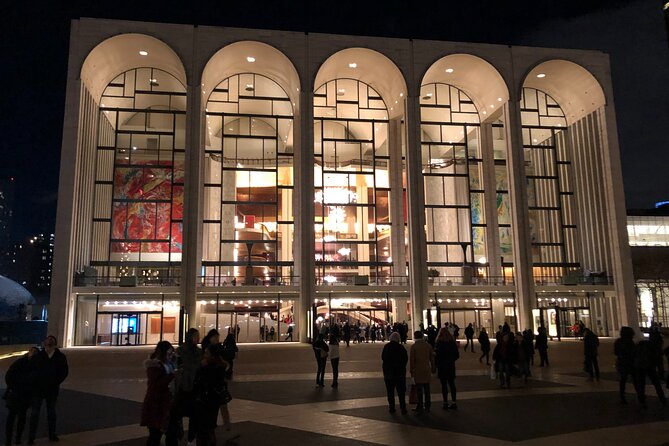
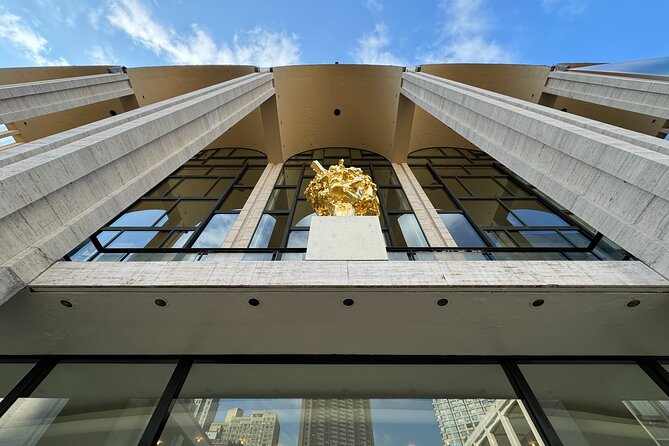
- The Metropolitan Opera House
- Vivian Beaumont Theater
Each one is a short visit, and that brevity is by design. You are meant to see the lineup, learn how the spaces relate, and then carry that understanding forward. If you want quiet time inside specific halls, you will likely enjoy returning on your own after the tour.
Juilliard School: Named Architects, Built Form, and Institutional Identity
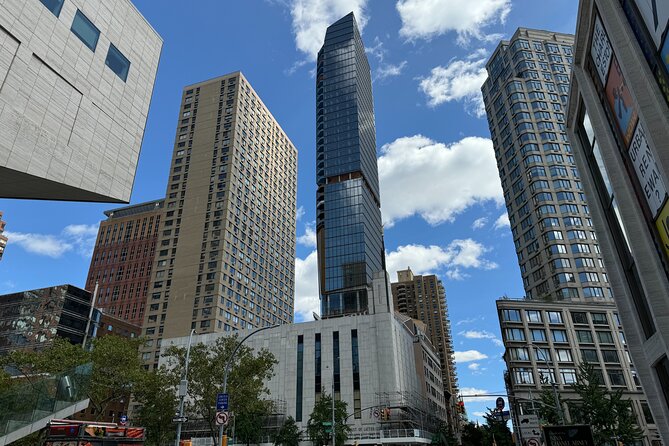
Next comes the Juilliard School. Here you get specific architectural attribution, including Pietro Belluschi and an extension associated with Diller and Scoffidio + Renfro.
This is a standout stop for architecture lovers because it gives you actual names tied to form. Even without long explanations, those design credits give you handles for what to look for and how to talk about what you see.
You also get about 15 minutes here, which is longer than many of the Lincoln Center venue stops. That extra time helps you absorb the “why” behind the building presence.
Alice Tully Hall: A Quick Look That Still Adds to the Pattern
You visit Alice Tully Hall as part of the Lincoln Center cluster. The time is short, around 5 minutes, but the purpose is to complete the mental map of performance spaces and their architectural personalities.
The quick pace here can be a little intense. If you are the type who likes slow wandering, plan to take photos and then later, choose one venue to revisit longer.
Pass by Fordham University: A Glimpse That Reminds You This Is a Network
There is also a pass-by of Fordham University. Since it is not a major timed stop, you should treat it as a “connection point” rather than a deep stop.
It helps reinforce one idea: New York institutions overlap and influence each other across neighborhoods. You see how cultural gravity can pull people and design in shared directions.
Hearst Tower: Ending With a Modern Landmark at the Transit-Friendly Finish
Finally, you end at Hearst Tower, with the guide discussing the building by Norman Foster. This finish is both satisfying and practical. You end at a landmark that feels modern and city-scale, and you are near transportation, so leaving does not feel like an ordeal.
If you like a tour that closes with something memorable and easy to act on, this ending works.
What Makes This Tour Special: Ivan, the Headsets, and the Q and A Energy
The biggest praise point in your feedback is consistent: Ivan is the reason people feel like they actually understood what they were looking at.
One review even mentions that an architect in the group had lots of questions, and Ivan answered them. That tells you the guide can handle different levels of interest. You do not have to pretend you know terms. If you ask questions, you will get answers that make you feel included.
The headsets also change the experience. You are not competing with street sound. The guide can speak clearly, and you can focus on details the way you would in a museum talk, minus the museum fatigue.
Because it is a small group, you also get a little social momentum. You are not just listening. You are sharing your thoughts, even if your questions are simple like what to notice or why a building’s mass feels the way it does.
Practical Tips So You Get More Out of the Two Hours
This is a walking tour, so plan for walking comfort. Wear shoes you trust. The route is dense with landmark areas, so you will spend a lot of time standing near key sightlines.
A few other practical moves:
- Arrive a few minutes early at Columbus Circle so you are not stressed at the start.
- Listen for transitions. The tour works best when you keep the guide’s connections in your head from stop to stop.
- Bring your curiosity, not just your camera. With headsets, you will hear details, so ask whatever you are wondering.
If you plan museum or performance time after the tour, this is a great way to decide what you want to prioritize. You will leave with a clearer sense of the cultural cluster around Lincoln Center and the modern presence at Hearst Tower.
Who Should Book This (and Who Might Want Something Longer)
I think this tour is perfect for you if:
- You like architecture and design but do not want to spend a full day
- You want a guided route through major Upper West Side landmarks
- You prefer a small group with room for questions
- You travel at midday and want something structured before evening plans
It may not be the best fit if:
- You want long interior visits at every stop. Many segments are brief, and the tour is built for noticing from the outside and learning context.
- You prefer deep museum time rather than street-level architectural reading.
For first-time visitors to New York, this can be an excellent way to get oriented quickly. For repeat visitors, it also works because you learn new ways to look at places you think you already know.
Should You Book This Upper West Side Architecture Tour?
If your goal is to understand the Upper West Side without wandering for hours and hoping you figure it out, I say book it. The value is strong for the structure you get: 2 hours, a small group, and headsets that keep the guide’s explanations clear.
The best part is that you walk away with a sharper lens for big landmarks like Lincoln Center and Hearst Tower, plus an understanding of how the neighborhood’s major institutions relate to city space. If you later decide to return to one venue or area for a longer stop, this tour gives you a reason and a focus.
If your schedule is tight, this is one of the easier ways to get a solid architecture hit without turning your day into a full marathon.
FAQ
How long is the New York Upper West Side Art and Architecture Tour?
It runs about 2 hours.
How much does the tour cost?
The price is $49.00 per person.
Where does the tour start and end?
It starts at Columbus Circle and ends at Hearst Tower at 300 W 57th St, New York, NY 10019.
What time does the tour begin?
The start time is 12:00 pm.
What is included in the price?
An in-person guide (English, Spanish, French, Italian), professional individual headsets for each guest, and all fees and taxes.
Are admission tickets needed for the stops?
Admission tickets are listed as free for the stops included on the tour.
What group size should I expect?
The tour has a maximum of 15 travelers.
Do I need to bring a printed ticket?
No. The tour uses a mobile ticket.
Is the tour affected by weather?
Yes. It requires good weather. If it is canceled due to poor weather, you will be offered a different date or a full refund.
Are service animals allowed?
Yes, service animals are allowed.
More Tours in New York City




More Tour Reviews in New York City
Not for you? Here's more nearby things to do in New York City we have reviewed









More New York City Tours to consider.
 ★ 4.7SUMMIT One Vanderbilt TicketsTickets from $4751,195 traveller reviews
 ★ 4.7Empire State Building Tickets – Observatory & MuseumTickets from $4725,757 traveller reviews
 ★ 4.6Statue of Liberty & Ellis Island with FerryTickets from $1918,683 traveller reviews
 ★ 4.5American Museum of Natural History TicketTickets from $3715,447 traveller reviews
 ★ 5.0New York in One Day Guided Sightseeing TourTickets from $9913,166 traveller reviews
 ★ 4.6Museum of Modern Art (MoMA) Entry TicketTickets from $3012,540 traveller reviews
 ★ 4.7One World Observatory Skip-the-Line TicketTickets from $3012,329 traveller reviews
 ★ 4.7New York CityPASS®: Save up to 41% at 5 Top AttractionsTickets from $15410,548 traveller reviews