

Review · GUIDED
The Battery: A Self-Guided Audio Tour from Bowling Green Park to Stone St
Battery walks hit different when you have a guide.
This self-guided audio route turns the Battery and Lower Manhattan into a connected story you can control, from park-level viewpoints to waterfront history. I like that it is built for pacing yourself, stopping when something grabs your attention, without racing a group.
I especially like the offline access to audio, maps, and geodata, so you are not stuck hunting for cell service along the waterfront. I also like the lifetime access, which means you can revisit later without buying anything again.
One consideration: the tour includes the VoiceMap app, but it does not include your smartphone or headphones. If you show up without those, you will need to sort that out before you can actually listen.
Highlights you will hear on this Battery walk

- Offline audio, maps, and geodata so you can keep moving even if your signal is weak
- A stop-by-stop story from Bowling Green Park down to Stone Street, with clear landmarks
- Memorials and maritime history including the Korean War Memorial and the American Merchant Marines Memorial
- Castle Clinton history tied to how New York’s defenses and shoreline changed
- Ellis Island and immigration context including Annie Moore, the first immigrant to disembark at the inspection station
- A finish on Stone Street where the cobblestones and side-street feel can surprise first-timers
Why this Battery-to-Stone Street route works so well
Lower Manhattan has plenty to see, but it can also feel like random stops unless you connect the dots. This route is designed to do that. It strings together the Battery’s defense era, the harbor’s wartime missions, and the immigrant story tied to Ellis Island, all in one walking arc.
What makes it practical is that you can stay in charge. If you want to linger at the Korean War Memorial, you do. If you want to zip ahead to Castle Clinton views, you do that too. The tour is built around walking a compact area, so you get more story per step.
You also get a tour that does not require you to keep your eyes glued to a phone screen. Offline audio means you can look out at the water and shoreline while you listen, which feels more natural for photos and street-level moments. And because it is only about 1 hour 30 minutes to 2 hours, it is realistic even on a packed NYC day.
You can also read our reviews of more guided tours in New York City



VoiceMap setup: offline audio, lifetime access, and what to bring

The tour runs through the VoiceMap Audio Tours app, available for Android and iOS. The big win is offline access to audio plus maps and geodata, so you can load everything in advance and then walk without cellular or Wi-Fi.
Before you start, you will want to do the common-sense prep:
- Bring a charged smartphone.
- Bring headphones you like.
- Download or prepare the tour audio ahead of time, so you do not waste time at the starting spot.
Plan to wear comfortable shoes. The route is mostly outside and the stops are spread along a walking line from Bowling Green down toward Stone Street. Also, the listing says the tour is offered in English, which keeps the listening experience consistent.
Finally, yes, you are paying $14.99 per person, and you are buying access to both the audio tour and a virtual tour with lifetime access. That matters because this is not a one-time ticket you abandon after one use. If you want to repeat the walk later, or share it with someone who can use your account, you get real long-term value from the purchase.
Starting at Bowling Green Park, where New York begins
You start at Bowling Green Greenmarket, at Broadway and Whitehall Street. That is a smart beginning because it places you at the bottom of Broadway, where Lower Manhattan’s grid meets waterfront history.
Right away, you get a quick explanation of how VoiceMap works and how New York got its start. Even if you have visited before, this kind of orientation helps you “read” the area faster. Instead of seeing buildings and monuments as disconnected objects, you understand what era you are in and why the next few corners matter.
If you want to make the most of the first minutes, arrive a few minutes early and take a breath. You are about to walk a line where the stories change every block, from early defenses to later maritime missions to immigration memory. Getting your bearings fast helps you catch every audio cue without stopping and starting.
The Battery: from a dirt-walled fort to a global harbor
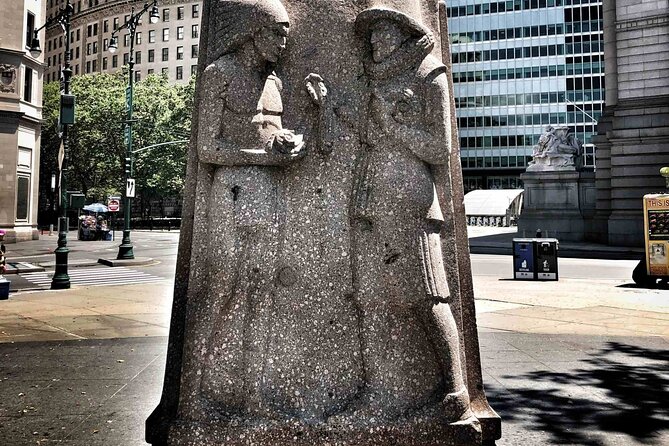
After Bowling Green, the audio guides you around The Battery itself. This is where the tour earns its name, because the shoreline here is not just scenery. It is the setting for how New York went from a protected outpost to a major, strategic city.
You will hear how the area began as a humble dirt-walled fort and trading outpost. Then the story moves forward to protection by artillery batteries. That defense detail changes how you see the waterfront. The Battery stops being just pretty waterfront, and starts feeling like a working edge of the city.
A note of practical reality: you may notice construction or temporary changes in this area, and one of the best pieces of feedback about this tour is that it will be even better when the Battery area is finished being worked on. So if you encounter scaffolding or rerouted paths, do not stress. The audio structure still holds, and you can still get the main monuments and viewpoints.
Korean War Memorial: The Universal Soldier and the meaning
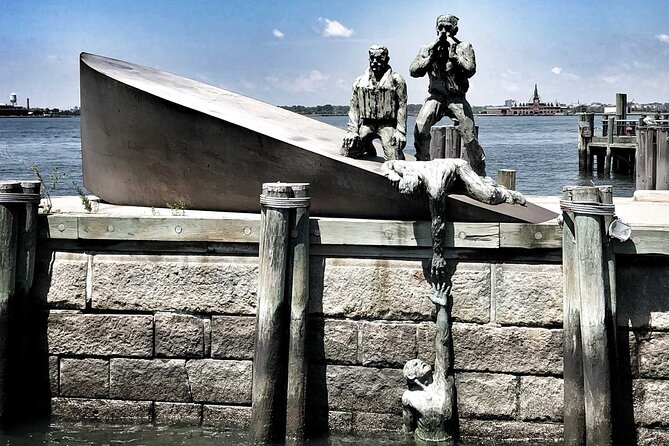
As you keep walking, you pass the Korean War Memorial, called The Universal Soldier. The tour frames this as a symbolic tribute to all who died or simply disappeared.
This is one of those stops where the audio context matters. Without it, the monument might read as another moment in the city’s monument lineup. With the narration, you slow down mentally, and you start noticing symbolism instead of just statues.
If you are short on time, still pause for a minute here. The path continues, but this is the kind of stop where you benefit from standing still instead of power-walking past.
More NYC tours and experiences for the shortlist






American Merchant Marines Memorial: wartime stakes in New York harbor
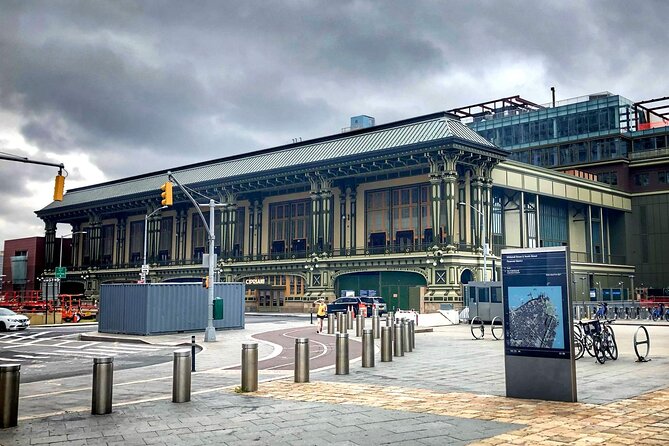
Next up is the American Merchant Marines Memorial. The audio shares a story about a 1940 mission, when German U-boat submarines secretly entered New York harbor.
That turns this stretch of Lower Manhattan into something more tense than postcards. The harbor looks calm, but the narration makes it clear that the water was a route with real risk. If you are traveling with kids or a history-curious friend, this is also an excellent “wow” moment, because it connects the city’s geography to a specific wartime event.
If you want a good photo, step back far enough that you include both the memorial area and the sense of open harbor around it. Let the geography do part of the storytelling.
Castle Clinton: the repeating fort history in one spot
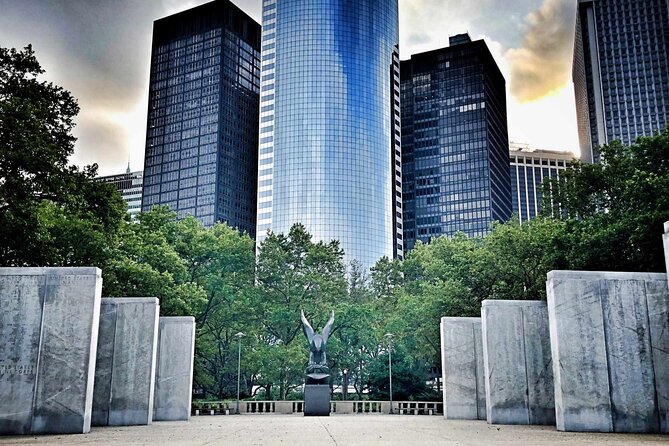
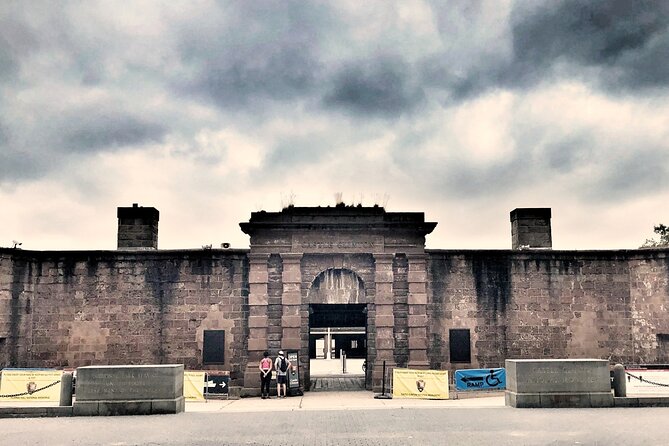
Then comes Castle Clinton, the 19th-century fort. The tour points out that it has had multiple iterations over time, and it even plays with the origin of the name, tied to NYC’s most powerful Clinton, not Bill or Hillary.
This stop is a great example of why an audio tour is useful here. Castle Clinton’s walls and setting can look like they are just one “thing” to see. But the narration helps you understand that this site reflects repeated changes in how the city defended itself and controlled access to the harbor.
When you get to Castle Clinton, give yourself enough time to both listen and look. You are in a small area with big-story layers, and the audio helps you switch between the layers without getting overwhelmed.
The Immigrants statue: Annie Moore and the Ellis Island connection
As you walk onward, you pass The Immigrants statue. The audio focuses on the immigrant experience, including Annie Moore, described as the first immigrant to disembark at Ellis Island’s inspection station.
This is another stop where you should not rush. The narration makes the statue feel more personal and less like a generic monument. It also connects your current walk to the Ellis Island story, even though you are not entering the island or museum.
If you are planning your NYC day around immigration history, you can treat this as your “human story” anchor before moving into memorials and quieter streets nearby.
East Coast Memorial: honoring lives lost in the Atlantic
You then pass the East Coast Memorial, honoring American servicemen who lost their lives in the Atlantic during World War II.
This part gives the walk a strong sense of sacrifice. Instead of focusing only on big battles, it remembers the losses tied to the Atlantic route itself. It also makes the earlier submarine mission story feel more connected, since both are about the water and what happened there.
If you are the type who likes to understand why a city chose to mark certain spots, this stop helps you see the logic. A harbor city remembers the risks that shaped daily life and national service.
Carousel and Peter Minuit Plaza: a memory of an old aquarium
Next, the audio guides you past the carousel inspired by a memory that Castle Clinton was once the New York Aquarium. This is a fun pivot. It adds a lighter layer without losing the historical thread.
Then you walk through Peter Minuit Plaza, named after the Dutchman credited with buying the island of Manhattan with wampum. That connection to early Dutch-era land deals adds a deeper time layer to the entire walk.
These stops are short, but they help you avoid a “just memorials all day” feeling. They also make you more likely to notice details in the street environment, which is where self-guided tours earn their keep.
Fraunces Tavern: the oldest surviving building moment
You pass Fraunces Tavern, described as Manhattan’s oldest surviving building. While you walk, the audio explains some of the notable things that took place within its walls.
Even if you have seen Fraunces Tavern from the outside before, the audio framing gives you a reason to pay attention to the building instead of just moving by. This is the type of stop that works well on an audio tour because it turns architecture into story without requiring any ticketed entry.
Give this part an extra minute or two. The audio fits well with slow walking and looking up at details.
Ending on Stone Street, a cobbled stretch you might miss
The tour ends on Stone Street, a cobbled stretch many lifelong New Yorkers never discover. That line is doing real work. It sets you up to treat the end as a reward, not just a random location.
Stone Street’s charm is visual and street-level. Even without entering any attractions, the feel of cobbles and the side-street vibe make it a strong finish. If you planned to keep shopping or grabbing coffee right after, this is a good place to stop and reset.
Because this tour is only about 2 hours, it is also easy to tack on something after. You can transition from history and memorials into street life without dragging your feet.
Price and value: what $14.99 buys you in real terms
At $14.99 per person, the cost is not about buying access to museums. This is about buying your own guide for a focused Lower Manhattan walking line.
Here is where the value comes from:
- Offline audio plus maps and geodata means you are not dependent on cell service to make the tour work.
- Lifetime access lets you repeat the walk later, or re-listen to sections you care about.
- The route covers a lot of distinct themes, including defense history, wartime harbor stories, memorials, immigration context, and street-level history.
Compare this to many paid tours that last a morning and then vanish. You are getting a tool you can use again. If your NYC trip includes other guided activities, this is a good way to stretch your learning without stacking another schedule-heavy tour.
The one cost you need to plan for is also the one you already know, bring your own phone and headphones. Those are not pricey items, but they are required for the audio experience to actually happen.
Timing, pacing, and how to plan your day
The tour runs about 1 hour 30 minutes to 2 hours. You will probably finish within that range unless you stop repeatedly for photos or decide to re-listen to certain sections.
The opening hours are listed as effectively 24 hours a day, and the experience runs within a date range. In plain terms, that means you can fit it into most NYC schedules, morning, afternoon, or evening.
Booking averages are listed at around 30 days in advance, which tells me this is popular enough that planning ahead is smart. Not because it sells out instantly, but because good time slots and smoother logistics matter when you are juggling a tight itinerary.
If you like doing things in the order of your interest rather than a rigid route, this works well. If you like tours that hand you every detail verbally from a live guide, you might miss that human back-and-forth. But for a self-paced walk with clear landmark cues, this style is the right match.
Who should book this Battery audio tour
You will likely love this if you want:
- A self-guided way to see a concentrated part of Lower Manhattan
- A tour that teaches while you walk, so you are not stuck waiting at one exhibit
- A strong mix of memorials, maritime history, and immigration context
- A plan that works without needing your phone to stream audio
It also suits solo walkers and couples who enjoy walking at their own tempo. It is listed as a private tour/activity with only your group participating, which can feel calmer than large group formats.
If you are traveling with limited time and you still want more meaning than a quick walk-by, this is efficient. And if you will be in NYC again someday, the lifetime access adds extra reason to buy now.
Should you book it? My take on the call
I think this is a smart buy for anyone who wants the Battery to feel less like a blur. The biggest strength is that you get a coherent walking story, and you can hear it on offline audio while you actually look at the monuments and shoreline.
The main drawback is practical, you need to bring your smartphone and headphones. If you can handle that, you are set.
If the Battery area near your dates has construction, you might notice detours or changes, and one of the standout pieces of feedback is that the experience will be even better when work finishes. Still, the route includes major points you can reach and learn from right now.
FAQ
How long is the Battery audio tour from Bowling Green to Stone Street?
The tour is approximately 1 hour 30 minutes to 2 hours.
Where does the tour start and where does it end?
It starts at Bowling Green Greenmarket on Broadway and Whitehall Street, and it ends on Stone Street.
Is the tour offered in English?
Yes, the tour is offered in English.
Do I need cellular data or Wi-Fi during the tour?
No. It includes offline access to audio, maps, and geodata.
What do I need to bring with me?
You need your smartphone and headphones. Food, drink, and transportation are not included.
Are tickets or museum entrance fees included?
No. Tickets or entrance fees to museums or other attractions are not included.
Is this a group tour with other people?
It is listed as a private tour/activity, so only your group participates.
Is the booking refundable if plans change?
No. The experience is non-refundable and cannot be changed for any reason.
If you want, tell me your travel month and your usual daily walking pace, and I will suggest a tight route plan for fitting this Battery-to-Stone Street walk into your day.
More Guided Tours in New York City



More Tours in New York City




More Tour Reviews in New York City




Not for you? Here's more nearby things to do in New York City we have reviewed












More Guided to consider.
 ★ 5.0New York in One Day Guided Sightseeing TourTickets from $9913,166 traveller reviews
 ★ 5.0Central Park Pedicab Guided ToursTickets from $387,108 traveller reviews
 ★ 4.7From NYC: Guided Day Trip to Washington DC by Van or BusTickets from $1043,418 traveller reviews
 ★ 4.6Statue of Liberty and Ellis Island Guided TourTickets from $592,765 traveller reviews
 ★ 5.0Original NYC Guided Food Tour of Chinatown and Little ItalyTickets from $1302,194 traveller reviews
 ★ 4.5Statue of Liberty and Ellis Island Guided Tour with FerryTickets from $592,189 traveller reviews
 ★ 5.0Washington DC & Philadelphia 1-Day Guided Tour from NYCTickets from $1282,109 traveller reviews
 ★ 4.0Gray Line New York Fully Guided 5 Hour Sightseeing TourTickets from $1091,119 traveller reviews
More useful New York routes