
Review · TIMES SQUARE TOURS
Broadway Backstage: From Times Square to Studio
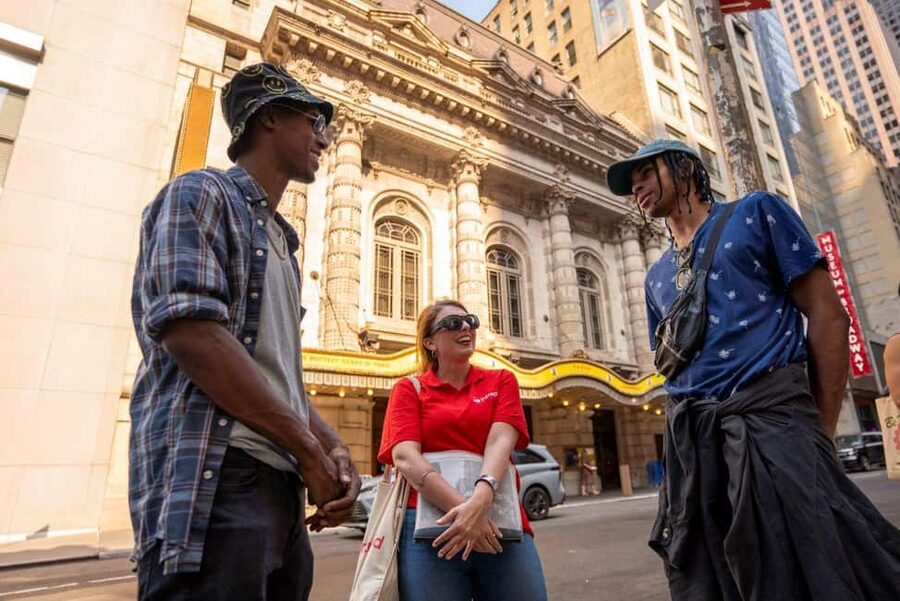
Broadway magic starts before the curtain. This 2-hour, small-group walk through the Broadway Theater District is the fastest way I know to connect the marquee lights to real people and real craft. I love how you start at the Winter Garden Theatre and get hit with the story of how this area became Broadway, not just the names of buildings.
The second thing I really like is the behind-the-scenes stop. You get a peek into a working rehearsal studio in Hell’s Kitchen, where actors, choreographers, and crews are preparing for opening night. That access turns the whole experience from sightseeing into perspective.
One drawback to plan for: the studio visit involves stairs. The rehearsal space is not wheelchair accessible, since you walk up 3 flights during the tour.
Key things to notice before you go
- Up to 12 guests keeps the tour personal, with room for questions.
- Winter Garden Theatre meeting point means you start in the middle of the action, under a clearly visible marquee.
- Historic theater route includes major venues such as the Richard Rodgers, Majestic, and Shubert Theatres.
- Broadway in timeline form covers vaudeville roots, the Golden Age, the 1970s slump, and today’s revival.
- A working rehearsal studio in Hell’s Kitchen can include a live rehearsal or class depending on what’s scheduled.
- Comfortable shoes matter since this is a walking tour with a studio stair climb.
From Winter Garden Theatre to Times Square, why the start matters
Meet your guide outside the Winter Garden Theatre, right under the marquee on Broadway. It is easy to spot, well lit, and you are basically dropped into the Broadway flow from the first minute. I like that. You do not have to find your way across a dozen blocks just to begin.
The timing also helps. Because the whole tour is short, about 2 hours, the guide keeps you moving between story points rather than letting you get stuck in one crowded spot. You’ll still spend time outdoors around Times Square and nearby streets, so wear shoes you can walk in for a couple of hours without thinking about it.
And if you need a quick gut check for the weather, do not ignore it. Times Square can feel like an open-air wind tunnel. One of the best practical tips I can give you is to dress for cold or heat on the street, then you’ll be comfortable when you transition into sheltered areas as the guide chooses stops.
You can also read our reviews of more tours and experiences in New York City.



Times Square and Duffy Square, the story behind the flashing signs
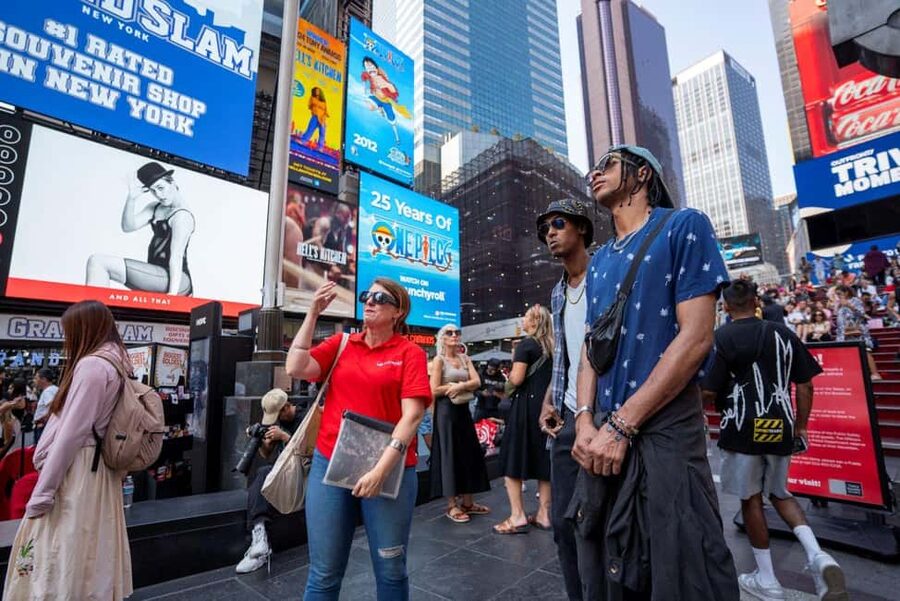
The tour begins at the Winter Garden Theatre and quickly works its way into the Times Square orbit, including a stop at Duffy Square. This is not a photo walk where the guide points at buildings and moves on. You get context.
You’ll hear how this district grew from older entertainment life into the Broadway center people know today. The tour focuses on the transformation of the neighborhood and why theater went from being one option for entertainment to being the main event on these streets.
Here’s what makes these stops valuable for you: Times Square is loud and overwhelming on your own. On this tour, the guide gives you anchors. When you learn the meaning of place names and the reason certain theatres rose where they did, the chaos turns into a map you understand.
It also helps that the walking pace is designed for conversation. With small groups, you’re more likely to ask questions when the story sparks something, like how Broadway’s business model shifted over time or why some eras felt different onstage.
Broadway’s marquee landmarks, how the theatre district becomes a timeline
You move along Broadway to several iconic venues, including theatres such as the Richard Rodgers Theatre, the Majestic Theatre, and the Shubert Theatre. The route also threads past other landmark locations in the area, like the historic New Amsterdam Theatre, which shows up as part of the broader story.
What you’re doing, step by step, is building a timeline out of architecture.
- You’ll connect the earliest entertainment roots in vaudeville to the Broadway style that followed.
- Then you’ll hear about the Golden Age when musicals became a dominant force.
- Next comes the 1970s decline, when the industry faced hard times.
- Finally, you’ll see how Broadway recovered into the modern era with top shows that pull major crowds.
The guide keeps this moving in a clear way, not through long lectures. It is more like a guided narrative you can follow while you look at the buildings.
One small bonus: even when you think you already know Times Square, the theatre district has patterns. After you watch the story unfold, you start noticing things you would normally miss, like why certain theatres are clustered where they are and how the district’s identity shapes the kinds of shows that get produced.
The people behind the magic, what you learn from the pros
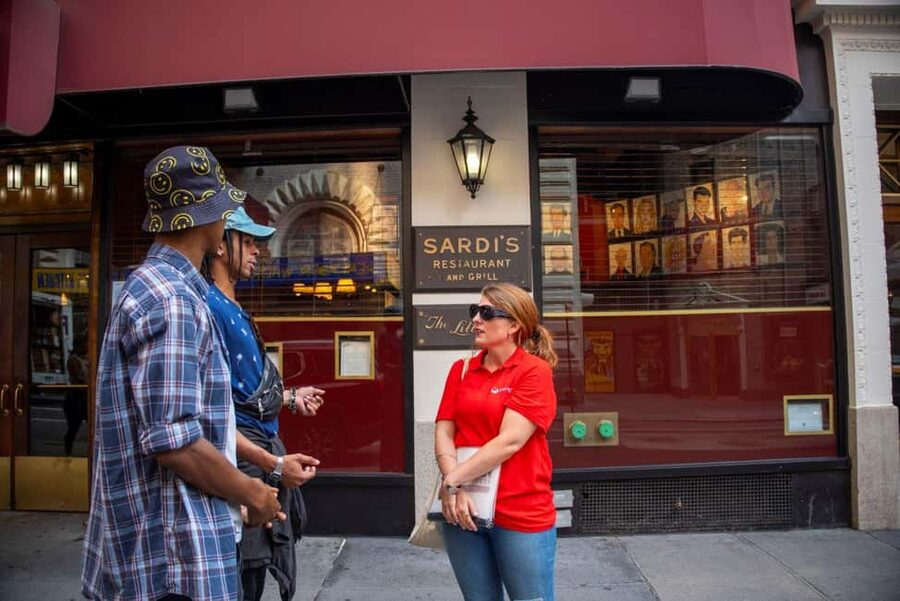
A walking tour of theatres can be passive. This one is not. The heart of the experience is how the guide reframes Broadway as a teamwork machine.
You’ll hear insider stories about the people who power productions day after day, including stagehands, understudies, and other behind-the-scenes professionals. The point is not to turn your visit into trivia night. The point is to help you watch a Broadway show with your eyes shifted.
After you hear about the backstage workload, you’ll realize how many moving parts have to sync for the show to land. That changes how you experience performance later. Suddenly, an onstage moment has a bigger shadow of effort behind it.
In terms of guide style, this tour has a track record of standout storytelling from different leaders. Names that came up include Mickey, A.J., Jessie, Hannah, Cullen, and Micaela. Across those guides, the consistent theme is energy plus real details, with a focus on making the theatre world understandable, not intimidating.
If you like tours where you ask questions and actually get answers, this format is your friend. And with a maximum group size of 12, you are less likely to get lost behind a wall of other people.
Hell’s Kitchen rehearsal studio, seeing the work, not just the stage
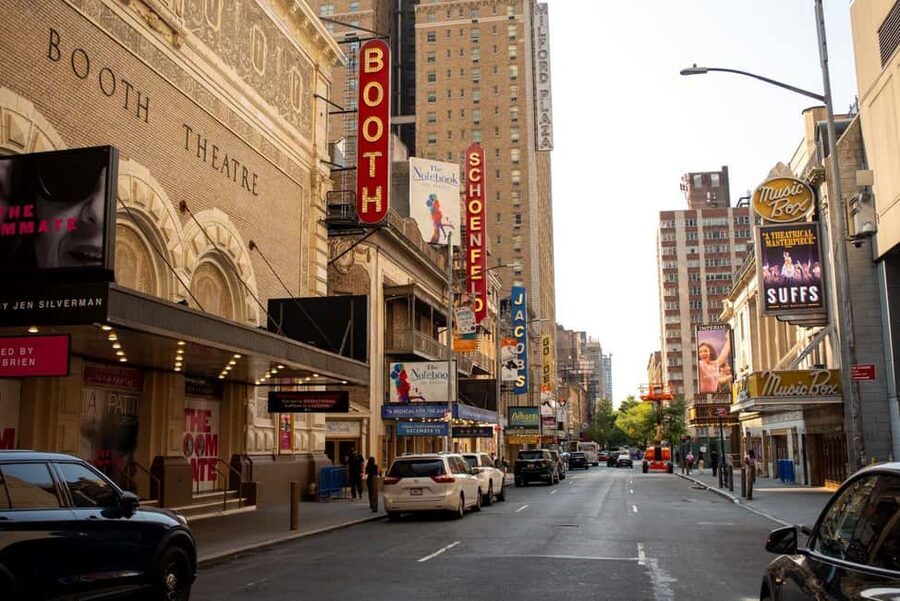
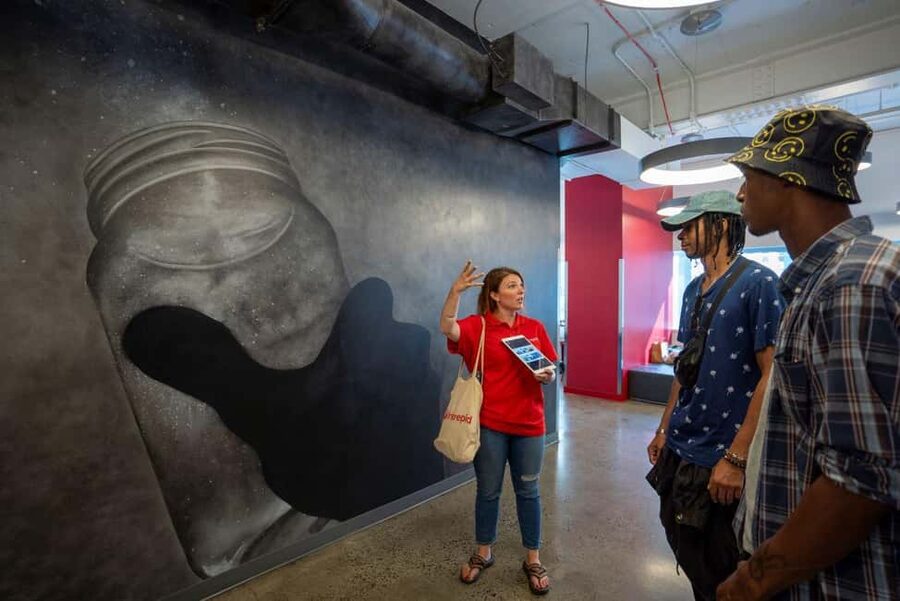
The best part for most people is the working rehearsal studio stop in Hell’s Kitchen. You are not just looking at a building for style. You’re stepping toward how shows get built.
In the studio, singers and dancers train. Choreographers and performers work through the physical side of the show. Crews prepare for opening night. Depending on what’s happening that day, you may catch a rehearsal or class in session.
This is why the studio visit matters so much for you. If you only visit the theatres when a show is running, you see the finished product. A rehearsal space is the opposite. It shows you the messier version of artistry, where timing gets corrected, music gets learned, and movement gets refined.
You should also be ready for the practical side of it. The studio visit involves walking up 3 flights of stairs. That is one reason the tour is not suitable for people with mobility impairments. If stairs are an issue for you, plan ahead or skip this one for another experience.
If the day includes live rehearsal activity, you’ll likely recognize patterns from what you later see onstage: how a performer practices a sequence, how staff coordinate, and how repetition turns into polish. Even when you do not catch something dramatic, you still get a sense of where Broadway’s consistency comes from.



Timing and pacing, fitting it into your Broadway plans
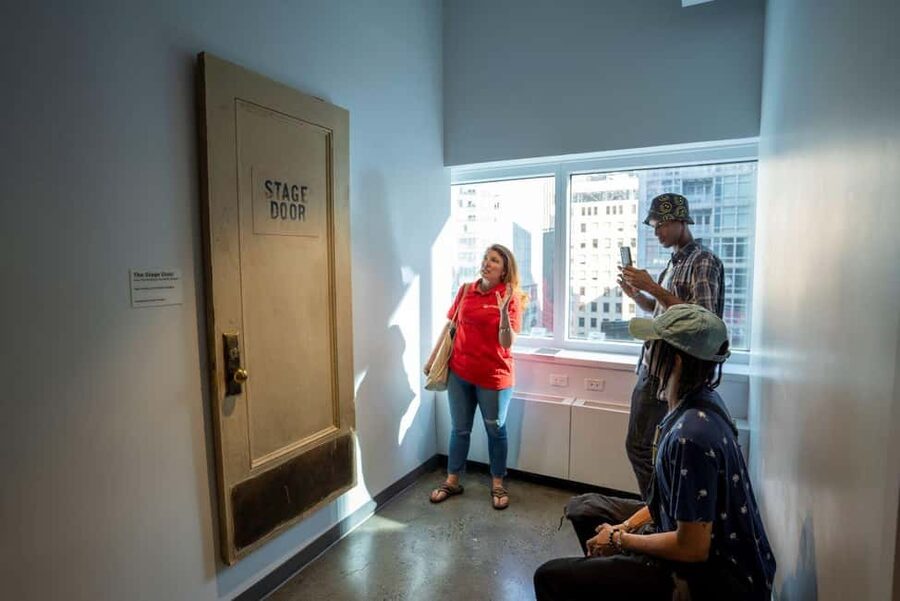
The tour runs for 2 hours. That’s a smart length because it gives you enough time to move through the theatre district and still reach the rehearsal studio without feeling rushed in a chaotic way.
I recommend booking it on a day when you can arrive without stress. It is a walking tour, so the “how long will this take me to get to” question matters. The meeting point is on Broadway at the Winter Garden Theatre, and you should arrive 10 minutes early so you’re ready when the group starts moving.
A quick strategy for your Broadway day: do this tour before you attend a show. You’ll have a head start on understanding what you’re looking at. The guide’s stories about the industry, plus the studio peek, makes the performances feel less mysterious.
Also plan your energy. If you’re already planning a busy day of shows, shopping, and long subway rides, keep this tour near the beginning of your itinerary so you are not trying to absorb theatre history while running on fumes.
Value check on $49, what you’re really paying for
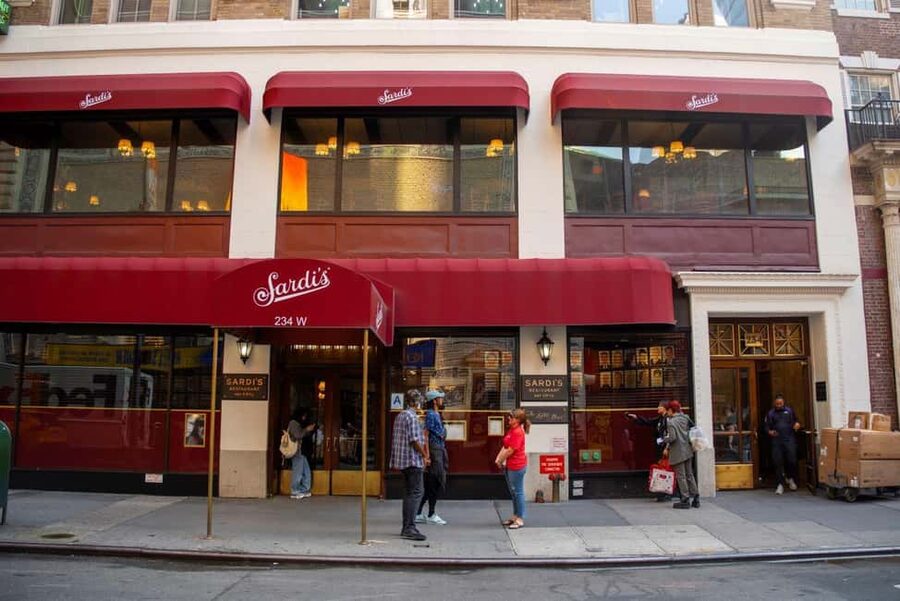
$49 for 2 hours in one of the most expensive cities in the world sounds reasonable, especially because it includes more than just a walk past photo-worthy buildings.
Here’s the value breakdown:
- You get a local, English-speaking guide who connects landmarks to Broadway’s evolution.
- You cover multiple major theatres rather than sticking to one strip.
- You add an actual studio visit in Hell’s Kitchen, with the chance to hear a rehearsal or class depending on schedules.
The best way to judge value is to compare it to how much time and access you usually get on a typical theatre tour. Many options show buildings only. This one gives you the craft side too.
If you love theatre and plan to see a show, this is the kind of spend that improves the return on everything you’ll watch next. If you are in NYC for the sights only and do not care about how performances get made, you might still enjoy the route, but the studio component is where the experience really justifies the cost.
Who this tour suits best (and who should skip it)
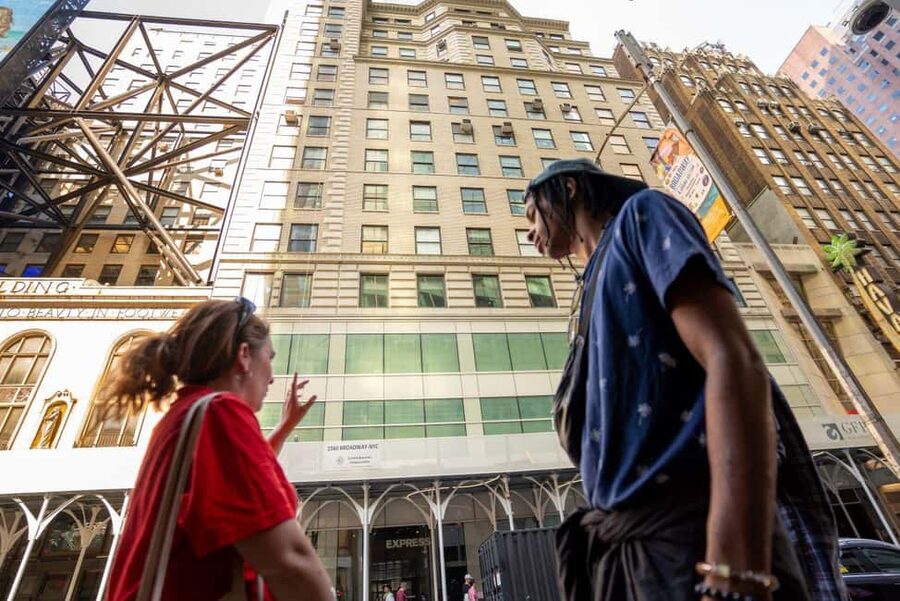
This tour is ideal if you:
- Want a clear, understandable history of Broadway told through real places.
- Plan to see a show and want backstage context first.
- Enjoy small-group tours where you can ask questions and get real answers.
- Like theatre professionals and the supporting roles that keep productions alive.
It is not suitable for people with mobility impairments because of the stairs at the rehearsal studio. If that affects you, look for a different experience that doesn’t include that kind of ascent.
It also works for families. Children under 6 can join free of charge, and it is described as child-friendly. If you’re bringing kids, comfortable shoes and patience for a couple of outdoor segments will make the day smoother.
Should you book Broadway Backstage from Times Square to Studio?
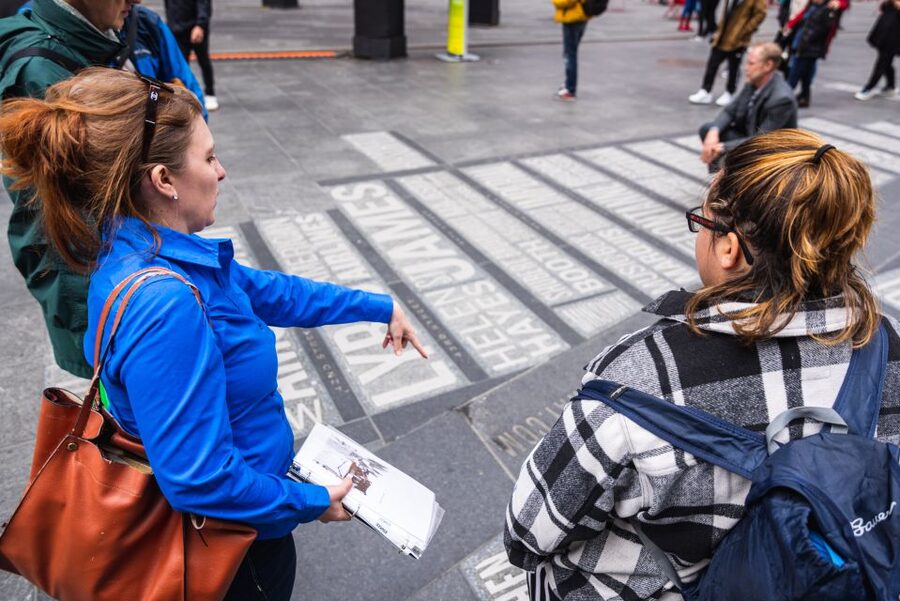
If you want to understand Broadway, not just photograph Broadway, I think this is an easy yes. The mix of theatre district landmarks plus a working rehearsal studio gives you two perspectives in one go: the public stage and the private prep.
Book it if you:
- Love theatre history and want it explained in plain, street-level terms.
- Are excited by the idea of seeing actors and crews in action, even in rehearsal form.
- Want a small-group format that feels personal rather than crowded.
Skip it if you:
- Cannot do stairs, since the studio stop involves walking up 3 flights.
- Want a totally indoor experience, because the tour runs rain or shine and outdoor walking is part of the plan.
If you’re on the fence, here’s my practical advice. Pair this tour with a Broadway show that evening or soon after, and you’ll get the biggest payoff from the backstage lens. You’ll notice the work behind the performance, and that is the kind of souvenir you take home in your head.
FAQ
Where do I meet the guide?
Meet your guide outside the Winter Garden Theatre, directly under the marquee (the large canopy with the theatre name) along Broadway. Arrive 10 minutes early. The navigation search term is Winter Garden Theatre, 1634 Broadway, New York, NY 10019.
How long is the tour?
The tour lasts 2 hours.
What is the group size?
The experience is designed for a small group, limited to up to 12 guests.
What does the tour include?
You’ll get a guided walking tour of Times Square and the Broadway Theater District, an English-speaking local guide, storytelling about Broadway history, and a peek inside a rehearsal studio with the chance to hear live rehearsal or class in session.
What should I wear or bring?
Wear comfortable shoes. You’ll be walking, and there are stairs involved in the rehearsal studio visit.
Is the tour canceled for bad weather?
The tour runs rain or shine. It is only canceled if weather conditions are unsafe.
Is the rehearsal studio wheelchair accessible?
No. The rehearsal studio visit is not wheelchair accessible because it involves walking up 3 flights of stairs.
Is this tour good for children?
Yes, it is child-friendly. Children under age 6 are permitted to join free of charge.
Is the tour operated by a responsible company?
Yes. It is carbon neutral and operated by a B Corp-certified company committed to responsible tourism.
More Tour Reviews in New York City
Not for you? Here's more nearby things to do in New York City we have reviewed









More Times Square Tours to consider.
 ★ 5.0NYC in a Day Tour: Lady Liberty, Times Square, Freedom TowerTickets from $891,735 traveller reviews
 ★ 5.0Broadway and Times Square Insider Tour with Theater ProfessionalTickets from $39651 traveller reviews
 ★ 4.5See Yourself on a Times Square Billboard for 24 HoursTickets from $150635 traveller reviews
 ★ 4.1Meal at Hard Rock Cafe New York Times SquareTickets from $42481 traveller reviews
 ★ 3.5Hard Rock Cafe New York Times SquareTickets from $41414 traveller reviews
 ★ 5.0NYC in a Day Tour: Statue of Liberty, Times Square and MoreTickets from $89366 traveller reviews
★ 4.8NYC in a Day Tour: Lady Liberty, Times Square, Freedom TowerTickets from $89219 traveller reviews
★ 5.0NYC in a Day Tour: Statue of Liberty, Times Square and MoreTickets from $89366 traveller reviews
★ 4.8NYC in a Day Tour: Lady Liberty, Times Square, Freedom TowerTickets from $89219 traveller reviews
 ★ 4.7Broadway and Times Square Insider Tour with a PerformerTickets from $3983 traveller reviews
More useful New York routes