
Review · BROADWAY EXPERIENCES
Broadway Musical Theater Walking Tour
New York’s theater district has its own stories. This walking tour turns Broadway into a living timeline as you pass the places fans actually talk about. I particularly like how it pairs a stop inside Drama Book Shop with theater lore that connects names, legends, and show-business myths. One thing to consider: much of the experience happens outside the big theater auditoriums, with most viewing in lobbies and landmark spots.
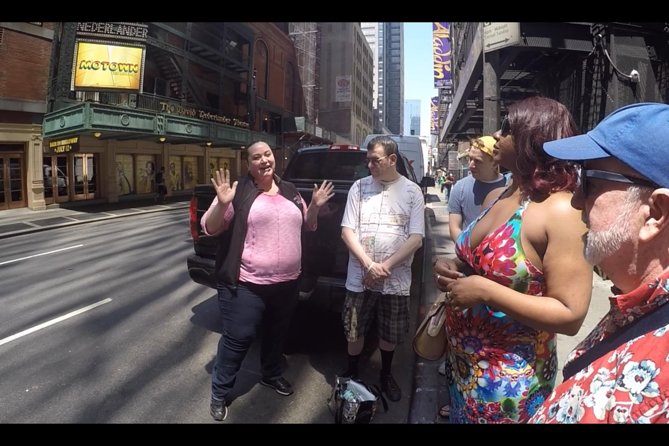
You’ll be on foot for about two hours, and the payoff is pace plus context. You get a theater insider’s way of reading the neighborhood, not just a list of famous venues. The group stays small, with a max of 25 travelers, so the host can keep the energy up without turning it into a crowded shuffle.
Guides like Mike and Michael (and even a mention of Jared in one standout group) are the kind of hosts who keep things moving and fun. If you love musicals, or you simply want to understand why Times Square and Broadway feel the way they do, this is an easy ticket to grab.
Key Things to Know Before You Go
- Insider host-led walk that explains how Broadway culture actually formed, not just what’s there now
- Drama Book Shop included, with a rare interior stop and free admission ticket
- Sardi’s and Shubert Alley stories that connect opening nights, artists, and the neighborhood’s origins
- Gershwin Theater lobby visit while a show like Wicked is playing, plus statue and backstage-style stories
- Small group size (up to 25) that helps you stay engaged throughout the walk
Why This Broadway Walk Works So Well
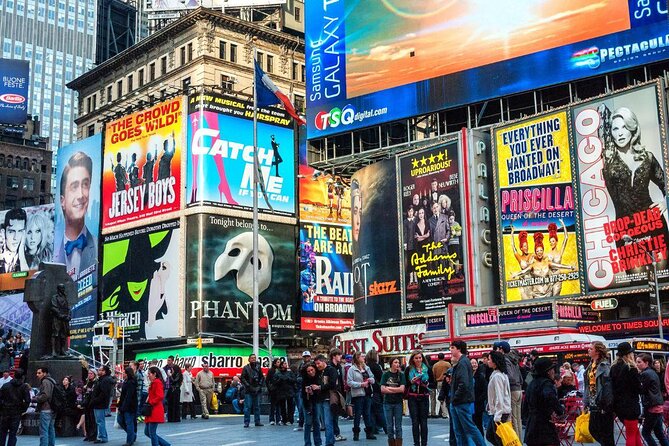
This tour is built for one of the best ways to experience New York: slow down, walk, and let the streets teach you. Broadway looks like a single strip from far away, but up close it’s layers. You start to see why certain blocks earned reputations, why certain names became shorthand for success, and how show business likes to repeat its own legends.
I also like that the tour doesn’t pretend theater history is boring. It’s presented through specific sites and characters, so you remember it. One minute you’re at a shop where theater folklore has a home, the next you’re learning how a restaurant became part of opening-night ritual, then you’re in the orbit of Gershwin’s theater world.
The final feeling is practical: you finish the walk with a mental map that helps you read the district the rest of the day. That matters because Broadway is loud and visual, and without context it can feel like sensory overload.
You can also read our reviews of more walking tours in New York City



Price and Time: What $50 Buys You on Broadway
At $50 per person for about two hours, you’re paying for more than a walk. You’re paying for a guide who can connect places you would otherwise pass without noticing to the people and stories behind them.
You also get structure. Instead of wandering the neighborhood alone, you follow a route with included stops and free admission tickets at certain points. A mobile ticket means you can keep everything simple on your phone and spend less time figuring out logistics.
The timing is also realistic for a theater lover day. Two hours is long enough to feel like you did something meaningful, but short enough that you can still plan dinner and an evening performance. If you’re coming from out of town or you’re squeezing in NYC sightseeing around show tickets, this kind of guided block is a smart use of time.
Stop 1 at Drama Book Shop: Legends, Lore, and Olive Thomas
Your first stop is Drama Book Shop, with time to go inside. That matters because the tour is not only about exterior photo spots. Once you step in, the atmosphere shifts, and the host can point out why this location holds a special place in Broadway culture.
This stop is where the stories lean into theater myth and personality. You’ll hear about legends and lore tied to show-business history, including Disney Theatrical and the resident ghost Olive Thomas. Whether you take the ghost stories literally or just enjoy them as part of the theater tradition, they give you a memorable thread to carry with you.
The practical payoff of this start: it gets you oriented early. Before you move back outside, you understand the “why” behind Broadway’s favorite storytelling habits, and that makes later stops easier to follow.
One small limitation to keep in mind: the time here is set, so if you love browsing shelves or want to linger, plan to do that on your own later. The tour is designed to teach the neighborhood, not replace a full shopping visit.
Sardi’s Wall Fame and Opening-Night Party Culture
Next up is Sardi’s, another iconic theater landmark. You spend about 15 minutes here, and the focus is on what the walls represent. The host talks about opening night parties and the artists displayed on the restaurant walls, which turns the place into more than a dining stop. It becomes a kind of visual record of who shaped Broadway in different eras.
From Sardi’s, the tour continues into stories about Broadway itself. You’ll learn about Mr. Broadway, plus the history behind how Times Square got its name. That’s a great kind of trivia, but it’s also useful because it explains why these streets got the branding and attention they did.
Then you head into the stories of Shubert Alley and the founders behind it. This is where a good guide can make a narrow lane feel like a chapter of a book. You’re not just passing it, you’re being taught how to read it.
The drawback of this portion is simple: it’s short. You’ll get the highlights, not an extended hangout. If you want a full meal at Sardi’s, you’ll still need to plan that for before or after the tour, since the walking schedule drives the pace.
Gershwin Theater Lobby and the Statue Moment
The last major stop is the Gershwin Theater, but the focus is on the lobby area rather than the main stage. You also spend time around key nearby points, including the George M. Cohan Statue and Shubert Alley again as the tour circles back through familiar ground.
This is the part that Broadway fans tend to love most. You’ll hear backstage stories, and the host makes the theater feel like a working machine, not just a building with a marquee. The tour also includes time around Broadway Souvenir Store, plus Sardi’s Restaurant, which helps connect the tour’s narrative to the real-life tourist path you’ll likely see afterward.
One detail that can feel extra fun: you visit the Gershwin lobby while a show like Wicked is playing there currently. Even if you’re not seeing that specific show, it helps you understand how Broadway operates day to day. Lobbies and marquee lights become part of the story, not just background noise.
If you’re hoping for full theater access into performances or behind-the-scenes rooms, this tour may not match that expectation. Based on the route structure, you’re getting the lobby-level and neighborhood-level experience, plus stories that sound like backstage conversations.






What the Guide Brings: Energy, Flow, and Real Engagement
The guide is the engine of this whole tour. The best part isn’t just facts, it’s how the facts are delivered. In particular, you get a host who stays animated and keeps the group moving with energy.
People who want a passive stroll might find the pacing a bit interactive, because the host pulls you into the story. That’s also why this tour works for beginners. You don’t have to already know every theater name to enjoy it, because the guide explains the context as you go.
I also appreciate when a tour plan acknowledges comfort in NYC. On this route, there are breaks built into the schedule, including indoor or semi-indoor stops that help you cool off. You’re still walking, but it doesn’t feel like an endurance test.
If you’re a serious theater nerd, you’ll likely enjoy the density of detail. The host can connect playwrights, theater culture, and memorable anecdotes into a thread you can hold onto. That’s how a tour turns into something you remember later, when you walk past a marquee and suddenly understand why it matters.
Tips to Get the Most From Your Two Hours
First, wear comfortable shoes. The tour is on foot, and Broadway sidewalks have their own quirks, including crowds and uneven walking space near major intersections.
Second, plan your schedule around the tour rather than forcing it to fit. Because it starts at 11:00 am, it works well as a morning foundation. You can then decide on an afternoon wandering plan with more confidence, since you’ll know which blocks are more story-driven and which are more shopping and photo-driven.
Third, decide how you want to handle photo moments. Souvenir photos are available to purchase, but they are not included. If you care about getting a specific type of photo, it’s worth budgeting for it, or just plan to use your own phone.
Lastly, keep an eye on weather. The experience requires good weather. If skies are questionable, build in a little flexibility so you don’t feel rushed.
Who This Tour Is Best For
This is an excellent choice if you love musicals, theater history, or simply want to understand Broadway’s language. It’s also a strong fit for first-time visitors who want a guide to translate the neighborhood.
If you’re traveling with kids, the tour can work, but children must be accompanied by an adult. The route is short enough in duration that it can stay manageable, as long as everyone is prepared for walking and waiting at each stop.
If you already have a deep theater calendar and multiple shows booked, this is still useful. It helps you connect what you’ll see later with how the neighborhood built itself. You’ll recognize names and themes more easily, and the district stops feeling like random glitter.
If you hate crowds, this may not be your ideal day. The tour is small, but Broadway is Broadway. The experience is guided and structured, yet you’re still in a major tourist area.
Should You Book This Broadway Musical Theater Walking Tour?
Yes, I’d book it if your goal is to turn Broadway from scenery into stories. The value is in the host-led interpretation, the specific stops like Drama Book Shop and Sardi’s, and the way the tour builds context so you understand what you’re looking at.
I would skip it or consider it carefully if you want a theater-seat experience with long indoor time inside the main auditoriums. This tour is designed around walking and lobby-level discovery, plus stories, not full access to productions.
One easy way to decide: if you’re excited to hear legends like Olive Thomas, want opening-night and Times Square origin context, and enjoy a guided route that finishes back where you started, this tour lines up perfectly with that mindset. For $50, you’re buying a shortcut to understanding Broadway fast.
FAQ
How long is the Broadway musical theater walking tour?
It lasts about 2 hours.
How much does the tour cost?
The price is $50.00 per person.
What is included in the tour price?
You get a tour guide or host. Some stops include free admission tickets, and the tour uses a mobile ticket.
Where does the tour go?
You visit Drama Book Shop, Sardi’s, and the Gershwin Theater lobby area, with stories connected to nearby places like Shubert Alley and the George M. Cohan Statue.
What language is the tour offered in?
The tour is offered in English.
Is the group size limited, and are children allowed?
The group has a maximum of 25 travelers. Children must be accompanied by an adult.
What is the cancellation and weather policy?
You can cancel for a full refund up to 24 hours in advance. The experience requires good weather, and if it is canceled due to poor weather, you will be offered a different date or a full refund.
More Walking Tours in New York City


More Tours in New York City




More Tour Reviews in New York City
Not for you? Here's more nearby things to do in New York City we have reviewed









More Broadway Experiences to consider.
 ★ 4.8Aladdin the Musical on BroadwayTickets from $831,800 traveller reviews
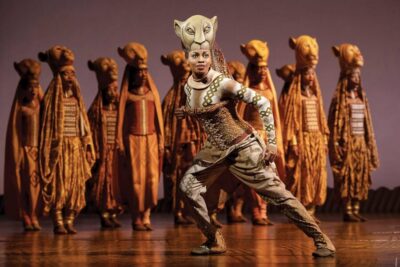 The Lion King on Broadway1,609 traveller reviews
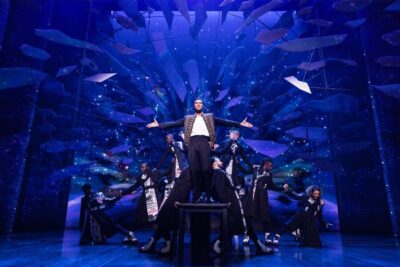 MJ the Musical on Broadway1,510 traveller reviews
 Moulin Rouge! the Musical on Broadway1,329 traveller reviews
 Harry Potter and the Cursed Child on Broadway700 traveller reviews
 Chicago the Musical on Broadway687 traveller reviews
 ★ 5.0Broadway and Times Square Insider Tour with Theater ProfessionalTickets from $39651 traveller reviews
 ★ 4.5The Lion King On Broadway TicketTickets from $143649 traveller reviews
More useful New York routes