

Review · BROADWAY EXPERIENCES
Broadway the Tour- NYC Guided Immersive Historic Walking Tour
Broadway on foot is the fast lane to understanding New York. This guided walking tour uses free audio headsets plus live narration so you get stories from Broadway actors and show recordings while you sightsee.
I especially like the expert guide-led pacing across classic theaters, plus the handy built-in stop themes, from early Broadway to modern hits like Wicked and Hamilton. The headset setup also means you can listen while you look up, point, and take photos.
One thing to plan for: you need to walk and stand, unaided, for the full time. If you have mobility limits or you expect to stop a lot, this may feel like a long stretch at Times Square crowd level.
Key Highlights You Should Know Before You Go
- Headsets included: live narration and recordings synced to the walk, so you do not miss the good parts
- A theater district story arc: from Longacre Square to the modern Broadway machine
- Photo-friendly stops at many marquee-worthy facades and historic playhouses
- Ask the Guide text service for quick questions during the tour
- Small group size (maximum 20) helps the guide keep things moving
- One morning departure that leaves you free for the rest of your day
A 2-Hour Broadway Walk That Feels Like a Personal Show Guide
This tour runs about 2 hours 10 minutes and meets at the Museum of Broadway, 145 W 45th St, starting at 10:00 am. It ends back at the meeting point, which is great if you want a clean restart for lunch or a museum visit.
What makes it work is the format. You get a headset that carries the guide’s live narration plus recordings and sound effects, including stories from Broadway actors and clips tied to well-known productions. In plain terms, you are not just reading plaques, you are hearing the theater world explain itself while you walk through it.
Group size matters here. With a cap of 20 people, the guide can keep the pace steady and handle questions without turning the sidewalk into a standstill. If you want the practical perk, it also makes it easier to hear the guide when the block gets noisy.
The other practical reality: it requires good weather and involves walking plus standing unaided for the duration. Comfortable shoes are not optional, and a light layer helps because Times Square can swing from sunny to wind-chill fast.
You can also read our reviews of more walking tours in New York City


Museum of Broadway to Lyceum Theatre: How the Story Starts
You begin at the Museum of Broadway, where you get the big-picture overview: the early beginnings of Broadway and the layout of the area. Even if you think you already know Broadway trivia, this start helps you build a map in your head, so later stops make more sense.
Then you move to the Lyceum Theatre, one of Broadway’s oldest continuously operated houses. Here the tour ties the historic proscenium to what is happening now, including the current production Oh Mary! at the time of the tour. That mix is smart: you get history, then you get proof it still matters today.
A short stop, but it is a good example of the tour’s method. You do not spend 30 minutes waiting outside a gate. Instead, you get a compact story, a quick visual anchor, and you keep walking to the next layer.
If you are the type who likes theater facts and show references, you will probably enjoy the way the headset shifts from general context to specific theatrical moments. It keeps your attention from drifting, especially on a busy corridor like 45th Street.
Longacre Square, Times Square Icons, and the 42nd Street Glow
After the Lyceum, the tour heads into the heart of Times Square, with the story of how Longacre Square became the Broadway center everyone recognizes today. You also get a photo moment linked to One Times Square, home of the iconic New Year’s Eve ball drop.
Then comes 42nd Street, one of the most important streets in American show business. This stop focuses on early Broadway roots: immigrant-inspired theater, vaudeville, operas, and early musicals. You also get the nickname story behind the lights that helped earn The Great White Way name, plus photo opportunities of several historic playhouses along the way, including the current home of Aladdin.
This is a good stretch for people who like visual details. You are standing in the place where theater changed from local entertainment to a recognizable national brand. Also, the tour keeps it efficient: about 10 minutes here means you can still enjoy the sidewalk energy without burning the whole morning on one block.
The only consideration is simple. Times Square sidewalks can be packed, and this tour is scheduled at 10:00 am. If you are sensitive to crowds, wear sunglasses if it is bright, and keep your phone ready for photos but not so ready that you drift into foot traffic.
New Amsterdam, New Victory, and the Theaters That Show the Changing City
Next up is the New Amsterdam Theatre, a standout example of Art Nouveau architecture built in 1903. The tour connects the building to landmark productions, including the Ziegfeld Follies, and explains why its design helped shape Broadway’s glamorous image. Today it is home to Aladdin, so you get both the past and the modern show schedule in the same glance.
Then you stop at the New Victory Theatre, which is not a classic Broadway house in the traditional sense, but it has a big role in the district’s entertainment evolution. The tour covers how it started as the Republic Theatre, moved through different eras like vaudeville and burlesque, and even served other entertainment uses before becoming a children’s theater venue. That shift tells you something key about Times Square: it reinvents itself as audiences change.
You also make time for smaller, meaningful stops, including the Helen Hayes Theatre, originally The Little Theatre, known for championing intimate, experimental productions. After that, the tour focuses on major marquee facades, including the Imperial Theater for Les Miserables and the St. James Theatre, opened in 1927, with associations from Oklahoma! to Hello, Dolly!.
A useful way to look at these stops: you are watching Broadway architecture as a timeline. Different buildings reflect different show formulas and different business needs. If you want a more grounded understanding of Broadway beyond a single ticket purchase, this is where the tour earns its keep.
Shubert Theatre and Shubert Alley: Backstage Energy, Not Just Facades
One of the most enjoyable parts of the tour comes when it shifts from individual theaters to the theater business machine. At the Shubert Theatre stop, you hear stories about early movers in Manhattan and the behind-the-scenes forces that shaped Broadway. This includes an explanation of the underbelly of Broadway’s birth and how the Shubert theater syndicate helped build power in the arts.
Then you walk to Shubert Alley, a narrow passageway between the Shubert and Booth Theatres. It exists because of fire safety regulations created in 1912, but it quickly became a hub where aspiring actors lined the walls hoping to be spotted. It is a small space with big ambition, and it is the kind of place where you can almost feel the audition bustle, even though today it is mostly photo moments and curiosity.
Right after that, you get the Majestic Theatre stop, tied to big musical creators and famous show titles, plus a set of photo opportunities that help you see the theater district as a cluster rather than as random buildings. This section includes references to shows like Gypsy, Dear Evan Hansen, Funny Girl, Les Miserables, and Phantom of the Opera.
If you like practical sightseeing, this is also where you learn to read the blocks. When the guide explains why certain theaters are grouped close together, you start to understand how audiences moved, how producers competed, and why certain venues became magnets.
You can also read our reviews of more guided tours in New York City






From Rodger and Hammerstein Song Mentions to Hamilton Street Energy
The tour keeps moving through both classic and modern Broadway. You get multiple photo stops tied to major houses such as the Majestic and then the Richard Rodgers Theatre, where current production connections like Hamilton appear in the story thread.
You also get a dedicated stop linked to Hamilton where you are basically on the street where the show happens. The guide frames why it took over Broadway, using its modern sound blend with traditional musical theater storytelling, and connects that success to renewed interest in American history and the arts.
Next is the Al Hirschfeld Theatre, with a focus on Al Hirschfeld himself, the caricaturist connected to Broadway. You hear how his drawings of theater luminaries became synonymous with The Great White Way, including the fun tradition of hidden names like Nina Hirschfeld within the lines of his work.
After that, the tour touches on modern hits and cultural shifts in Midtown, including references to Wicked, the Brill Building, and later the Gershwin Theatre. It also points out how Times Square’s planning and redevelopment shaped what survives as historic theaters, and it mentions why keeping historic overlays matters when the city keeps changing.
Two more practical stops land in this section. You visit Schmackary’s, a bakery with whimsical cookie creations inspired by musicals, and that stop includes admission on the tour. You also stop at the George M. Cohan Statue, included on the tour, which ties early American musical theater influence to songs like Over There and the idea of Cohan as an all-in-one entertainer.
Then you round out with the Palace Theatre, known for its early vaudeville prestige and the idea of playing the Palace as a career dream. It is a shorter stop, but it helps balance the newer shows with the older entertainment engine that fed them.
Brill Building to Theatre Circle: Midtown Music Roots and Final Souvenirs
As the tour closes, you cover more of Midtown’s music ecosystem, starting with the Brill Building. The story here is about the 1960s songwriter and pop-music factory, with names tied to pop songwriting and the way those influences seeped into musicals over time.
You also get stops tied to other theater landmarks described through their building origins and long-running production associations, including the Winter Garden Theatre, which the tour describes as originally built as a horse exchange for William Vanderbilt before becoming a theater in 1911. That kind of detail is more than trivia. It shows you how entertainment spaces adapt to city needs and economic cycles.
Finally, the tour ends at Theatre Circle, a theater-focused shop that functions like a community hub for playbills, posters, autographed photos, and theater books. That last stop includes admission, and it is a friendly way to wrap up because you can bring the story home in a tangible form.
If you want a smart move, set aside a little time for browsing. You are already looking at famous marquee facades in your mind, so the memorabilia hits differently at the end.
Should You Book Broadway the Tour?
Book it if you want an efficient, story-led Broadway walk where audio headsets keep you engaged and help you connect each theater to a larger timeline. It is especially good for your first day in the theater district, because it gives you mental map power fast.
Pass or choose a different format if you expect lots of sitting breaks. This tour is built on walking and standing unaided for the full time, and it depends on good weather.
If you get a guide like Roxie, it can be funny, sharp, and clear, with the kind of narration that makes show facts feel human instead of like a lecture. With a small group cap and a start at 10:00 am, it also works well as a morning anchor that leaves you free for the rest of your day.
FAQ
How long is the Broadway the Tour walk?
The tour is approximately 2 hours 10 minutes.
What is included in the tour experience?
You get live, in-person narration from NYC historic tour guides and use of a personal audio headset. The tour also includes access to an Ask the Guide text-a-guide service and exclusive discount access to additional tours, attractions, and museums.
Are audio headsets and narration available during the walk?
Yes. The tour provides personal audio headsets so you can stay connected to the guide while hearing live narration, recordings, sound effects, and interviews.
What language is the tour offered in?
The tour is offered in English. ASL interpretation is available with advance notice.
Do I need separate tickets for the stops?
Some stops list admission as ticket not included, while others are free. A few items or stops are marked as included on the tour, such as Schmackary’s, the George M. Cohan Statue, and Theatre Circle. If a stop says admission is not included, you should plan on handling any entry separately.
Where does the tour start and end?
It starts at the Museum of Broadway, 145 W 45th St, New York, NY 10036 and ends back at the meeting point.
More Walking Tours in New York City


More Tours in New York City




More Tour Reviews in New York City



Not for you? Here's more nearby things to do in New York City we have reviewed








More Broadway Experiences to consider.
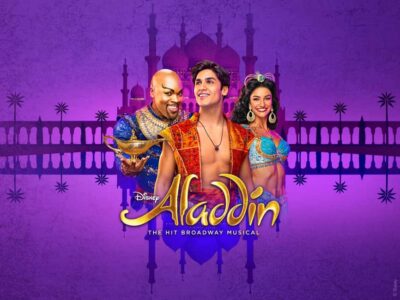 ★ 4.8Aladdin the Musical on BroadwayTickets from $831,800 traveller reviews
 The Lion King on Broadway1,609 traveller reviews
 MJ the Musical on Broadway1,510 traveller reviews
 Moulin Rouge! the Musical on Broadway1,329 traveller reviews
 Harry Potter and the Cursed Child on Broadway700 traveller reviews
 Chicago the Musical on Broadway687 traveller reviews
 ★ 5.0Broadway and Times Square Insider Tour with Theater ProfessionalTickets from $39651 traveller reviews
 ★ 4.5The Lion King On Broadway TicketTickets from $143649 traveller reviews
More useful New York routes