
Review · CENTRAL PARK TOURS
Central Park Pedicab Tours – History and Movie Locations
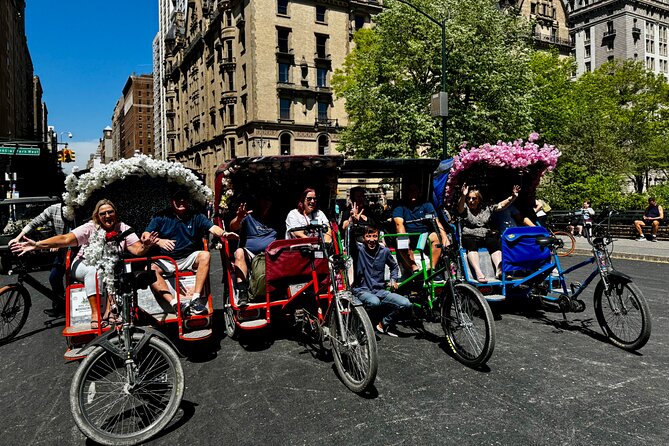
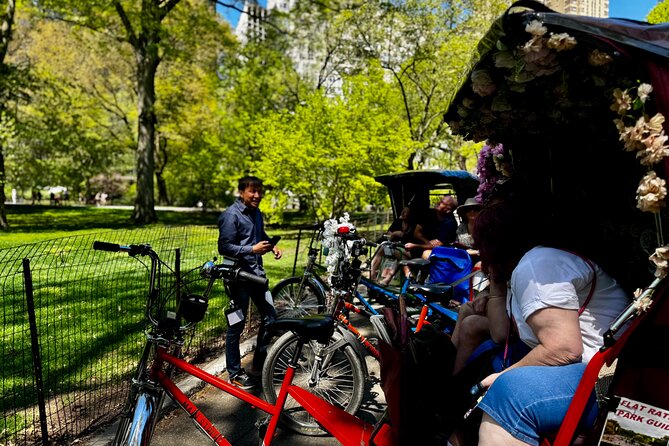
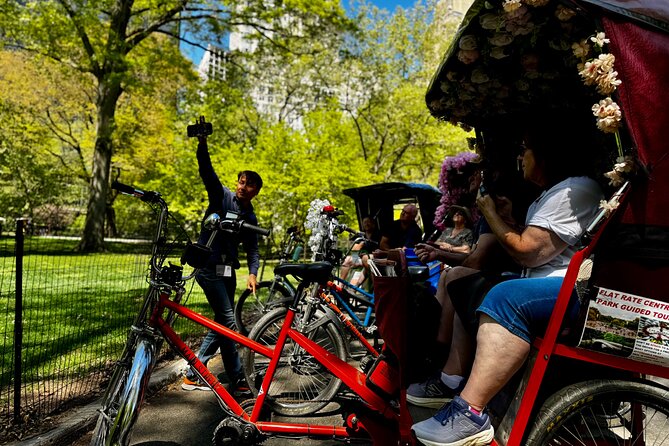
One pedicab ride, a stack of Central Park icons. I like the easy efficiency of seeing major sights in 1 to 3 hours, and I like the movie-location storytelling that connects the park to scenes you recognize. The trade-off is you move at pedicab pace, so this is not the right pick if you want to roam solo for hours on foot.
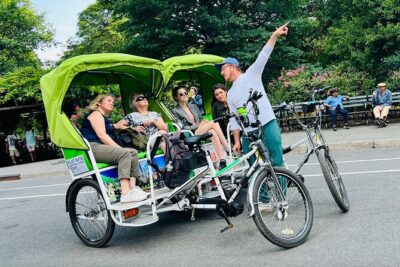
This is a private activity for your group only, so it feels more like a guided walk than a crowded hop-on ride. If your guide is someone like Ricky, the vibe is friendly, upbeat, and very good at pointing out the film spots and small details that you might otherwise miss.
You’ll get a mobile ticket, the tour is offered in English, and you’ll return to the same place you start, which makes the whole thing easy to plug into a NYC day.
Key things that make this Central Park pedicab tour worth your time
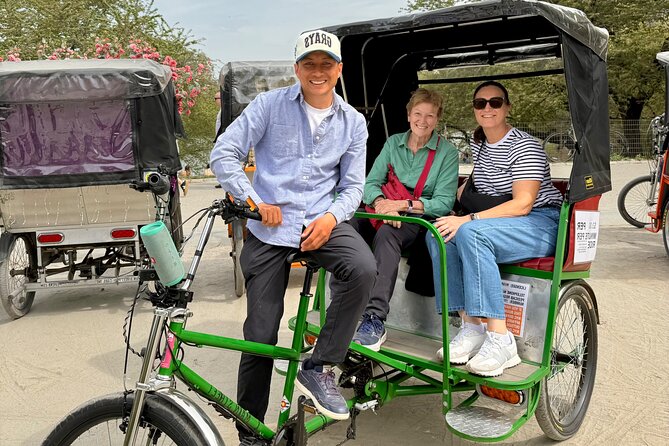
- Private group only so you control the pace and questions stay personal
- Movie and history tie-ins that turn common landmarks into recognizable scenes
- Pedicab saves your legs while you cover a lot more park than a walking loop
- Admissions included at several stops plus a mix of free-view areas
- Photo stops built in so you can grab classic Central Park angles without sprinting
Why a pedicab makes Central Park feel doable
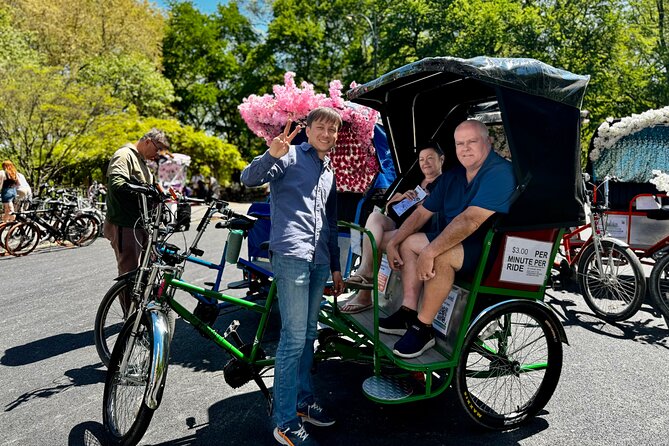
Central Park is huge, and that’s the problem. If you try to see everything by foot, you end up doing math in your head: distance, time, and your next sore spot.
This tour solves that with one simple idea: sit back, relax, and let the pedicab do the heavy lifting. You still get the sights, but you spend less energy getting from one must-see corner to another. For anyone visiting during a busy schedule, it’s an efficient way to get your bearings and see the park’s most famous features in one go.
The other reason I like this setup is the guide’s role. You’re not just passively watching. You get stories that explain why the park looks the way it does, who designed key elements, and how specific places show up in movies and TV.
You can also read our reviews of more historical tours in New York City


Timing, meeting point, and what 1 to 3 hours feels like
The tour runs about 1 to 3 hours, depending on your chosen length. Either way, you’re not committing to a full day, which matters in New York where plans can shift fast.
You start at 1415 6th Ave, New York, NY 10019, and the ride ends back at that meeting point. That round-trip structure helps you avoid the end-of-tour scramble, especially if you’re also trying to fit in other sights nearby.
A practical note: this is a pedicab experience and it runs best when weather cooperates. You are outdoors the whole time, and the provider notes that good weather is required.
Bethesda Terrace, the fountain, and the arcade tile work people forget to notice
If Central Park has a classic postcard zone, it’s Bethesda. You’ll roll past Bethesda Fountain, where the centerpiece is Emma Stebbins’ Angel of the Waters sculpture. The guide context matters here because it’s not only pretty, it’s symbolic, tied to the biblical story about healing at the Pool of Bethesda.
Then you move up to Bethesda Terrace, which is the kind of place you can easily walk by without realizing you’re standing in a detail-heavy architectural moment. One standout is the arcade ceiling covered with Minton encaustic tiles. These tiles were removed during a renovation when restoring them was deemed too costly, a ceiling mural was used instead, and later the original tiles were restored and reinstalled. That full story helps you look at the terrace like a museum space, not just a scenic viewpoint.
A quick extra stop in the same lower terrace area often includes Cherry Hill Fountain. It was built in the 1860s originally to water horses for carriage travel through the park, which is a clever way to connect today’s strolling with the park’s 19th-century purpose.
What makes this stretch valuable is contrast. You get major Central Park icons, but you also get craft details like sculpture symbolism and tile restoration efforts that you’d likely skip if you were simply racing from photo spot to photo spot.
The Lake loop, boathouse views, and the “heart of the park” effect
After Bethesda, you glide toward The Lake, often considered a central pull of the park because it links multiple landmark areas and gives you that wide open water view. It’s listed as a 20-acre water body, and you’ll also hear how it connects to key areas like the Ramble and Bethesda Terrace.
If you like the idea of seeing the park from the water, the area is closely tied to boating. You’ll find Loeb Boathouse nearby for rowboat rentals, so you can follow up with extra time there if you want more than the pedicab gives you.
You may also pass the Central Park Boathouse area. It’s one of those locations that feels cinematic on its own. The current boathouse structure dates to 1956 after an earlier version burned, and it offers year-round dining with heated outdoor seating, so even colder months can feel like a real New York day plan.
This whole section is one of the best uses of a guided pedicab because it’s easy to get stuck walking in circles around the same few photos. Here, you’re moving in a logical flow, which keeps you from wasting time while still seeing the visual “why” of the park.
Bridges and shoreline favorites: Gapstow Bridge, Bow Bridge, and The Pond
Central Park’s bridges are basically characters. They frame skyline views, they look good in every season, and filmmakers love them.
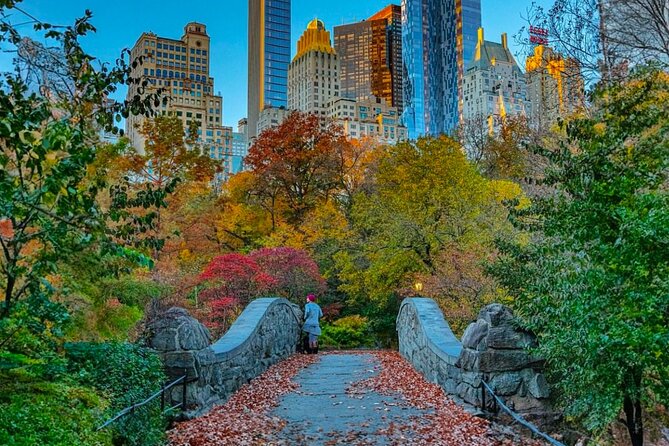
You’ll hit Gapstow Bridge, known for its views over The Pond and the Midtown skyline. It was originally wood and cast iron, then replaced in 1896 with the stone version. The ivy-covered feel is part of why it photographs so well, and the guide context helps you understand why it’s such a go-to location for photographers and movie crews. You’ll also hear about wildlife like turtles and ducks in the pond area.
Then there’s Bow Bridge, another signature bridge designed by Calvert Vaux and Jacob Wrey Mould, completed in 1862. It’s cast-iron, with that bow-like curve, and the bridge has been restored and preserved, including a noted two-month renovation window that began in November 2023. Even if you don’t know the exact construction story, the bridge reads as iconic the minute you see it.
What I appreciate about doing both bridges in one ride is variety. Gapstow leans into pond tranquility and skyline framing, while Bow Bridge feels like a romantic, classic Central Park angle. You end up with two different styles of photos and two different moods.



Chess, carousel, and small structures with surprisingly big stories
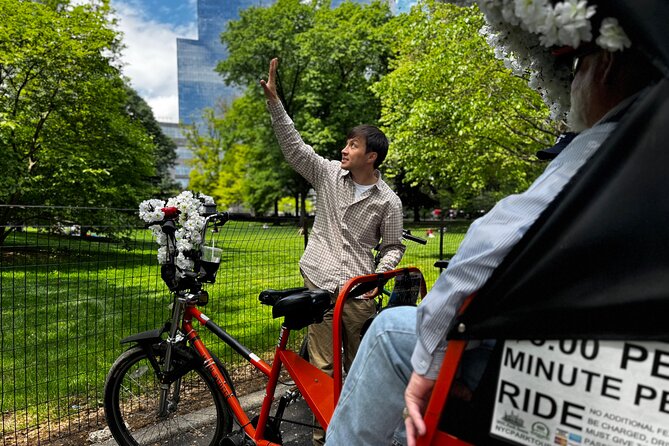
This tour doesn’t only do the biggest landmarks. It also includes Central Park details that feel like secret chapters.
One highlight is the Central Park Carousel. The information shared here is the kind you want on a trip: the original carousel story includes multiple versions, horse power in earlier days, and today’s carousel is the park’s fourth installation, with a current version dated to 1951. The horse carvings are tied to the Stein and Goldstein company, and it’s described as one of the finest early 20th-century carousels in the United States. Even if you don’t ride, standing near the carousel feels like stepping into a preserved past.
Next, there’s the Chess & Checkers House, an octagonal brick building built in 1952 with game tables all around it. It’s a practical and relaxing scene, because it gives beginners and experts a place to play without needing lessons or equipment. The film connection is a plus too. It appears in the 1993 movie Searching for Bobby Fischer, where outdoor chess action is a major visual element.
You may also pass the Dairy, built in 1871 as a Gothic Revival cottage refreshment stop designed by park architect Calvert Vaux. It was created for children and families at a time when fresh milk was considered a luxury. That historical angle helps you see why the Dairy looks so whimsical now, because it’s not random cuteness. It was part of the park’s original social design. A movie appearance tied to The Fisher King adds a layer of nostalgia.
Finally, Conservatory Water is a calm pause that’s more interesting than it sounds. It’s known for model boat sailing, and that tradition still continues. If you’re a literature fan, you’ll also notice the presence of statues of literary icons like Alice in Wonderland and Hans Christian Andersen nearby. It’s a low-key stop that’s ideal when you want a break from the busiest parts of the park.
Film-famous corners: Strawberry Fields, the Dakota, and the Mall’s straight-line surprise
Central Park is one of New York’s main movie sets, and this tour leans into that fact in a smart way: instead of treating film trivia like party talk, it uses the stories to explain how the park works and why certain spots repeat on screen.
Strawberry Fields is a major moment. It’s dedicated to John Lennon, designed as a living memorial after his death in 1980. The name points to Strawberry Fields Forever, and there’s also the Imagine mosaic at the center, inspired by Lennon’s peace vision. It’s one of those places where you can stand quietly, listen to a guide’s context, and then understand why fans make a pilgrimage.
Then there’s the Dakota building exterior on the corner of 72nd Street and Central Park West. It’s completed in 1884, known for its Renaissance Revival style, and historically famous for residents including John Lennon and Yoko Ono. The movie tie-in called out here is Rosemary’s Baby (1968), which used the exterior to create a specific eerie atmosphere. Even if you’re not a film buff, you’ll feel how iconic the building is against the park.
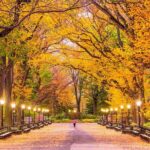
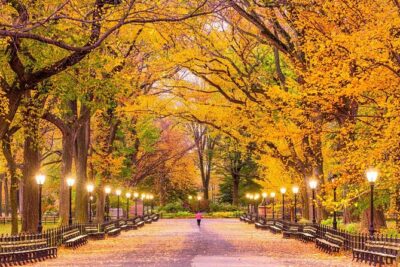
For classic strolling visuals, the tour routes you through The Mall, also called Literary Walk. This is the park’s only intentionally straight line, which is a fun fact because Central Park overall is famous for winding paths. The Mall’s elm canopy and the statues honoring writers like William Shakespeare, Robert Burns, and Sir Walter Scott make the experience feel like outdoor literary geography. The southern end includes the Christopher Columbus statue, which adds another layer of symbolic framing.
If you love photos, this area tends to deliver. The guide also helps you time your picture-taking approach during the ride so you’re not scrambling at the exact wrong moment.
Zoo, statues, and open lawns: Balto, Sheep Meadow, and Rumsey Playfield
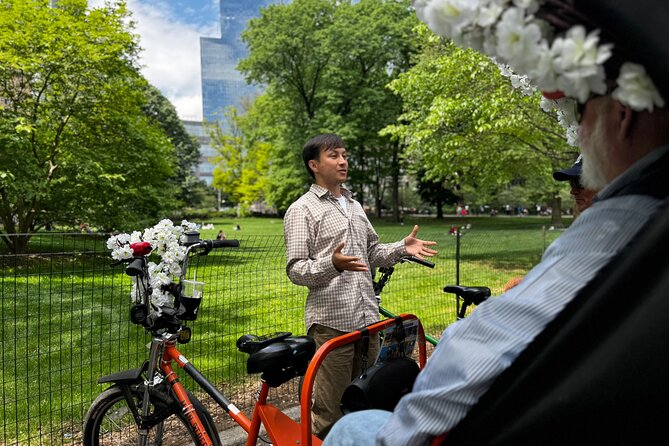
Some of Central Park’s best moments are family-friendly, even when you’re not traveling with kids.
You may pass the Central Park Zoo, one of the city’s oldest attractions. It began in 1864 as a small menagerie, became an official zoo in 1934, and later shifted toward more natural habitat design. It’s run by the Wildlife Conservation Society and includes themed areas like a Temperate Territory, a Tropic Zone, and a Polar Circle, where you can see animals including penguins and sea lions. Even a quick look is enough to show why families keep returning.
Nearby, the tour can include Balto Statue, commemorating the heroic sled dog from the 1925 serum run to Nome. The guide story turns the statue into a real-world event, including how the antitoxin delivery depended on crossing rough ice and through Arctic blizzards. It’s one of those statues that feels dramatic in a good way, not like a random monument.
For big open space, you’ll also see Sheep Meadow, a 15-acre lawn that’s one of the park’s most popular spots for relaxing and picnicking. It contrasts sharply with the skyline, which is exactly why it shows up in film. The examples tied to it include Ghostbusters (1984) and Wall Street (1987), plus The Fisher King (1991). The lawn is also a natural place to stop, breathe, and let your legs recover after a run of more structured landmarks.
If your day includes music or events, Rumsey Playfield gives you context. It has a past connected to Calvert Vaux’s earlier Casino structure, then later a nightclub, then a playground, and eventually a sports field for older children. SummerStage later relocated there and continues to host performances. That makes this stop more than just grass. It’s an evolving public-space story.
Additional Central Park icons in the longer 2 hour option
If you choose a longer ride (the data notes a 2 hour tour option for certain stops), you may reach some of Central Park’s biggest “only in NYC” attractions that sit right on the edges of the park.
One is Alice in Wonderland Statue, donated in 1959 by George Delacorte. It’s designed as an interactive tribute for children, with Alice sitting on a giant mushroom and characters from the story gathered around her. The best part here is the play-friendly design, so the statue feels less like a photo prop and more like a kid-approved stop.
Another is Cleopatra’s Needle, described as the oldest outdoor monument in New York City. It dates back more than 3,500 years, was carved in Egypt, moved across the Atlantic, and dedicated in Central Park in 1881. The hieroglyph-covered surface makes it feel like a direct connection to ancient history, not a replica vibe.
You may also see the Metropolitan Museum of Art from the park side. It’s founded in 1870, opened in 1880 along Central Park’s eastern edge, and today holds over 2 million works of art across roughly 5,000 years of human history. You do not get a museum day from a pedicab stop, but you do get a sense of why this corner is so important. If you’re an art person, it will likely push you to plan a follow-up visit.
Another big sight is Jacqueline Kennedy Onassis Reservoir. Built between 1858 and 1862 to add capacity for the city’s receiving reservoir, it’s a massive water feature with a curving shape designed to harmonize with the park. The stated scale is huge: 106 acres, 40 feet deep, and more than one billion gallons. That size alone makes it feel like a different kind of Central Park experience.
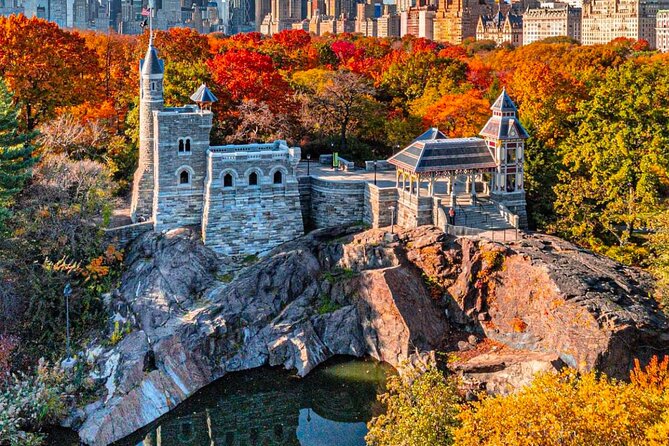
Then there’s Belvedere Castle, perched on Vista Rock with some of the park’s best views. It’s a decorative folly built in 1867, with Gothic and Romanesque style. It also has a practical role because since 1919 it has served as Central Park’s weather station, providing data to the National Weather Service. If you like the idea of a spot that is both cute and functional, this fits.
Price and value: what $38.40 per person actually buys you
At $38.40 per person, this is priced like a straightforward guided experience, not a collection of separate tickets you have to juggle.
Here’s what makes it feel like value from the inside:
- You’re paying for pedicab transportation that covers a lot of ground in a short window.
- Several stops include admission tickets, while others are free to view. That mix reduces your “what does it cost to get in” stress.
- The guide turns landmarks into a storyline through design history and movie locations, so you’re not just buying movement.
It’s not the cheapest option if you’re the type who loves to self-navigate and spend your hours walking anyway. But if you want a guided, efficient, photo-friendly Central Park day, this pricing makes sense.
Also, the average booking window is about 32 days in advance, which is a useful signal. Popular dates fill up, so if your trip has a tight schedule, don’t wait until the last moment.
Who should book this tour, and who might skip it
I’d book this if:
- You want Central Park highlights without doing a full foot marathon
- You care about movie and TV locations and want the stories tied to real places
- You prefer a private group experience where you can ask questions and take your time at photo stops
I might skip it if:
- You want a long, self-paced walk where you pick every turn and linger for hours
- You’re traveling during shaky weather where outdoor plans often get disrupted
- You’re focused on one deep neighborhood theme and don’t care about seeing a wide swath of the park
Should you book Central Park Travel’s history and movie locations pedicab tour?
If your goal is a smart Central Park day that hits the famous landmarks, plus a handful of details that make the park feel deeper, this is an easy yes. The private group format keeps it personal, and the guide’s focus on design history and film locations helps you look at the park like more than just a green backdrop.
My deciding question for you is this: do you want Central Park compressed into a guided highlights loop? If yes, book it. If you’re more into long solo wandering, you’ll probably prefer time on foot.
FAQ
How much does the Central Park pedicab tour cost?
It costs $38.40 per person.
How long is the tour?
The tour duration is about 1 to 3 hours.
Is this a private tour or shared?
This is a private tour/activity, meaning only your group participates.
What language is the tour offered in?
The tour is offered in English.
Where does the tour start and end?
The tour starts at 1415 6th Ave, New York, NY 10019, and it ends back at the same meeting point.
What is included in the price?
The price includes the pedicab and all fees and taxes. Admission tickets are included at several listed stops, while some stops are free to visit.
What happens if the weather is bad?
The experience requires good weather. If it is canceled due to poor weather, you are offered a different date or a full refund.
More Historical Tours in New York City


More Tours in New York City



More Tour Reviews in New York City
Not for you? Here's more nearby things to do in New York City we have reviewed





More Central Park Tours to consider.
 ★ 5.0Central Park Pedicab Guided ToursTickets from $387,108 traveller reviews
 ★ 5.0Private Central Park Pedicab TourTickets from $386,981 traveller reviews
 ★ 4.2Central Park Bike RentalsTickets from $92,528 traveller reviews
 ★ 5.0Official NYC Horse Carriage Rides in Central Park since 1979 ™Tickets from $992,365 traveller reviews
 ★ 4.1Central Park Bike RentalTickets from $81,651 traveller reviews
 ★ 4.9Private Central Park Pedicab TourTickets from $401,637 traveller reviews
 ★ 4.7Central Park Bike RentalTickets from $91,509 traveller reviews
 ★ 4.0Carriage Ride in Central Park (VIP – PRIVATE) Since 1964™Tickets from $141,074 traveller reviews
More useful New York routes