
Review · HIGH LINE TOURS
Chelsea and the High Line NYC Architecture Walking Tour
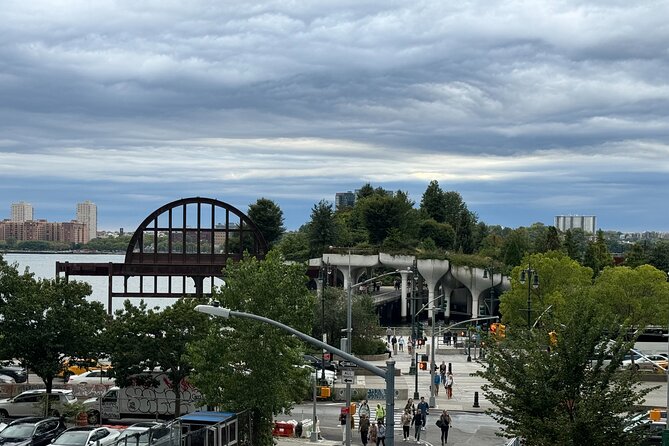
High Line views turn a simple walk into art. I like how this Chelsea architecture tour ties the High Line to what came next, guiding you from the elevated park into the design swagger of Hudson Yards.
Two things I really like: the guide makes the buildings feel connected, not random photo stops, and the personal headsets keep the story clear as you move. One consideration: the experience is weather dependent, so if conditions are rough, you may be asked to switch dates or get a refund.
Key Highlights You Should Know Before You Go
- Small group size (up to 15) means you can actually hear, ask, and follow the route.
- Individual headsets help you catch architecture details without craning or guessing.
- High Line time first (about 1 hour) gives you enough pace to enjoy the park and the explanations.
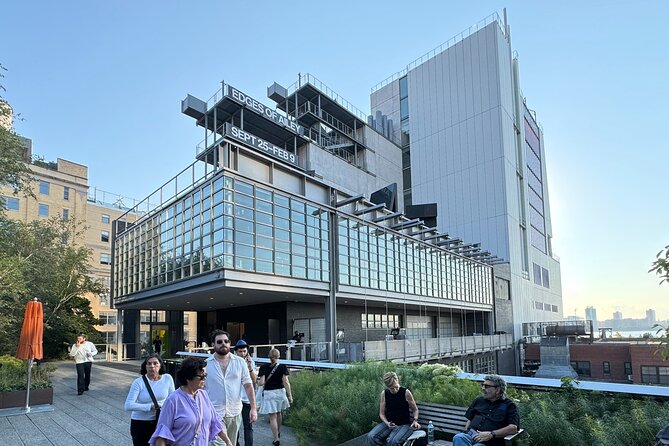
- Quick hits around Whitney, The Shed, The Vessel, and more keep you moving without feeling rushed.
- Hudson Yards landmarks are included, so you leave with a mental map, not just selfies.
- Free admission for the listed stops makes the math simpler when you plan your day.
Starting at the Whitney Museum, Then Letting Chelsea Set the Tone
The tour starts at the Whitney Museum of American Art, 99 Gansevoort St, with a 2:00 pm start time. That matters because Whitney is a natural launch point for Chelsea, where warehouses, galleries, and big-ticket design projects sit side by side.
I like that the end point is at 20 Hudson Yards. You finish near the action, so it is easy to roll right into dinner plans, a subway transfer, or a wander through the new public spaces around the complex.
Chelsea can feel like a collage if you do it on your own. With a guide, you get the order, the “why,” and the architectural through-line that connects the High Line to what replaced the old industrial edges.
You can also read our reviews of more walking tours in New York City


Entering the High Line Like It Has a Backstory
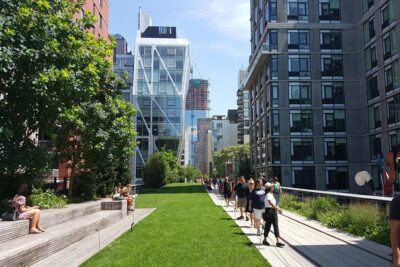
The High Line is the main event on this walk, with about an hour set aside there. It is not just a scenic stroll. You will walk through an urban park that shows how design can be both practical and poetic, especially when elevated greenspace becomes a public room.
One of the most praised parts of this tour is the way the guide explains the High Line’s history and how funding worked through air rights. That is the kind of detail that changes how you see the place. Instead of thinking, Nice park, you start thinking, How did they make this happen, physically and financially, in a dense city?
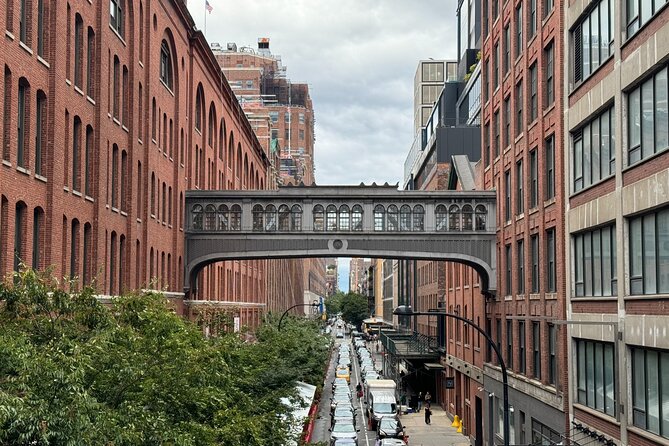
The High Line also gives you perspective. From up high, you can compare streets below, watch how buildings frame views, and notice how landscape design interacts with architecture. If you are the type of person who likes to spot materials, sightlines, and structure, you will have a field day here.
What to watch for during that first hour
Keep an eye out for transitions. The High Line has moments where the scenery opens up and the buildings around you suddenly look planned, not accidental. Use the headset story as your checklist, not a script, and you will get more out of it.
If you are short on stamina, this is still a smart choice. You get a concentrated dose of the park first, instead of trekking across half the city before anything interesting happens.
Chelsea Art Galleries and Design Blink-and-You-Miss-It Stops
After the High Line, the tour moves into short, focused stops around some of Chelsea’s best-known cultural and design-adjacent landmarks. The pace is quick here, usually just a few minutes each, so treat these as orientation points.
The Whitney Museum stop is brief, but it helps anchor the neighborhood context. It is a reminder that Chelsea’s evolution is not only about buildings and streets. It is also about galleries, museums, and the kind of visitors those institutions attract.
Then you get a look at the Standard, High Line. Even if you do not plan to stay there, it is useful to see how hospitality is packaged in a place defined by design and curated public space. You start noticing how the neighborhood sells itself visually.
A practical tip for these quick stops
Because each stop is short, you need to be mentally ready. Try not to drift toward photos immediately. Listen first, then take pictures with the explanation in mind. It is the fastest way to turn a photo stop into a real learning stop.






Little Island and the Hudson River Edge: Where the Views Matter
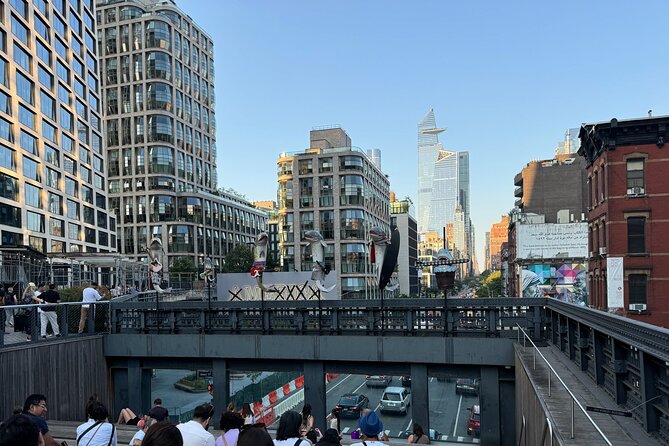
One part of the route points you toward Little Island Park in the Hudson River area. This is valuable because it reinforces a theme from the High Line. New public space in NYC is often built to change how people use space at street level, and also how they experience the city from unusual angles.
Even if you only get a brief look, you will come away with a better sense of the shoreline story. NYC keeps reshaping how parks relate to water, and those design choices ripple into neighborhood energy.
If you love skyline views, this section is your cue to slow down for a minute. Use the headset while you listen, then take a breath and watch where the river frames the buildings. That pause is usually the difference between rushing through architecture and actually seeing it.
The Jean Nouvel and Zaha Hadid Stops: Modern Icons in the City Grid
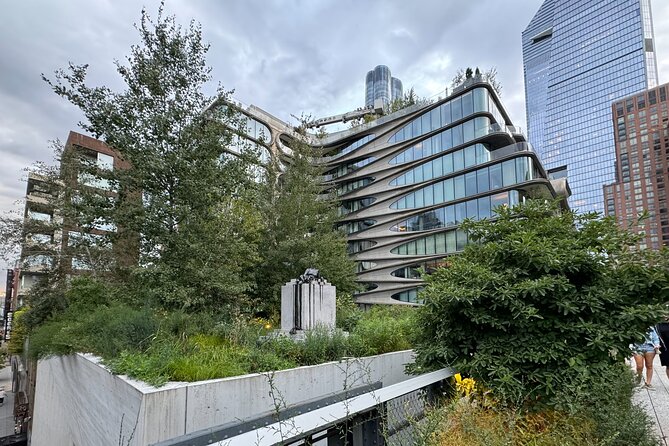
The route includes stops for two heavyweight names in contemporary architecture: 100 11th Avenue by Jean Nouvel and 520 West 28th Street by Zaha Hadid Architects. These are quick, but they act like markers along the bigger story of the area’s growth.
Why include buildings like this on a walking architecture tour? Because they are visual shorthand for design ambition. You can talk about urban renewal all day, but at some point you have to look at the work itself. These stops let you do that without planning a separate detour.
A useful way to think about it: when a tour connects the High Line and Hudson Yards, it is not only about two neighborhoods. It is about how design ideas travel. You see a shift from industrial space to public space, and then to signature skyline architecture with its own identity.
The Shed and The Vessel: Public Space that Plays With Shape
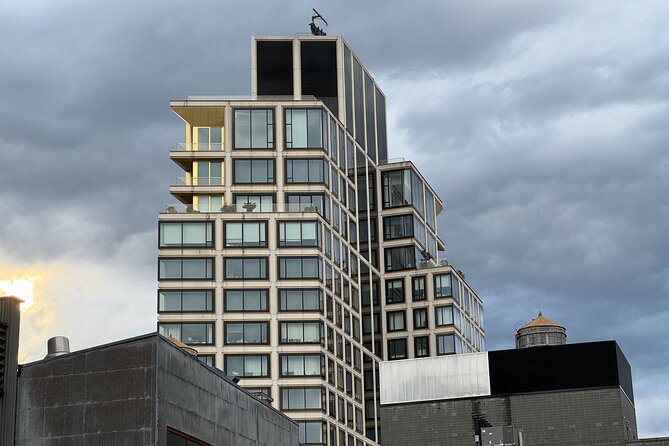
Two of the most memorable architectural “wow” moments on the tour are The Shed and The Vessel. The route gives you brief viewing time, but those shapes are the kind you remember even after you walk away.
The Shed stop is about presence. You can read a building like this as a signal that the area is meant for more than sightseeing. It points toward programmed culture and flexible use of space.
Then you hit The Vessel, and it is hard to treat it like just another building. It is designed to pull you into the experience of moving through space. Even if you do not go inside during the tour window, the exterior concept works as a lesson in how architecture can invite participation.
Timing note
Because the tour compresses a lot of landmarks into a two-hour total, these stops are “look and learn,” not “fully explore.” If you want to spend a long time inside one of these places, plan for a follow-up visit after the tour ends near Hudson Yards.
Hudson Yards and 15 Hudson Yards: From Big Plan to Street-Level Reality
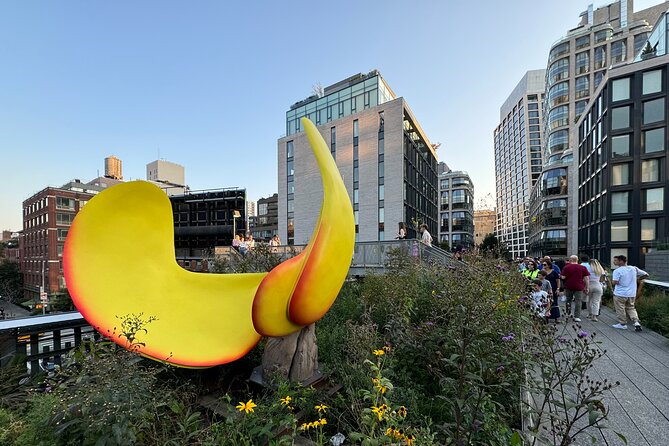
At about 10 minutes, the Hudson Yards stop is one of the longer segments after the High Line. This is where the tour helps you build a mental map. You see the big project as a whole, not just a set of famous facades.
Then you get 15 Hudson Yards by Diller Scoffidio + Renfro. This is the kind of building that makes you realize the scale of what Hudson Yards is. It is designed to be seen, photographed, and experienced as you move through the public realm.
This section is worth extra attention if you like urban planning and renewal stories. Hudson Yards is not only about architecture. It is about how a district is constructed around pedestrian movement, transit access, and public space.
The Spiral by BIG: How to Read a Building From a Few Minutes
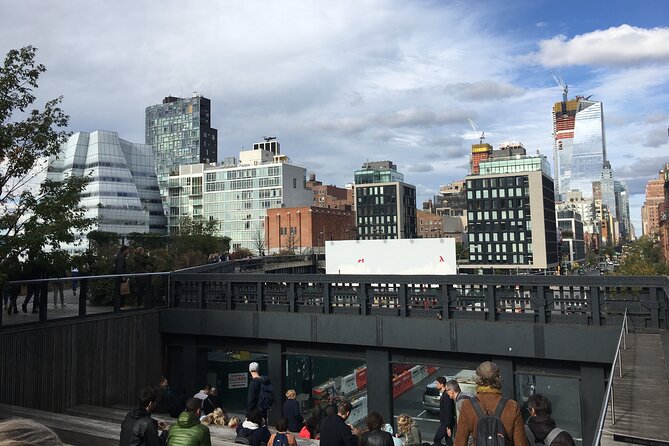
The last major architecture stop is The Spiral by BIG (Bjarke Ingels Group) from 2021. Even with only a few minutes on it, the tour gives you the right kind of question to ask. How does this form change the way people move and interact with the structure?
The Spiral is one of those designs where you can look at it two ways: as a sculptural object and as a system for movement. That dual reading makes it a good final stop because it ties design back to human experience, which is what makes architecture tours worthwhile in the first place.
Price and Value: What $49 Gets You in NYC
The price is $49 per person for approximately 2 hours. In NYC, that is not nothing, but it is also not just you paying to walk between landmarks. You are paying for the guide, the structure of the route, and the gear that keeps the experience usable.
The included professional individual headsets are a big part of the value. Without them, you end up guessing what the guide is saying, especially near busy galleries and busier streets. With them, you can keep pace and still catch the architecture details.
Also, several stops are listed with admission ticket free. That helps you avoid surprise ticket costs while still seeing major sights tied to the architecture story.
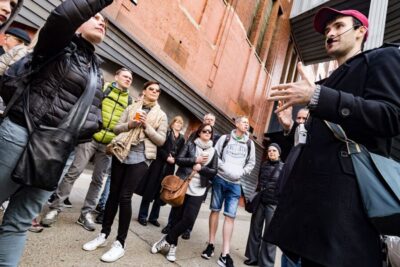
One more value point: the tour is capped at a maximum of 15 travelers. That keeps it personal enough that the guide can move you through the stops with the right attention, rather than shouting to a large crowd.
Logistics That Matter: Mobile Ticket, Transit Area, and Weather
You receive a mobile ticket, which is handy in a city where paper tickets can get lost fast. The start point is near public transportation, so you can plug it into an afternoon itinerary without too much stress.
One operational reality: the experience requires good weather. That means you should check conditions on the day and wear shoes that handle NYC sidewalks comfortably. You will be walking.
Service animals are allowed, and most travelers can participate. If you have any mobility limits, you should still consider the total walking time and the fact that several stops are short, meaning you will need to stay moving.
Who This Tour Is Best For (and Who Might Want Another Plan)
This is a strong fit if you care about architecture, design, and city renewal, and you want a guided way to connect iconic landmarks. It is also ideal if you have limited time and want a tight route that does not require planning separate tickets or chasing directions across neighborhoods.
You might want a different plan if you prefer slow museum pacing. This tour is about outdoor seeing and quick architectural orientation, not deep interior exploration.
If you like a guide who can connect the big story to the specific buildings, you are in the right place. One of the best things that comes through from the tour experiences is that the guide can talk history and design at a detailed level, including how High Line funding worked and how each building fits into the area’s development.
Should You Book This Chelsea and High Line Architecture Tour?
Yes, if you want a guided architecture story that you can actually follow in two hours. The headsets, the small group cap, and the focus on design connections make the tour feel more like a curated walkthrough than a rushed sightseeing shuffle.
Book it especially if you plan to spend time in Chelsea and Hudson Yards later. The walk ends right near Hudson Yards, so you get both the explanations and the payoff of being in the area when it is time to explore on your own.
More Walking Tours in New York City


More Tours in New York City




More Tour Reviews in New York City
Not for you? Here's more nearby things to do in New York City we have reviewed







More High Line Tours to consider.
 ★ 5.0High Line and Chelsea Small Group TourTickets from $391,238 traveller reviews
 ★ 5.0Chelsea Market and High Line Guided Food TourTickets from $88827 traveller reviews
 ★ 5.0High Line Park and Greenwich Village Food TourTickets from $159398 traveller reviews
 ★ 4.9High Line, Chelsea, & Meatpacking District Walking TourTickets from $39195 traveller reviews
 ★ 5.0Foods of NY Tours Chelsea Market Food Tour & High Line ParkTickets from $99141 traveller reviews
 ★ 4.2Hudson Yards & High Line Tour with Optional Edge TicketTickets from $49125 traveller reviews
 ★ 4.8Chelsea Market, Meatpacking, High Line Food TourTickets from $88123 traveller reviews
 ★ 5.0Semi-Private Meatpacking District, Chelsea Market, and High Line Walking TourTickets from $3988 traveller reviews
More useful New York routes