
Review · 9/11 MEMORIAL TOURS
Lower Manhattan & 9/11 Memorial Walking Tour Semi-Private 12ppl
Lower Manhattan is a lot of city in 2.5 hours. This semi-private walking tour pairs classic Wall Street sights with human-scale storytelling, from Battery Park to the National 9/11 Memorial. You’ll cover major landmarks with a professional guide, plus a few recovery-and-rebuild moments that give the skyline a deeper meaning.
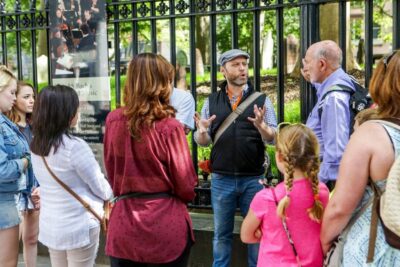
I like two things most: the small group size keeps the pace friendly, and the guides focus on what each building and statue meant at the time, not just what it looks like now. You’ll also get thoughtful context at the 9/11 sites, with guides described as historians and strong communicators, including names like Kevin, Jonathan, Rob, Matt, Jeff, Katherine, and Ashley. One consideration: several highlights are quick exterior views, and paid entry stops like the National 9/11 Memorial & Museum are not included in the tour price, so you should plan to add that if you want to go inside.
Key highlights you will actually feel on this walk
- Semi-private pace (max 12) that makes questions and detours for photos realistic
- Start at Battery Park Underpass and move in a logical line toward Wall Street and Ground Zero
- Most stops are free to view, so your money goes to the guide, not constant ticketing
- Real storytelling at major civic sites like Federal Hall and Trinity Churchyard
- Wall Street icons with context (Charging Bull, Fearless Girl, NYSE exterior)
- 9/11 Memorial focus at the end when the meaning lands hardest
Lower Manhattan in 2.5 hours: the semi-private format that keeps you from feeling rushed
This is a classic Lower Manhattan loop that works because it is built for walking, not for hopping between distant points. The tour lasts about 2 hours 30 minutes, and the semi-private size means you are rarely stuck behind a crowd. That matters here, because the streets can get chaotic fast, especially around Wall Street and the World Trade Center area.
Another practical win is the stop style. You are not doing one long museum session. Instead, you get short, guided landmark moments that help you connect what you see to what happened there. With a guide who is praised for clear explanations and even tailoring, you can ask follow-up questions without derailing the whole group.
The guide work is the core value. In feedback tied to this experience, names like Jonathan (described as a historian), Rob (architecture and cultural context), Jeff (strong 9/11 insights), and Katherine (engaging and adaptable) show up. The point for you is simple: you will get more than “this is a landmark.” You will get why it matters, and what to notice next time you see it on your own.
You can also read our reviews of more walking tours in New York City


Battery Park Underpass and Castle Clinton: where the story starts with arrivals
Your tour begins at Battery Park Underpass at 2:00 pm, so you are starting near the harbor side of Lower Manhattan. That gives the walk a good rhythm: you start with the “coming in” story, then slide toward the “power and loss” story, ending at the memorial.
The first stop is Castle Clinton National Monument, a fort that helped shape the city as the United States grew. It was built from 1808 to 1811, and it served as the first U.S. immigration station where more than 8 million people arrived between 1855 and 1890. That immigrant scale is the key idea. When you stand in this area, the skyline feels less like a backdrop and more like a destination people risked everything to reach.
What I like about starting here is how it sets your eyes for later stops. You start noticing who controlled space, who moved through it, and how New York kept changing its role. If you are the type who loves architecture and city development, Castle Clinton gives you an anchor point before you hit Wall Street.
New York Harbor views and SeaGlass Carousel: recovery you can point to
From Castle Clinton, you get a look at New York Harbor, positioned where the Hudson River meets the sea. Even if you are not a geography person, it helps to understand the setting: this is a port city. Seeing the harbor early makes later financial history feel more grounded, because trade and immigration fed the city long before the stock exchange got its global spotlight.
Next comes the SeaGlass Carousel, fish-themed and built around the idea of recovery in the area after Hurricane Sandy in 2012. You get a chance to appreciate the design, and the timing is important. The description here matters because it explains that the work took nearly a decade. That puts “recovery” on the same level as construction, not as a background detail.
This stop is also a breather. After the big-history fort and the open harbor view, a colorful public art piece gives your feet and brain a reset. For families, it is a moment of wonder without sacrificing meaning. For adults, it is a reminder that Lower Manhattan is still in progress, not frozen in 1900 or 2001.
Bowling Green to Trinity Church: where civic power meets personal graves
You will reach Bowling Green, which is New York’s oldest public park. It is small, but it holds a lot of lore, including the idea that it served as council ground for Native American tribes and that it was the site of the sale of Manhattan in 1626. A tour guide can easily turn this into a trivia dump. A good guide turns it into a lens, and that is the point here.
From there, you hit Charging Bull. This bronze sculpture was created by artist Arturo Di Modica, and the story around it is part of why it became famous. You’ll hear how it was put in place outside the New York Stock Exchange and became an instant hit once installed at Bowling Green. When you see it on your walk, try noticing what people do instinctively. They pose, they grin, they treat it like a mascot. The guide will help you connect that behavior back to Wall Street culture.
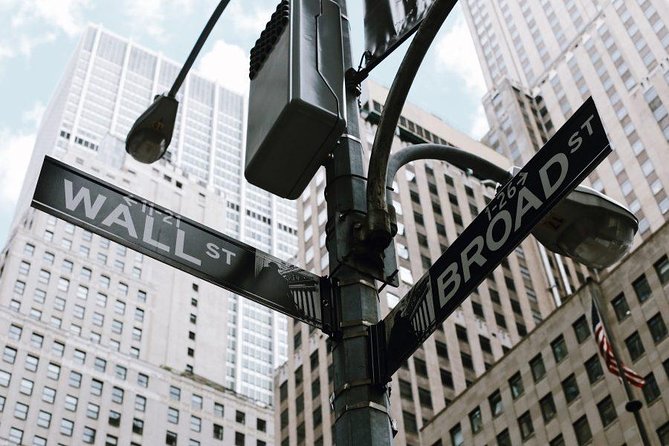
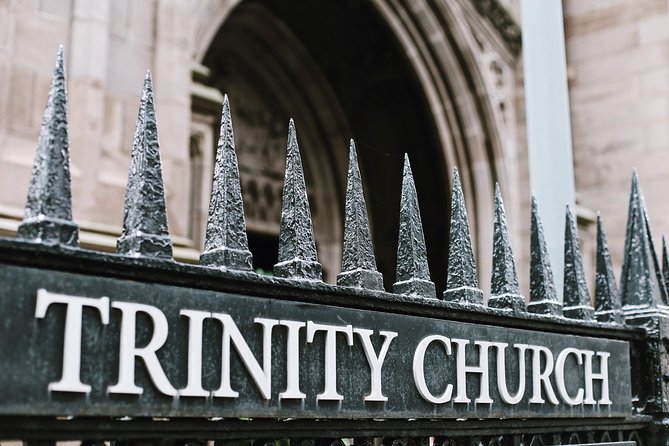
Then it is Trinity Church at the intersection of Wall Street and Broadway, with origins dating to 1696. The standout detail you should look for is the human side inside the churchyard: the graves of Mr. and Ms. Hamilton and the memorial dedicated near their resting place. This is where Lower Manhattan stops being just finance and starts being about real lives and real legacies.
If you care about “what kind of place is this,” Trinity Churchyard is the answer. The city’s power structures live right next to places built for worship, mourning, and memory.
Wall Street, the NYSE exterior, and Fearless Girl: icons with meaning, not just photos
Walking along Wall Street gives you the street’s scale in your legs. It is an eight-block stretch that still drives global attention, and on foot you feel how tightly packed the landmarks are. This matters because the street is basically an outdoor exhibit for American finance culture.
At the New York Stock Exchange, you’ll see the exterior of the building. It is the world’s largest stock exchange, founded in 1792 and recognized as a National Historic Landmark. Since admission is not included here, your goal is not a formal visit. Your goal is to understand why the architecture and location carry so much weight.
Right in front is Fearless Girl, the bronze statue by Kristen Visbal. The description here is simple and powerful: it depicts a four-foot tour girl, and many people see it as a symbol of female empowerment. In practice, this stop works because it breaks the Wall Street vibe. You get a different kind of message than money and power, even while you remain in the same small geographic area.
One thing I would do as you walk: slow down for the statue and let the guide connect it to the surrounding symbolism. If your guide is strong, this will feel like a conversation about culture, not just a photo spot.
You can also read our reviews of more private tours in New York City





House of Morgan and Federal Hall: classical stone, changing eras
As you continue down Wall Street, you will pass the House of Morgan, an office building tied to J.P. Morgan & Co. Built in 1913, it is known for classical architecture and became a New York City landmark in 1965. Even from the sidewalk, it signals a different kind of authority than the NYSE does. The style says permanence, the location says influence.
Next up is Federal Hall at 26 Wall Street. The details matter here: the original Greek Revival structure was completed in 1703, but the current building dates to 1842, and it’s described as one of the best examples of neoclassical architecture in New York. If you like seeing how American ideals get built in stone, Federal Hall is one of those stops.
Why this leg is valuable for you is that it shows the city reinventing itself without starting over. You get early civic ambitions, then later architectural expressions of government and stability. And because these are quick stops with guidance, you learn what to notice without feeling like you are trapped reading a plaque.
St. Paul’s Chapel: a calm refuge right by the fire and the future
After Federal Hall, you move to St. Paul’s Chapel, part of the Parish of Trinity Church Wall Street. It began as a chapel-of-ease for people who did not want to walk a few blocks to Trinity. The story adds a skyline detail too: upon completion in 1766, it was the tallest building in New York City.
This is a stop where I think the right guide really shines. In particular, Ashley was praised for giving an in-depth description of St. Paul’s Chapel and also for explaining nearby modern transit architecture in the wider area. Even if you are not focused on every building, you will likely leave with a better sense of how the old and new sit next to each other here.
Practically, St. Paul’s Chapel is also a mental reset. After the Wall Street intensity, it gives you a quieter, reflective pocket. If your group likes history but not rigid museum pacing, this is the kind of stop you appreciate.
Zuccotti Park to One World Trade Center: the rebuild story you can walk through
Next is Zuccotti Park, formerly known as Liberty Plaza Park. The big fact is that it was heavily damaged in the 9/11 attacks, then recovered through subsequent efforts. Today it serves as a site for events commemorating the anniversary of the attack.
This is where your eyes will adjust. Instead of only seeing monuments, you start seeing how public spaces function after trauma. Parks here are not passive. They hold gatherings, remembrance, and civic life.
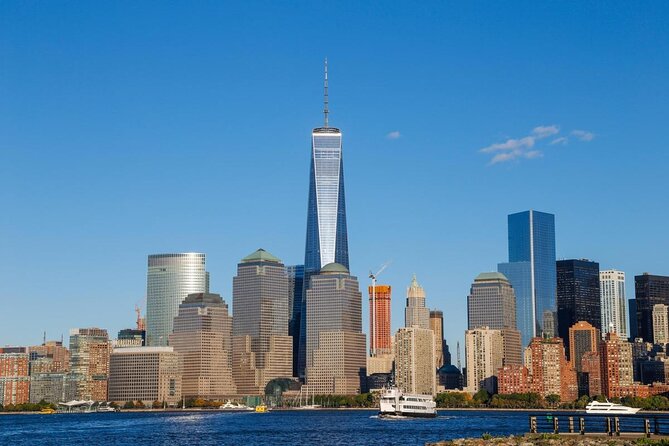
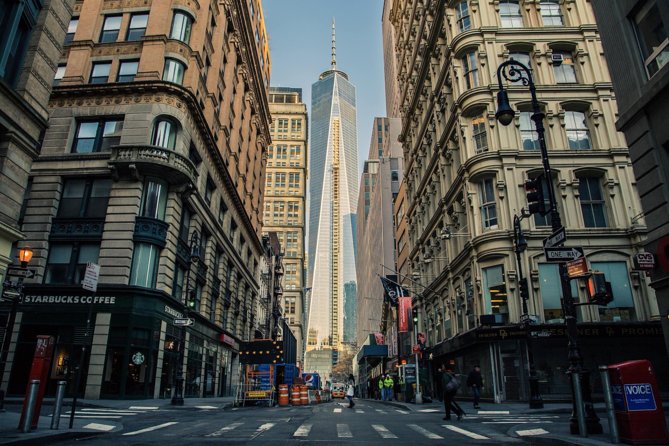
Then comes One World Trade Center, also known as the Freedom Tower, seen from the outside. It is the tallest building in New York and stands where the Twin Towers once towered. Since admission is not included at this stop, the value is the sightline and the guidance. You will get the connection between today’s silhouette and what stood there before.
A helpful way to approach this section is to notice your own reaction. Some people feel emotional right away, others need time. The tour structure helps because the grief-focused stop is saved for the end, so you do not get overwhelmed before you understand the context around the site.
The National 9/11 Memorial and Museum stop: respectful, and not about sightseeing
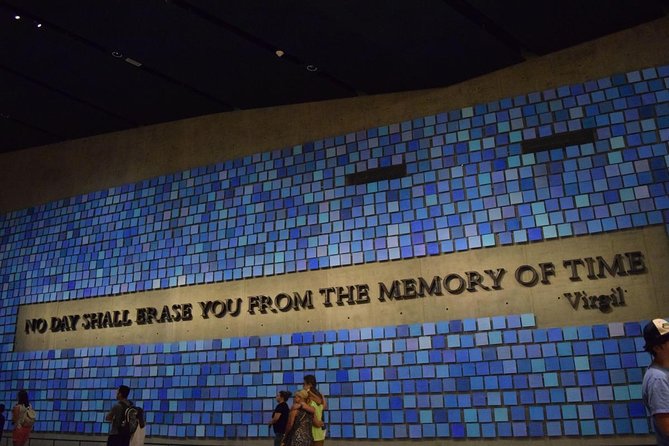
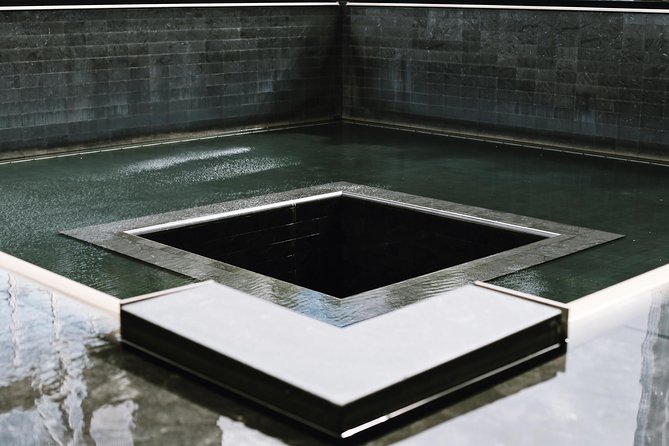
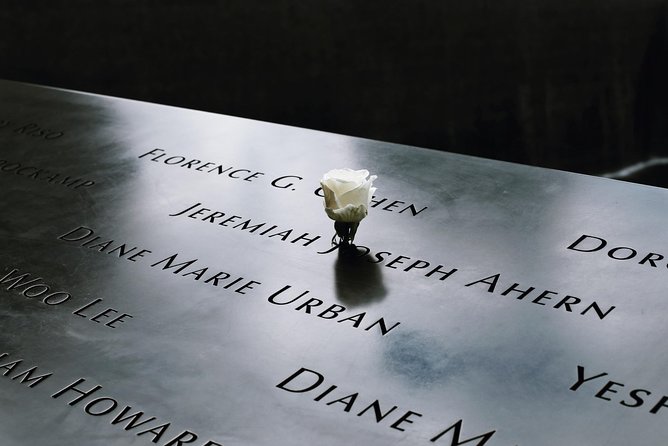
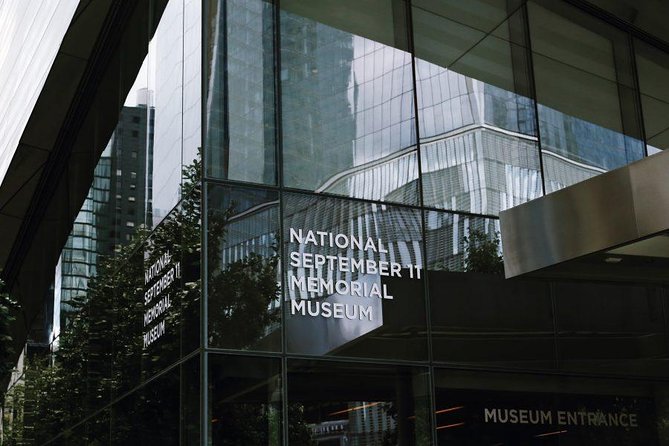
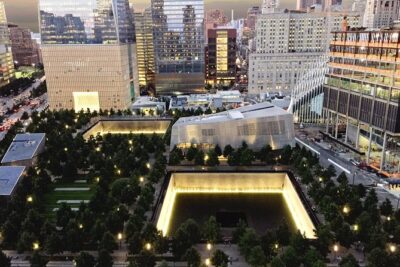
You end at the National 9/11 Memorial & Museum, which is the tribute of remembrance and honor for those killed in 9/11. The standout design feature you will want to look for is the twin reflecting pools. They include the largest manmade waterfalls in North America, and the bronze panels around the pools inscribe the names of every person who died in the attacks.
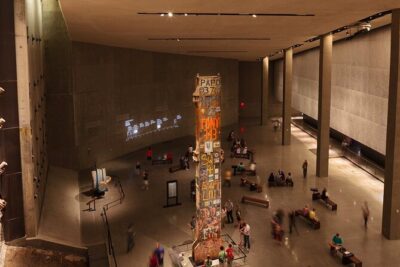
Admission is not included for the Memorial & Museum, so you should plan on purchasing tickets separately if you want to go inside. Even if you keep it to the outdoor memorial space, this stop changes how the whole walk feels. The earlier stops become less like “things to see” and more like a map of the world that existed right before disaster.
Guides are often praised specifically for how they handle the 9/11 portion, including Jeff for 9/11 insights and Katherine for making the Ground Zero part moving. That matters because this is not a typical “quick facts” zone. You want a guide who can keep it respectful, clear, and human.
One practical tip: bring patience for lines and ticket entry if you are going into the museum. The tour gives you the chance to be in the right place at the right time, but the memorial itself has its own pace.
Price, pacing, and logistics that affect your day (and value for money)
The price is $51.94 per person for about 2 hours 30 minutes with a professional guide. That is not a bargain style price, but it is fair considering what you get: a guided route across high-demand Lower Manhattan landmarks, a semi-private cap at 12 guests, and guided context at several sites that are easy to misunderstand if you just walk through them.
Here is the value breakdown in plain terms:
- Most stops you can see without paying extra for admission, including places like Castle Clinton, Bowling Green, Charging Bull, Trinity Church area, Federal Hall, St. Paul’s Chapel, Zuccotti Park, and the exterior looks at several famous buildings.
- Some higher-demand areas are not included in tour price, like entry related to the National 9/11 Memorial & Museum, and the NYSE is listed as not included (and other building entries are also not included).
So you should budget for add-ons if you want the full experience beyond exterior views. If you only want the guided walkthrough and the memorial outdoor space, you may spend less overall. If you want to do the museum too, you will want to plan your time and ticket costs.
The tour also runs rain or shine, so wear shoes you trust on sidewalks. You are walking in a dense, street-crossing area. Moderate physical fitness is enough, but if you are nursing sore knees or you hate long standing, you should think about how you handle city walking.
Who this Lower Manhattan and 9/11 tour suits best
This is a strong fit if you want three things in one afternoon:
- A guided Lower Manhattan orientation that connects architecture, politics, and finance.
- A Wall Street landmark walk that includes real meaning behind the famous icons.
- A respectful 9/11 Memorial stop that feels guided rather than rushed.
I would especially recommend it to first-time visitors who feel overwhelmed by Lower Manhattan on their own. You will get a clear line through the area, and your guide helps you connect the dots. It also works for repeat visitors who already know the big names but want better context, because the stops include civic details like Hamilton and the Hamilton-related memorial in Trinity Churchyard, plus Federal Hall’s neoclassical story.
If you are the type who hates crowds, the semi-private group size is your friend. If you are the type who wants long museum time, you may need to pair this with separate time before or after, because this tour keeps stops short.
Should you book this tour?
If you want a guided Lower Manhattan walk that gives you meaning fast, yes, I think you should book it. The combination of small group pacing, Wall Street landmark context, and a guided end at the National 9/11 Memorial & Museum is exactly the kind of structure that makes this area easier to understand and more moving to experience.
I would only hesitate if you know you want long stays at paid sites, or if you have zero flexibility for ticketed entry. In that case, you may want a different format that includes more time inside.
FAQ
How long is the Lower Manhattan & 9/11 Memorial Walking Tour?
The tour is listed as about 2 hours 30 minutes.
What is the maximum group size?
The tour is semi-private with a maximum of 12 travelers.
What time does the tour start?
The start time is 2:00 pm.
Where do I meet the tour?
The meeting point is Battery Park Underpass, New York, NY 10004.
Is the tour wheelchair accessible or does it require special mobility?
The tour notes that travelers should have a moderate physical fitness level, and it is a walking tour.
Is hotel pickup or drop-off included?
No. Hotel pickup and drop-off are not included.
Is gratuity included in the price?
No. Gratuities are not included and are optional.
Are tickets included for the National 9/11 Memorial & Museum?
No. Admission to the National 9/11 Memorial & Museum is not included.
Are tickets included for the New York Stock Exchange?
No. Admission for the New York Stock Exchange is not included.
Can I cancel for a full refund?
Yes. You can cancel up to 24 hours in advance of the experience’s start time for a full refund.
More Walking Tours in New York City


More Tours in New York City





More Tour Reviews in New York City




Not for you? Here's more nearby things to do in New York City we have reviewed







More 9/11 Memorial Tours to consider.
 ★ 5.09/11 Memorial, Ground Zero Tour with Optional 9/11 Museum TicketTickets from $396,381 traveller reviews
 ★ 4.59/11 Memorial Museum Admission TicketTickets from $366,376 traveller reviews
 ★ 5.0All-Access 9/11: Ground Zero Tour, Memorial and Museum, One World ObservatoryTickets from $1094,886 traveller reviews
 ★ 4.5NYC City Tour: Statue of Liberty, 9/11 Memorial, Wall StreetTickets from $392,059 traveller reviews
 ★ 4.7Ground Zero 9/11 Memorial Tour & Optional 9/11 Museum TicketTickets from $391,584 traveller reviews
 ★ 4.79/11 Ground Zero Tour with All Access OptionTickets from $391,272 traveller reviews
 ★ 4.89/11 Memorial Tour and Optional Observatory TicketTickets from $39841 traveller reviews
 ★ 5.0New York 9/11 Memorial Tour with Optional One World ObservatoryTickets from $39637 traveller reviews
More useful New York routes