
Review · CHINATOWN & LITTLE ITALY TOURS
Mafia Gangster History Walking Tour in Little Italy, New York
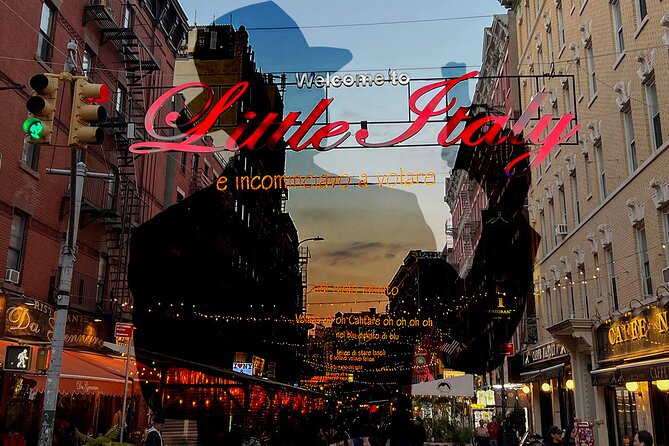
Mafia stories, right on your walking route. This Mafia Gangster History Walking Tour turns Little Italy into a real-world crime map, with stops tied to the liquor wars of Prohibition and the men who ran the show, including Lucky Luciano. You also get plenty of movie-friendly waypoints connected to The Godfather and Gangs of New York, so the streets feel familiar even if you do not know your mob history.
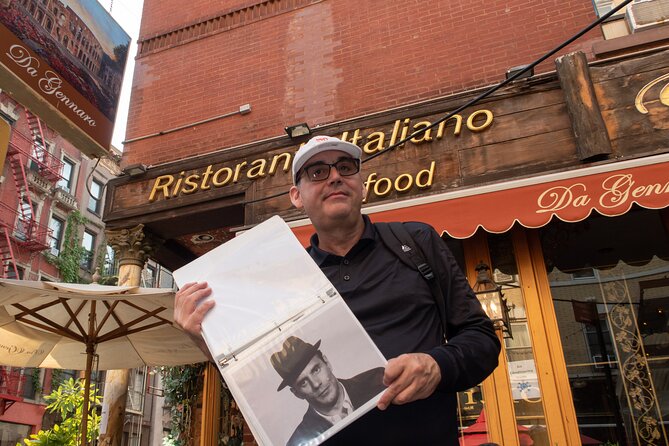
Two things I especially like are the small group size and the photo-heavy storytelling. A maximum of 10 travelers keeps it easy to hear, and the guide style (Tom is one example from past groups) uses a binder of photos and newspaper clippings that makes the past feel specific, not vague. One thing to consider is that this is a walking tour, so if you dislike moving from block to block, you may find some sections feel tighter than you expected.
Key highlights worth your time
- Little Italy focus: early Black Hand gangs, the shift into the Mafia, and Lucky Luciano’s Commission of the Five Families
- Movie fans get a bonus: locations tied to The Godfather and Gangs of New York
- John Gotti spotlight on Mulberry Street: see where Dapper Don held court
- Crime-fighter history included: Lt. Petrosino and his early push against the Black Hand
- Anti-corruption thread: a connection to Frank Serpico at the Police Building
- A dramatic food stop moment: Umbertos Clam House and the story of Crazy Joey Gallo
Little Italy’s mob power base and the Black Hand to Commission story
The tour starts in Little Italy, and that first stretch is the big one, with about 40 minutes spent in the neighborhood. This is where you learn how early Black Hand gangs operated and how the Mafia culture grew out of that Prohibition era competition. The guide keeps the storyline moving, so you are not just collecting names, you are understanding how one era feeds the next.
A helpful way to think about this part is as a shift from street-level pressure to organized power. The Black Hand is often discussed like a scary label, but here you connect the dots to why Prohibition made organized crime both profitable and visible. The liquor trade was the fuel, and control of distribution and protection became the business model. Once you see that logic, the rest of the tour makes more sense.
You also get the Lucky Luciano angle, including his role in creating the Commission of the Five Families. Even if you do not know what that commission did day-to-day, you will understand the point: it was a method for keeping rivalries from turning into constant chaos. That theme of structure versus chaos is what makes the tour more than a list of crimes. It is an explanation of how businesses form, even when the product is illegal.
There is a practical benefit here for movie watchers. Many mob stories on screen feel like they happen in a vacuum, but this neighborhood walk grounds the drama in real blocks and real places where figures could gather and negotiate. When the guide points out places that also show up in The Godfather and Gangs of New York in spirit, the connection feels earned, not forced.
You can also read our reviews of more walking tours in New York City



Mulberry Street and John Gotti’s court on a familiar block
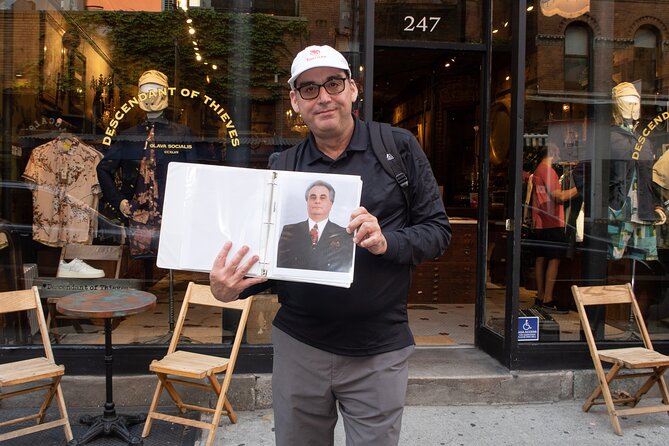
Next you head to Mulberry Street, where the tour tightens into a shorter, punchier stop, around 15 minutes. This is the section that many people remember most because it anchors the history to one name: John Gotti, known as Dapper Don. You see the kind of streets where a big personality could be hard to miss.
Here is the key value for you: the guide uses the Gotti story to show how the Mafia brand became public. In other words, this is not just about what happened behind closed doors. It is also about how reputations, intimidation, and visibility worked on the street.
If you are a movie fan, you will likely enjoy how the guide connects pop culture imagery to the practical reality of the neighborhood. The tour does not treat the streets like a set. It treats them like a workplace, and that framing helps you picture how people moved, met, and controlled the flow of deals.
The only trade-off is time. Fifteen minutes sounds short because it is short, so if you want a slow, academic treatment of John Gotti and the late era, you may want to come ready with curiosity or plan to follow up afterward on your own.
Lt. Petrosino Square, and why early crime fighting mattered
From there you walk to Lt. Petrosino Square, again for about 15 minutes. This stop gives you a different lens than the usual mob tour. Instead of focusing only on the criminals, you meet Lieutenant Petrosino, described here as an early crime fighter against the Black Hand gangs.
This is a smart balance. Mafia tours can drift into pure mythology, where the only heroes are criminals with a flair for drama. Petrosino gives you a reminder that law enforcement responses were part of the same story, and not an afterthought. You get to see how the situation created urgency and attention, and how that pressure shaped what happened next.
For you, this portion can also be a reality check. It is easy to watch gangster films and assume the world just tolerated organized crime. This stop nudges you toward a more grounded view: the system was under strain, people were fighting back, and organized groups kept adapting.
If you are traveling with older kids, this is also one of the more accessible stops. It is not only violence for shock value. It is the logic of a cat-and-mouse fight, right in the middle of the city.
The Police Building, Frank Serpico, and the corruption angle
Another 15 minutes takes you to the Police Building. Here the tour links to Frank Serpico, known for fighting corruption. This is an important twist in the pacing. After you have walked through criminal organization and street power, you shift to what happens when the badge itself becomes a battleground.
I like this stop because it turns the neighborhood into a living debate. You are forced to hold two ideas at once. On one hand, organized crime was building influence. On the other hand, integrity failures and internal corruption could weaken the entire response. The tour does not ask you to pick one villain. It shows the pressure points across the system.
You will also appreciate the practical storytelling approach. The guide uses the setting to make the concept feel real, not theoretical. In a city with so much history stacked on top of itself, that kind of location-based explanation is how you avoid the usual sightseeing fog.
Umbertos Clam House and the Crazy Joey Gallo endpoint
The tour ends its core set of stories with Umbertos Clam House, about 15 minutes on the scene. This is where the guide brings up Crazy Joey Gallo and the fact that the story connects to a bloody end. Even if you know the name from pop culture, you will get more value by hearing it tied to place and time rather than as a random trivia nugget.
This stop works on two levels for you. First, it is a clear narrative button. The tour has built an arc from early gangs to organized structure, then it hits a turning point that shows how brutal the conflicts could get. Second, it sits inside an actual restaurant setting. That contrast makes the history feel close. You are standing where people eat, while learning what happened when the area had a very different kind of energy.
One small consideration: the tour time here is short. If you want to linger for a meal or want extra context beyond what fits in the walking format, plan to extend your time in the neighborhood afterward.
You can also read our reviews of more historical tours in New York City






How the movie connections help you remember the real story
The tour clearly aims at two audiences: people who want Mafia history, and people who want the street-level context behind Mafia movies. When you see connections to The Godfather and Gangs of New York, you get an advantage. Films already taught you a lot of the visual language, and the guide uses that familiarity as a bridge.
But the best part is not the fan service. It is what the guide uses the movies for. The stories become shorthand for bigger patterns: power struggles, negotiation, reputation, and violence. Once you learn the pattern, you stop thinking only about one character and start understanding the bigger mechanics.
And if you are bringing family, this movie bridge matters. Older children often enjoy the fact that the places are not just spooky legends. They are streets you can recognize, which makes the walking tour feel more like a game than a lecture.
Why the guide’s binder style makes this feel well researched
A huge portion of the tour’s value is the guide approach, and the clearest example from past experiences is Tom, who guided groups with a serious binder of supporting materials. That binder includes photos and newspaper clippings, and it changes the tone of the tour.
Here is why it matters for you: when a guide only tells stories, history can feel like theater. When a guide shows images and period reporting, the story shifts into something you can visually verify and emotionally anchor. It also helps keep attention for a full 2 hours, even when the topic is heavy.
The other big praise point tied to the guide is accuracy and pacing. The guide appears to know the exact spots where events played out, and keeps the tour moving on time. That is not a small thing. A good walking tour depends on you arriving at the right corner at the right moment, with the right context in your head.
Some groups also received helpful restaurant and food recommendations. That is extra value because it helps you turn a history afternoon into a better overall Little Italy plan.
Walking time, group size, and who should book
The experience is about 2 hours long, with a structured rhythm that includes a longer first segment and shorter, story-focused stops after that. The tour is designed to be straightforward to follow, and it works for people who want a focused afternoon rather than an all-day commitment.
Group size matters here. With a maximum of 10 travelers, you are not stuck in a loud scrum. You can hear, ask questions, and actually take in the street details the guide points out. It also tends to feel safer and more comfortable, especially if you are traveling with teens who want attention but do not want a classroom vibe.
The tour is offered in English, and service animals are allowed. It is also described as accessible for most travelers, and it runs near public transportation, so you are not locked into one complicated arrival plan.
Best fit:
- You like crime history but want it tied to real places
- You are a movie fan and want the street map behind the screen
- You are traveling with families with older children who enjoy stories with clear characters and timelines
- You want an easy way to spend time in Little Italy without spending your whole day there
Price and logistics: $40 worth it when the story is the product
At $40 per person, this is not a bargain tour, but it also is not a luxury price. The value comes from what you are paying for: a guided explanation tied to specific locations, plus the added impact of photos and newspaper material, plus a small group experience.
Also, there is no paid museum admission built in. The tour describes admission tickets as free at the stops, which means you are not paying extra just to stand in front of buildings. You are paying for interpretation, context, and keeping the route coherent.
You meet at 44 Spring St, New York, NY 10012, and the tour ends back around that meeting area. That loop format is convenient if you want to grab a snack after, or if you are heading to another part of the city with less hassle.
One last practical note: the experience requires good weather. If it is rainy, cloudy, or miserable out, you may find the walking less pleasant. In that case, having a backup plan for the rest of your afternoon is smart.
Should you book this Mafia Gangster History walking tour?
I think you should book it if you want a place-based Mafia story instead of generic “gangster facts.” The combination of Little Italy focus, clear character-driven storytelling, and the guide’s binder materials is exactly what makes this kind of tour worth doing in a city like New York, where you can otherwise walk past history without knowing what you are seeing.
Skip it if you want only scholarly history with heavy sourcing and no pop culture connections. This tour clearly leans into entertainment value, including movie tie-ins, and that is part of its appeal. It is also a walking tour, so if you have mobility limits or dislike moving every 10 to 15 minutes, you may not enjoy it as much.
If you are deciding between doing this now or later, my advice is simple: book it while you are already planning to be in Little Italy. The streets are the show, and the story works best when you can look around and connect the scene to what you just learned.
FAQ
How long is the Mafia Gangster History Walking Tour in Little Italy?
The tour lasts about 2 hours.
What does the tour cost?
It costs $40.00 per person.
What language is the tour offered in?
The tour is offered in English.
How many people are in a group?
The maximum group size is 10 travelers.
Where do I meet for the tour?
The meeting point is 44 Spring St, New York, NY 10012, USA. The tour ends back at the meeting point.
Do I get a mobile ticket?
Yes, the tour includes a mobile ticket.
Is service available for travelers with service animals?
Yes, service animals are allowed.
Is free cancellation available?
Yes, you can cancel for a full refund up to 24 hours in advance. The experience requires good weather, and if it is canceled due to poor weather, you will be offered a different date or a full refund.
More Walking Tours in New York City


More Tours in New York City






More Tour Reviews in New York City



Not for you? Here's more nearby things to do in New York City we have reviewed










More Chinatown & Little Italy Tours to consider.
 ★ 5.0SoHo, Little Italy, and Chinatown Walking Tour in New YorkTickets from $393,153 traveller reviews
 ★ 5.0Chinatown & Little Italy Food Tour with 7 Flavorful TastingsTickets from $992,733 traveller reviews
 ★ 5.0Original NYC Guided Food Tour of Chinatown and Little ItalyTickets from $1302,194 traveller reviews
NYC Food Tour: Chinatown and Little ItalyTickets from $991,090 traveller reviews
★ 5.0Original NYC Guided Food Tour of Chinatown and Little ItalyTickets from $1302,194 traveller reviews
NYC Food Tour: Chinatown and Little ItalyTickets from $991,090 traveller reviews
 ★ 4.7Chinatown and Little Italy Food TourTickets from $80703 traveller reviews
 ★ 4.7SoHo, Little Italy, and Chinatown Guided TourTickets from $30614 traveller reviews
 ★ 4.6SoHo, Little Italy, and Chinatown 2-Hour Guided WalkTickets from $39566 traveller reviews
 ★ 5.0SoHo, Little Italy, and Chinatown NYC Guided Walking TourTickets from $36443 traveller reviews
More useful New York routes