
Review · NEW YORK CITY TOURS
New York City Fortune Tour 1-Day Sightseeing Adventure
One day, and Wall Street feels personal. This 6.5-hour Fortune Tour zips you from Lower Manhattan to Midtown with guided stops that connect money, architecture, and ambition. You get a real sense of how New York went from colonial port to global finance hub, fast and on a clear route.
I like the way the itinerary turns buildings into lessons. You walk past power and learn the “why” behind each landmark, from Broadway’s Canyon of Heroes to old-school banks tied to the country’s financial system.
My main caution is cost and communication. The base tour price is $106, but optional add-ons can add up, and a few past customers reported confusion when optional charges, pickup expectations, or English clarity did not match what they planned.
Key moments that make this tour worth your time
- Short, efficient stops that keep the pace moving across two major districts.
- Big-name finance landmarks paired with architecture and city planning context.
- Included admissions at select sites, not just stop-and-stare photos.
- Three pickup zones across Manhattan, Brooklyn, and Queens for easier starting points.
- Optional add-ons like One World Observatory, a harbor cruise, or RiseNY if you want more than street-level views.
A one-day money-history hit across Lower Manhattan and Midtown
This tour is built for people who want a focused New York day, not a random walk. You spend your time where New York’s business story is written in stone, steel, and street layout.
The route starts in Lower Manhattan, then works its way toward Midtown. By the end, you’re dropped near major markets and Times Square area, with a clearer picture of how old power became new power.
And the timing matters. With a tour that runs around 6 hours 30 minutes (and can clock closer to 7 with traffic), you’ll get momentum. You also get less time to wander off on your own, which is a feature here, not a bug.
You can also read our reviews of more city tours in New York City



What you actually get for $106: guidance, rides, and selective admissions
At $106 per person, you’re paying for three things: transportation, a guide who explains what you’re seeing, and a set structure that gets you from stop to stop. You’re also paying for comfort, since you ride in a professionally maintained vehicle that depends on group size.
The itinerary includes many stops where admission is marked free, plus several stops where an admission ticket is included. For you, that means the tour is not purely exterior sightseeing. You should plan on at least a few short entries or ticketed moments during the day.
Also note the fine print that can affect your budget. The tour includes optional admission fees only if you choose them: One World Observatory, Liberty Cruise, and RiseNY. If you skip options, you still continue the day with the group.
Finally, gratuities are expected. The tour recommends 15% to 20%, so figure that into your “true cost” if you like to tip well.
Lower Manhattan power stops: Broadway, early skyscrapers, and zoning lessons
Lower Manhattan is where this tour makes its case, and it does it with a strong opening. You begin at the part of Broadway tied to American ambition: Canyon of Heroes. It’s known for ticker-tape style markers celebrating presidents, astronauts, and global icons, and it sets the tone for a day about legacy.
Next you hit the early skyscraper era with the Woolworth Building. It’s described as a Gothic masterpiece funded entirely in cash, and that cash-fueled momentum is exactly the kind of detail that turns a building into a story.
Then comes a cluster of “vertical ambition” stops tied to early skyline competition. You’ll see the 15 Park Row area as a world-record early skyscraper moment, and you’ll also pass by the Porter Building. These are quick stops, but the pacing helps you build a mental map: New York started reaching up long before the modern tower boom.
One surprise stop in this “era” stretch is St. Paul’s Chapel. It’s one of Manhattan’s oldest surviving churches, and it works as a quiet counterpoint to nearby finance towers. For a day like this, that contrast is valuable. It keeps the story from turning into pure marketing.
A practical city-planning highlight follows at the Equitable Building. The tour explanation centers on how its mass blocked sunlight and pushed New York toward zoning laws. This is one of those moments where you’ll look at a skyline and finally understand why the city grew the way it did.
Wall Street meets American governance: Trinity, Federal Hall, and the Federal Reserve district
Then the tour leans hard into the intersection of faith, government, and banking, with stops clustered around the Wall Street core.
At Trinity Church, you get the Gothic landmark setting plus the idea that faith, wealth, and power live side by side here. The tour also notes that the graveyard sits among some of the most valuable real estate in the country, which is a striking way to understand how New York values land.
Next is the financial foundation thread. You’ll visit the Bank of New York, described as America’s oldest bank and tied to Alexander Hamilton. Whether you’re into economics or you just like city lore, that Hamilton connection is one of the most “how it all got built” links on the day.
From there, Federal Hall makes the political pivot. You’ll learn it’s the birthplace of American government and where George Washington was inaugurated. This stop is short, but it’s a big one conceptually, because it shows how the financial district grew around political power.
The tour then brings you right to the nerve center. The New York Stock Exchange stop is marked with included admission, and even if you mostly see the exterior, it frames what markets mean in the real world. You get the idea of daily global trading pressure, placed in a physical location people associate with fortune-making.
Skyscraper theater and famous symbols: from Trump Tower to Charging Bull
After that, the day shifts from foundations to icons. This is where the tour helps you decode what you already recognize from TV, photos, and headlines.
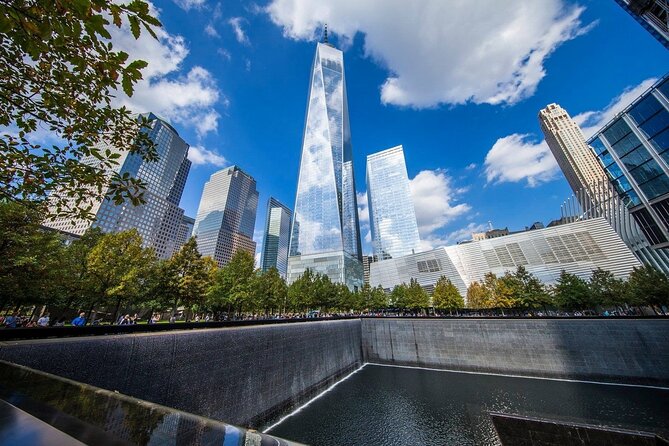
You’ll see Trump Tower as a Lower Manhattan “tallest” and banking-era story point, described as originally the Bank of Manhattan Trust Building. The tour explanation emphasizes Art Deco ambitions and how banks competed not only for money, but for skyline visibility.
The same idea continues at the Deutsche Bank Building, positioned as a symbol of international finance. It’s a reminder that Wall Street influence is not just local or national, it’s global by design.
Then you reach one of the most photographed moments: Charging Bull. The tour frames it as market optimism and strength. Even if you’ve seen it a hundred times in pictures, being there in person helps you understand why it became a symbol, not just a sculpture.
The route also includes Customs House and Standard Oil Building. Customs House is tied to trade revenue management and highlights global exchange. Standard Oil points to corporate monopolies and industrial wealth, anchored in John D. Rockefeller’s empire.
These stops are quick, so don’t expect a deep museum experience. Instead, treat them as a guided “labeling system” for what you’d otherwise see as random landmark clusters.
More NYC tours and experiences for the shortlist






Global commerce in the middle of everything: Cunard, Rockefeller, and the gem districts
One of the tour’s smartest choices is inserting “how the city connected the world” stops right inside the sightseeing flow.
At the Cunard Building, you get the angle of ocean liners, immigration, and luxury travel, tying global movement to New York’s finance engine. That’s a useful lens because New York was always a gateway city, not just a trading city.
Next is Rockefeller Center, described as a landmark of private enterprise and media influence. It also connects wealth to cultural power, which helps explain why Midtown feels different from Wall Street. Lower Manhattan feels like decisions. Midtown feels like branding, visibility, and reach.
Then you move into the Diamond District, including the International Gem Tower. These stops are framed as high-stakes luxury trade tied to global exchange. For you, it’s less about buying diamonds and more about seeing how specialized industries shape a neighborhood.
If you like details that make cities feel real, the tour’s emphasis on money-moving systems across industries is the thread you’ll keep noticing.
Midtown finale near Pulitzer Fountain, Plaza Hotel, and Times Square
The tour continues south to Central Park area landmarks and then back into the Midtown “media power” zone.
You’ll stop at Pulitzer Fountain, linked to Joseph Pulitzer and the expansion of influence into public space. It’s a quick civic moment, and it adds a different flavor to a day otherwise focused on commerce.
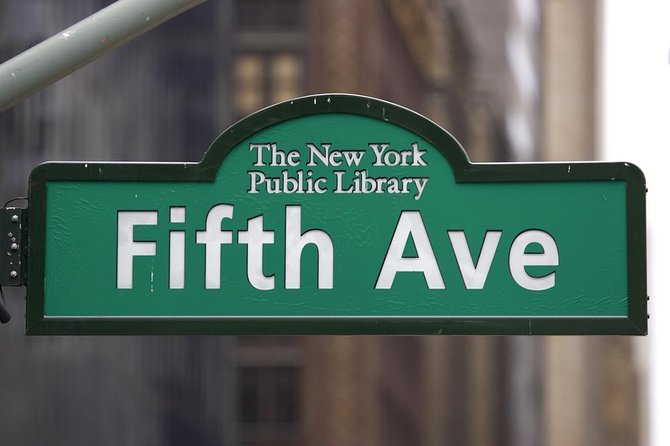
Then comes Grand Army Plaza. The tour frames it as a Fifth Avenue gateway where prestige retail, monuments, and elite living converge. You also visit the Plaza Hotel, described as a luxury icon that has hosted royalty, celebrities, and power brokers.
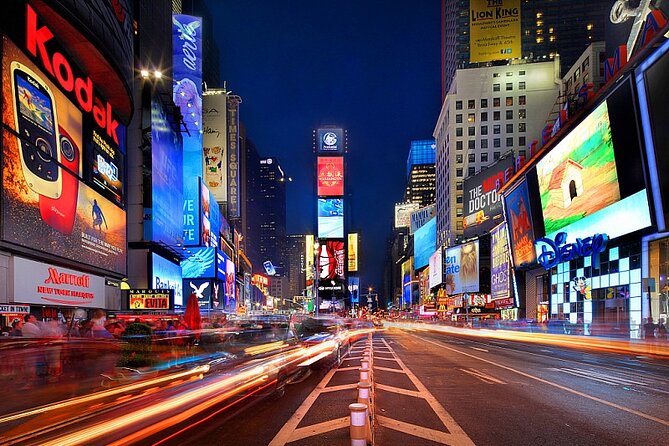
Finally, you reach Times Square and then Nasdaq MarketSite. Times Square is positioned as modern media and visibility equals power. Nasdaq MarketSite brings the day into the future, highlighting technology’s role in trading and innovation.
Even though each stop is brief (often around 6 minutes), the tour works because the theme stays consistent. It’s money, plus the tools that spread money’s influence.
Optional upgrades that can change your day: One World, Liberty Cruise, and RiseNY
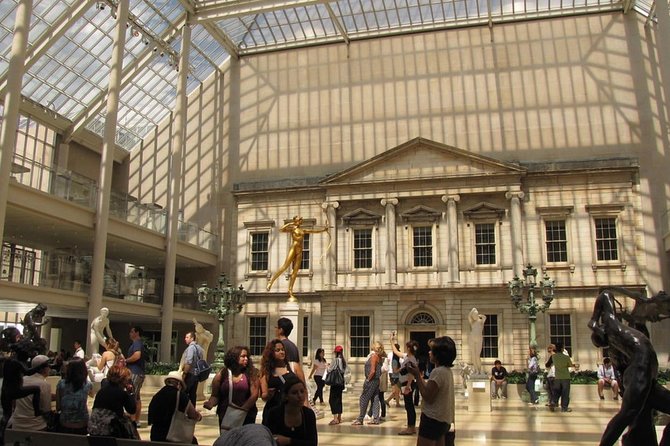
The tour offers optional add-ons near the end, and this is where you can decide what kind of New York day you want.
One World Trade Center Observatory is optional and includes admission if you select it. The tour description emphasizes resilience, renewal, and views over skyline and rivers. Plan this if you want a big, clean perspective after spending the day close to buildings.
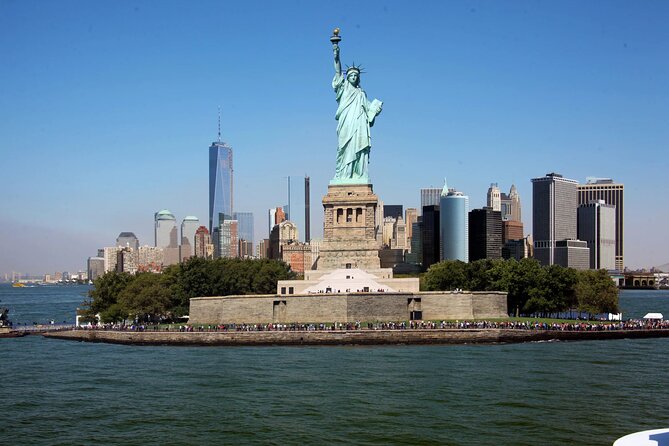
There’s also an optional Liberty Cruise. It’s described as a harbor cruise with views past the Statue of Liberty, Ellis Island, and the Manhattan skyline, with learning tied to immigration, trade, and maritime power. This one tends to work well if you want a calmer second act and you like the idea of seeing the story from the waterline.
If you want a more modern, indoor option, RiseNY is offered as a multi-sensory experience. It uses galleries, film, and a ride over the city to connect finance with culture, music, fashion, and media. Choose this if you prefer a guided “experience format” rather than more street walking.
One practical tip from how the tour is structured: if you add options, your day may feel more scheduled, and your costs can rise quickly. If you like flexibility, skip one or two options and spend more time at the included stops.
How to make this day go smoothly: pickups, cash, and English clarity
Logistics make or break a long city day, and this one depends on timing.
The tour offers select pick-up and drop-off locations across NYC. You will be dropped off at your pick-up location, except for the special case noted for the 07:00 departure where it’s pick-up only and drop-off is at Chinatown. If you care about ending near your hotel, double-check which pickup time you booked.
If you do not provide your pickup location at least 3 days before departure, the default pick-up is 08:00AM at Chinatown, Manhattan (75 Chrystie St). So if you’re traveling from another borough or you have a specific meeting point, you need to provide it early.
Cash is another point you cannot ignore. The tour notes that cash is required for certain attractions, shops, and tickets. It also says admission tickets or city passes from outside are not accepted. So for you, the safest move is to bring enough cash and rely on the guide or booking options for paid admissions that are part of your plan.
Language is worth a practical note. The tour is offered in English, but in real life, guides can vary in fluency. I suggest you keep your questions simple and written down if something matters, like which option you selected or what time you need to be back at the gathering point.
Finally, bring the basics. Wear comfortable shoes. Add water and weather gear, because this is a walking and standing day. Also have a reachable phone number, since the tour relies on you to stay reachable for safety and communication.
Should you book the NYC Fortune Tour?
Book it if you want a structured, fast-paced New York overview with a finance-and-ambition theme. The value is strongest when you like guided context and you plan to stick with the included admissions rather than stacking lots of optional add-ons.
Skip or reconsider if you hate quick stops and prefer slower, neighborhood-style wandering. This is a “see a lot with a story” tour, and the pacing is not built for long lingering.
Also book with eyes open on cost. The base price is clear, but optional choices like One World Observatory, Liberty Cruise, and RiseNY can turn a normal day into a higher-spend day. If you choose options, treat them as planned upgrades, not surprises.
If you want the best chance of a smooth day, pick a start time that matches your plans, confirm pickup details, and bring cash for any items that require it. When you do those things, this tour can feel like a guided shortcut to understanding how New York built its money machine.
FAQ
How long is the NYC Fortune Tour?
It runs about 6 hours 30 minutes (approximately 7 hours). The total time includes visiting stops, travel time, driving between locations, and traffic and weather.
What is included in the $106 ticket price?
You get a guide/driver, transportation in a professionally maintained vehicle, the Fortune Tour itself, and select admission fees depending on your chosen options. Gratuities are recommended.
Are pickups available?
Yes, pickup is offered with select locations in Manhattan, Brooklyn, and Queens. You should arrive 5 to 10 minutes early.
Where is the default pickup if I do not provide my location?
If you do not provide your pickup location at least 3 days before departure, the default pickup is 08:00AM at Chinatown, Manhattan (75 Chrystie St).
Where does the tour end?
You are dropped off at your pick-up location, except the 07:00 departure is pick-up only, and drop-off is at Chinatown. The tour concludes in Midtown Manhattan near major financial markets.
Do I need to pay extra for attractions during the day?
Some admission tickets are included and some are marked free. Other optional experiences are additional and depend on ticket option selection.
Is cash required during the tour?
Yes. The tour notes that cash is required for certain attractions, shops, and tickets, so bring sufficient cash.
What about meals?
Meals, food, and drinks are not included.
Is the tour in English?
The tour is offered in English, and you receive a mobile ticket.
What if weather is bad?
The tour requires good weather. If canceled due to poor weather, you’ll be offered a different date or a full refund.
What is the maximum group size?
The tour has a maximum of 55 travelers.
If you’d like, tell me your hotel area (or nearest subway stop) and your preferred add-on choices, and I’ll help you sanity-check whether this route fits your schedule.
More City Tours in New York City


More Tours in New York City




More Tour Reviews in New York City

Not for you? Here's more nearby things to do in New York City we have reviewed




More New York City Tours to consider.
 ★ 4.7SUMMIT One Vanderbilt TicketsTickets from $4751,195 traveller reviews
 ★ 4.7Empire State Building Tickets – Observatory & MuseumTickets from $4725,757 traveller reviews
 ★ 4.6Statue of Liberty & Ellis Island with FerryTickets from $1918,683 traveller reviews
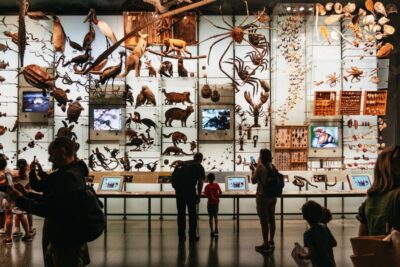 ★ 4.5American Museum of Natural History TicketTickets from $3715,447 traveller reviews
 ★ 5.0New York in One Day Guided Sightseeing TourTickets from $9913,166 traveller reviews
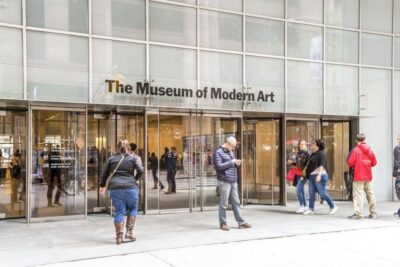 ★ 4.6Museum of Modern Art (MoMA) Entry TicketTickets from $3012,540 traveller reviews
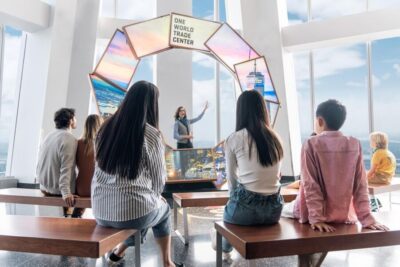 ★ 4.7One World Observatory Skip-the-Line TicketTickets from $3012,329 traveller reviews
 ★ 4.7New York CityPASS®: Save up to 41% at 5 Top AttractionsTickets from $15410,548 traveller reviews