
Review · CHINATOWN & LITTLE ITALY TOURS
New York City: Mafia History in Little Italy Walking Tour w/NYPD
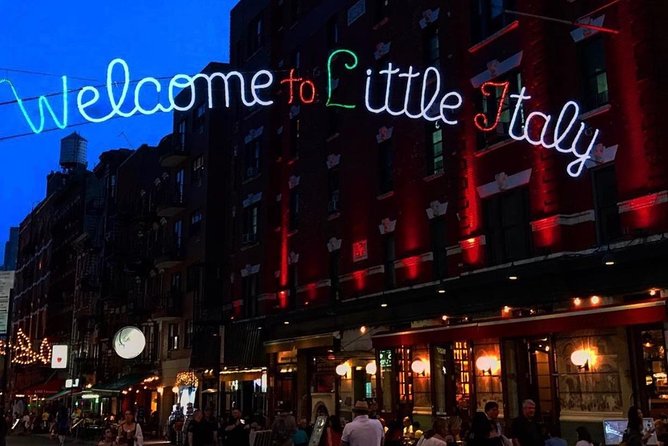
Mob stories meet real neighborhood food. This 3.5-hour walk links Lower Manhattan landmarks to mafia power moves, with an active or retired NYPD detective guiding you through the East Village and Little Italy. I especially like the in-person NYPD perspective and the fact that you get a full Italian dinner plus cannoli, not just “a few bites while walking.”
One heads-up: the tour includes strong language and sometimes graphic descriptions of murders, so it is not for everyone. If you prefer crime history without the darker details, or you have walking limits, you may want to skip this one.
Key Highlights You Should Know Before You Go
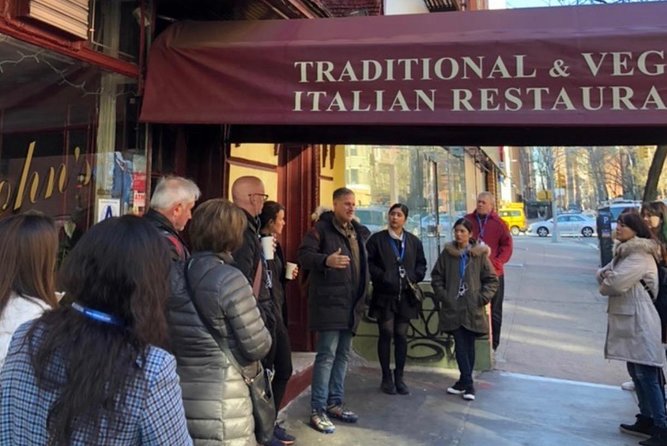
- John’s of 12th Street is the anchor stop, tied to Lucky Luciano and the mafia Commission story
- An NYPD detective guides the walk, bringing real law-enforcement framing to the neighborhood tales
- You eat a full dinner on the route, ending with a large Sicilian cannoli
- You hit more than “Little Italy postcards”, including cemeteries, a historic theater, gardens, and old-school businesses
- Expect a true-crime style narration, with strong language and occasional graphic murder descriptions
- Group size tops out at 35, which helps keep the walk moving
NYPD Detective Guides and the Mafia Map of Lower Manhattan
This tour is built around two things: place and perspective. You are not just reading about the mob, you are walking Lower Manhattan streets where the stories were lived, planned, and hidden in plain sight.
What really helps is the guiding approach. With active or retired NYPD detective leadership, the narration tends to focus on how people operated, what patterns looked like, and why certain places mattered. Guides like Dennis and Frank are specifically mentioned by name in recent experiences, and both are praised for making the stories feel personal, not like a classroom slideshow.
This is also a practical walking tour. It runs about 3 hours 30 minutes, with a steady rhythm, timed stops, and a cap of up to 35 people, so you are not stuck watching a long conga line stretch across the block.
You can also read our reviews of more walking tours in New York City


John’s of 12th Street, Luciano, and the 1931 Commission Story
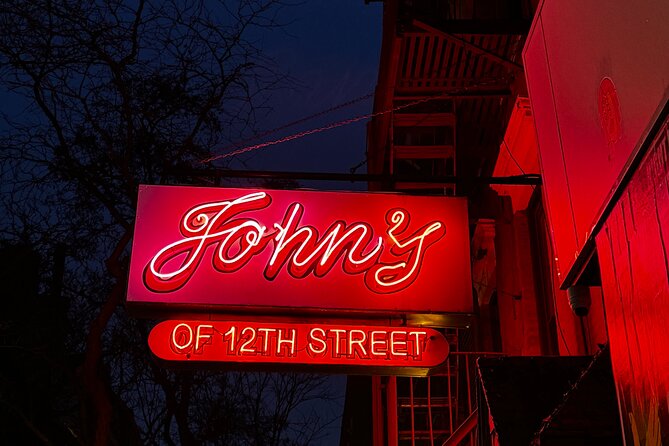
Your first stop sets the tone fast: John’s of 12th Street, a classic red sauce joint in the East Village with deep entertainment and mob-related connections. It opened in March 1908, and it is tied to the story that in 1931 Lucky Luciano created the mafia Commission.
This is also where the tour leans into the “only on this tour” angle. The experience emphasizes that you can enter the restaurant for this mafia history angle, and that matters because you are seeing how the place fits the era. You are not just standing outside a landmark hoping your imagination does the work.
On top of that, the stop connects food to pop culture. The restaurant is described as having been filmed for TV shows and movies tied to crime and gangster storytelling, including Boardwalk Empire and Sopranos, plus references to other crime-focused projects. Even if you are not a screen-nerd, it gives you a shortcut to understanding why Lower Manhattan remains such a magnet for these stories.
One more practical detail: this stop is not a quick “look and go.” You will spend about 45 minutes here, which helps you settle into the evening before the walk turns more intense.
East Village Stops: From Mafia Strongholds to Orpheum Theatre Changes
After John’s, the walk zooms in on the East Village side of the story. The tour frames the neighborhood as a mafia stronghold since around 1900, and you are guided to key locations tied to how multiple families operated in the same city blocks.
You also get a mix of surprise stops that break up the mob focus with real Lower Manhattan texture. One stop includes a cemetery connection at the New York Marble Cemetery, described as the first public cemetery in NYC, with vaults below ground built to protect residents from disease. It is a brief moment, but it adds weight, because it reminds you that the people in these stories lived, died, and were buried in the same urban ecosystem you are walking now.
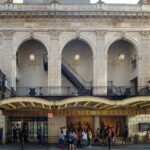
From there, you move past the Orpheum Theatre, formerly Player’s Theatre. It is a 299-seat off-Broadway venue on Second Avenue near St. Marks Place, and the tour notes its role in the Yiddish theatre era, later film use, and conversion back to dramatic productions in 1958. You do not need to be a theatre fanatic for this stop to work. The point is that entertainment districts often sit next to power districts, and crime groups historically relied on social worlds, not just back rooms.
188 1st Ave, Club 188, and the Nightlife Influence Thread
One of the stops I found most “New York” is 188 1st Ave, connected to Club 188 and Charlie Lucky Luciano. You are not just hearing a name. You get the thread of how the nightlife scene can become a home base for influence, from the 1920s onward and into later decades.
This is a useful way to understand Lower Manhattan. Mafia power did not always look like a mustache-twirling crime cartoon. It often looked like social control: knowing who belonged, which rooms were safe, and how money and access moved through the city.
This stop is brief, around 2 minutes, but it helps you connect the dots between the big-name stories and the day-to-day environment that made those stories possible.
Cemeteries, Community Gardens, and Old Businesses That Keep Moving
Not every stop is “crime and court.” Some are quieter and genuinely interesting.
At Liz Christy Bowery Houston Community Garden, you learn about how a vacant lot became a community space. The tour describes it as the oldest community garden in New York, established in 1973, with the Green Guerillas clearing the lot and the city agreeing to rent it for $1 a month. This is a nice counterbalance after darker storytelling, and it also shows how Lower Manhattan changes layer by layer.
Then you hit an old-school food institution: Albanese Meats & Poultry. It is described as the oldest butcher shop in NYC, welcoming Sicilian immigrants since the 1800s, and it is connected to filming visits by Martin Scorsese and Robert De Niro, including a reference to Scorsese’s first film. Even if you are only lightly into movies, you will appreciate the practical reality: this is the kind of place that feeds neighborhood life, and those are the same communities where social networks formed.
The tour keeps moving, but these stops give you breathing space and context. They prevent the walk from feeling like a single-note true-crime lecture.
You can also read our reviews of more city tours in New York City






St. Patrick’s Old Cathedral and the Godfather Filming Connection
One of the most visually satisfying stops is Basilica of Saint Patrick’s Old Cathedral in the Nolita area. The tour frames it as the original Cathedral Church of the Roman Catholic Archdiocese of New York, opened over 200 years ago, and still a “beacon” for Catholic faithful.
What I like here is the human angle. The tour notes that the parish grew beyond an Irish immigrant base to serve a diverse Catholic community, including Italian, African American, Chinese, and Vietnamese Catholics. Then it adds a pop-culture link: the tour says The Godfather was filmed inside the cathedral.
This stop works because it shows how crime stories borrow from mainstream institutions. You get a reminder that these were not separate worlds. Religion, food, theatre, and politics all sat inside the same neighborhoods, with overlap.
Mulberry Street Headquarters Energy and Little Italy Without the Sugarcoating
Your final stretch turns more tightly toward the mob geography. At Mulberry Street, the tour frames the area as tied to the Gambino crime family and John Gotti, with stops at places presented as headquarters and operational points.
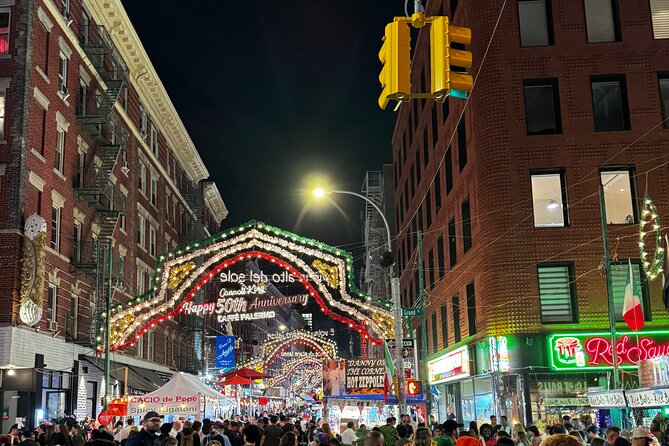
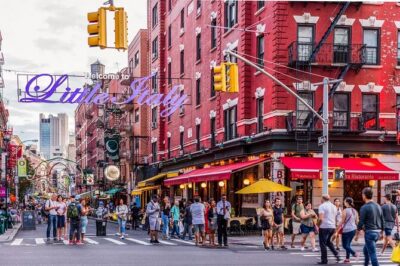
Then you reach Little Italy, now a smaller area than it used to be. The tour explains the neighborhood’s Italian immigrant development beginning in the 1840s, plus older layers involving earlier settlers in the wider region. It also notes that today Little Italy takes up roughly three blocks on Mulberry Street, where Italian speakers and traditional culture helped the community survive and shape the area.
At this stage, the walk feels like it is closing an arc. You start with the restaurant where the mafia Commission story is presented, and you end in the neighborhood that tourists often think is only restaurants and festivals. Here, you get both, with the darker context layered underneath.
The Included Italian Dinner, Cannoli, and the Real Value Question
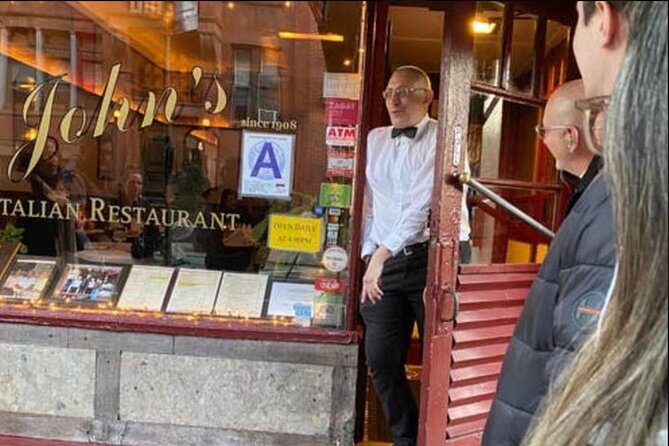
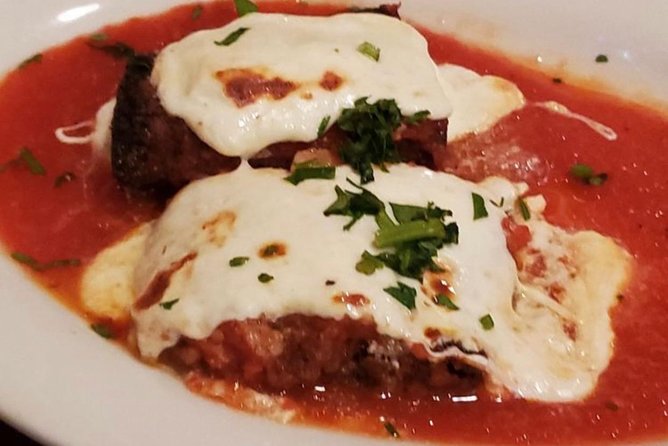
The food part is not an afterthought. The dinner is described as a full portion with spaghetti and meatballs, plus fresh bread. Then you end with large Sicilian cannoli, with the tour emphasizing these are freshly made and full-sized, not a small “tour cannoli.”
This is a big deal for value. At $129 per person, you are paying for a 3.5-hour guided experience, and you are also getting a sit-down meal and dessert. If you would otherwise spend a meal budget plus a separate dessert somewhere else, this pricing makes more sense because it bundles time, narration, and calories into one ticket.
A practical note: drinks are not included. You can purchase them on the day, and that matters if you tend to order sodas or wine with dinner. Gratuity is also not included, and it is always welcomed.
If you care about dietary needs, vegetarian options are available, but you must request them in advance.
Price, Walking Pace, and What to Bring
At 3 hours 30 minutes and with moderate walking expectations, this is not a “slow stroll only” kind of tour. The experience calls for moderate physical fitness, and it is not recommended if you have walking problems.
The group size maxes at 35 people, which usually keeps things under control, and the tour is set up for you to hear the guide as you move. One recent experience also highlighted a way to listen while walking, which helps you avoid the frustration of shouting over street noise.
For what to bring, keep it simple:
- Wear comfortable shoes. The route is city blocks, not museum floors.
- Plan to arrive ready for a true-crime vibe. Strong language and sometimes graphic murder descriptions are part of the narration.
- Eat beforehand if you want, or bring an appetite if you do not. The meal is filling and the tour ends with cannoli, so you will want to make room.
Also, the tour does not include transportation, so you will want to plan how you get to the start point and how you return after the end.
Who This Tour Fits Best, and Who Should Think Twice
This is a great fit if you like three things: crime history, neighborhood storytelling, and Italian-American food that is more than a snack. It is also a strong match for adults who enjoy true-crime narration and can handle darker content.
It might not fit if:
- You are sensitive to strong language or graphic murder descriptions.
- You want a purely light, family-friendly walk.
- You cannot handle moderate walking for a little over three hours.
If you are a film person, you will probably enjoy the way the tour threads in pop culture locations, from restaurant filming connections to The Godfather and the Orpheum Theatre’s stage-to-screen shifts.
Should You Book This Little Italy Mafia History Walk?
If you want one Lower Manhattan activity that mixes NYPD-led mafia stories with a real Italian dinner and a finish of Sicilian cannoli, this is a strong candidate. It also helps that you are not limiting yourself to “Little Italy photo stops,” you are seeing cemeteries, a historic theatre, gardens, butcher shops, and churches that shaped day-to-day neighborhood life.
My take: book it if you can handle dark true-crime storytelling and you want an evening that feels like a guided night out, not a history worksheet. Skip it if graphic crime details are a deal-breaker for you or if walking for the full route sounds uncomfortable.
FAQ
What is the price of the Mafia History in Little Italy walking tour?
The tour costs $129.00 per person.
How long is the tour?
The tour runs about 3 hours 30 minutes.
What food is included in the dinner?
You get a full portion spaghetti with meatballs, and the tour ends with a large Sicilian cannoli.
Are vegetarian options available?
Yes. Vegetarian options are available if you request them in advance.
Are drinks included?
No. Drinks are not included, but you can purchase them on the day.
Is the tour offered in English?
Yes. The tour is offered in English.
Where does the tour start and where does it end?
The tour starts at 302 E 12th St, New York, NY 10003, and ends at 108 Mulberry St, New York, NY 10013.
Does the tour include strong language or graphic content?
Yes. The tour includes strong language and sometimes graphic descriptions of murders.
Can I cancel for a full refund?
Yes, you can cancel for a full refund if you cancel at least 24 hours in advance of the experience start time.
More Walking Tours in New York City


More Tours in New York City





More Tour Reviews in New York City


Not for you? Here's more nearby things to do in New York City we have reviewed






More Chinatown & Little Italy Tours to consider.
 ★ 5.0SoHo, Little Italy, and Chinatown Walking Tour in New YorkTickets from $393,153 traveller reviews
 ★ 5.0Chinatown & Little Italy Food Tour with 7 Flavorful TastingsTickets from $992,733 traveller reviews
 ★ 5.0Original NYC Guided Food Tour of Chinatown and Little ItalyTickets from $1302,194 traveller reviews
NYC Food Tour: Chinatown and Little ItalyTickets from $991,090 traveller reviews
★ 5.0Original NYC Guided Food Tour of Chinatown and Little ItalyTickets from $1302,194 traveller reviews
NYC Food Tour: Chinatown and Little ItalyTickets from $991,090 traveller reviews
 ★ 4.7Chinatown and Little Italy Food TourTickets from $80703 traveller reviews
 ★ 4.7SoHo, Little Italy, and Chinatown Guided TourTickets from $30614 traveller reviews
 ★ 4.6SoHo, Little Italy, and Chinatown 2-Hour Guided WalkTickets from $39566 traveller reviews
 ★ 5.0SoHo, Little Italy, and Chinatown NYC Guided Walking TourTickets from $36443 traveller reviews
More useful New York routes