
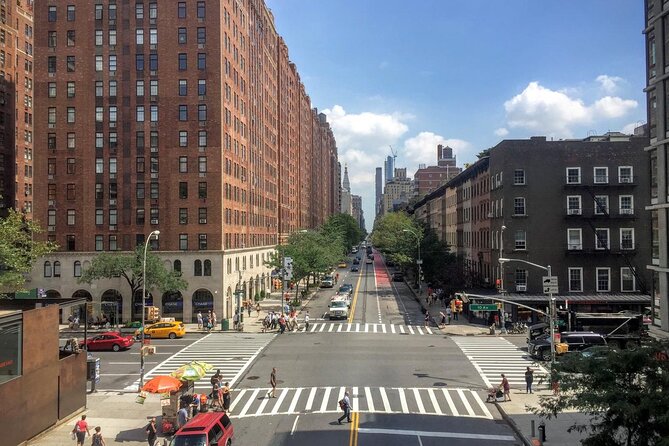
Review · HIGH LINE TOURS
New York City & The High Line – Self Guided Walking Tour
One great way to see Manhattan. This self-guided audio route links the High Line to Hudson Yards, with historian narration and offline playback so you can wander without holding up your phone. It also throws in Instagram hot spots and GPS guidance, so you spend more time looking ahead and less time checking maps.
What I like most is how the story hangs together while you walk, from art and architecture to nightlife and redevelopment. I also love the practical touch of offline mode, which matters in NYC when signal can be inconsistent and your battery is a precious resource.
One thing to consider: it depends on the app working smoothly, and headphones are not included. If you run into a start-position issue, it can be frustrating, so plan to begin at the High Line entrance like the tour intends.
Key things to know before you go

- Offline mode for a low-stress walk: download the tour ahead of time and listen without relying on WiFi or roaming.
- Historian narration while you move: explanations are built into the route so the sights make sense as you pass them.
- GPS map that helps with positioning: location-aware guidance is meant to reduce getting lost along the way.
- Photo-focused Instagram hot spots: prompts help you line up viewpoints on the High Line and beyond.
- A tidy West Side route for a 50-minute plan: you get a “best of” stretch without committing to a half-day.
- Tech depends on Vidi Guides: the audio runs through Vidi Guides, so it is worth testing before you’re on the sidewalk.
The easy win: self-guided pacing from the High Line to Hudson Yards

This is designed for the way most people actually travel in NYC. You walk when you want, pause when you want, and listen when you want, instead of syncing your life to a group pace. The route is short enough that you can keep it fun, but long enough that you feel you’re going somewhere, not just circling the same blocks.
The itinerary also makes sense as a flow. You start on the High Line, move through the Meatpacking and West Side corridor, spot the newest icons, and finish at Hudson Yards with views that feel bigger than the time you spent getting there. If you like the idea of a curated walk without the pressure of a tour leader, this fits.
Also, the maximum group size listed is 10 travelers, which usually means less friction if you end up needing help. Since it is self-guided, you are not stuck in a big crowd anyway, but smaller numbers tend to mean fewer moving parts.
You can also read our reviews of more walking tours in New York City


Price and value: why $10.13 can work in NYC
$10.13 is a bargain price for an audio tour in Manhattan, especially one that includes offline access and GPS support. You are not paying for museum tickets here, you are paying for context, guidance, and the small “nudge” points that turn a random walk into a more satisfying one.
Here is the value math that matters in NYC:
- You save time by having the route and the story mapped out.
- You save hassle by downloading the tour for offline use.
- You save energy by using location-aware guidance, so you are not constantly reorienting.
The duration is about 50 minutes, which means you can slot it into a day full of other plans. That makes it a good add-on if you are already visiting Chelsea Market, Hudson Yards, or the High Line area and want more meaning behind what you are seeing.
What you need: Vidi Guides, offline audio, and the smart setup
Your tour runs through Vidi Guides, and the most important feature is offline mode. You download the tour in advance, then you listen without WiFi. That is a big deal in NYC, because it reduces stress and protects your data plan.
Just be realistic about what is not included:
- You need your own mobile device.
- Headphones are not provided.
So plan to bring headphones you like, fully charged phone battery, and a few minutes before you start to confirm the audio is downloaded. If the app does not behave well, you lose one of the core benefits: the walking, listening, and learning in one smooth loop.
One review issue mentioned a technical app problem that was later reported as resolved, so I would treat that as a gentle warning. Test the app at least once earlier in the day. Make sure your download is complete and the audio plays before you step onto the route.
Stop 1, The High Line entrance: Hudson River views and the Whitney link
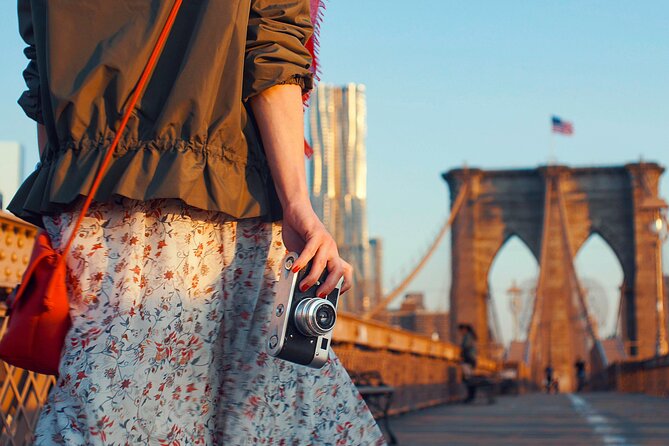
Start at the High Line entrance at 10011. The tour’s first cue is simple and worth following: you should find a great view of the Hudson River to your left right as you begin.
From there, you get a focused look at the Whitney Museum. The narration points you toward what the museum represents, especially its emphasis on twentieth-century and contemporary American art, with a special focus on living artists. Even if you do not go inside the museum, this context changes how you experience the surrounding blocks, because you understand why this stretch became such a cultural magnet.
Practical tip: arrive with comfy walking shoes. The High Line is not hard, but you will feel every step once you start factoring in photo stops and pauses.
Stop 2, Chelsea Piers and Pier 54: looking down at the past
Next up is Chelsea Piers Sports & Entertainment Complex, with a viewpoint that asks you to look down 13th Street at Pier 54. The narration touches on the area’s interesting, somewhat tragic past, and then brings it to the present, where the piers function as parks and recreation spaces.
This is one of those moments where a self-guided audio tour pays off. From street level, the history can feel invisible. With audio context, you start noticing the shape of the waterfront area and how today’s uses sit on older layers.
You also get a “spot it if you want” moment: Little Island, a quirky overwater park, opened in spring of 2021. Even if you just glance toward it, it helps connect the High Line world with the waterfront renaissance that has been reshaping this side of Manhattan.
You can also read our reviews of more guided tours in New York City






Stop 3, Chelsea Market: food stops with real local energy
Chelsea Market is one of those places you can walk into without a plan and still have a great time. The tour keeps you grounded by framing it as a standout destination of the Meatpacking District.
Once you step inside, you get a quick sense of what the market is like: food-themed shops spread across the space, with options such as seafood and butcheries, plus items like tacos and brownies. The key point here is not the shopping list. It is that this is a place where you can reset your walk. You can browse, snack, or just soak in the everyday rhythm of the market.
Practical tip: if you want to keep the full 50 minutes, treat Chelsea Market like a quick stop, not a food expedition. It is easy to lose track of time here because it is designed to tempt you.
Stop 4, IAC Building and the ROXY: architecture, nightlife, and big history

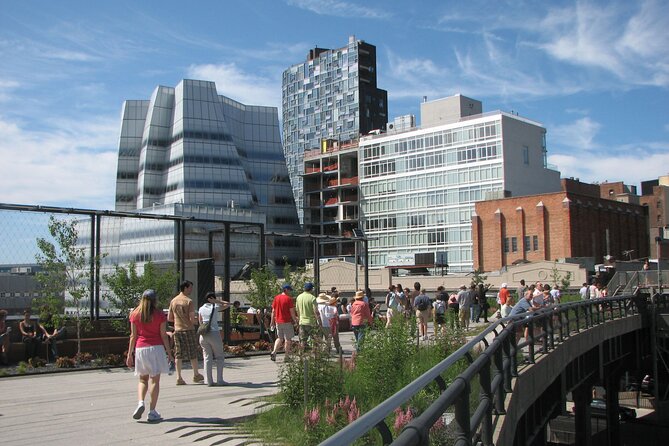
This stop is packed, and it is also where the narration adds some serious contrast. You are asked to check out iconic architecture in the Meatpacking District, including the IAC Building and the famous ROXY.
The ROXY story is especially interesting because it links style to changing trends. It was originally a roller disco, then shifted as roller skating faded, and it became a regular club. The narration also names big performers associated with the venue, including Madonna, Liza Minelli, Whitney Houston, and Beyoncé.
Then you get a sharp pivot into historic science and warfare context with the Manhattan Project, connected to the development of the world’s first atomic bomb used during World War II. The narration points you toward the Baker and Williams Warehouses as part of that broader setting.
This is the kind of stop that can surprise people, in a good way. You think you are touring nightlife and design, but you also get reminded that this neighborhood sat within major world-changing events. It makes the area feel more layered than the typical photo-and-coffee route.
Practical tip: if you prefer to keep history light, you can treat this stop as a “take what you want” moment. Pause for the architecture, glance at the area, and let the rest play while you move.
Stop 5, Guardian Angel Roman Catholic Church and the Flyover gardens
Next you head to the Church of the Guardian Angel. The narration frames it as one of New York’s few churches, and that alone makes it a memorable pause point in a neighborhood better known for shopping, nightlife, and modern attractions.
After that, you move toward the Flyover, tucked between 25th and 27th Streets. The tour describes the Flyover as divided into different garden segments that display local flora. There is also a raised walkway where you can look down on the plant life and the forgotten train tracks below.
This is a great stop if you like small details. A lot of people breeze past “garden structure” without really noticing the design choices. Here, audio helps you see the space as part of a transformation story, where nature and old infrastructure share the same footprint.
Practical tip: bring a moment of patience here. Garden segments and viewpoints are the kind of place where a slow look makes the difference between taking a photo and actually understanding what you’re seeing.
Stop 6, The Vessel: how to use it as your photo and perspective anchor
The Vessel is described as the High Line’s most contemporary and popular addition, and it really does dominate the final curve. The structure is presented as a bizarre, sculptural form with multiple levels and interlocking staircases.
The narration’s value here is about perspective. It encourages you to look at Manhattan from different angles and to consider how The Vessel frames views over the High Line area. That turns it from just a landmark you pose in front of, into a viewpoint tool.
Practical tip: don’t rush The Vessel. If you are aiming for better photos, this is where the timing of your stop matters. You want to place yourself to get a skyline background, but also to capture the geometry of the structure itself.
Stop 7, Hudson Yards finale: views and the redevelopment conversation
The tour ends with a stunning view from Hudson Yards and the river. This final section aims to close the loop on what you have been seeing since the start. You go from the High Line’s adaptive reuse and culture cues, to the market and nightlife architecture, and then finish at a modern urban renewal hub.
The narration calls this corner of Manhattan a model for urban renewal and sustainably-driven gentrification, with the hope that it brings advantages to both locals and visitors over time.
Whether you agree with that framing or not, it’s a useful prompt. Hudson Yards can feel like a separate world from older Manhattan neighborhoods. Ending here with some context helps you interpret what you’re standing in, not just what you’re looking at.
When the audio finishes, you are on your own, and that is a good thing. Use the viewpoints you’ve earned to choose your next move, whether you want more walking, a food stop, or just a longer look at the skyline.
How to plan the 50 minutes so you do not feel rushed
This is a quick route. About 50 minutes means you need to build in time, but not too much.
Here is a practical way to do it:
- Start at the High Line entrance so the audio aligns with what you see.
- Let the GPS guidance do its job, but do not yank your phone out constantly. Quick glances are enough if you keep moving.
- Decide in advance how you handle Chelsea Market. One browse and one snack can fit, but a full meal probably will not.
- Save your longer photo time for The Vessel and the Hudson Yards finale, since those are the sections most tied to viewpoints.
Also, keep your phone battery in mind. Offline mode helps your connection, but your screen and audio still drain power.
Finally, remember that the tour is position-based. If you start from the wrong end, the guidance can feel off. One reported problem was that the tour was not described clearly enough for people who tried to start at the opposite end. So just follow the intended start and end points.
Who this audio tour suits best (and who might want another option)
You will love this if you:
- Want a budget-friendly self-guided way to connect iconic West Side sights.
- Like learning through stories while you walk, instead of reading a guidebook at every stop.
- Prefer offline listening and a route that helps you stay oriented.
- Want photo prompts at landmarks like The Vessel and viewpoints on the High Line.
You might consider another option if:
- You rely on a very specific audio guide platform and do not want to use Vidi Guides.
- You need headphones provided for you, since they are not included.
- You plan to start the tour far from the High Line entrance, because alignment seems to matter.
Should you book this High Line and Hudson Yards audio walk?
I think this is a strong buy for the price, especially if you are already doing the High Line area and want a structured, story-first walk without paying for a guide. The big wins are offline mode, GPS support, and historian-style narration that turns landmarks into something more meaningful.
Book it if you want a calm, DIY-friendly route with photo guidance and practical context. Skip it or think twice if you are worried about app reliability, hate using Vidi Guides, or you want someone physically leading you step-by-step.
If your goal is value, flexibility, and an easy way to understand what you are seeing on NYC’s West Side, this hits the sweet spot.
FAQ
How much does the New York City and The High Line self-guided walking tour cost?
It costs $10.13 per person.
About how long is the tour?
The duration is approximately 50 minutes.
Does the tour work offline?
Yes. You can download the tour in advance so it works without WiFi in offline mode.
What app or platform is used for the audio tour?
The audio tour is provided through Vidi Guides.
Do I need headphones?
Yes, headphones are not included.
Do I need my own mobile device?
Yes. A mobile device is not included.
Where does the tour start and end?
It starts at the High Line in New York, NY 10011, and ends at Hudson Yards in New York, NY 10001.
Are the stops free to access?
The sights listed in the route show admission ticket free for each stop.
Is there a limit on group size?
Yes. The maximum group size is 10 travelers.
What are the tour hours?
The listing shows Monday through Sunday from 12:00 AM to 11:30 PM, with the overall availability running from 10/19/2021 to 07/30/2026.
Is there a cancellation window for a refund?
You can cancel up to 24 hours in advance for a full refund. Within 24 hours, the amount paid is not refunded.
More Walking Tours in New York City


More Tours in New York City




More Tour Reviews in New York City




Not for you? Here's more nearby things to do in New York City we have reviewed









More High Line Tours to consider.
 ★ 5.0High Line and Chelsea Small Group TourTickets from $391,238 traveller reviews
 ★ 5.0Chelsea Market and High Line Guided Food TourTickets from $88827 traveller reviews
 ★ 5.0High Line Park and Greenwich Village Food TourTickets from $159398 traveller reviews
 ★ 4.9High Line, Chelsea, & Meatpacking District Walking TourTickets from $39195 traveller reviews
 ★ 5.0Foods of NY Tours Chelsea Market Food Tour & High Line ParkTickets from $99141 traveller reviews
 ★ 4.2Hudson Yards & High Line Tour with Optional Edge TicketTickets from $49125 traveller reviews
 ★ 4.8Chelsea Market, Meatpacking, High Line Food TourTickets from $88123 traveller reviews
 ★ 5.0Semi-Private Meatpacking District, Chelsea Market, and High Line Walking TourTickets from $3988 traveller reviews
More useful New York routes