
Review · HIGH LINE TOURS
New York City’s High Line: A Self-Guided Audio Tour
High above Manhattan, stories on repeat. This self-guided audio walk follows the High Line from Gansevoort Street in the Meatpacking District to Hudson Yards, turning the park into a real-time storybook with voice-guided chapters. It is priced at $14.99 and runs about 1 hour 30 minutes.
What I like most is the story-first commentary. It does not just list facts, it connects the dots between the High Line’s past, the ideas people proposed to transform it, and the big, showy finale. The other win: you get offline access to the audio, maps, and geodata, so you can keep moving without hunting for service.
One thing to plan for: the app narration can be slightly off if you walk at a very different pace, based on a reported sync issue.
Key highlights before you go

- Storytelling over trivia: the narration leans into why places matter, not just what they are.
- Offline audio and maps: download once, then keep walking without chasing signal.
- A start and end that make sense: begin at Friends of The High Line and return there.
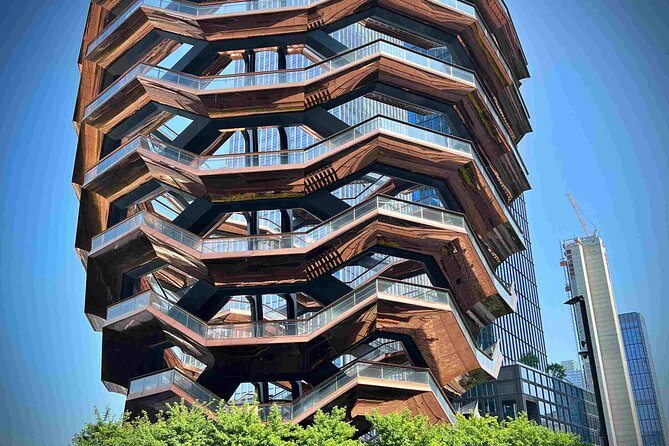
- A tour arc with real stakes: it moves from the grim past of Death Avenue to the heavily watched ending at Vessel.
- Art and design stops built in: you pass major landmarks like Whitney Museum, Chelsea Market, and Hudson Yards.
Walking the High Line from Gansevoort Street to Hudson Yards

This tour is built around a full High Line walk, not a small loop. You start at Gansevoort Street in the Meatpacking District and work your way toward Hudson Yards, so your day naturally changes as the neighborhood shifts below you.
The narration also gives the walk a sense of direction. Early on, it sets the mood with the High Line’s roots, including the infamous street-level train period in the late 1800s when so many pedestrians were killed that the area earned the name Death Avenue. That detail matters, because it reframes the High Line from an Instagram park into a “how we got here” story.
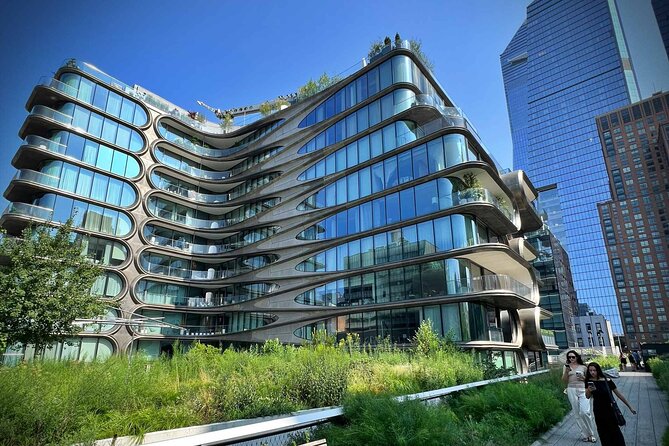
As you go, you will keep running into the park’s personality: modern design on top of old infrastructure. The audio taps into that contrast, so the walk feels like a timeline rather than a random stroll.
You can also read our reviews of more guided tours in New York City



Price and time: what you actually get for $14.99
At $14.99 per person, you are buying two things: the VoiceMap audio and the ability to use it whenever you go during the allowed period. The experience includes lifetime access to the tour in English, plus the VoiceMap app and offline download for audio, maps, and geodata.
Duration is listed as about 1 hour 30 minutes. In real terms, that is a sweet spot. It is long enough to take in several distinct areas and hear multiple chapters, but not so long that you feel locked into the walk.
Value here comes from pacing. A guided tour can cost a lot more, and you would still need to pause for group movement. A self-guided audio tour lets you stop for photos, look out over the city, and keep your own flow, then rely on the audio to bring you back on track.
How the VoiceMap audio tour works once you’re standing there
You will use the VoiceMap application. The tour includes offline access to audio plus maps and geodata, which is ideal in New York where data can get spotty in dense areas.
You still need your own phone and headphones. The listing does not include a smartphone or headphones, so bring wired or Bluetooth headphones you already trust. Also, confirmation happens at booking, and the tour is available in English.
One detail that comes up from the experience feedback: the audio can have trouble syncing with your walking speed. That does not ruin the tour, but it means you should not sprint through the route. A steady, normal pace works best so the narration lands when you are near the intended spot.
If you tend to walk fast, slow down for the first 10 to 15 minutes. Once you find a comfortable rhythm, the experience usually smooths out.
Stop-by-stop: what each chapter feels like
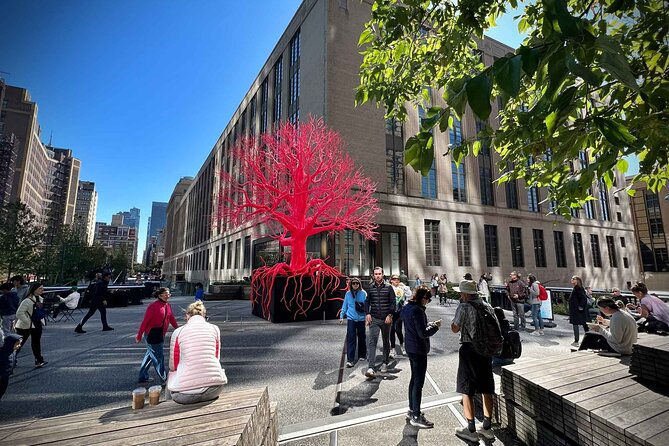
Starting point: Friends of The High Line (820 Washington St)
Your launchpad is Friends of The High Line at 820 Washington St. It is a smart meeting point because it is clearly tied to the park itself, so you are not trying to “find the tour” in a maze of side streets.
From there, the narration guides you through the High Line experience from the start stretch toward the end around Hudson Yards. Since the activity ends back at the meeting point, you do not need to solve an exit puzzle at the end of your walk.
You can also read our reviews of more city tours in New York City






The High Line chapter, where the park becomes a story
This is not just scenery. The audio frames the High Line as an idea with a past that includes Death Avenue and the late 1800s train era when pedestrians were killed. That section gives you context for why the High Line exists in the first place, and why turning it into a park feels like a deliberate change in how people move through the city.
It also brings in a creative-suggestion angle. The tour mentions that more than 700 ideas were submitted for repurposing the High Line, including concepts like a mile-long swimming pool and a rollercoaster snaking between buildings. Those imaginative options make the actual park feel less inevitable and more like a choice the city could have taken in many directions.
Whitney Museum of American Art stop: art nearby, not inside
One of your scheduled landmarks is the Whitney Museum of American Art. The tour does not require museum entry fees, so think of this stop as an “art city” moment where the audio can connect the museum’s presence to the neighborhood’s culture.
Because the tour is self-guided, you can decide what you want to do with the stop. If you want quick photos and a photo check of your surroundings, you can keep moving. If you want a short pause to look around, the audio structure is designed for walking.
The main drawback is simply time. If you linger too long, you might end up with narration that feels rushed afterward.
Pier 57 stop: a change in tempo
Next comes Pier 57. Even if you do not plan extra stops beyond the audio, this kind of waypoint helps break up the walk. It is one of the places where you can reset your attention, check your route mentally, and stay present.
Since the tour information here only confirms the stop name, I would treat this as a location cue from the audio. Let the narration tell you what to notice in that area, rather than trying to force a checklist.
Chelsea Market stop: where TV culture lives next to food halls
Chelsea Market is another named stop, and the tour specifically notes that Food Network films its hit shows there. That is the kind of detail that makes a normal-looking market feel like part of the wider city’s media world.
This is also a good spot to consider your energy. It is the midpoint-ish area of the route, so if you want a snack or a drink, you can plan it around the stop. The tour itself does not include food or drink, and museum entry is not included either, but Chelsea Market is exactly the kind of place where you can add a quick break without derailing the day.
The High Line chapter again: the route tightens toward Hudson Yards
You get another High Line stop later in the route. That matters because it signals the walk is not “one long straight line.” The audio re-anchors you to the park experience as you transition toward new sections and new surroundings.
This is where the idea of repurposing becomes more tangible. You start seeing the High Line not only as a preserved relic but also as a platform for modern design and bold city planning.
General Theological Seminary stop: civic landmarks in the mix
General Theological Seminary is listed as another stop. When a self-guided tour includes institutions like this, it usually means the audio will help you read the city beyond the park edges.
You might find the best moments here are the ones where you glance up and notice how the High Line overlays the urban grid. The audio helps translate what you see into meaning, so you leave this stretch feeling like you understand how the neighborhood layers over time.
Hudson Yards stop: where the High Line arrives
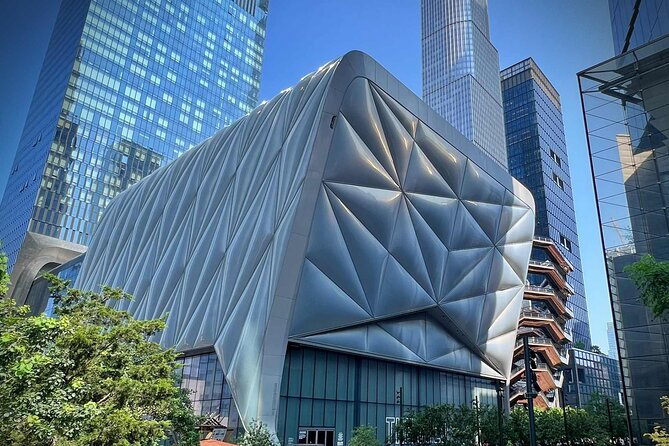
Hudson Yards is both a destination and a symbol in the tour’s arc. The earlier chapters talk about past danger and big speculative ideas, and then you reach the area that represents the future-facing side of New York.
The practical benefit: the audio gives you a reason to pay attention as the setting shifts. Without that, Hudson Yards can feel like a separate planet from the High Line. With it, the park feels like the bridge between old infrastructure and new skyline ambitions.
Vessel: the Instagram icon with a darker undertone

The tour ends at Vessel, the sixteen-story structure known as the stairway to nowhere. It is designed as a visual icon for Hudson Yards, and the tour frames it that way.
But it also adds a heavy note: Vessel is described as a tragic suicide magnet. That is not a light detail, and it is worth acknowledging respectfully. If you are someone who gets affected by stories like that, I suggest you approach the final stop with a calm mindset and focus on what you can control, like the views, the people around you, and the fact that you are ending a thoughtful walk.
For practical planning, this is where you should slow down the most. Even if you just want photos and a quick look around, the structure draws attention, and you will likely want extra seconds at the top or along the sides.
The tour finishes back at the meeting point, so you will follow the route back using your own sense of direction, or you may let the last narration guide your final steps depending on how the app cues are set.
What the best-rated feedback tells you to expect
The highest-rated experiences line up with a clear theme: the audio works when it tells stories instead of dumping facts. You can expect commentary that feels entertaining and informative at the same time.
Another repeated win is usability. People report that the app is easy to download and start, and that it works well during the walk. That is important, because a self-guided tour rises and falls on the tech, not just the script.
The main caution comes from one commonly mentioned flaw: synchronization. If your walking pace is much faster or slower than what the narration expects, you could get sections that feel slightly out of step. You can reduce this risk by keeping a steady pace and not rushing through early chapters.
Who this High Line audio tour is best for

This is ideal if you like city history told in human terms, with humor and bite. If you prefer walking while an audio guide connects the dots, you will probably enjoy the way the tour moves from Death Avenue to repurpose fantasies and then to Vessel.
It also fits travelers who do not want to coordinate with a group schedule. Since it is private to your group, you avoid the “wait for the stragglers” problem and you can pause when something catches your eye.
You might especially like it if you are the type who enjoys landmark-hopping. It includes major names like Whitney Museum of American Art, Chelsea Market, General Theological Seminary, and Hudson Yards, so you are not stuck in one generic park segment.
If you are the type who needs a perfect match between narration and your speed, consider that the audio can be sensitive to pace. Slower and steady is your friend here.
Quick practical checklist before you start
- Bring your own smartphone and headphones
- Wear comfortable walking shoes, since this is a long urban walk on an elevated path
- Keep your pace steady, especially at the start, to help audio timing
- Plan to finish at Vessel and then work your way back to your start area
Should you book this High Line self-guided audio tour?
Book it if you want a High Line walk that feels like a guided story, without the pressure of a group schedule. For $14.99, the offline audio and maps make it a practical choice, and the most praised part is clearly the storytelling approach.
Skip it or adjust expectations if you need perfect audio synchronization with your walking pace, or if you prefer tours that are purely factual and neutral. This one has opinions, jokes, and dramatic chapters, including the darker Vessel note.
If you are visiting New York and want one solid “do it on your own time” experience that still feels structured, this High Line audio walk is a smart pick.
FAQ
How much does the High Line self-guided audio tour cost?
The price is $14.99 per person.
How long is the tour?
The duration is about 1 hour 30 minutes.
What language is the audio in?
The tour is offered in English.
What is included, and what do I need to bring?
Included are lifetime access to the tour in English, the VoiceMap application, and offline access to audio, maps, and geodata. You need to bring your own smartphone and headphones.
Where do I start and where does it end?
The tour starts at Friends of The High Line, 820 Washington St, New York, NY 10014, USA, and it ends back at the meeting point.
Is this tour private, and is it refundable?
It is private, meaning only your group will participate. It is non-refundable and cannot be changed for any reason.
More Guided Tours in New York City



More Tours in New York City



More Tour Reviews in New York City

Not for you? Here's more nearby things to do in New York City we have reviewed









More High Line Tours to consider.
 ★ 5.0High Line and Chelsea Small Group TourTickets from $391,238 traveller reviews
 ★ 5.0Chelsea Market and High Line Guided Food TourTickets from $88827 traveller reviews
 ★ 5.0High Line Park and Greenwich Village Food TourTickets from $159398 traveller reviews
 ★ 4.9High Line, Chelsea, & Meatpacking District Walking TourTickets from $39195 traveller reviews
 ★ 5.0Foods of NY Tours Chelsea Market Food Tour & High Line ParkTickets from $99141 traveller reviews
 ★ 4.2Hudson Yards & High Line Tour with Optional Edge TicketTickets from $49125 traveller reviews
 ★ 4.8Chelsea Market, Meatpacking, High Line Food TourTickets from $88123 traveller reviews
 ★ 5.0Semi-Private Meatpacking District, Chelsea Market, and High Line Walking TourTickets from $3988 traveller reviews
More useful New York routes