
Review · CHINATOWN & LITTLE ITALY TOURS
New York: Mafia and Gangster History Tour in Little Italy
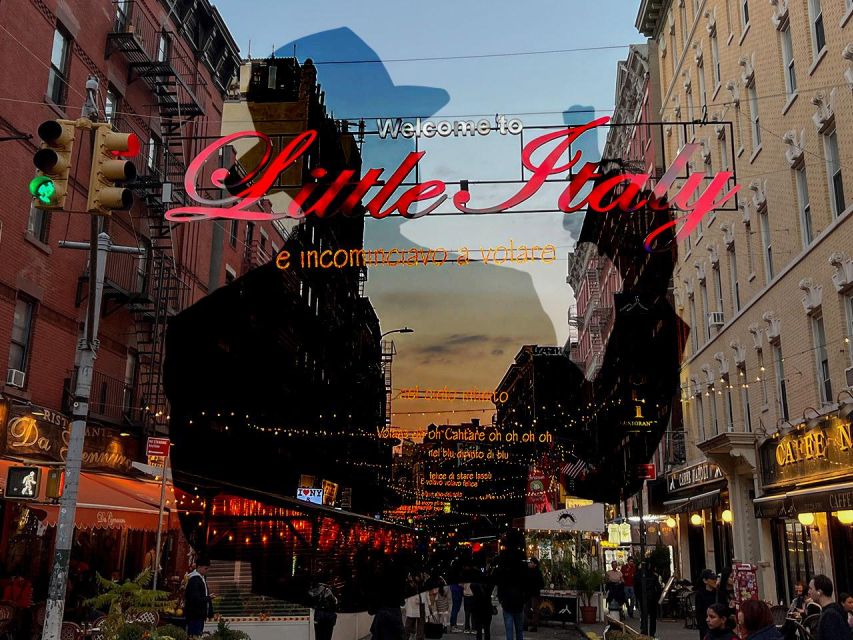
Mafia stories live on these streets. This Little Italy walk turns New York crime headlines into real locations, with stops tied to bosses, police fighters, and famous mob hits. You start at 44 Spring St and move through a tight loop of places you could miss on your own. Little Italy becomes a map you can actually follow.
I love the way the guide connects the early street-level gangs to bigger organized crime systems. You get a clear thread from black hand violence and Prohibition liquor battles, to Joe “The Boss” Masseria, then to Lucky Luciano and his Commission plan. I also like the stop choices that go beyond lurid tales, including the Ravenite Social Club and sites tied to law enforcement efforts.
One thing to consider: this is a walking tour that is not suitable for people with mobility impairments, and you should plan on comfortable shoes and a steady pace.
Key things to know before you go
- Small group, max 10 people, so the guide can keep momentum without feeling rushed
- A 2-hour, about 1 mile route, easy to fit into a day in Lower Manhattan
- Real-world mob locations, including the Ravenite Social Club and sites tied to John Gotti and Crazy Joey Gallo
- Both sides of the story, with early crime fighter Lt. Petrosino and Frank Serpico on police corruption
- Pop-culture extras, with optional stops linked to The Godfather and The Sopranos
Spring and Mulberry: The 2-hour walk that keeps moving
The tour starts at 44 Spring St, right by the corner of Spring and Mulberry Streets next to DaSalvio Playground. Plan to arrive 10 minutes early and look for the guide in a white cap. Once the walking starts, you cannot join, so treat that early arrival as part of the experience, not a formality.
This is built for people who like to learn while walking, not standing in one spot. Total time is about 2 hours, covering roughly 1 mile (about 1.5 km). That is short enough to stay engaged, but long enough to connect the dots between eras, from early gangs to later crime syndicates.
If you are imagining a gritty stroll with lots of standing around posing for photos, adjust your expectations. The pace is structured, and the stops are chosen to keep the story flowing. That structure is also why the tour works well for first-time visitors who want something more than a standard Little Italy walk.
You can also read our reviews of more historical tours in New York City



Little Italy streets: From black hand gangs to Masseria
About 75 minutes of your time is spent moving through Little Italy’s criminal past, using the neighborhood as the backdrop for a timeline you can actually picture.
The story often begins with early black hand gangs, the kind of street violence and extortion that helped shape how organized crime operated in the city. Then you move into Prohibition-era power struggles, especially battles over control of the liquor trade. This is where the tour gets practical: you learn how money, intimidation, and alliances helped gangs survive and grow.
From there, the tour connects the dots to Joe “The Boss” Masseria, a key figure tied to the rise of more structured criminal leadership. The value here is that you are not just hearing name and date trivia. You are learning how the incentives changed as the city changed, and how that shift set up the next era of organized crime.
Ravenite Social Club: When the syndicate had a clubhouse
Next comes the Ravenite Social Club for a short guided stop. Even if you only know the name from crime lore, this is one of those locations that immediately feels like a turning point in the story.
The guide uses this stop to explain why places like this mattered. A clubhouse is not just a setting for stories, it is a system for meeting, networking, and reinforcing status. In other words, it is how organized crime built stability in a city where the streets were always unpredictable.
This is also where the narrative starts to lean more heavily into later big-league figures. You will hear about the rise and fall of Dapper Don John Gotti. The focus is on how leadership styles and public persona shaped how the public, rivals, and law enforcement responded.
Lt. Petrosino Square and the police fight back
A big reason this tour is worth your time is that it does not treat crime as entertainment only. It brings in the other side, with Lieutenant Petrosino Square as one of your guided stops.
Lieutenant Petrosino is described here as an early crime fighter, which matters because it reframes the timeline. Instead of only tracing how mobs evolved, you also see how early efforts to fight organized crime were forming on the ground.
Then the tour adds another police-related chapter with a visit to the Police Building. This is tied to what Frank Serpico did later, risking his life to expose police corruption. The contrast is important: you see that the problem was not only crime groups, it was also the integrity of the system meant to stop them.
For you, this part of the walk can be the most thought-provoking. It is harder to turn away when the story stops being myth and turns into institutions, accountability, and the consequences of silence.
Umbertos Clam House: Mob stories, real neighborhood energy
You also stop at Umbertos Clam House for about 10 minutes. Even though this is a short stop, it helps anchor the tour in everyday Lower Manhattan reality.
This is where Little Italy’s atmosphere gives the history its weight. You are not trapped in a museum tone. You are looking at a place where regular life happens next to the legacy sites the guide points out.
If you want to keep your bearings during the tour, these neighborhood stops do the job. They break up the heavier, more intense parts of the story so you do not feel like you are being hit with names and events nonstop.





Godfather and Sopranos spotting, optional but fun
The tour includes optional locations connected to The Godfather and one location tied to The Sopranos. If you are a fan, this can make the walk feel extra satisfying because you notice how fiction borrows from real geography.
Just keep it balanced. The main strength is the real historical thread, from black hand gangs to Prohibition to later syndicate structure. The pop-culture connections are a bonus layer, not the foundation.
If you are not into mob TV and movies, do not worry. The tour is still built to stand on its own as a walk through how organized crime took shape, and how it met resistance.
Why the John Gotti and Luciano chapters land
The tour’s biggest shift is the move from earlier gang eras to the more system-like organization described with Lucky Luciano.
Luciano is presented as someone who transformed organized crime with The Commission of Five Families. You also learn about an unlikely deal with the government during World War Two. That topic matters because it shows how organized crime and government priorities could intersect, even if it sounds impossible at first.
Then the narrative comes back into focus with John Gotti. The Ravenite Social Club stop and the later landmarks about his era help you see how a visible, almost mythic leadership style can rise fast and fall hard.
For you, the payoff is clarity. When the guide explains these transitions in order, you stop seeing the mob as a bunch of disconnected legends. You start seeing it as a changing system, adapting to laws, markets, and enforcement.
Crazy Joey Gallo and Sally Bugs: The ending that hits
The walk ends with visits to locations tied to the bloody demise of mobsters including Crazy Joey Gallo and Sally Bugs Briguglio. Those final stops are short, but they are memorable because the tour brings the consequences of power struggles into the open.
Even if you think you know the general outline of mob violence, these are the places that turn the story from abstract to specific. You can look at the streets and imagine what the guide describes, without needing the scene to be staged.
After that, you return to 44 Spring St to wrap up the 2-hour experience.
Price and value: $40 for a story you can place on a map
At $40 per person for about 2 hours, this tour is priced like a practical city experience, not a luxury add-on. The value comes from the combination of factors: small group size (max 10), a tight walking distance, and a guide who keeps a structured timeline.
What makes that price feel fair is the emphasis on both sides of the story. You get mob evolution, yes, but you also get early policing efforts and later internal corruption exposure. That turns the tour into more than a crime-themed stroll.
Also, several guides have been described as using photos and even newspaper articles to bring buildings and moments to life. One review specifically noted a thick binder of photos. Even if your guide uses a slightly different format on the day, the pattern suggests you will get more than verbal storytelling.
Who should book this Little Italy mafia tour
This is a strong fit if you want:
- a short, walkable way to understand how organized crime evolved in New York
- a tour that includes law enforcement angles, not just mob mythology
- a small-group experience in a neighborhood that is easy to explore but hard to interpret alone
It may not be the best choice if you have mobility limitations, since it is not suitable for people with mobility impairments. If you are sensitive to violent content, this tour does include mob-related deaths in its ending, so consider that before you go.
Should you book? My practical take
Book it if you like city history with a narrative spine. This tour works because it connects street-level origins, Prohibition-era competition, high-level organization, and the pushback from people in law enforcement.
Skip it if you want a mellow walk with mostly scenic stops. This one is story-driven and focused on crime and its ripple effects. The upside is that the focus makes the time feel efficient, and the downside is that you are signing up for serious subject matter.
If you want to get the most out of it, arrive on time, wear comfortable shoes, and come with curiosity rather than a checklist. You will leave with a cleaner mental map of Little Italy, plus a better sense of why figures like Lucky Luciano and John Gotti mattered, and why Lt. Petrosino and Frank Serpico changed the conversation too.
FAQ
Where is the meeting point, and how do I find the guide?
Meet on the sidewalk at the corner of Spring and Mulberry Streets next to the DaSalvio Playground at 44 Spring Street. The guide wears a white cap. Arrive about 10 minutes early, since the tour starts promptly.
How long is the tour, and how much walking is involved?
The tour lasts about 2 hours and covers about 1 mile (1.5 km) on foot.
What group size should I expect?
This is a small-group tour limited to a maximum of 10 participants.
Is the tour suitable for mobility impairments?
No, the tour is not suitable for people with mobility impairments.
Is the tour guide English-speaking?
Yes, the tour guide provides the tour in English.
Can I bring a pet?
Pets are not allowed. Assistance dogs are allowed.
More Historical Tours in New York City



More Tours in New York City




More Tour Reviews in New York City
Not for you? Here's more nearby things to do in New York City we have reviewed









More Chinatown & Little Italy Tours to consider.
 ★ 5.0SoHo, Little Italy, and Chinatown Walking Tour in New YorkTickets from $393,153 traveller reviews
 ★ 5.0Chinatown & Little Italy Food Tour with 7 Flavorful TastingsTickets from $992,733 traveller reviews
 ★ 5.0Original NYC Guided Food Tour of Chinatown and Little ItalyTickets from $1302,194 traveller reviews
NYC Food Tour: Chinatown and Little ItalyTickets from $991,090 traveller reviews
★ 5.0Original NYC Guided Food Tour of Chinatown and Little ItalyTickets from $1302,194 traveller reviews
NYC Food Tour: Chinatown and Little ItalyTickets from $991,090 traveller reviews
 ★ 4.7Chinatown and Little Italy Food TourTickets from $80703 traveller reviews
 ★ 4.7SoHo, Little Italy, and Chinatown Guided TourTickets from $30614 traveller reviews
 ★ 4.6SoHo, Little Italy, and Chinatown 2-Hour Guided WalkTickets from $39566 traveller reviews
 ★ 5.0SoHo, Little Italy, and Chinatown NYC Guided Walking TourTickets from $36443 traveller reviews
More useful New York routes