
Review · BROADWAY EXPERIENCES
NYC Broadway Tour: Backstage Stories & Theater Secrets
Broadway can feel like a pinball machine. This tour turns the noise into clear stories, with a small-group pace and a real look at where shows get built. You start at the Winter Garden Theatre, then work your way through Times Square and down the marquee-lined blocks with a guide who connects places to productions and the people behind them.
I especially love two parts: the small-group format (up to 12 people) that makes it easier to ask questions, and the working rehearsal studio visit that can let you hear classes or rehearsals in action when it is running. It also hits a smart sweet spot, giving you that Times Square buzz without requiring you to fight crowds just to understand what you are seeing.
The one thing to calibrate is your expectations around access. The rehearsal studio stop is tied to what is happening that day, and you might not get the kind of full backstage access you imagined if you are hoping for nonstop production-level rehearsals.
Key things to know before you go
- Small-group pacing keeps the walk lively and questions easy to fit in
- Winter Garden Theatre start helps you orient fast in Times Square
- TKTS at Duffy Square is explained so you understand why that area matters for ticket hunters
- Big-name theaters plus real production context connects each building to shows and how Broadway works
- Hell’s Kitchen rehearsal studio stop may include hearing a live class or rehearsal depending on availability
- Guides bring both facts and show-life perspective, with guides like Lucy, Lee, Jessie Fahay, Hannah, Makayla, Micaela, Mickey, and Cullen mentioned for being fun, focused, and responsive to questions
Winter Garden Theatre to Times Square, start where the story begins
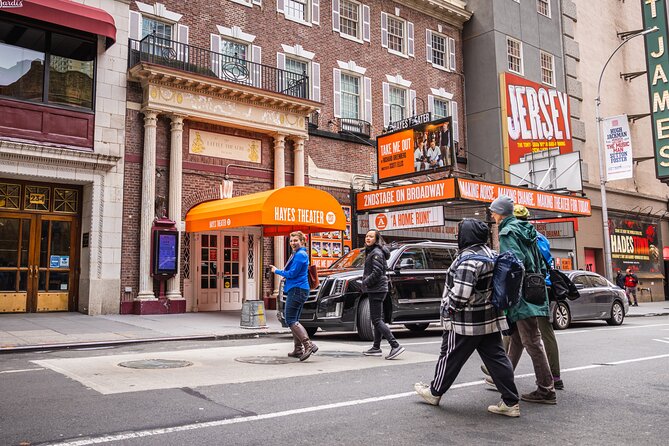
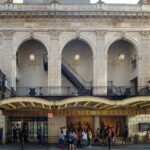
Your tour kicks off at the Winter Garden Theatre, right at 1634 Broadway. The location matters because the Winter Garden is one of those landmarks that immediately sets the tone. You get that classic Times Square theater district feel from the start, so you are not just wandering. You are learning as you walk.
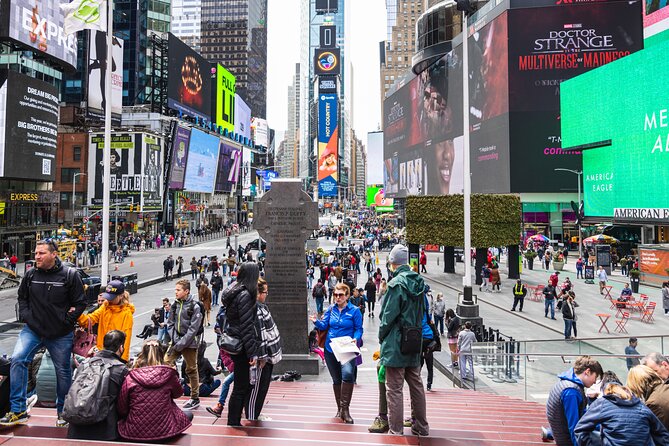
From there, the group moves into Times Square, which used to be known as Longacre Square. That shift from rougher neighborhood to showbiz center is one of the most useful ideas for first-time Broadway visitors. Once you know that this place did not always look like a neon postcard, the tour’s theater stories start landing harder.
If you want the practical angle, this is how you get your bearings fast. Instead of trying to memorize names while the lights blur, you learn what the district is and how it functions. Then the rest of the walk makes sense.
You can also read our reviews of more tours and experiences in New York City.



Duffy Square and the TKTS reality check
The next stop is Duffy Square, a short walk from Times Square. This is where the TKTS Booth is located, the place tied to same-day ticket lotteries that bring a huge flow of people.
Why this matters on a tour like this: it turns Duffy Square from a random square with a line into part of the Broadway rhythm. Knowing that lots of people come here daily to gamble a little on getting in for less money makes you understand the energy around you. You also get context for why ticket lines and last-minute choices are such a big part of Broadway culture.
It is also a nice contrast. Times Square can feel overwhelming, but Duffy Square is still tightly connected to theater access. You get a “how people actually buy shows” moment right in the middle of the marquee world.
Walking Broadway’s marquee corridor, how theaters connect to what you watch
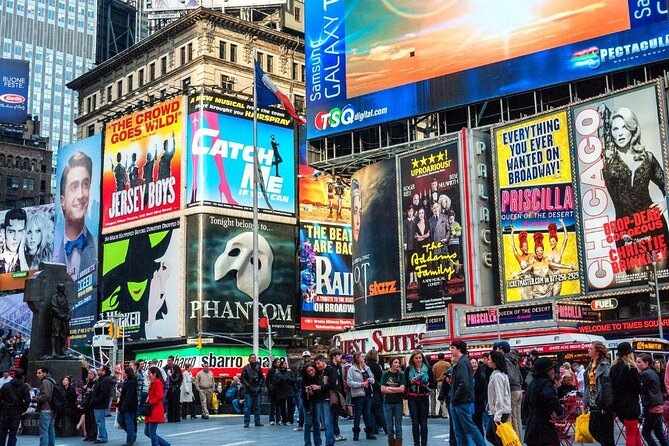
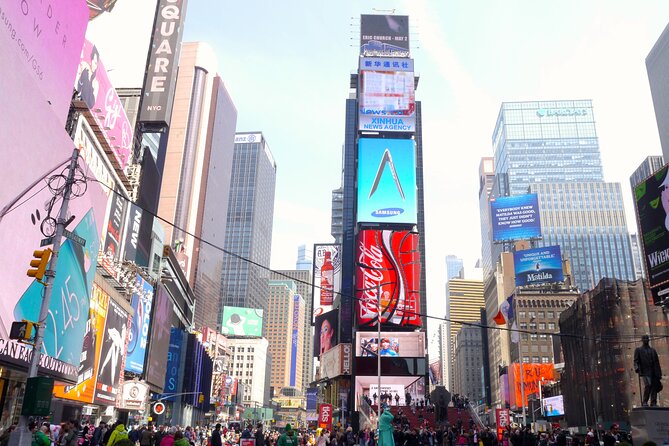
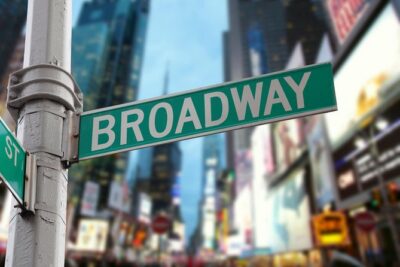
Then you head down Broadway itself, about 50 minutes of walking and theater spotting. The streetscape here is the classic look: bright signs, posters, and marquees that feel like they are shouting show titles at you.
What makes this portion valuable is that the guide is not only listing buildings. You get history and production context as you pass theaters. That is what transforms the walk from sightseeing into Broadway literacy. You start noticing patterns, like which theaters lean musical-heavy, where certain production eras left their mark, and how the district’s growth shaped the types of shows that got made.
This is also where your theater fan brain gets a workout. The tour uses the buildings as chapters, so you are not just seeing a lot of venues. You are learning what each one represents, and that changes how you will read the marquee once you start planning your evening.
Richard Rodgers Theatre and Hamilton: one stop, a whole modern chapter
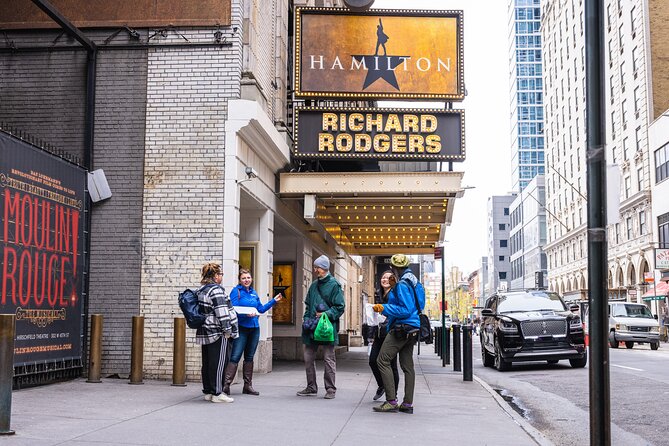
One of the standout named stops is the Richard Rodgers Theatre. It is named after composer Rodgers, with credits like Oklahoma!, The Sound of Music, The King and I, and South Pacific. That naming detail is not trivia for trivia’s sake. It signals how Broadway remembers its creative power centers, and it helps you see how musical history is built into the physical landscape.
Since 2015, the Richard Rodgers Theatre has been home to Lin-Manuel Miranda’s Hamilton. If Hamilton is on your radar, this stop gives the title more weight. You are not only looking at a theater. You are pointing at a specific era of Broadway that reshaped how audiences think about casting, storytelling, and scale.
Even if you have not seen Hamilton, you will likely feel the meaning here. The guide’s job is to connect that modern cultural moment to the broader theater district, so the marquee is not just a name. It is a reference point.
Majestic Theatre: big scale and show titles you recognize
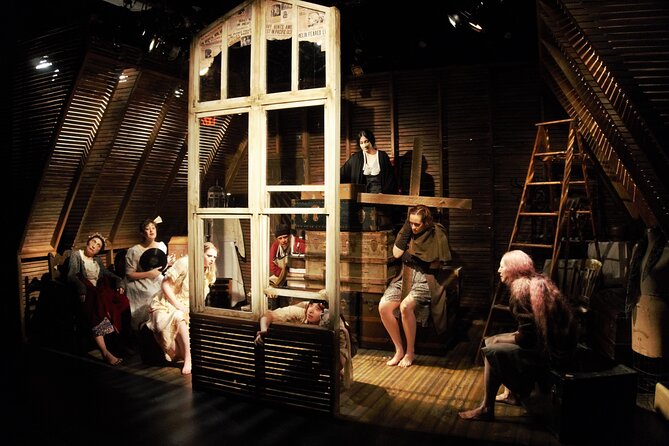
Another named theater stop is the Majestic Theatre. It is described as one of the largest on the strip, with a track record that includes The Music Man, Camelot, and The Wiz.
This stop is useful even if you do not know the exact year-by-year history. You get a feel for how Broadway theaters vary in size and legacy. The Majestic signals “classic scale,” the kind of house that has long been associated with major productions and big audience draw.
It is also a reminder that Broadway is not one thing. It is a set of venues with different identities, and those identities matter when a show is choosing a stage. As you walk, you start to see the district as an ecosystem rather than a single street.


The 1913 theater, Tony Awards, and how shows get made offstage
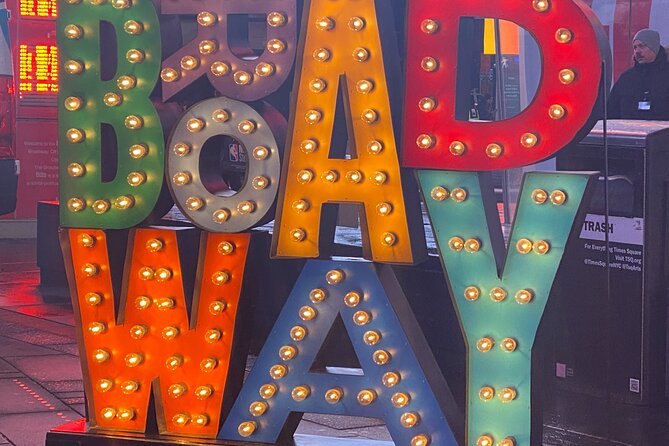
A few stops shift from marquee names to how Broadway operates. One theater on the route is described as open since 1913 and a staple where the Tony Awards have been hosted over the years. Even without getting lost in dates, that detail gives you perspective. Broadway has been formalizing its prestige for a long time, and venues play a role in that tradition.
Then the tour moves toward the “writer-first” side of the industry. You will pass a theater company that specializes in developing writer-focused plays and productions, connected to the Tony Award-winning musical Dear Evan Hansen. This is a key context point because most people only think about the final production they buy tickets for. The reality is that Broadway starts with development, rehearsal, rewrites, and shaping.
After that, you get a stop at a theater complex that operates as a hub for up-and-coming theatre companies, offering rehearsal space and tech support. That kind of infrastructure is easy to overlook when you are focused on star casting and opening nights. Here, you are being shown the backstage logic of the district, even if you are still standing on the sidewalk.
Finally, the walk includes a venue described as hosting more plays than musicals and showcasing Pulitzer Prize winners including Driving Miss Daisy and The Flick. That detail helps you understand why Broadway is not only a musical machine. Plays have a real place here too, and the district supports both forms.
Hell’s Kitchen rehearsal studio: what you might hear and what you should expect
The tour ends with a stop in Hell’s Kitchen at a working rehearsal studio. This is the heart of the behind-the-scenes promise: insight into performers, choreographers, and crew, the people you rarely see unless you are already in the production world.
You may also get the chance to observe live classes or rehearsals when available. That is important wording. On Broadway, schedules change, and studios sometimes have classes happening rather than full company rehearsals. So what you experience can vary, even though the goal stays the same.
From the overall vibe of the tour experience, this is the part people remember most when it lines up with what is running that day. It is also where expectations need the most calibration. If you are hoping for nonstop backstage drama, aim for a lower-key reality: you are likely to witness the training and rehearsal process more than a full public-facing “backstage tour” moment.
Still, it can be fascinating. Watching how performers move through work, even at a class level, gives you a different appreciation for what you later see onstage. You start to understand that polish is built, not magically created.
Price and logistics: is $50 worth your time for 2 hours?
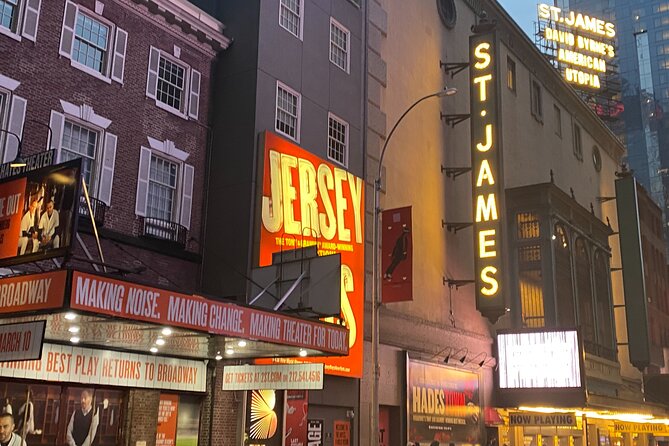
At $50 per person for about 2 hours, the value hinges on one thing: you are not only getting walking-and-spotting. You are paying for a guided story that connects the district to show history and show mechanics, plus a rehearsal studio stop when available.
This is also a tour where small-group size matters. With a maximum of 12 travelers, you get more conversational space than you would on a big bus-style tour. If you are the type who likes to ask questions like where certain shows rehearse or why certain theaters have certain reputations, the format supports that.
Two more practical notes:
- Food and drinks are not included, so plan for a snack before or after. Times Square eats can be pricey and rushed.
- The tour operates year-round, proceeding rain or shine unless weather is unsafe. Comfortable shoes are not optional here because you are walking through the Theater District and Hell’s Kitchen.
Who this tour fits best
This is a strong match if you are a theater fan who wants your Broadway day to feel more informed. It also works well if you have tickets for a musical or play and you want the evening to hit deeper. The tour gives context so you will recognize names, understand how theaters fit together, and grasp why Broadway looks the way it does.
It is also family-friendly. Children under 6 can join free when accompanied by a paying adult, and the walking is described as moderate for most fitness levels. That matters if you are traveling with kids who need frequent explanations and occasional perspective shifts.
Because the tour is in English and capped at 12 people, it suits travelers who want interaction rather than just passive sightseeing. If you like history with a practical edge, you are in the right lane.
Should you book this Broadway tour?
I think you should book it if you want a guided way to get oriented in the Theater District, learn how Broadway venues relate to productions, and see a rehearsal studio stop that can include a live class or rehearsal.
I would hesitate if your top goal is guaranteed backstage access inside an actively rehearsing show. Based on how the rehearsal studio visit works (it depends on what is happening that day), you should expect an observation window more than a locked-in production show-and-tell.
One smart strategy: book this before you go to a show. It helps you connect the title on your ticket to the places and people behind it, and it makes your Broadway evening feel less like random entertainment and more like understanding the machine that produces it.
FAQ
How long is the NYC Broadway tour?
The tour runs about 2 hours.
Where does the tour start?
It starts outside the Winter Garden Theatre at 1634 Broadway, New York, NY 10019, USA.
Is this tour small-group?
Yes. The maximum group size is 12 travelers.
Do you go inside theaters or rehearsal spaces?
You visit a working rehearsal studio when available, where you may observe live classes or rehearsals. The data does not say that all theaters are entered.
What is the weather plan?
The tour operates year-round and proceeds rain or shine unless weather conditions are deemed unsafe.
Is the tour suitable for kids?
It is child-friendly. Children under 6 may join free of charge when accompanied by a paying adult.
What should I wear?
Wear comfortable, casual clothes and especially comfortable shoes for walking.
More Tours in New York City




More Tour Reviews in New York City
Not for you? Here's more nearby things to do in New York City we have reviewed







More Broadway Experiences to consider.
 ★ 4.8Aladdin the Musical on BroadwayTickets from $831,800 traveller reviews
 The Lion King on Broadway1,609 traveller reviews
 MJ the Musical on Broadway1,510 traveller reviews
 Moulin Rouge! the Musical on Broadway1,329 traveller reviews
 Harry Potter and the Cursed Child on Broadway700 traveller reviews
 Chicago the Musical on Broadway687 traveller reviews
 ★ 5.0Broadway and Times Square Insider Tour with Theater ProfessionalTickets from $39651 traveller reviews
 ★ 4.5The Lion King On Broadway TicketTickets from $143649 traveller reviews
More useful New York routes