
Review · CENTRAL PARK TOURS
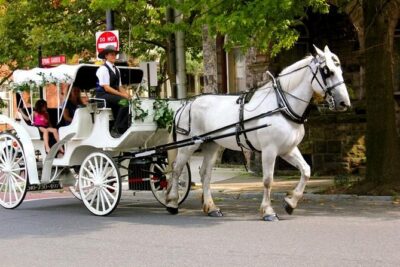
NYC Horse and Carriage Central Park Tours
Central Park goes quiet at carriage speed. You get a private ride through 40 to 45 minutes of park highlights, with your driver offering on-the-go commentary and chances to take scenic photos without the usual walking-tour crowd. I love the photo stops that actually help you frame landmarks like Bethesda Fountain and Strawberry Fields, and I also like that you can pick the time of day to match your schedule and your lighting. One thing to consider: the ride is short, so on busy days the picture opportunities can feel a bit limited, and the experience can end with a hurry.
You meet at the Ritz-Carlton New York, Central Park at 50 Central Park S, and the ride ends back at the same spot. This is set up as a private outing for just your group, and you’ll use a mobile ticket. If you get a driver like LEO, Peter, or Pharvis, you’re likely to get extra personality, quick wit, and a good sense of pacing.
Quick hits before you climb aboard
- Private carriage time, not a group shuffle: you stay with your own party for the full ride.
- Driver-led stories: you hear what you’re looking at while you move, not after the fact.
- Time-of-day flexibility: morning, afternoon, or evening can change the whole feel of the tour.
- Photo-friendly landmarks: expect stops or pull-offs near major sights like Bethesda Fountain and Strawberry Fields.
- Good Central Park coverage in under an hour: it’s a smart way to see more without burning your whole day walking.
- Short and sweet: you’ll see a lot, but you should still plan for a faster end when it’s busy.
Why this Central Park horse and carriage tour works better than a long walk
Central Park is one of those places that looks different depending on how you travel. On foot, you’re constantly moving, constantly stopping, and constantly negotiating crowds. On a horse-drawn carriage, you move at a slower rhythm. That changes how you take things in.
The big win is less stress, more seeing. You get to look around as you go, rather than constantly checking directions. And because your driver is talking as you travel, you naturally learn what you’re looking at, even if you’re not the type who reads every plaque.
I also like that this tour is built around time efficiency. In about 40 to 45 minutes, you can cover multiple “must-see” areas, including the lake area and the West Side icons. If you only have a short window, it’s a strong choice.
More NYC tours and experiences for the shortlist
Where you start at the Ritz-Carlton, and what the timing really feels like
Your meeting point is the Ritz-Carlton New York, Central Park at 50 Central Park S. That matters more than it sounds. It’s a clear landmark with easy wayfinding, which helps when you’re arriving from midtown or you’re dealing with traffic.
The total ride is listed at 40 to 45 minutes. In practice, that means the carriage portion feels substantial, but you still want to treat it like a tight highlight loop, not a slow day-long tour. A bathroom stop can come up on the route, and if you’re hoping for lots of extended stops for photos, manage expectations. You’ll get memorable views, but you won’t have time to wander.
Because it’s private, your group can set the tone. If you want more pictures, you can ask your driver to help you line up angles at key spots. If you want more stories, you can lean into the commentary as you ride.
Carousel, Wollman Rink, and the classic Central Park fun-zone energy
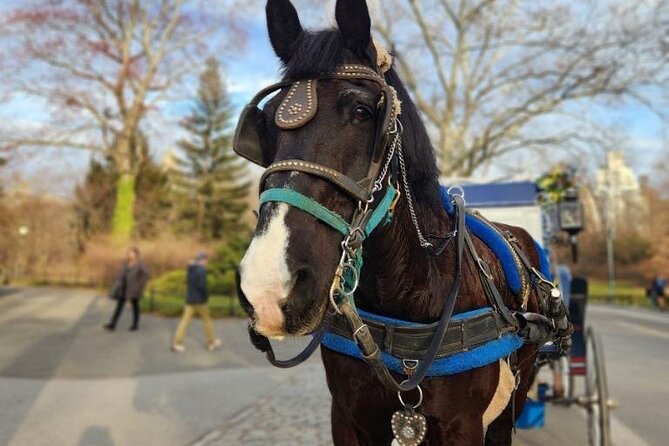
Early on, you’ll pass by some of the Park’s most recognizable “Central Park season” areas.
One highlight on the route is the Central Park Carousel. It’s a big deal in Park lore, with about 250,000 rides each year and an original attraction dating back to 1871. Even if you’re not riding, it’s a fun visual landmark, especially if you like classic New York nostalgia.
Next, you’ll glide past Wollman Rink, opened in 1949. The rink is known for winter skating, and the idea of gliding across the ice under a sky full of stars is part of what makes it so iconic. Even outside the skating season, it’s a meaningful stop because it tells you how Central Park shifts with the calendar.
This portion of the route also helps you understand Central Park as more than “pretty scenery.” It’s an active public playground, with traditions that locals and visitors keep coming back for.
Chess & Checkers House and the Children’s District, where play was planned on purpose
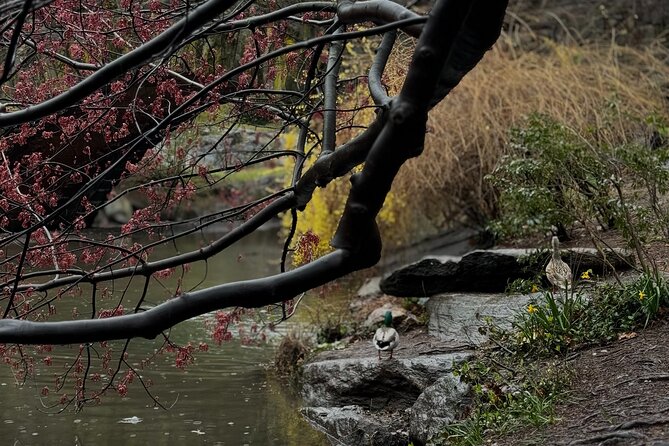
Central Park includes places designed specifically for play. Two of them come up during the ride.
Chess & Checkers House, built in 1952, is a simple concept with a smart goal: a space where visitors of all ages can play. There are 24 game tables shaded by a wooden trellis around an octagonal brick structure. On a slow-moving carriage, you get a chance to actually take in that design, not just rush past it.
Then there’s the Children’s District, home to the Dairy. This is one of those details that makes Central Park feel thoughtfully engineered. Before modern playgrounds existed, the Park set aside an area specifically for children, and the Children’s District was completed in 1872. The takeaway for you is that the Park’s “family areas” are not random. They were planned from the beginning.
If you’re traveling with kids or you’re a big kid at heart, this is the kind of stop that turns Central Park from a stroll into a story.
Olmsted and Vaux promenade, and why the trees matter as much as the views
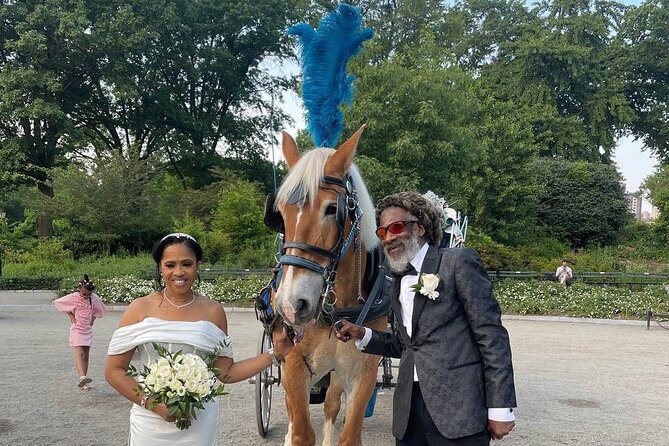
You’ll ride along a wide, straight path lined by two rows of American elm trees. This is the kind of place Central Park visitors often photograph without realizing the design thinking behind it.
Park designers Frederick Law Olmsted and Calvert Vaux shaped parts of Central Park to work like a formal promenade. That means this area is meant for strolling, pausing, sitting, people-watching, listening to music, and generally absorbing the scene. You’ll feel that purpose when you look around, because the path is built for moving bodies at a calm pace and for long looks.
This is also a great reminder that the “best photos” in Central Park are often about composition, not just the landmark. Symmetry, rows of trees, and long sightlines are all part of why a carriage ride works.






Balto and the boat ponds: stories with motion, not just static sights
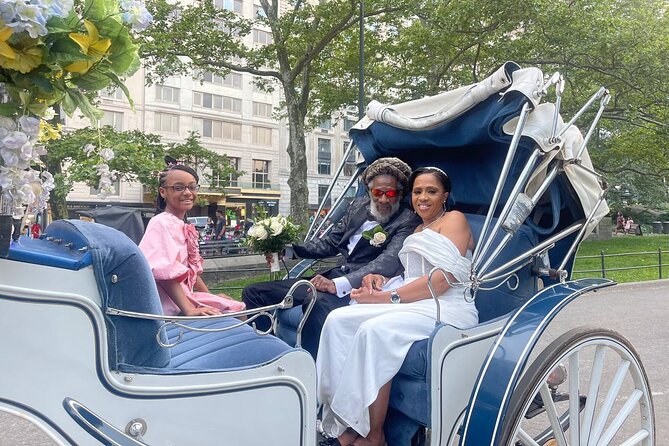
Two route themes repeat in a good way: animals and water.
Balto is one of the most dramatic stories you’ll hear on the ride. After a diphtheria outbreak threatened the town of Nome, Alaska, vaccines couldn’t be flown due to weather. A relay of dog-sled teams carried the vaccine roughly 700 miles in blizzard conditions in about five days and seven hours. Temperatures were around minus 30 degrees Fahrenheit. It’s the kind of story that feels almost impossible, and it lands well in Central Park because it reminds you that the Park’s tributes connect to real-world history and courage.
From there, you’ll head toward Rumsey Playfield and the Model Boat Pond. Rumsey Playfield has shifted over time, and it originally featured a restaurant created by Park co-designer Calvert Vaux. No gambling here, just a name that means little house in Italian.
The Model Boat Pond is the working heart of this area: children and hobbyists launch miniature sailboats and yachts. Boats are stored and rented at the nearby Kerbs Boathouse, which also houses a café. Even if you’re not watching a race, the setting gives you a sense of the Park as a living place where people do real hobbies.
Then you’ll pass Loeb Boathouse, known as the launch point for rowboats. It’s a simple idea, but it’s a big one for your experience. Central Park’s lake is one of the most significant landscapes in the Park, and this route gives you a chance to see it from the outside track while you’re moving through.
Bethesda Fountain and Cherry Hill, the kind of stops you actually remember
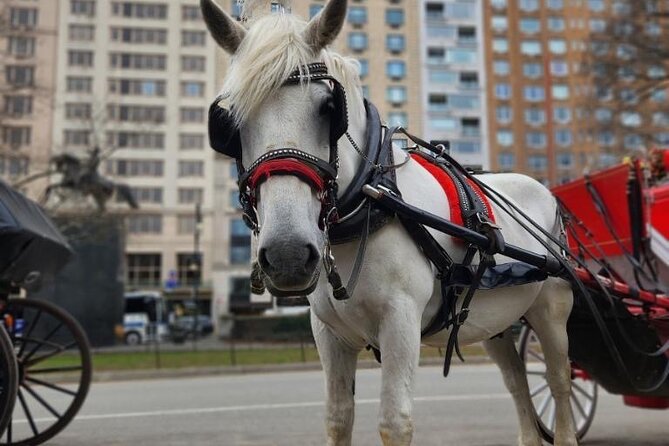
When your carriage reaches the fountain zone, you’ll feel the shift. Fountains in Central Park aren’t just “pretty.” They’re central meeting points in a visual map.
Bethesda Fountain is a must-stop moment. At the top is the Angel of the Waters, a bronze figure of a robed angel with raised wings stepping on a stone that spouts water. Water cascades down into basins that fill a large circular pool. From a carriage, you get a cleaner view than you would from behind crowds, and you can take photos that include the fountain as a full scene rather than a partial frame.
Cherry Hill Fountain is another highlight near the center of the carriage concourse at the top of Cherry Hill. It’s ornate but not hard to understand once you see it: the stone base supports a finial with small saucers for birds to drink from and a light fixture with eight globes. Water drips down from the saucer, onto a granite and tile base, then spills into a bluestone basin. This is the type of detail your driver can point out while you roll by, and it makes your photos look more intentional.
These two fountains also help you understand why carriage tours are worth it. They give you time to look upward and frame the scene, instead of always staying at eye level while walking.
The West Side icons: Strawberry Fields, Daniel Webster, and that romantic Lake-area vibe
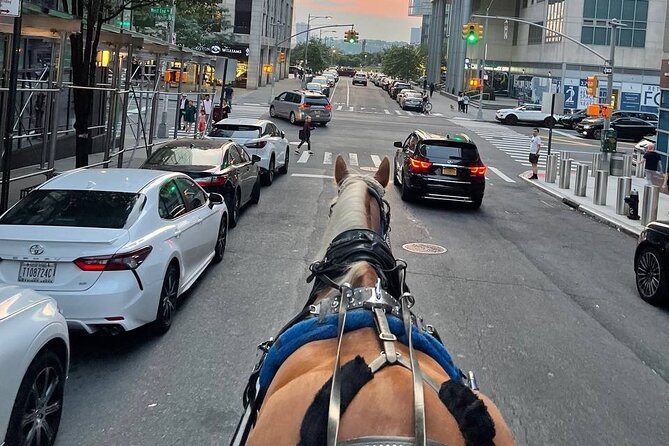
Central Park’s West Side has an identity all its own, and your route touches a few of its defining points.
Strawberry Fields is the memorial to John Lennon, the British musician and peace activist. The memorial includes the Imagine mosaic, where many people come to pay tribute. The name references Lennon’s song Strawberry Fields Forever. Even if you’re not a hardcore fan, the emotional weight of the space comes through quickly. It’s quiet in a way that feels different from the surrounding park bustle.
Daniel Webster’s monument sits along the West Drive near 72nd Street. The bronze figure shows him gazing into the distance, right hand tucked into his coat, with a stack of books at his feet. If you like landmarks that feel like they belong to a real city story, this is the kind of stop that adds variety beyond just scenery.
You’ll also pass major dining and open-meadow spaces. Tavern on the Green, in the historic building once known as the Sheepfold, has been a fine dining destination since the 1930s. Sheep Meadow is one of Central Park’s best-known retreats from urban life. If you’re tired from subway days, this kind of open space is a mental reset.
And if you’re the kind of person who stops to admire architecture, keep an eye out for Pinebank Arch. It’s an elegant cast-iron bridge spanning the bridle path and shows up as a distinctive ornamental feature in the south end of the Park.
Macy’s parade route and the practical question: how much photo time do you really get?
One part of the route is the shopping area and where the Macy’s parade goes through. That’s a helpful context point. Central Park is also a stage for big city events, not just quiet relaxation.
Now, here’s the practical question you should ask yourself before booking: how much photo time do you want?
The ride is designed for scenic photos from your private carriage, and you’ll hear commentary from your driver. Many people love the stops and the pacing. But if you’re visiting during a high-demand day, you may notice a quicker end to the ride, or fewer opportunities to stop longer for pictures. That doesn’t ruin the experience, but it does mean you should come with a clear goal: get a set of strong photos and enjoy the stories, then plan separate walking time only if you have it.
A smart strategy is to decide in advance which three landmarks matter most to you. Then during the ride, watch for those moments and ask your driver for a quick photo setup when you’re closest.
Who should book this Central Park carriage ride, and who should skip it
This is a good fit if you want Central Park highlights without burning energy on a long route. It’s also great if you value the ride itself as part of the experience, like gliding through the Park while someone else handles the logistics.
It’s especially suitable for:
- Couples who want a romantic, low-effort way to see key places
- Families who want a calmer overview rather than a stop-and-start walk
- Anyone short on time but still determined to hit major sights like Bethesda Fountain and Strawberry Fields
I’d be a bit more cautious if:
- You’re expecting a lot of long photo pauses and wandering time
- Your schedule depends on squeezing in extra stops after the carriage ends
Also, if you’re booking based on driver personality, you can’t control who you get. Still, the named guides in the mix, including LEO, Peter, and Pharvis, point to the kind of experience style you can hope for: talk, humor, and good timing.
Final call: should you book NYC Horse and Carriage Central Park Tours?
I think you should book this if you want a smooth, scenic Central Park overview with a private feel. The value is in the combination: 40 to 45 minutes of movement, a driver who explains what you’re seeing, and major landmarks grouped into one ride. It’s one of the easier ways to experience Central Park when you’re not trying to out-walk the city.
If you’re the type who loves slow wandering and long stops, treat this as your “highlight intro,” then add walking time afterward on your own terms. If you’re short on time or you just want the Park to be fun and easy, this carriage tour is a strong choice.
One last practical note: the tour is described as requiring good weather. If weather is uncertain, have a backup plan for swapping dates.
FAQ
How long is the Central Park horse and carriage tour?
The ride is listed at about 40 to 45 minutes (approx.).
Where does the tour start?
The tour starts at the Ritz-Carlton New York, Central Park, 50 Central Park S, New York, NY 10019, USA.
Does the tour include commentary from the driver?
Yes, the driver provides commentary about Central Park’s sights as you ride.
Is it a private tour?
Yes. It’s a private tour or activity, and only your group participates.
Do I need to print a ticket?
No. It uses a mobile ticket.
Can I choose what time of day to take the ride?
Yes, you can choose the time of day that best fits your schedule.
Is this tour accessible to most travelers?
It’s described as suitable for most travelers.
Are service animals allowed?
Yes, service animals are allowed.
What happens if the weather is poor?
The experience requires good weather. If canceled due to poor weather, you’ll be offered a different date or a full refund.
What is the cancellation window for a refund?
Free cancellation is available if you cancel up to 24 hours in advance for a full refund.
More Horses in New York City

More Tours in New York City




More Tour Reviews in New York City
Not for you? Here's more nearby things to do in New York City we have reviewed







More Central Park Tours to consider.
 ★ 5.0Central Park Pedicab Guided ToursTickets from $387,108 traveller reviews
 ★ 5.0Private Central Park Pedicab TourTickets from $386,981 traveller reviews
 ★ 4.2Central Park Bike RentalsTickets from $92,528 traveller reviews
 ★ 5.0Official NYC Horse Carriage Rides in Central Park since 1979 ™Tickets from $992,365 traveller reviews
 ★ 4.1Central Park Bike RentalTickets from $81,651 traveller reviews
 ★ 4.9Private Central Park Pedicab TourTickets from $401,637 traveller reviews
 ★ 4.7Central Park Bike RentalTickets from $91,509 traveller reviews
 ★ 4.0Carriage Ride in Central Park (VIP – PRIVATE) Since 1964™Tickets from $141,074 traveller reviews
More useful New York routes