
Review · CENTRAL PARK TOURS
NYC: Private Tour Secrets of Central Park
Central Park has secrets to notice. A private, interactive guide helps you spot what most people miss, from grand entrances to small details in stonework and sculpture.
I love the customizable feel, because you get to steer the pace. You can linger where you care, then move on before the park gets crowded and noisy around the edges.
One thing to consider: if you dislike history told as a string of dates, you’ll want to set the tone with your guide early, since the focus can skew factual.
Key highlights at a glance
- Start at Grand Army Plaza by the General William Tecumseh Sherman Monument, then get oriented fast
- Private, hands-on style where the route can match your interests in real time
- Classic Central Park icons covered in a tight 2-hour flow, including Bethesda Terrace and Bow Bridge
- Art and architecture explanations tied to what you’re actually looking at, not just a lecture
- Major landmarks at multiple moods from Sheep’s Meadow open space to Strawberry Fields reflection
- Rain or shine planning, so you can keep your day on track
Grand Army Plaza to your first wow moment
You begin at Grand Army Plaza, right on Fifth Avenue, between 59th and 60th Street, in front of the General William Tecumseh Sherman Monument. That matters more than it sounds. From this corner you quickly understand how Central Park pulls Manhattan into a different rhythm, opening up from street noise into a designed world of pathways, sightlines, and set pieces.
The guide will get you oriented and moving. You’ll likely cross from the “city edge” into the park’s interior thinking, which is where Central Park’s biggest trick shows up: nature-like scenes built with deliberate planning.
In a standard walking day, you can wander, stop for photos, and still feel like you missed the meaning. In this format, you get help turning your eyes on. That is the real value of a private guide here. You’re not just collecting stops, you’re learning how to read the park while you walk.
You can also read our reviews of more private tours in New York City


How a private 2-hour Central Park route stays fun
Central Park is huge. Most people try to cover too much and end up seeing everything only halfway. The private format solves that math problem.
You get a 2-hour session, with a licensed local guide, and it’s built to be customizable. That means you can ask for a route that fits what you want most:
- iconic photo spots and architectural details
- calmer garden moments and memorial spaces
- viewpoints and park design you can interpret as you walk
The best part is that your guide can respond to your group. If you want more talking at one stop and shorter looks at another, you can shape it. If someone in your group needs fewer steps, you can adjust. This is also wheelchair accessible, so you can plan without treating access as an afterthought.
The downside of any 2-hour plan is simple: you can’t do slow, museum-level detail everywhere. Expect highlights. The guide’s job is to pick the most meaningful angles, then help you see why they were chosen.
Grand Army Plaza, the Zoo area, and the park’s “entrance logic”
From Grand Army Plaza, the guide’s explanations tend to focus on how Central Park transitions from city to park. That transition is a key design feature, and once you understand it, you’ll notice it everywhere.
The tour also includes the Central Park Zoo area. Even if you do not go inside, being there helps you connect Central Park to another layer of the park experience, animals and public recreation. It’s a reminder that this isn’t only a “pretty walk.” It’s been a public destination for many kinds of days.
Your guide will likely keep the pace moving so you can feel the park changing as you move. That’s part of why private tours work better than self-guided wandering. You get commentary exactly when you are standing where it matters.
The Pond, Loeb Boathouse, and why water is a design tool
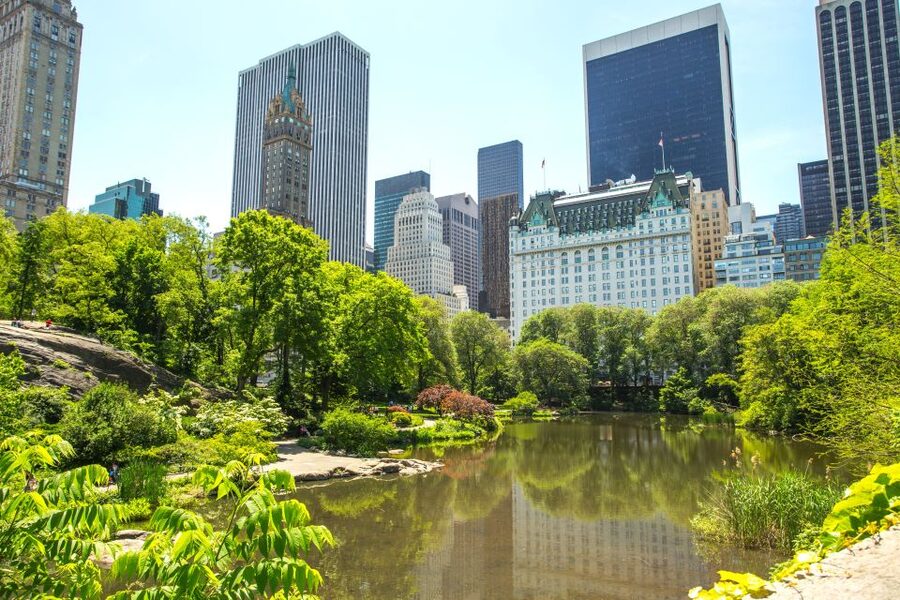
One of the most practical skills you’ll pick up is how Central Park uses water to guide your attention. The Pond and the Loeb Boathouse area show you that water is not only scenic, it’s structural. It creates reflections, open sightlines, and a visual pause that makes the rest of the park feel more dramatic.
Even if you’re not a “boat person,” the Boathouse neighborhood gives you a strong sense of scale. Central Park can feel small when you’re stuck in one corridor. Step near the water and your view expands, and the park starts to feel like its own world.
The guide’s job here is to connect what you see to the design intent, and that helps you appreciate the park as a planned work, not just a random collection of attractions.
Tavern on the Green and Sheep’s Meadow, big open-space energy
Tavern on the Green and Sheep’s Meadow are the “wide air” portion of Central Park. They’re where the park stops feeling like a sequence of landmarks and starts feeling like room.
Tavern on the Green sits near one of the park’s more social zones. Even if you don’t plan a meal, it helps you understand how Central Park has always supported everyday recreation, not only quiet sightseeing.
Sheep’s Meadow is different. It’s open space, and it changes how you walk through the park. Your eyes lift. You see more sky. And you start noticing how paths and views are arranged to make that open feeling possible.
If you want a break from constant visuals, this is where you get it. Bring a snack if you can, then use the guide’s commentary to match what you see to the broader park story.






Strawberry Fields, the Mall, and the emotional “pause” in the design
The tour includes Strawberry Fields, and that is one of the spots where Central Park can feel personal. This is not about architecture trivia. It’s about tone.
Strawberry Fields is a space where the park shifts from postcard beauty into something reflective. A good guide helps you slow down a bit and notice how the area works as a memorial in the middle of a busy city.
From there, moving toward The Mall keeps that idea going. The Mall is about perspective. It’s a corridor-like feeling, where long views are part of the experience. When your guide points out design choices, it becomes easier to understand why you can feel the park guiding your gaze.
If you’re in Central Park for the first time, you’ll appreciate Strawberry Fields and The Mall as a “story beat.” They show how Central Park can shift emotions without changing geography.
Bethesda Terrace and Bow Bridge, architecture you can read with your feet
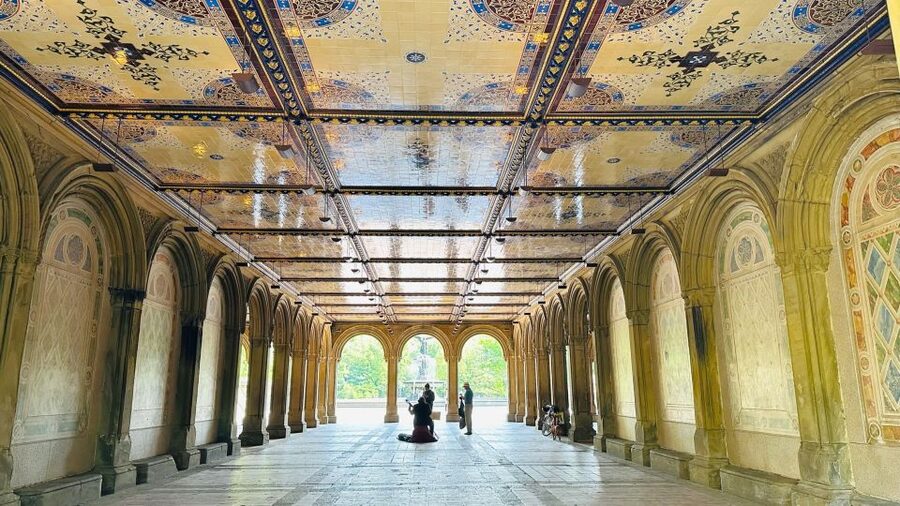
Bethesda Terrace is the sort of place where you realize Central Park has a strong architectural brain. It’s not just greenery. It’s built structure with sculptural details, dramatic framing, and a feeling that you stepped into a designed stage.
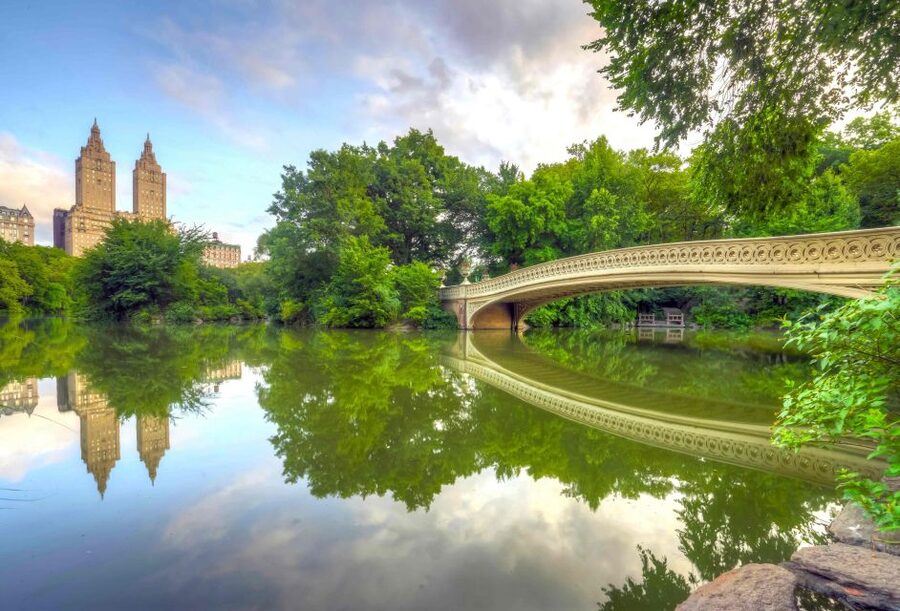
Bow Bridge is the follow-up. It’s a classic Central Park moment, but the guide can help you understand why it’s so memorable. The bridge acts like a connector, and the view around it turns the pond area into a composed scene.
This is where I’d focus your attention during the walk. Slow down, look up, then look across. The guide’s explanations here can turn random sightseeing into pattern recognition. You start seeing how Central Park keeps creating “views within views.”
Belvedere Castle, Delacorte Theater, and Shakespeare Gardens
Belvedere Castle and the surrounding theater and garden areas give Central Park a different kind of identity. This is where the park feels like a cultural campus.
Belvedere Castle adds height and drama. It changes the skyline of the park and gives you another kind of viewpoint. Even when you are not climbing, you are learning how Central Park uses elevation and structure for variety.
Delacorte Theater and Shakespeare Gardens bring performance and theme into the mix. They show that Central Park isn’t only for strolling. It’s for events, gatherings, and seasonal energy.
If your group likes art, performances, or themed spaces, this is the section that may feel the most “specific” compared to other parts of the park. The guide’s commentary can help connect each element to the broader idea of Central Park as a planned experience with many moods.
The Great Lawn and the sculptures, statues, fountains, lakes factor
Toward the end, you’ll reach the Great Lawn and you’ll get more of the open park “stage” feeling again. The Great Lawn is important because it’s one of the clearest examples of Central Park as a place for recreation and public gathering.
The tour also covers remarkable sculptures, statues, fountains, and lakes throughout. This is a big part of what makes Central Park feel like living art. A private guide helps you connect these pieces so they don’t feel random. Instead, they become part of the park’s visual language.
Practical tip: when you see a fountain or sculpture, pause for a moment and ask yourself what direction it faces and what view it anchors. With a guide, you’ll usually get the answer fast, and it makes the rest of the walk more enjoyable.
Price and value: is $149 per person worth a private guide?
At $149 per person for a 2-hour private tour, the value depends on how you like to travel.
If you’re the type who enjoys seeing iconic places with explanations you can actually use, this can be a good deal. Central Park is famous, which means it’s also easy to waste time. The guide helps you avoid that. You spend your limited time standing at meaningful points like Bethesda Terrace, Bow Bridge, Strawberry Fields, and the Great Lawn, instead of guessing what’s worth your effort.
You’re also paying for personalization. A customizable private tour means the route can match your group’s interests, and that often beats trying to “DIY but with research.” If you’re traveling with family members who want different things, private can help keep everyone engaged.
The other angle is expectations. You do not get an all-day museum pass. It’s a focused walk, and the guide’s approach may lean more factual at times. If that style works for you, you’ll likely feel like the time is well spent.
For budget minded travel, this is not a bargain ticket. For high value on time and clarity, it often lands well.
Who this Central Park private tour fits best
This tour is a strong fit if you:
- want a private, licensed local guide to help you interpret what you see
- like architectural details and public art, not just “photo stops”
- have limited time and want major Central Park landmarks covered efficiently
- want a flexible experience that can shift to your interests
It may be less ideal if you want a comedy show style narration or if you hate any history told as lots of dates. In that case, tell your guide what you prefer at the start, then steer toward what you care about: design, art, and what each site does for the visitor experience.
Should you book NYC: Private Tour Secrets of Central Park?
I’d book it if your goal is smart sightseeing, not just walking. The combination of a private guide, a customizable route, and coverage of big-name Central Park elements makes the 2-hour format work.
If you’re heading out anyway, you’ll also benefit from the practical choices: comfortable shoes matter here, and the tour runs rain or shine. Starting at Grand Army Plaza also helps you feel oriented right away.
In short, if you want Central Park to make more sense while you’re still in it, this is a solid way to spend your time.
More Private Tours in New York City



More Tours in New York City



More Tour Reviews in New York City
Not for you? Here's more nearby things to do in New York City we have reviewed









More Central Park Tours to consider.
 ★ 5.0Central Park Pedicab Guided ToursTickets from $387,108 traveller reviews
 ★ 5.0Private Central Park Pedicab TourTickets from $386,981 traveller reviews
 ★ 4.2Central Park Bike RentalsTickets from $92,528 traveller reviews
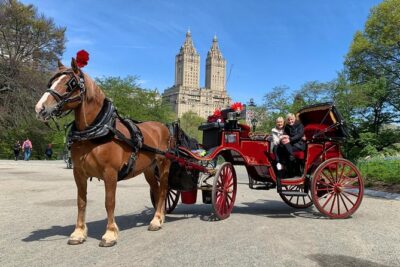 ★ 5.0Official NYC Horse Carriage Rides in Central Park since 1979 ™Tickets from $992,365 traveller reviews
 ★ 4.1Central Park Bike RentalTickets from $81,651 traveller reviews
 ★ 4.9Private Central Park Pedicab TourTickets from $401,637 traveller reviews
 ★ 4.7Central Park Bike RentalTickets from $91,509 traveller reviews
 ★ 4.0Carriage Ride in Central Park (VIP – PRIVATE) Since 1964™Tickets from $141,074 traveller reviews
More useful New York routes