
Review · NEW YORK CITY TOURS
Rock and Roll History and Culture Walking Tour in New York City
Rock history in New York feels like street level. This small-group tour strings together the big names, the famous venues, and the exact corners where the sound changed. You’ll move through the East and West Villages, with stops tied to the 1960s through the 1980s.
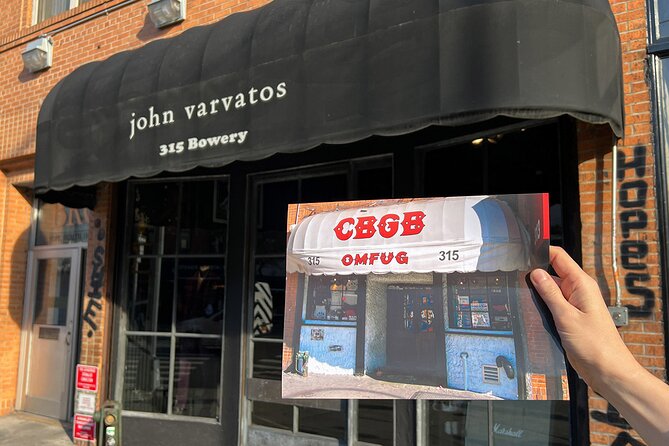
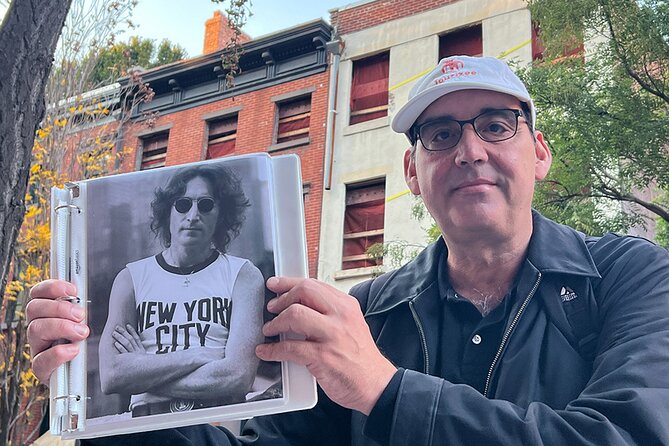
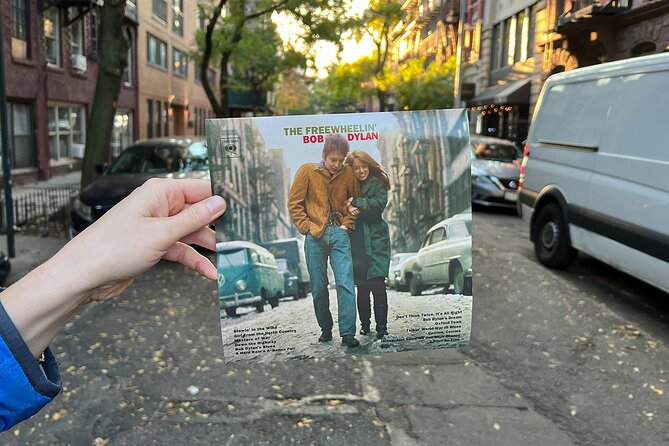
I like that the guide uses then-and-now photos at the stops. That makes the album cover locations, the clubs, and the homes feel less like trivia and more like something you can actually point at. I also like the private feel of the tour, with lots of room for questions during the walking.
One thing to consider: it’s mainly outdoor sidewalk time. If the weather turns ugly, you may need to reschedule.
Key Highlights at a Glance
- Small group, max 6 people, so questions are realistic, not stuck in your head
- Album cover locations you can see with your own eyes, not just read about later
- Multiple music eras in one loop, from late 1960s rock scenes into punk and beyond
- Free admission at most stops, so your $45 goes further
- Audio moment at Washington Square Park, so the story has an extra layer
- Easy theme check, East Village to White Horse Tavern, with names you recognize all the way
Rock and Roll in New York, Why This Route Works
New York doesn’t do music history in a museum-only way. It does it on corners, outside buildings, and in places you can walk by a thousand times without realizing what happened there. This tour leans into that reality.
What I like about this setup is the way it connects scenes. You start in the East Village with the late-1960s rock era and the art-rock crossovers. Then you hit CBGB for punk rock. After that, you bounce into Greenwich Village and the album cover locations. Finally, you wind down in the West Village and end at a legendary drinking address tied to Dylan Thomas.
It’s not just name-dropping. The tour is built around specific places: Fillmore East, CBGB, Cafe Wha?, Washington Square Park, John Lennon’s early New York home, Sid Vicious, and the White Horse Tavern. Seeing those references on foot makes your whole New York trip click faster.
You can also read our reviews of more walking tours in New York City


Price and Timing, What You Get for $45
At $45 per person for about 3 hours, you’re paying for guidance plus the structure of a themed walk. The value is stronger than a lot of low-cost tours because many stops come with free admission tickets, not paid entry after paid entry. One notable exception is Cafe Wha?, where the admission is not included.
The tour starts at 1:30 pm from 101 Astor Pl in the East Village area and ends at the White Horse Tavern at 567 Hudson St in the West Village area. Because it’s a single, continuous loop, you’re not charting multiple rides or hunting for the next spot on your own. You also get a mobile ticket, which helps on a day when you’re juggling photos, directions, and caffeine runs.
The average booking timing is also a clue: this one gets planned ahead, often about 48 days in advance. If you’re traveling in peak weeks, don’t wait until the last minute to grab your spot.
East Village Opening Act at Astor Place
You meet at 101 Astor Pl, New York, NY 10003, and the vibe is set right away. The East Village is where a lot of New York’s music-and-art overlap feels most natural. The tour starts by pointing you at places that helped shape how rock culture looked and sounded in the late 1960s and into the next wave.
Since the maximum group size is 6, the pace tends to stay conversational. That matters here, because a stop like Fillmore East isn’t just a building. It’s a shorthand for a whole shift in the way rock performed in New York.
Also, the tour is offered in English, so you won’t be stuck translating context from your own notes. You get the story as you walk, plus time to ask questions while the location is still right in front of you.
Stop 1: Fillmore East and Warhol’s Exploding Plastic Inevitable
This is the “church of rock and roll” moment. The stop at the Fillmore East location is positioned as a key late-1960s rock landmark, and it sets the tone for the tour. The pitch here is simple: this is where the performance culture and the cultural spotlight met.
Right nearby, you also see Andy Warhol’s Exploding Plastic Inevitable with the Velvet Underground. That pairing is important because it signals something beyond rock concerts. It points to a New York pattern where visual art, attitude, and sound all share the same stage.
Then the tour moves to the Pyramid Club connection in the 1980s, where music and art kept crossing paths. Even if you only know a couple of the names, the idea is easy to follow: New York kept rewriting what rock could look like.
Practical note: this is a 45-minute stop block. It’s long enough to get context and take photos without feeling rushed.
Stop 2: CBGB, Where Punk Rock Was Born
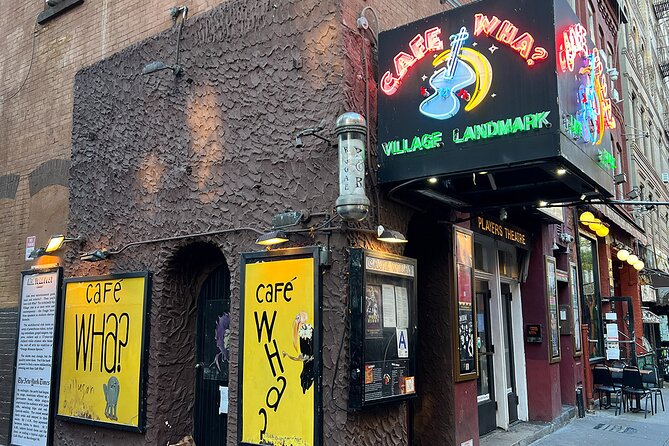
Next up is the CBGB site. The tour keeps it direct: punk rock was born here. That short statement lands because CBGB has become shorthand for a particular kind of speed, grit, and DIY energy.
At 20 minutes, you’re not sitting through a lecture. You’re standing where it happened, then getting the story that explains why this place matters even if you weren’t alive for the scene. If you like punk, you’ll recognize the name instantly. If you don’t, you’ll still walk away understanding why punk became such a turning point in rock culture.
This stop also works because it’s a bridge. You’ve just seen the East Village rock era and art crossovers, and now you pivot into a more stripped-down, confrontational music identity.
You can also read our reviews of more city tours in New York City






Stop 3: Greenwich Village Album Cover Locations
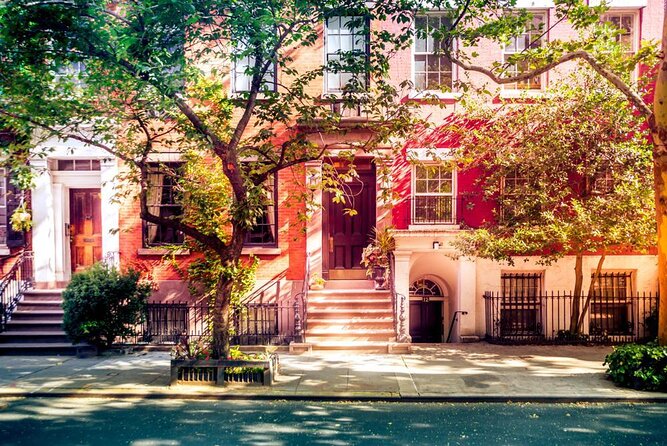
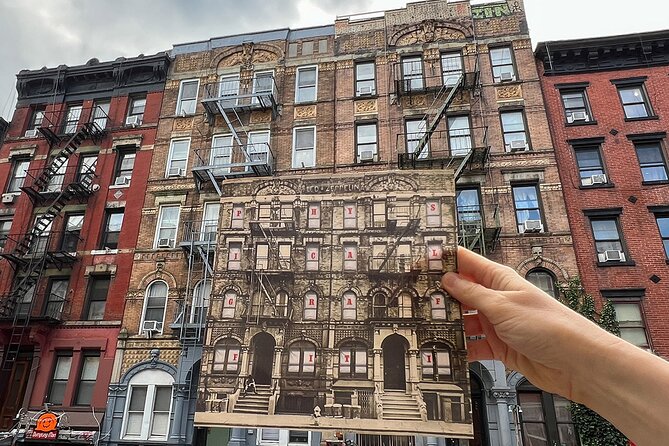
After CBGB, you head into Greenwich Village for classic album cover locations for Bob Dylan, Ramones, and Led Zeppelin. This is one of my favorite kinds of tour stops: the ones where you get to look at a wall, then instantly understand why a photo became iconic.
The tour frames these locations as part of how New York shaped music imagery. Album art isn’t just design. It’s also place-making. Seeing these spots in real life helps you understand the setting behind the myth.
This block is about 35 minutes, which is just enough time to slow down, line up your photos, and absorb the connections between different eras. Dylan represents one kind of cultural weight. The Ramones represent a different kind of New York immediacy. Led Zeppelin adds another scale, another style of rock storytelling.
A possible drawback: if album covers are your main interest, you may feel a little “wait, that’s it?” because each location is quick. The payoff is that the tour keeps moving through more eras instead of spending the whole time on only one thread.
Stop 4: Cafe Wha?, Where Careers Got Started
Cafe Wha? is where the tour leans into beginnings. It points you to venues where Bob Dylan and Jimi Hendrix launched their careers.
This is a short stop at 20 minutes, which keeps the momentum. It also matters that Cafe Wha? admission is not included. So while the tour gives you the location and context, you may need to decide on the spot whether you want to pay anything extra for interior access or programs. (If you’re trying to keep your day budget tight, you’ll want to plan for that.)
Still, the value here is the framing. Dylan and Hendrix are big enough that the names can float in your head without landing. This stop gives those names a street address feeling.
Stop 5: Washington Square Park Audio Tour and Buddy Holly’s Last Home
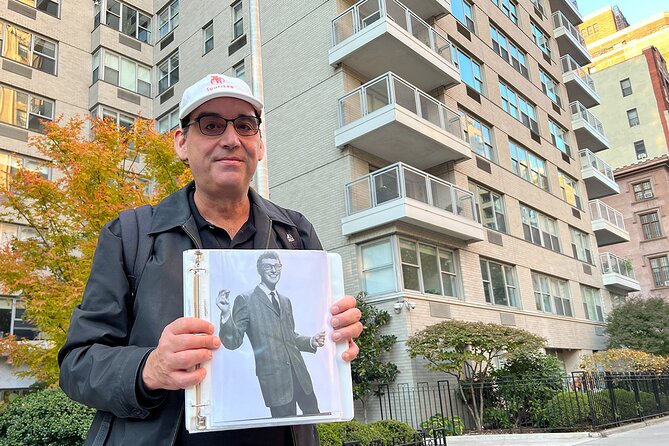
Washington Square Park is where the tour adds another format: an audio tour moment. You walk through the heart of Greenwich Village where Beats and folk musicians gathered, then you see the last home of Buddy Holly.
The audio piece helps because it breaks up pure walking narration. It also matches the theme: this is a park stop that’s not just about one star. It’s about the kind of culture that feeds performers over time.
This stop is scheduled for 20 minutes. That’s a good length because parks are tricky for tours. You can get stuck watching people for 45 minutes if you’re not paying attention. The tour’s structure keeps it moving while still giving you time to absorb the vibe.
Photo tip if you like details: take a quick shot of the street view before you start listening. That way, when you look back later, you’ll have both a visual and the story tied together.
Stop 6: West Village Stories, Sid Vicious and John and Yoko
Now the mood sharpens. West Village is quieter than the big-name hotspots, but it still carries heavy music lore.
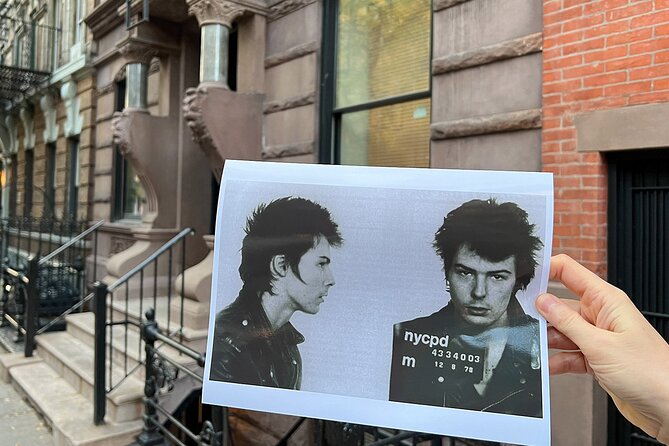
You’ll see where Sid Vicious died, and you’ll also visit the first home of John and Yoko in New York. That combination is intense because it puts two different kinds of New York music mythology on the same walk: punk’s darkest edge, then the Lennon-era relationship of art, fame, and activism.
This block is 30 minutes, so it’s longer than some of the earlier stops. That extra time makes sense. These are places people associate with strong stories, and you’ll want the guide to explain the connections without making it feel like a trivia sheet.
A consideration: if you prefer upbeat, feel-good music stories only, these stops can feel more dramatic. If you’re okay with rock culture at all its angles, this is where the tour really shows its bite.
Stop 7: White Horse Tavern, Dylan Thomas and the Final Stop
The tour ends at the White Horse Tavern, 567 Hudson St, with a stop that lasts about 10 minutes. It’s brief, but it’s a memorable finale.
The connection here is Dylan Thomas, the poet tied to an infamous drinking ending. Ending at a real, named tavern makes sense because it closes the loop on rock-and-roll culture, where nightlife, writers, and musicians often lived on the same streets.
Also, having the tour finish at a known location helps you plan your next step. You can grab a late drink, a meal, or just continue wandering in the West Village without needing another taxi hop.
What the Guide Does That Makes This Tour Feel Practical
The big thing I’d watch for in this tour style is how the guide uses pictures. One of the standout details is that the guide compares past and present views, so you’re not just hearing about old New York. You’re looking at it.
That matters at stops like album covers and the CBGB area. Streets look different over time, and your brain fills in the blanks if you don’t get prompts. Photo comparisons cut through that problem fast.
It also helps that the tour is paced across multiple neighborhoods rather than one long “stand and listen” block. You cover East Village, then Greenwich Village, then West Village. That keeps your day from becoming one long history lecture.
And because the maximum group size is small, the guide can answer your follow-up questions without rushing to the next corner.
Who This Tour Is For (And Who Might Not Love It)
This is a strong pick if you:
- want a structured way to see music landmarks in the Village areas
- like rock culture across different eras, not just one genre
- enjoy a small group where you can ask questions during the walk
- want iconic stop points like CBGB, Fillmore East, and album cover locations
It might be less ideal if you:
- hate walking in busy areas for about 3 hours total
- only want live venues or indoor tours, since many stops are location-based
- need everything to be fully paid-included, because Cafe Wha? admission is not included
Should You Book This Rock and Roll Walking Tour?
If your goal is to understand New York rock culture by seeing the actual places, I’d say yes. The mix of free-admission stops, the small group size, and the photo-based storytelling give you a lot for $45. The route also makes sense for first-timers and returning visitors, because it puts big names into walkable geography.
If you’re sensitive to weather or you’re visiting during unpredictable conditions, pick a day when the forecast looks stable. Also, check your plan for Cafe Wha? since admission is not included there.
If you want a rock-focused walk that feels more like street photography with context than a classroom, this is a very solid choice.
FAQ
How long is the Rock and Roll History and Culture Walking Tour?
It runs for about 3 hours.
What is the price per person?
The price is $45.00 per person.
Where does the tour start and where does it end?
The tour starts at 101 Astor Pl, New York, NY 10003 and ends at the White Horse Tavern, 567 Hudson St, New York, NY 10014.
Is the tour in English?
Yes, it is offered in English.
Are there admission fees for the stops?
Most stops are listed with free admission tickets. Cafe Wha? is marked as admission not included.
How big is the group?
The tour has a maximum of 6 travelers.
What happens if the weather is poor?
The experience requires good weather. If it gets canceled due to poor weather, you’ll be offered a different date or a full refund.
More Walking Tours in New York City


More Tours in New York City





More Tour Reviews in New York City


Not for you? Here's more nearby things to do in New York City we have reviewed








More New York City Tours to consider.
 ★ 4.7SUMMIT One Vanderbilt TicketsTickets from $4751,195 traveller reviews
 ★ 4.7Empire State Building Tickets – Observatory & MuseumTickets from $4725,757 traveller reviews
 ★ 4.6Statue of Liberty & Ellis Island with FerryTickets from $1918,683 traveller reviews
 ★ 4.5American Museum of Natural History TicketTickets from $3715,447 traveller reviews
 ★ 5.0New York in One Day Guided Sightseeing TourTickets from $9913,166 traveller reviews
 ★ 4.6Museum of Modern Art (MoMA) Entry TicketTickets from $3012,540 traveller reviews
 ★ 4.7One World Observatory Skip-the-Line TicketTickets from $3012,329 traveller reviews
 ★ 4.7New York CityPASS®: Save up to 41% at 5 Top AttractionsTickets from $15410,548 traveller reviews
More useful New York routes