
Review · CHINATOWN & LITTLE ITALY TOURS
The Original SoHo, Little Italy, Chinatown Walking Tour
One block, lots of stories. This Lower Manhattan walk mixes street history with practical tastings, so it feels like you’re learning and eating at the same time. I love the small-group size, and I love how the stops focus on the streets where immigrant life actually played out.
The only thing to watch is time: with about 30 minutes per neighborhood, you’ll get a smart overview, not an all-day, sit-and-stay deep dive. Come ready for sample-size food and brisk pacing.
Key Things I’d Put on Your Radar
- Small group, up to 15 people means you can ask questions and actually hear the guide.
- A focused 90 minutes keeps it manageable, even if you’ve already walked a lot that day.
- Street-level neighborhoods centers on Mott and Mulberry Streets, not the usual postcard stops.
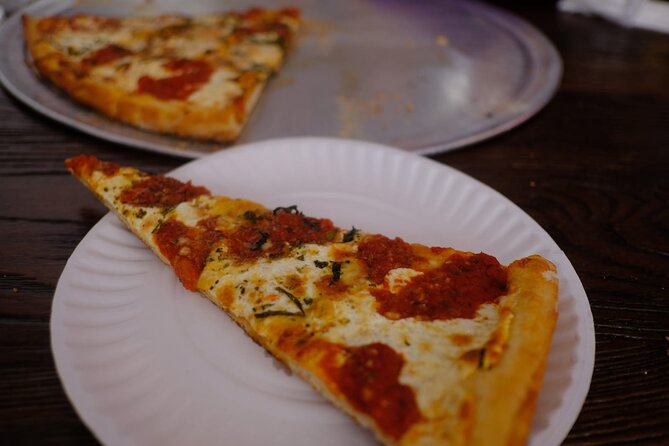
- Food samples are built in, including pizza, Chinese dumplings, and gelato, with cannoli included at the end.
- Church stop at 1801 gives you a real anchor point for how immigrant communities worshiped and gathered.
- Repeatable in a good way, since guides can shape the stories differently across visits.
Entering Lower Manhattan at Spring Street Park
Most NYC tours start with a big, obvious landmark. This one starts somewhere calmer, Spring Street Park at Spring Street. That matters because it helps you get your bearings fast. You’re already in the right mood for Lower Manhattan, not stuck in the “main drag” crowd.
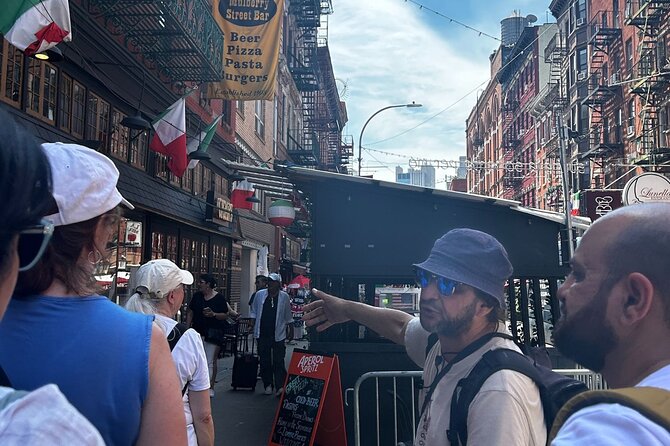
From the start, the tone is personal. The group max is 15, which is big enough to feel lively, but small enough that you’re not just one more face in a line. If you like asking questions and getting answers that actually fit what you’re seeing, this format does well.
You’ll also be moving at a steady walking pace for about 1 hour 30 minutes total. That timing is ideal if you want culture and food without eating up half your day. I’d treat it as a foundation walk. After it, you’ll have an easier time spotting what you’re looking at when you explore on your own.
You can also read our reviews of more walking tours in New York City



Chinatown Stop: Mott and Mulberry Streets, Plus Real Food Samples
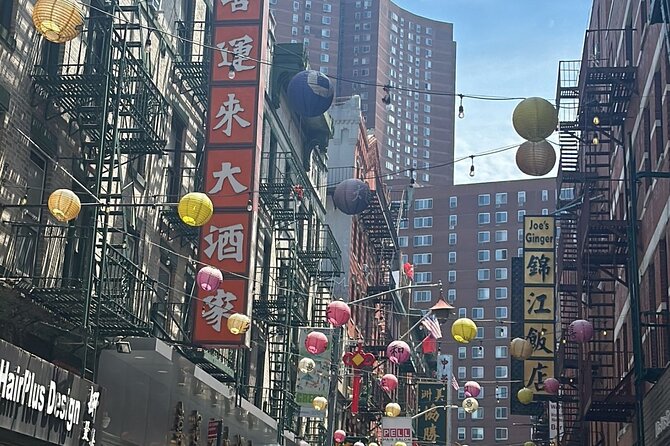
The first leg lands in Chinatown, with time focused around Mott and Mulberry Streets. That’s a smart choice because these blocks sit at the intersection of “still here” and “changing fast.” You get historic context, then you look up and see the modern art and architectural energy that’s also part of the neighborhood today.
Here’s what I like about how this stop is designed: it ties the human story to the street view. You’re learning about what life could look like for immigrants arriving in the 1800s, and you’re doing it while you’re physically walking the same kind of corridors where people once needed to find food, community, and daily survival.
And yes, you’ll be eating along the way. The plan includes multiple Chinese food samples, such as Chinese pork buns and dumplings. You’ll also likely pick up a clearer sense of why these items became part of this neighborhood’s identity, not just why they’re popular elsewhere.
If you’re trying to decide whether this is a “history tour” or a “food tour,” this first stop helps answer that. It’s both, and the food is not an afterthought. It’s integrated into the experience as you go.
A small consideration
You should be fine if you have a normal appetite. But because this is a walking tour with 30 minutes per stop, expect tastings, not a full meal situation. If you hate being slightly hungry, eat something light before you go.
Little Italy Stop: Old Streets, New Culture, And Cross-City Flavors
Next up is Little Italy, again focused on Mott and Mulberry Streets. Repeating the street framework is actually useful. It helps you compare how different communities shaped the same Lower Manhattan geography over time. You’re not just hopping between unrelated areas. You’re seeing how the neighborhood evolved.
This stop follows the same idea: immigrant arrivals in the 1800s, then the neighborhood’s later cultural shifts, including newer art and architecture. It’s a reminder that these streets are layered. Even when you’re looking at today’s storefronts and murals, you’re still standing in places shaped by earlier needs and businesses.
Now add the food side. The tastings at this point are described as covering classic New York and Italian favorites: New York-style pizza, Italian gelato, and more. I like that mix because it keeps you from treating Chinatown and Little Italy as separate fantasy worlds. In New York, people, tastes, and influences overlap more than you’d guess.
Where this stop shines
This is where the tour’s “pop culture meets place” vibe can land best. One practical reason: you’re eating food that many people already recognize, but you’re learning where it fits in a specific neighborhood story. You get comfort food with context.






Church of the Transfiguration: Completed in 1801, Still Doing Community Work
After the street and food focus, you get a short pause at Church of the Transfiguration. It was completed in 1801, and it’s described as a worship center for immigrant groups for over 200 years.
That’s a big deal in NYC terms. It means you’re not only learning about migration through dates and demographics. You’re seeing one of the physical places where communities came together. Even in a modern city, a long-running church like this can help you understand how neighborhoods anchored themselves beyond work and commerce.
This stop is only about 10 minutes, so don’t expect a long guided sermon. Instead, think of it as an emotional reset button. A quick moment that connects the walking and eating to something steadier.
If you like photos, this is also a good pause point. You’ll have a moment to look up, slow down, and actually notice details you might otherwise miss while power-walking for the next bite.
Cannoli King at Caffé Palermo: A Classic Finish Since 1973
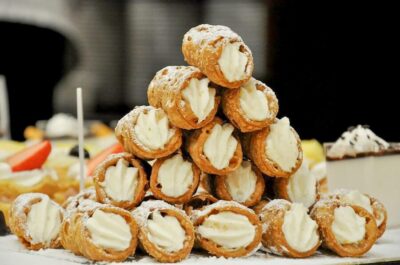
The last stop is the sweet payoff at Cannoli King at Caffé Palermo, marked as admission included. Caffé Palermo has been serving since 1973, and the stop notes it has been home to the Cannoli King for 51 years.
Even if you don’t care about the lore, cannoli is a perfect ending. It’s portable, iconic, and it gives you that satisfying “we finished the loop” feeling. Plus, having the cannoli portion explicitly included makes it easier to plan your budget. You’re not guessing whether the final stop costs extra.
This part of the tour is short, about 10 minutes, so you’ll likely get in, taste, and move on without feeling rushed out. It’s also a helpful final checkpoint. If you end your walk with food in hand, you can linger for a minute and then head to whatever comes next.
Practical note: cannoli is best enjoyed freshly tasted, so treat the tasting as part of the experience, not something to save for later.
Value, Price, and How to Make It Worth Your $49
The price is $49 per person for about 1 hour 30 minutes, with a maximum group size of 15. For NYC, that’s not a low number, but it can be a good value when you look at what you’re getting.
You’re paying for:
- Guided storytelling focused on Chinatown and Little Italy beyond the typical highlights
- A small-group experience, which usually means less time waiting and more time hearing
- Food samples that include items like dumplings, pizza, gelato, and cannoli, with the cannoli stop specifically marked included
- A real-world walking route centered on Mott and Mulberry Streets
- No entrance fee style stops listed for key parts of the route (the church and the first two street walks are marked free for admission)
So where does this price feel best? If you want the comfort of a plan, plus someone else doing the connecting of streets to stories. If you’re the kind of person who loves “what am I looking at” moments, this tour can do that work for you fast.
The best way to get value
- Show up hungry enough for tastings, but not so hungry that you rush through the stories.
- Wear comfortable shoes. You’ll walk enough that footwear matters.
- If you’ve already covered major Midtown sights, this tour is a smart add-on because it gives you a different slice of NYC that most people skip.
Where the Tour Ends: Columbus Park And Your Next Move
You finish at Columbus Park at Mulberry Street and Baxter Street. Ending on those streets is practical, because it keeps you in the same general Lower Manhattan orbit where you can keep exploring immediately.
Think of the tour as a map you can carry in your head. After it, you can walk more confidently, knowing which streets were central, what changed over time, and which landmarks were there to serve communities for generations.
If you’re doing multiple activities the same day, this ending spot helps. You’re not dropped somewhere inconvenient. You’re left near areas where you can grab your next bite or choose a new street to wander.
Who This Tour Fits Best (And Who Might Skip It)
This is ideal for you if:
- You want a small-group Lower Manhattan experience with personal attention
- You like food that comes with context, not just a checklist
- You’re curious about how immigrant communities shaped these neighborhoods, especially around Mott and Mulberry Streets
- You prefer a plan that fits into a normal day, not an all-day production
I’d be a little more cautious if:
- You’re expecting museum-level depth. Each neighborhood is about 30 minutes.
- You want a full meal. Expect samples and a sweet ending, not a sit-down feast.
One extra plus from repeat participation: people doing it more than once can get something new, since guides can tell stories with their own angle. That makes it easier to justify coming back on a different trip, not just checking it off once.
Should You Book This SoHo, Little Italy, Chinatown Walking Tour?
Yes, I’d book it if you want a practical Lower Manhattan intro that mixes history, streets, and food without turning into a marathon. The biggest strengths are the small group size, the street focus on Mott and Mulberry, and the way the food samples keep the experience grounded.
I’d skip or rethink it only if you hate walking, want long stops, or need a very structured meal. For most people doing NYC for the first time, or for anyone tired of only seeing the loudest parts of town, this tour is a smart use of time.
FAQ
How long is the Original SoHo, Little Italy, Chinatown Walking Tour?
The tour lasts about 1 hour 30 minutes.
What does the tour cost, and what is included?
The price is $49.00 per person. The experience includes food sampling along the route, and the cannoli stop at Cannoli King is marked as admission included.
Where does the tour start and end?
It starts at Spring Street Park (Spring St, New York, NY 10013) and ends at Columbus Park (Mulberry Street and Baxter St, New York, NY 10013).
How big is the group?
The tour has a maximum of 15 travelers.
Is it easy to get to using public transportation?
The tour is listed as near public transportation.
What is the cancellation policy?
You can cancel for a full refund if you cancel at least 24 hours in advance of the experience start time. If you cancel less than 24 hours before, the amount paid is not refunded.
More Walking Tours in New York City


More Tours in New York City




More Tour Reviews in New York City
Not for you? Here's more nearby things to do in New York City we have reviewed







More Chinatown & Little Italy Tours to consider.
 ★ 5.0SoHo, Little Italy, and Chinatown Walking Tour in New YorkTickets from $393,153 traveller reviews
 ★ 5.0Chinatown & Little Italy Food Tour with 7 Flavorful TastingsTickets from $992,733 traveller reviews
 ★ 5.0Original NYC Guided Food Tour of Chinatown and Little ItalyTickets from $1302,194 traveller reviews
NYC Food Tour: Chinatown and Little ItalyTickets from $991,090 traveller reviews
 ★ 4.7Chinatown and Little Italy Food TourTickets from $80703 traveller reviews
 ★ 4.7SoHo, Little Italy, and Chinatown Guided TourTickets from $30614 traveller reviews
 ★ 4.6SoHo, Little Italy, and Chinatown 2-Hour Guided WalkTickets from $39566 traveller reviews
 ★ 5.0SoHo, Little Italy, and Chinatown NYC Guided Walking TourTickets from $36443 traveller reviews
More useful New York routes