

Review · HARLEM TOURS
The Soul of Harlem Walking Tour in New York
Harlem has stories you can feel. This walking tour focuses on the neighborhood most visitors skip, with stops that connect 125th Street landmarks to the people and movements that shaped them. It is built for a small group and led by a local author, so the facts come with context, not a lecture.
I especially like two things. First, I love the guide style, with Larry using humor and real street detail to keep every stop moving. Second, I like the small-group feel, which means you can ask questions and get answers without getting rushed.
One thing to plan around: the National Jazz Museum in Harlem is open only Thursday through Saturday, and the tour needs good weather to work well on foot.
Key highlights you will actually care about
- A Metro-North platform view at Stop 1, with Harlem history shown through public art
- A tight route of famous and overlooked sites from Harlem Hospital to Lenox Terrace
- Schomburg Center stop at the New York Public Library research complex, focused on African and African American culture
- Langston Hughes House quick hit for Harlem Renaissance context without wasting time
- Apollo Theater front-of-house talk including the area’s Walk of Fame style tributes
- Max 10 travelers for a more personal, question-friendly pace
Harlem’s soul, told block by block
If your idea of Harlem is a quick subway ride or a single landmark photo, this tour changes the angle fast. It takes you down streets where the architecture, institutions, and public art all point to a bigger story, from migration and culture to civil rights and the music scene.
What makes it work is the flow. You do not just bounce between big names. You also slow down where the neighborhood shows its layers, like the way transit, hotels, museums, and historic homes sit inside the same street grid. Even when individual stops are short, the guide ties them together so you start seeing how Harlem’s past keeps echoing in what you notice today.
For me, the best part is the guide energy. I keep hearing the same theme in the guide style, Larry’s blend of humor and clarity. It is not just facts on a timeline. It is explanations that help you recognize why a building mattered, why a street corner earned a nickname, and how major events played out in everyday places.
You can also read our reviews of more walking tours in New York City



The route: what you will see in about 2.5 hours
The tour runs about 2 hours 30 minutes and is designed for walking at an easy pace, with room for questions. The group stays small, with a maximum of 10 travelers, so you are not swallowed by a crowd. The meeting point is at 85 E 125th St, with pickup on 125th Street between Adam Clayton Powell Blvd and Frederick Douglass Blvd.
The sights are set up like a guided path through Harlem’s identity. You start with a transit view that frames the main north-south artery, then you move through institutions and architecture tied to major eras. You finish at the Apollo Theater area, on 233 W 125th St (3rd Floor), which is a handy drop-off if you plan to grab lunch or a show afterward.
Also, many stops are listed with free admission, which helps the value. You are paying mainly for the local storytelling and the route design, not for a stack of paid museum tickets.
Stop 1, Park Avenue and the Metro-North view of 125th Street
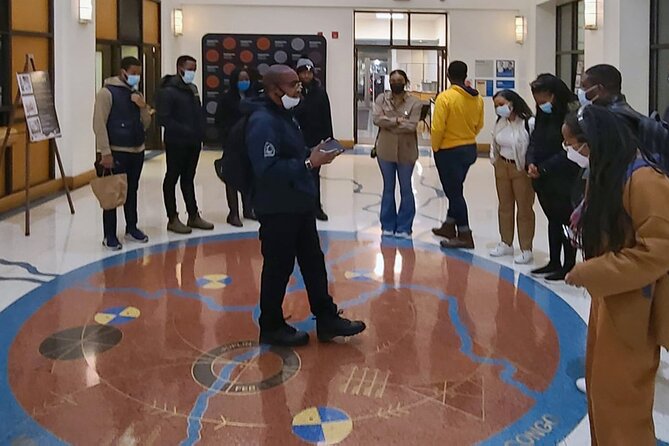
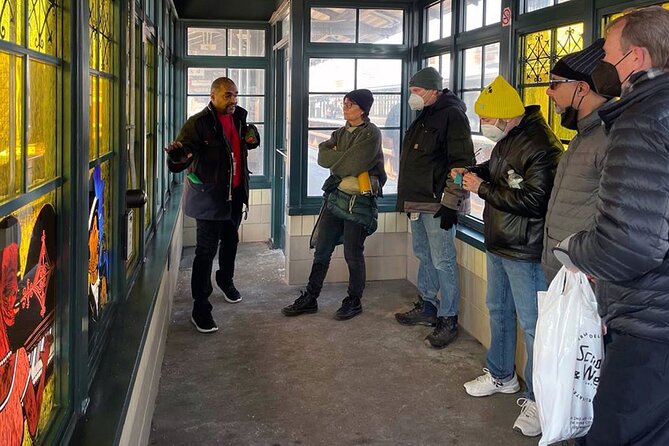
Your first moment in the tour is a quick orientation: a view of Harlem’s famous 125th Street from the Metro-North Train Station platform. You also look at public artwork that describes Harlem’s history. That matters because it sets the tone right away. Harlem is not treated like a theme park. It is treated like a place with its own voice, even in transit spaces.
This is a strong start if you want to understand geography fast. Seeing 125th Street from up top gives you a mental map before you start street-level walking. It also helps when you later hear references to neighborhoods, corridors, and landmark institutions. You can actually picture where everything sits.
The stop is short, around 10 minutes, so do not expect a deep station tour right here. Instead, think of it as a visual warm-up.
Stop 2, Harlem streets: murals, institutions, and MLK’s near miss
Next comes the main walk through Harlem, lasting about 1 hour 20 minutes. This is where the tour’s “local author” storytelling really earns its keep. You are not just moving from one plaque to the next. You are getting context tied to specific buildings, streets, and cultural signals.
Here are some of the places and themes you will talk about along the way:
- The Metro-North train station history, and why it connects to Harlem’s growth
- Astor’s Row, a stretch associated with Harlem’s changing commercial and residential story
- The so-called White House in Harlem, a reference point that sparks conversation about what outsiders miss
- The YMCA, another anchor institution tied to community life
- Several famous murals, which help you understand how art operates as public memory
- Lenox Terrace, an architectural landmark that helps show how housing and neighborhoods evolve
- Harlem Hospital and the Harlem State Office Building, both tied to Harlem as a civic and institutional center
- Blumstein’s Department Store, a site connected to a dramatic Martin Luther King Jr story, where he nearly lost his life
What you will get, if you pay attention, is a sense of cause and effect. A mural is not just color on a wall. A store is not just a storefront. A hospital is not just where people go for care. The guide connects these places to the community’s needs, struggles, and wins.
One more practical point: this stop is where you will likely want to slow down and ask questions. If you are curious about housing patterns, civil rights era details, or why certain institutions clustered where they did, this is the moment the tour gives you time and space for it.
Stop 3, the Schomburg Center for Research in Black Culture
After the streets, you get a brain-and-culture stop at the Schomburg Center for Research in Black Culture. It is part of the New York Public Library system, and it is known for research and preservation of materials tied to African American, African Diaspora, and African experiences.
The stop is about 15 minutes. That is not meant to replace a full library visit. Instead, it gives you a quick framework for why Schomburg matters. It is about more than exhibits. It is about how institutions protect stories, documents, and cultural memory so they do not disappear.
If you like museums but find long lines or overly broad interpretations frustrating, this stop is a good fit. It is focused, and the guide’s context helps you notice what you might otherwise skip.






Stop 4, Langston Hughes House and the Harlem Renaissance connection
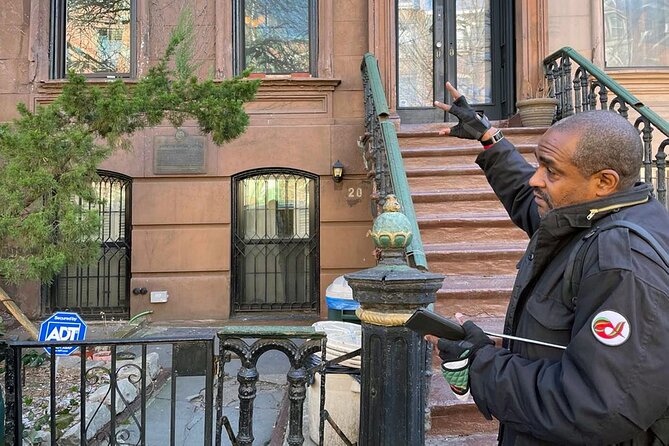
Then it is off to Langston Hughes House, a historic home linked to an icon of the Harlem Renaissance. This stop is short, about 10 minutes, but it is placed well. By the time you reach it, you have already walked past institutions, public art, and civic landmarks. So the literary and artistic thread lands with weight.
Langston Hughes is more than a school name in this context. You will hear how Harlem’s creative energy was tied to the neighborhood’s identity and how writers became part of the public voice. Even in a brief stop, you can pick up the connections between art, activism, and the sense of community pride that defined the era.
If you want to understand Harlem through its creative figures, this is one of the best time-to-impact stops on the route.
Stop 5, the National Jazz Museum in Harlem, plus the day-of-week reality
Next is the National Jazz Museum in Harlem, with a stop of about 10 minutes. Here is the key planning detail from the tour information: the museum is open only Thursday through Saturday.
So if you booked a tour on a Sunday, Monday, Tuesday, or Wednesday, you should expect that this stop may not line up with opening hours. The good news is that the tour stays interesting even when a museum-specific moment is constrained. But it is worth checking your day so you are not surprised.
When it is open, you are set up to see famous jazz musicians linked to the Harlem Renaissance and also current exhibits, plus things like vintage jazz photos, maps, and books. That mix is what makes jazz museums feel different from music listening. You are seeing history as a paper trail and a visual record, not only as sound.
Stop 6, the Apollo Theater and the Walk of Fame area

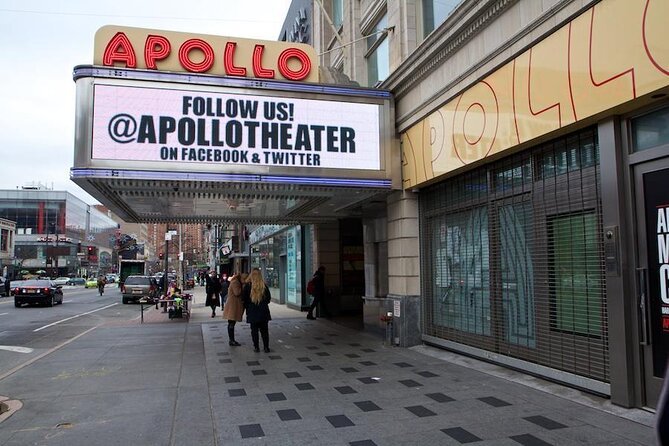
The tour then heads to the Apollo Theater, with about 5 minutes devoted to the front area. This is a very quick stop, but it hits something important: you get discussion of the Apollo’s role as a mainstay in Harlem and references to the Walk of Fame style tributes in front of the theater.
Even if you do not go inside the Apollo on this tour, the outside framing is useful. It helps you understand why the Apollo is more than a building. It is a cultural signal, a stage where careers and the neighborhood’s talent culture became connected.
If you are planning to see a show, this short stop helps you appreciate what you are walking into. It also gives you a better sense of the crowd energy you might feel when you are nearby later.
Stop 7, the Theresa Hotel area on Adam Clayton Powell Jr Blvd
Your final named landmark stop is at 2082 Adam Clayton Powell Jr Blvd, connected to the Theresa Hotel. The walk-by is about 5 minutes, but it adds another layer to your mental map of Harlem.
Hotels matter in Harlem’s story because they tie neighborhoods to visitors, business, and major events. They are also where you can sometimes feel the shift between public facing Harlem and the Harlem residents lived every day. A quick discussion like this is the kind of detail that makes the route feel intentional, not random.
Then you end near the Apollo Theater at 233 W 125th St (3rd Floor). That is a convenient end point for continuing your day around 125th Street.
Price and value: $60 for a guided Harlem map
At $60 per person, this tour is not a cheap add-on, but it is not priced like a museum day either. The value comes from three practical things:
- A local author guide who connects multiple categories, streets, institutions, culture, and specific landmark stories
- A small group size that keeps your questions from disappearing
- Free-to-enter stops where you still get interpretation, so you pay for the thinking, not for admission
Also, the tour is typically booked around 24 days in advance. That suggests it is a popular way to get an overview of Harlem without spending your whole trip in transit. If you want a weekend slot or a specific day, plan ahead.
The route is short enough to stay manageable, but it is packed with stops. Reviews often point out that time can feel like it moves quickly because the guide keeps things organized and adds breaks. That pacing is key. You want to learn without getting worn out.
Who should book this tour
This is a great fit if you want to:
- Get your bearings in Harlem fast, especially around 125th Street
- Learn Harlem through specific places tied to the Harlem Renaissance, civil rights era stories, and music culture
- Prefer guided context over wandering with a phone and hoping you guessed correctly
- Travel in a small group and like asking questions out loud
It might be less ideal if you want lots of time inside each museum. Most stops are brief, with the learning delivered through walking, looking, and short conversations. If you want to spend an hour at one building, you may want to pair this with a later self-guided visit to the Schomburg Center or the jazz museum when it is open.
Practical tips so your tour goes smoothly
A few simple prep steps can make a big difference:
- Wear comfortable shoes. This is a walking tour with frequent stops, and you will be standing and looking up and around.
- Check the day for the National Jazz Museum stop. Since it is open only Thursday through Saturday, your weekday matters.
- Bring a light layer, even in warmer months. You are outside much of the time.
- Plan for questions. The guide pace makes time for interaction, so have a few curiosity prompts ready, like what to focus on if you come back for a longer visit.
- Use your mobile ticket. It keeps you from having to juggle paper and makes the start cleaner.
- Aim for good weather. The experience requires it, and if weather cancels the tour, the operator offers a different date or a full refund.
If you care about feeling connected to the neighborhood, do not treat this like a checklist. Treat it like a guided walk where the details help you see the whole.
Should you book the Soul of Harlem Walking Tour?
Yes, you should book it if you want a smart, human-scale introduction to Harlem that goes beyond the usual photo stops. The Apollo Theater, the Schomburg Center, and the literary connection through Langston Hughes House give you big cultural touchpoints, but the real payoff is how the guide ties streets and institutions into one coherent story.
Skip it only if you are mainly chasing long museum time or you are traveling on a day when the jazz museum will almost certainly be closed. Otherwise, this is one of the best ways to understand Harlem’s “why” while you are still in the neighborhood, not hours later on a couch.
FAQ
How long is the Soul of Harlem Walking Tour?
It runs about 2 hours 30 minutes.
How much does the tour cost?
The price is $60.00 per person.
How many people are in a group?
This tour has a maximum of 10 travelers.
What is the meeting point and where does it end?
You meet at 85 E 125th St, New York, NY 10035 (125th Street between Adam Clayton Powell Blvd and Frederick Douglass Blvd). The tour ends at Apollo Theater, 233 W 125th St, 3rd Floor, New York, NY 10027.
What language is the tour offered in?
The tour is offered in English.
What stops are included?
The tour includes stops at the Metro-North station area for views of 125th Street, multiple Harlem landmarks and murals, the Schomburg Center for Research in Black Culture, Langston Hughes House, the National Jazz Museum in Harlem, the Apollo Theater, and the Theresa Hotel area near 2082 Adam Clayton Powell Jr Blvd.
When is the National Jazz Museum in Harlem stop available?
The National Jazz Museum in Harlem is open only Thursday through Saturday.
What is the cancellation policy if weather is poor or plans change?
You can cancel for a full refund up to 24 hours before the experience starts. The tour requires good weather, and if it is canceled due to poor weather, you will be offered a different date or a full refund.
More Walking Tours in New York City


More Tours in New York City




More Tour Reviews in New York City
Not for you? Here's more nearby things to do in New York City we have reviewed










More Harlem Tours to consider.
 ★ 4.5NYC Highlights Tour: Bronx, Brooklyn, Harlem, Queens & ConeyTickets from $462,846 traveller reviews
 ★ 4.5Contrasts Tour of Harlem, The Bronx, Queens & BrooklynTickets from $392,167 traveller reviews
 ★ 4.7Harlem Hallelujah! Gospel Wednesday ConcertTickets from $251,638 traveller reviews
 ★ 4.7Harlem Gospel Live Music ConcertTickets from $281,479 traveller reviews
 ★ 4.0Harlem Sunday Morning Gospel TourTickets from $85995 traveller reviews
 ★ 4.04-hour Harlem Gospel Tour in New York CityTickets from $79935 traveller reviews
 ★ 3.9Harlem: Central Harlem Sunday Gospel with LocalsTickets from $25499 traveller reviews
 ★ 4.3Sunday Harlem Gospel Guided TourTickets from $89438 traveller reviews
More useful New York routes