

Review · HARLEM TOURS
Washington Heights – Sugar Hill North Harlem Walking Tour
Sugar Hill tells a whole different New York story. On this Washington Heights to North Harlem walking tour, I love how you get neighborhood history without wrestling a map, and I love the small-group pace that makes the walk feel relaxed instead of rushed. You follow a local guide through streets where the city shifted from estates and wartime sites to a modern cultural hub.
My other favorite part is the way the guide connects buildings to real life. With a resident guide like William, you don’t just see landmarks, you learn how the area evolved and how people actually move through the neighborhood now, including practical lunch and deli tips. The one thing to plan for is that this is still a walking tour, and it can be moderately difficult if you have mobility concerns.
Key Highlights That Make This Tour Worth Your Time
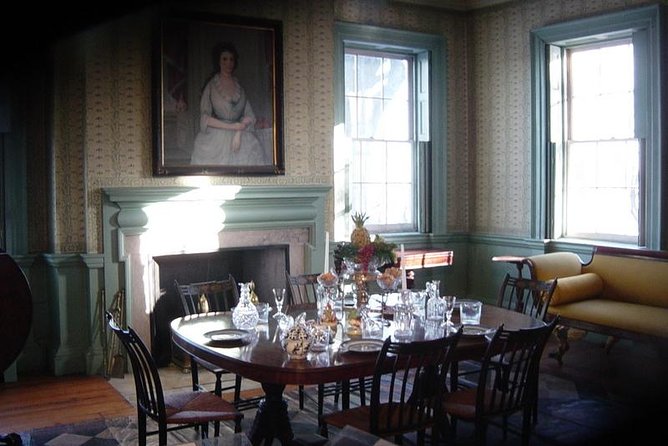
- Small group, slower pace: Max 15 travelers means more back-and-forth and fewer people trying to squeeze around photos
- Sugar Hill plus North Harlem: You get a perspective on Manhattan that skips the usual greatest-hits route
- Morris-Jumel Mansion as a real time machine: A Federal-style museum home with 18th-century roots
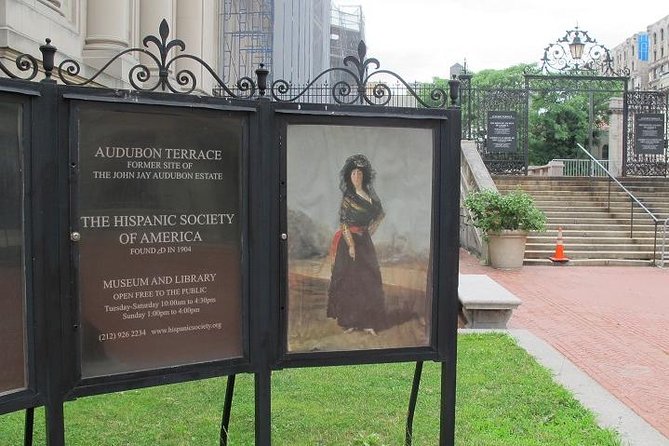
- The Hispanic Society of America, free stop: Art and cultural reference library, no paid entry required
- Street-level history during the walk: You’ll learn why these blocks look the way they do
- Cemetery and civic history from the curb: You pass the Church of the Intercession and Trinity Cemetery area without a full church visit
Why Sugar Hill and North Harlem Feel Like a Different City
If you think you already know Manhattan, this walk is a useful reality check. Sugar Hill and North Harlem cover the kind of change that feels layered, because it is. Here, you can see how the neighborhood moved from older country estates and revolutionary-era sites toward the Harlem Renaissance era and then to the community life you recognize today.
What makes the experience click is that it is not a museum-only day. You are learning from the street itself, with a guide who turns architectural details into plain language. You also get a calmer rhythm, since this is capped at 15 people. That matters in New York, because crowds can turn even good facts into noise.
You can also read our reviews of more walking tours in New York City



Price and What You Really Get for $30
At $30 per person for about 2 hours 30 minutes, this is priced like a solid guided stroll rather than a big-ticket attraction day. The value mostly comes from three things.
First, you are paying for a licensed guide who has an insider view, not a canned script. Second, the route includes two specific stops that anchor the story: Morris-Jumel Mansion and the Hispanic Society of America. Third, even the parts you view from the sidewalk are treated like learning moments, not just walking time.
One small budget note: the Morris-Jumel Mansion stop lists admission as not included. The Hispanic Society of America stop is free. So, your best idea is to assume you may add one paid entry cost for Morris-Jumel, while the other major stop won’t ask for another ticket.
Meeting at St Nicholas Avenue, Then Letting the Guide Do the Work
The tour meets at 1000 to 1002 St Nicholas Ave and starts at 10:00 am. Using a fixed start point helps a lot on a walking tour, since you are not trying to triangulate a moving group on busy blocks.
The tour ends near Hamilton Grange National Memorial at 414 W 141st St, with the walk finishing around the Alexander Hamilton National Monument Avenue area near W 141st St and St Nicholas Ave. If you want an easy exit plan, you can also aim for 145th Street Station, where the A, B, C, and D trains are close by.
You’ll have a mobile ticket, which usually makes check-in painless. Come with a phone that has battery to spare, since you will likely want photos and occasional map support even though the whole point is that you do not have to navigate.
Stop 1: Morris-Jumel Mansion, 18th-Century Roots in a Federal Shell
Morris-Jumel Mansion is the kind of place that makes the street feel like a timeline. This Federal-style museum home has mid-18th century roots, so it works as an early chapter before the tour gets into later Harlem history.
Plan for about 10 minutes at this stop. That time is short, but it is designed for street-level learning, not a long museum day. Admission is not included here, so you should decide before the tour if you want to pay for a proper interior visit. If you do, you will get the full impact of the setting.
A practical tip: wear shoes you trust. Even with stops, you will spend most of the outing walking between blocks, and you do not want your feet making the decisions for you.
Stop 2: Hispanic Society of America, a Free Stop That Changes the Pace
After Morris-Jumel Mansion, the walk brings you to the Hispanic Society of America. This is listed as a museum and reference library focused on the arts and cultures of Spain and Portugal, plus their former colonies in Latin America, the Philippines, and Portuguese India.
The best part for value is simple: admission is free for this stop. You’ll usually get about 10 minutes here as well, so it is more of a quick orientation moment than a deep museum session. Still, it is a strong contrast to the mansion stop. One place anchors older New York roots, and the other signals how broad the neighborhood story can be.
If you like museums but hate spending half a day inside, this is a good compromise. You can see enough to understand why the institution matters, then return to street history while the tour energy stays high.






The Walk Through North Harlem: Estates, Revolution, and Community Change
The tour really earns its keep during the middle stretch. Instead of hopping randomly between landmarks, the guide connects the area’s development in a logical way, from rural countryside and estates, to the site of revolutionary war, and then toward what became the center of New York’s Dominican community.
You are walking through blocks where the city’s layers are visible through architecture, spacing, and how people use the streets. That is why a guide matters. Without one, you might see nice buildings but miss why they are important.
One note about expectations: the tour focuses on neighborhood history. It does not include visits to a church or music stops. That said, you will pass the Church of the Intercession and Trinity Cemetery area, which is described as the resting place of some of New York City’s aristocracy and politicos who helped shape the city. You will learn about that history from where you stand.
Bailey House and the Circus Connection You Can Spot From the Street
A memorable part of this tour is how it brings in smaller, story-rich details that you might walk past on your own. The route includes views of the Bailey House, a castle-like residence built for James Bailey of the Barnum and Bailey Circus.
You do not need to be a circus fan to enjoy this stop. The fun is how it shows a slice of popular culture history folded into residential architecture. It is the kind of connection that makes the neighborhood feel more alive, because you realize these buildings were part of real lives, not just postcard backgrounds.
You’ll mainly view this from the street, so it is quick. But the guide’s interpretation is what turns the sight into a story you remember later.
What the Guide Adds, Especially When William Turns It Practical
This tour lives or dies on the guide, and the recent experience with William seems to be a huge reason it scores so well. The standout pattern is his enthusiasm and his willingness to go beyond the minimum plan when it makes sense.
In the strongest version of the experience, William took the group inside places like Audubon and CUNY. That is not something you should assume will always happen, but it does match the overall vibe described in the feedback: the guide wants you to leave with more than photos. He also shared local, usable tips like how to order a sandwich at a nearby deli and where to go for lunch.
That practical add-on is not fluff. On a walking tour, it turns the day from sightseeing into something closer to a neighborhood day. You finish with plans in your pocket, which is exactly what you want when you are trying to spend fewer hours on logistics and more on what you came for.
Group Size, Timing, and How to Keep the Walk Comfortable
This is a walking tour with an approximate duration of 2 hours 30 minutes, and it is limited to a maximum group size of 15 travelers. A smaller group usually means you wait less, ask more questions, and hear details clearly.
Because the tour can be moderately difficult for physically challenged travelers, choose comfortable shoes and a pace that fits you. If you know you tire quickly, consider bringing water and taking quick, respectful breaks when you need them.
Also remember: you are starting at 10:00 am. That timing is great for daylight photos and for getting your bearings early in the day. If you plan a museum after, keep some buffer time, since stops can run a little longer depending on the group and what the guide can fit in.
Should You Book This Washington Heights to Sugar Hill Walking Tour?
Book it if you want a Harlem experience that feels local, not generic. This is a smart choice when you like architecture and history but also want a guide to translate it into a story you can picture. The combination of Morris-Jumel Mansion, the free Hispanic Society stop, and the street-based narrative through North Harlem makes it a good value for the $30 price point.
Skip it or think twice if you strongly prefer indoor time or if mobility is a major limitation for you. Also, if you do not want to pay any admission at all, note that Morris-Jumel Mansion lists admission as not included.
If you want a tour that helps you walk away with context, street-level meaning, and even a lunch plan, this one fits the bill.
FAQ
How long is the Washington Heights – Sugar Hill North Harlem walking tour?
It’s approximately 2 hours 30 minutes.
How much does the tour cost?
The price is $30.00 per person.
Where is the meeting point?
The tour starts at 1000 to 1002 St Nicholas Ave, New York, NY 10032.
Where does the tour end?
The tour ends near Hamilton Grange National Memorial at 414 W 141st St, finishing around the Alexander Hamilton National Monument Avenue near W 141st and St Nicholas Avenue.
Is the tour ticket mobile?
Yes, it uses a mobile ticket.
Does the tour include admission to Morris-Jumel Mansion?
Morris-Jumel Mansion lists admission as not included.
Is the Hispanic Society of America stop free?
Yes, the Hispanic Society of America stop is listed as free.
What should I wear?
Wear appropriate clothing and footwear, since this is a walking tour.
Is this tour accessible for everyone?
The tour may be moderately difficult for the physically challenged, so it is best to consider your mobility needs before booking.
What is the cancellation policy?
You can cancel for a full refund up to 24 hours before the experience’s start time. The tour requires a minimum number of travelers, and if it’s canceled because that minimum isn’t met, you’ll be offered a different date or a full refund.
More Walking Tours in New York City


More Tours in New York City




More Tour Reviews in New York City
Not for you? Here's more nearby things to do in New York City we have reviewed











More Harlem Tours to consider.
 ★ 4.5NYC Highlights Tour: Bronx, Brooklyn, Harlem, Queens & ConeyTickets from $462,846 traveller reviews
 ★ 4.5Contrasts Tour of Harlem, The Bronx, Queens & BrooklynTickets from $392,167 traveller reviews
 ★ 4.7Harlem Hallelujah! Gospel Wednesday ConcertTickets from $251,638 traveller reviews
 ★ 4.7Harlem Gospel Live Music ConcertTickets from $281,479 traveller reviews
 ★ 4.0Harlem Sunday Morning Gospel TourTickets from $85995 traveller reviews
 ★ 4.04-hour Harlem Gospel Tour in New York CityTickets from $79935 traveller reviews
 ★ 3.9Harlem: Central Harlem Sunday Gospel with LocalsTickets from $25499 traveller reviews
 ★ 4.3Sunday Harlem Gospel Guided TourTickets from $89438 traveller reviews
More useful New York routes