
Review · WALL STREET TOURS
Financial District NYC Architecture Walking Tour
Big buildings, big stories, and quick stops. This Financial District NYC Architecture Walking Tour strings together landmarks that explain how New York changed its mind about power, design, and money.
Two things I really like are the focus on local insight you can ask about as you walk, and the fact that you get a professional individual photo so you leave with more than just phone pictures. One thing to keep in mind is that it is an efficient walk with mostly short viewing windows, so if you want long sits, deep museum time, or lots of quiet, this might feel a bit fast.
What makes the tour feel worth $59
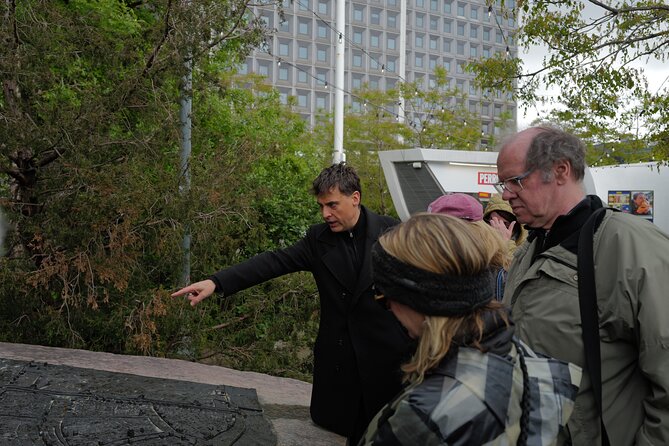
At $59 for about 2 hours, the value is in the small group and the built-in audio. A cap of 15 travelers keeps it conversational instead of lecture-y, and the professional individual headsets help you actually hear your guide on busy corners.
You are also not guessing your route. It runs as a clear line through Battery Park, the early government blocks, the classic skyscraper era, then into the newest wave of downtown design.
The one drawback to plan around
The schedule depends on good weather. If conditions are poor, the experience can be rescheduled or refunded, and the walking pace may not suit people who have problems walking.
You can also read our reviews of more walking tours in New York City


Key highlights you should care about
- Small group size (max 15) for a calmer pace and better questions
- Ground Zero stop with the 9/11 Memorial and Museum included in the route
- Professional photo so you remember the day with a clean shot
- Earphones provided for clear guide audio on crowded sidewalks
- Real downtown design mix, from 1840s buildings to 2020s architecture
Starting at Battery Park, where the views set the tone
The tour begins at Battery Park at the Glass Carousel, near Castle Clinton National Monument. Right away, you’re placed at a waterfront gateway, which is a smart move for an architecture day, because it helps you understand how the Financial District connects to the harbor and the older city edge.
From the start, you’re in guide mode. You’ll also have the chance to ask your burning questions early, when your brain is fresh and you can follow the pattern of the day instead of collecting random facts.
Trinity Church and Federal Hall, early government landmarks in walking distance
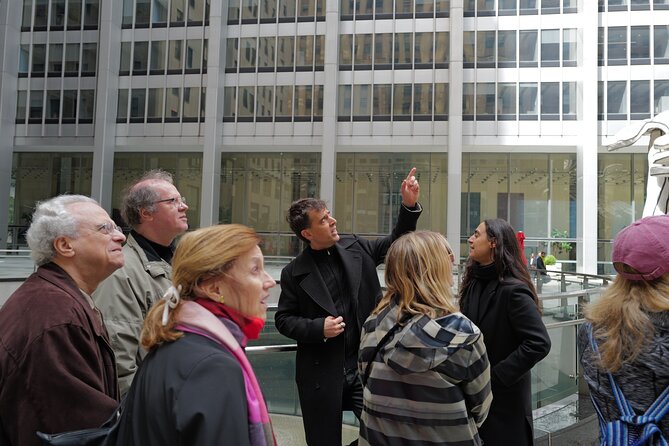
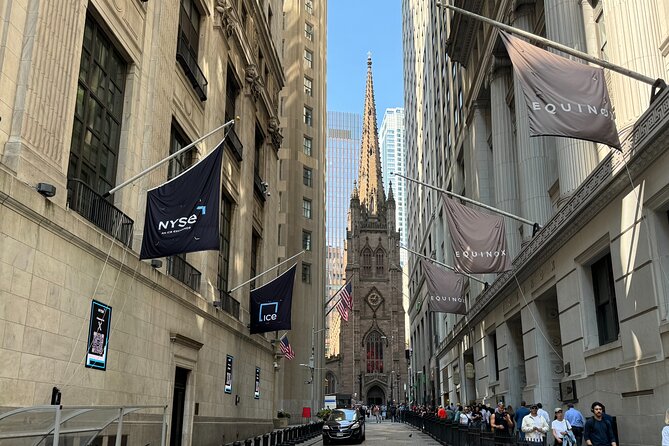
One of the most satisfying parts of the route is how quickly it moves into the 1840s. Trinity Church NYC, dating to 1846, is a stop that anchors the area before modern skyscrapers took over the skyline.
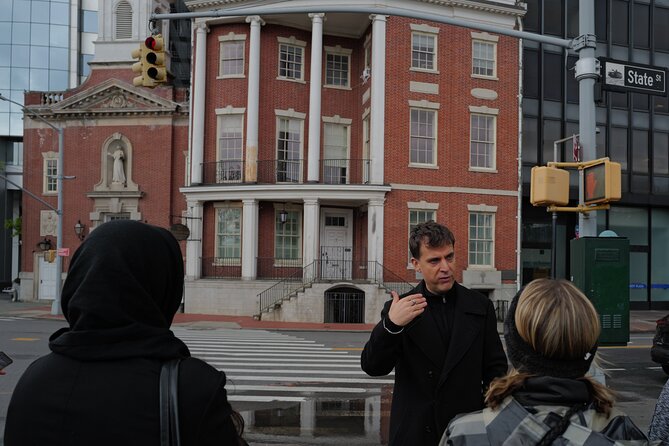
Then you shift to Federal Hall, from 1842. Even if you only get a short visit, you’re watching the story of civic power take shape in real stone and real form, not textbook diagrams.
If you like architecture that tells you who held authority and why, this is where the tour earns its keep. You get context for the blocks you’re standing on, instead of just reading plaques.
The Federal Reserve and the symbolism of money buildings
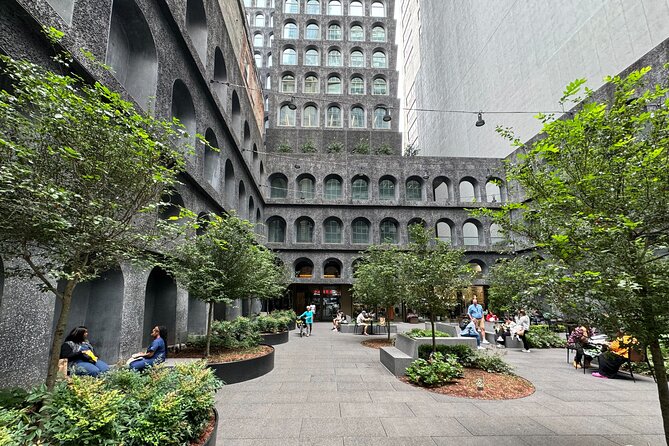
Next comes the Federal Reserve, described in the tour as the 1924 building by York & Sawyer that stores most of the gold in the world. That one detail changes how you look at the whole structure, because it’s not just an office shell. It represents security, control, and a kind of quiet confidence.
A quick stop like this works well on walking tours because your guide can frame what you’re seeing fast. You’re not trapped in a long timeline, but you’re still getting a clear takeaway: downtown architecture often reflects what people feared or protected, not just what looked impressive.

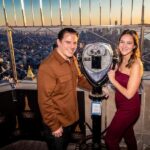




Woolworth Building, the classic skyline marker you can spot from a block away
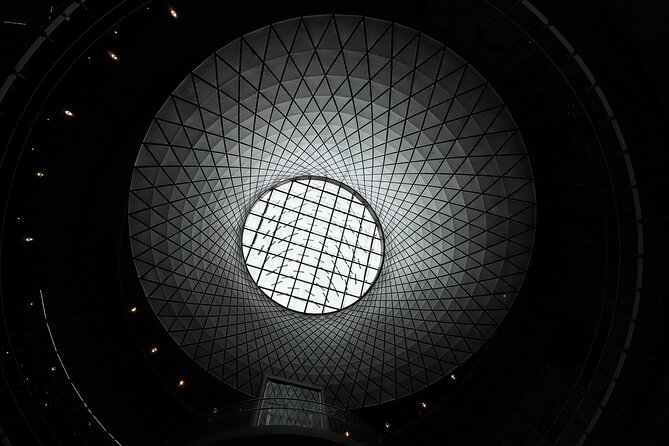
The tour also includes the Woolworth Building by Cass Gilbert, from 1912. This is a landmark stop for a reason. It’s the kind of building that helps you connect “architectural style” to a specific era of New York ambition.
Even with limited time, it’s a useful moment. You see how ornament, proportions, and height work together to signal status. And you get to compare that era to what comes next, because the route is designed to let the styles talk to each other.
One Chase Manhattan Plaza and the idea of public art at scale
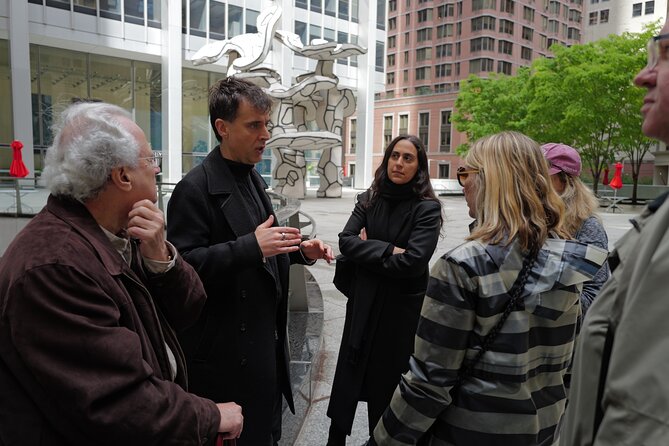
After the early landmark energy, you move into the modern era at One Chase Manhattan Plaza. The building is listed as the Chase Manhattan Bank by Gordon Bunshaft (SOM) from 1960, plus a look at public art and architecture.
This stop is interesting because it shows how big institutions shifted their image. Instead of only projecting strength through classic forms, mid-century power often expressed itself through large-scale design and a sense of institutional order that you feel even from the sidewalk.
If you enjoy seeing how style changes with leadership and economics, you’ll like this stretch. It’s also a nice breather before the transit-heavy finale.
Fulton Center and the Gehry-era shift toward movement
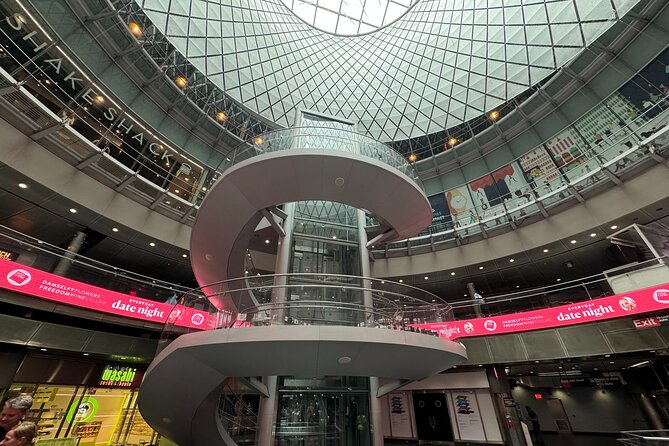
The route includes Fulton Center by Grimshaw from 2015. Even when you only have a short visit, this is the kind of place where architecture is partly about flow. It’s built for movement, and you can read that in how the spaces connect rather than how a façade simply looks.
Then the tour points to New York by Frank Gehry at 8 Spruce Street from 2010. Gehry’s work often feels like it’s moving even when it’s standing still. Here, it helps you understand that downtown architecture is not only about corporate seriousness. It can also be playful, angular, and intentionally surprising.
9/11 Memorial and Museum, the emotional center of the route
The National 9/11 Memorial & Museum is on the itinerary, designed by Snohetta, Michael Arad, and Peter Walker (2011). The tour also lists it as free admission in the experience info, with about 10 minutes for this stop.
This is the moment where you should slow down mentally, even if the schedule is brief. Architecture is doing something different here: it’s trying to honor loss, create space for reflection, and hold memory in a physical layout.
Because the time is limited, I’d treat this as a guided orientation. Think of it as a first pass that helps you know what you’re looking at, then you can decide later if you want to return for more.
St. Nicholas Greek Orthodox Church and National Shrine, Calatrava’s 2020 presence
The route continues with Saint Nicholas Greek Orthodox Church and National Shrine by Santiago Calatrava from 2020. Calatrava’s design language tends to feel structural and expressive at the same time, so this stop is a good contrast after the earlier civic and corporate landmarks.
It also broadens the day beyond “finance only.” Downtown isn’t just towers and banks. You’re also seeing how spiritual architecture shapes the skyline and how new designs fit into an older, denser neighborhood.
Perelman Performing Arts Center, 2023 modern culture in the mix
You’ll also see the Perelman Performing Arts Center by REX from 2023. This matters on an architecture tour because it adds a cultural building to the equation, showing how the district keeps reinventing what it wants to attract.
It’s a reminder that the Financial District is not just a work destination. It’s still evolving, still building new identity.
Liberty Park and the World Trade Center complex, from WTC1 through WTC7
The tour includes World Trade Center’s Liberty Park, where you’ll see the WTC buildings listed on your route: WTC1 by David Childs (SOM) from 2015, WTC2 in-process, WTC3 by Richard Rogers from 2018, WTC4 by Fumihiko Maki from 2015, WTC5 in-process, WTC7 by David Childs (SOM) from 2015. You also get about 10 minutes here.
This part can feel like architecture made for headlines, but it’s also where you can focus on the design choices. What stands out is the range of architects and time periods in one view. Even in short viewing moments, you can spot the shifts in style and intent across decades.
If you want to ask questions, this is a strong moment for it. It helps you connect the skyline you see on photos to the real people and planning behind each block.
Ending at the Oculus Path Station, Calatrava’s 2015 finale
The tour wraps up at The Oculus, the Path Station by Santiago Calatrava from 2015, with about 10 minutes at the end. Ending here is smart. It’s a transit building that doubles as a city symbol, and it gives your eyes a final “wow, that’s a shape” moment before you head off.
If you’ve been thinking about architecture all day, the Oculus works like a visual summary. It’s not just height or ornament. It’s about structure, movement, and the experience of arriving.
How the professional photo and headsets improve the experience
Two practical touches make a real difference. You’ll have professional individual headsets, which means your guide stays audible even when you’re surrounded by school groups, construction noise, and late-day traffic. On an architecture walk, hearing details about materials and design is half the value.
Also, the tour includes a professional photo taken during the experience. That’s useful because you’re in iconic spots, and you’re spending your energy looking up and around. You don’t have to hunt for an angle, and you don’t have to bribe a stranger with your camera.
Price and timing, is $59 actually good value?
For $59 per person, you’re paying for a 2-hour guided walkthrough that covers a dense cluster of major landmarks. The included fees and taxes, plus the headsets, matter here, because they remove two common “hidden extras” that add up on walking tours.
The best way to judge the value is by the itinerary density. You are hitting Battery Park, Trinity Church, Federal Hall, Woolworth, Chase Manhattan, Fulton Center, multiple World Trade Center elements, and the Oculus finale, all in a single route. That kind of concentration is hard to replicate on your own in the same time.
My only caution on value is the short stop times. The day is built for coverage and context, not for long museum sessions. If you want more time at a single site, you’ll likely need to plan a return visit.
Who this tour fits best
This tour is ideal if you want an architecture-focused day that still includes emotional and civic landmarks. If you’re traveling as a couple, with older teens, or with anyone who likes seeing how styles change over time, the pacing and small group size make it easier to stay engaged.
It also works well for first-time visitors to downtown who don’t want to figure out logistics for every stop. With the route mapped in the itinerary and the meeting and end points clearly defined, you can focus on the buildings instead of your phone battery.
Quick practical tips before you go
Wear shoes for a real walking tour. Several stops are quick, and you’ll get the most out of it if you can keep a comfortable pace for about 2 hours.
Bring weather gear. The experience requires good weather, and the walking parts are outdoors.
Finally, plan your questions. The tour is designed so you can ask your burning questions, and you’ll get more out of the day if you bring at least a couple of themes like mid-century bank design, how towers signal power, or how the memorial space is shaped.
Should you book this Financial District architecture walking tour?
I think it’s a strong choice if you want a guided, high-density route through NYC architecture landmarks with a small group and clear audio support. The inclusion of Ground Zero and the 9/11 Memorial and Museum makes it more than a skyline stroll, and the professional photo and headsets add practical value beyond the talking.
Don’t book if you need long stops, lots of slow wandering, or if walking is tough for you. This is built for motion and efficient viewing.
If you want a fast way to understand downtown’s architectural timeline, from Trinity Church and Federal Hall to modern icons like the Oculus, this tour hits the right balance.
FAQ
How long is the Financial District NYC Architecture Walking Tour?
It runs for about 2 hours.
How much does the tour cost?
The price is $59.00 per person.
Where does the tour start and where does it end?
It starts at the Glass Carousel at Battery Park near Castle Clinton National Monument, and it ends at the Oculus Path Station at the World Trade Center.
What’s included in the tour price?
All fees and taxes are included, and professional individual headsets are provided for each guest.
Are there any admission fees for the stops?
The tour information lists admission tickets as free for the included stops.
How many people are in the group?
The tour has a maximum of 15 travelers.
Does the tour include a photo?
Yes, there is a professional photo taken to remember your trip.
What if the weather is bad?
The experience requires good weather. If it is canceled due to poor weather, you’ll be offered a different date or a full refund.
Is it recommended for people who have trouble walking?
It is not recommended for people who have problems walking. Service animals are allowed.
More Walking Tours in New York City


More Tours in New York City




More Tour Reviews in New York City
Not for you? Here's more nearby things to do in New York City we have reviewed






More Wall Street Tours to consider.
 ★ 4.5NYC City Tour: Statue of Liberty, 9/11 Memorial, Wall StreetTickets from $392,059 traveller reviews
 ★ 4.5Wall Street Insider Tour with a Finance ProfessionalTickets from $39660 traveller reviews
★ 4.5Wall Street Insider Tour with a Finance ProfessionalTickets from $39571 traveller reviews
★ 4.5Wall Street Insider Tour with a Finance ProfessionalTickets from $39660 traveller reviews
★ 4.5Wall Street Insider Tour with a Finance ProfessionalTickets from $39571 traveller reviews
 ★ 5.0Manhattan Group Tour Including Wall Street and 911 MemorialTickets from $39408 traveller reviews
 ★ 4.6Wall Street Tour with 9/11 Memorial and Statue FerryTickets from $39367 traveller reviews
 ★ 4.9Wall Street and Financial District Walking TourTickets from $34284 traveller reviews
 ★ 5.0How Money Was Made Wall Street Walking TourTickets from $49185 traveller reviews
 ★ 5.0Wall Street and Financial District Walking TourTickets from $34116 traveller reviews
More useful New York routes