
Review · GREENWICH VILLAGE TOURS
Greenwich Village Historic Walking Tour
Geography here comes with receipts. This walk stitches together key Village sites and the people behind them, from Washington Square Park to the Stonewall Inn, so the area feels lived-in instead of like a textbook. I love that the stops are the actual places where events unfolded, with time to look around, and I love the use of historical photos at each stop that make the stories stick. One thing to consider: most of it is outside and the segments are brief, so you’ll want good shoes and full attention.
The tour runs about 2-3 hours, costs $39, and keeps the group small with a max of 20, which helps questions stay practical. It’s guided in English, uses a mobile ticket, and starts at Washington Square Park at 10:00 am, so you can plan the rest of your day without stress.
Key things to know before you go
- Washington Square Park sets the tone: potter’s field beginnings, then parades, then activism and art, with historical photos at stops
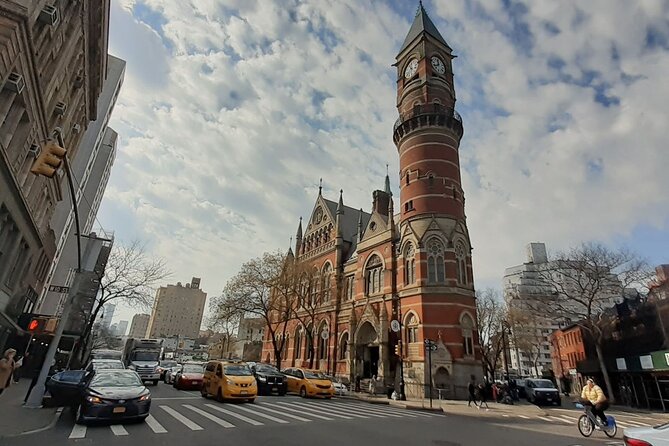
- Courts, jail, and women’s rights: Jefferson Market Library once served as a working jail and women’s court in a Victorian Gothic courthouse
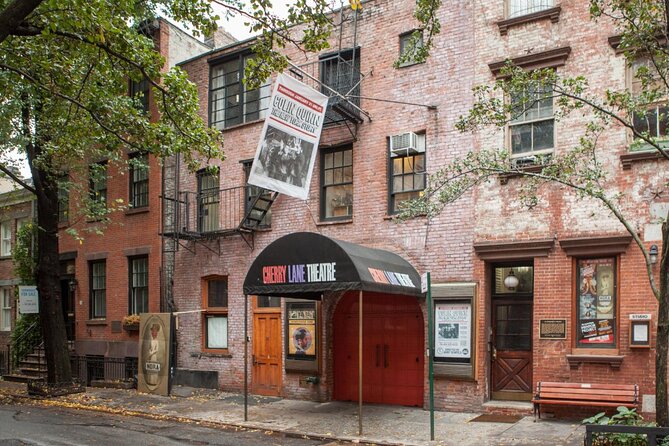
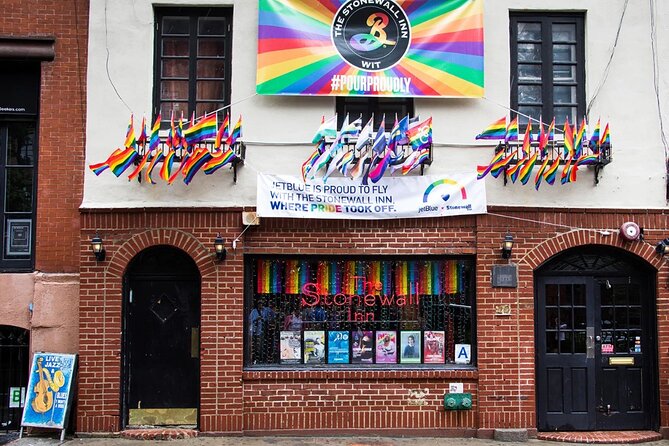
- Stonewall + theater blocks: you’ll see the Stonewall Inn from the sidewalk, then move on to the Cherry Lane Theatre, the oldest continuously operating off-Broadway theater
- Different kinds of justice: from a court case at the Northern Dispensary (1827) to the first racially integrated night club at Society Cafe
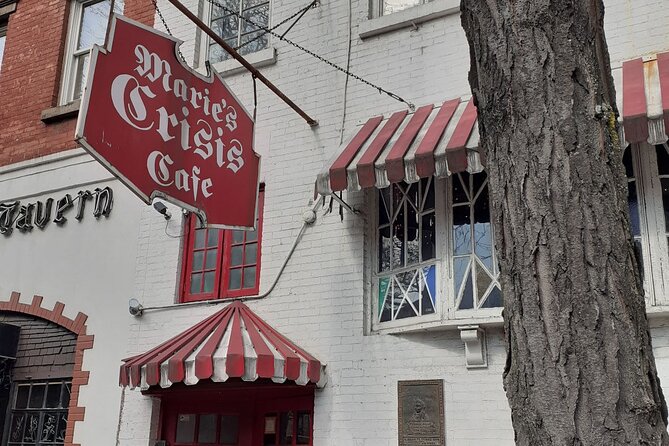
- A revolutionary writer’s last home: Marie’s Crisis Café connects Thomas Paine and Common Sense to Village culture
- A hard ending with real impact: the Triangle Shirtwaist Factory fire site, tied to labor reforms and the women’s suffrage movement
What the tour feels like on the sidewalk
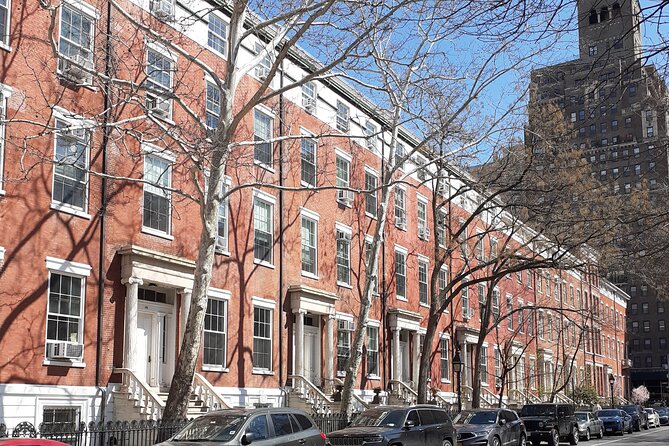
This is a walking tour built like a chain of short scenes. You move through Greenwich Village using major sites as anchors, but the real payoff is how the guide connects people and events across decades. The tour’s rhythm is part the point. You get short on-the-street context, then a chance to pause and look at what’s in front of you, not just what used to be there.
I like that it doesn’t treat the Village as one theme park of hip cafés. It’s more like a living timeline, where art, politics, crime trials, and community resistance are all part of the same neighborhood story. You’ll walk away with a clearer sense of why this area has always attracted people who push back.
Also, the tour is designed for accessibility in the common sense way. Most travelers can participate, it’s near public transportation, and it uses a mobile ticket. You’re not stuck with museum rules, and you’re not trying to read a hundred plaques by yourself.
You can also read our reviews of more walking tours in New York City


Price and ticket value: what $39 covers
The base price is $39 per person for about 2-3 hours. What makes it feel reasonable is that you’re not just hearing facts while passing buildings. The tour includes admission tickets for the scheduled stops, and you spend time at each location rather than rushing past.
There’s also an optional pizza add-on. If you choose the pizza option, it adds about one extra hour after the walking portion ends. The pizza itself costs $19, but food and drinks are not included in that price, so you’ll buy what you want on-site.
My practical take: this is a strong value if you want structure plus storytelling at walking speed. If you’re the type who hates guided groups and prefers to roam, you might feel a bit constrained by the schedule. But if you like getting your bearings fast with a plan, $39 won’t feel outrageous for Manhattan.
Washington Square Park, Hopper, and the park’s symbolic role
You start at Washington Square Park, and the guide uses it like a stage. Expect a story that stretches back to the 1600s, including the park’s early use as a potter’s field, then its later transformation into a parade ground, and finally its evolution into a center for activism, art, and rebellion.
What I like here is that the park isn’t treated as scenery. It’s treated as evidence. The guide points out how a single public space can keep taking on new meanings as the neighborhood changes. You also get historical photos at stops, which helps you compare what you see now to what the guide is describing.
From there, the tour takes you to the former home of Edward Hopper. This part is short, but it’s focused: how the neighborhood’s unique character influenced Hopper’s stark, contemplative style, and how his time there shaped some of the enduring images of 20th-century art.
Potential drawback: because this section is built around ideas and interpretation, you’ll want to listen. If you’re tuning out for the sake of people-watching, the best parts will pass you by.
Jefferson Market Library: courtroom drama in Victorian Gothic stone
Next up is Jefferson Market Library, formerly the Jefferson Market Courthouse. The building is dramatic in the way only Victorian Gothic architecture can be. But the most interesting piece is what happened inside it.
You’ll hear how it served as a working jail from the 1870s, how it became a women’s court, and how it held notorious criminals. The tour also connects the courthouse to New York’s fight for justice and women’s rights.
This stop is one of the easiest to remember later. It sticks because the subject matter is specific and the setting is unmistakable. Even if you’re not a history buff, it’s hard not to feel the weight of the building when you learn it was used for real courts and real confinement.
Time here is longer than some stops (around 15 minutes), which gives you a better chance to absorb the story. If you tend to speed-read facts, this is the stop where slow down and actually take in the details the guide points out.
Emma Lazarus House: from a compassionate poet to Lady Liberty
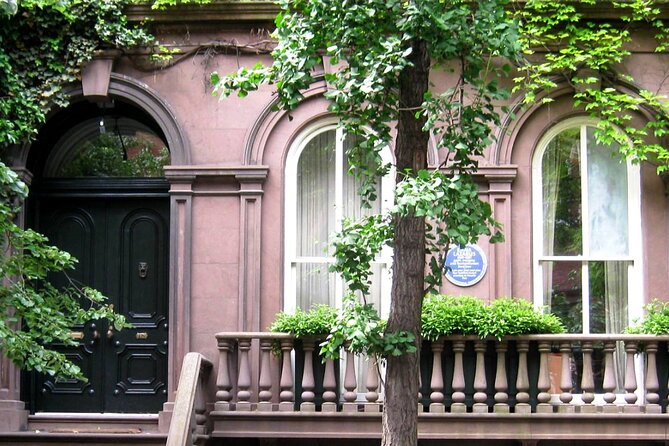
Then you move to Emma Lazarus House, where the focus shifts from courts and conflict to compassion and legacy. You’ll learn about Lazarus as one of America’s most impactful and compassionate poets, and you’ll hear about her ties to the Statue of Liberty.
I like this change of pace because it prevents the tour from becoming only heavy topics. You still get a clear historical connection, but the tone turns more human and less procedural. It’s a good reminder that activism and public life do not only show up through trials and raids. They can show up through words and public imagination too.
The stop is brief (about 10 minutes), so if you want more detail, this is the moment to ask the guide a question before you move on.
You can also read our reviews of more historical tours in New York City






Stonewall Inn and Cherry Lane Theatre: two kinds of bravery
The tour reaches The Stonewall Inn by walking past a place that’s become globally recognizable. You’ll travel back to the summer of 1969 and hear the events that led to the Stonewall Uprising, including the tensions, raids, and acts of resistance that helped ignite a turning point in the fight for LGBTQ+ rights.
What makes this stop work is how the guide frames resistance as action by real people. Instead of treating Stonewall as a myth you already know, you’re encouraged to understand it as a moment made of pressure, fear, and bravery.
After that, you head to Cherry Lane Theatre. This is the oldest continuously operating off-Broadway theater in New York City, and the guide explains why that matters. You’ll hear about the intimate nature of the venue and how it has launched careers of legendary actors, playwrights, and musicians.
My favorite thing about placing theater next to Stonewall is that you get two parallel stories of pushing boundaries. One is public protest and rights. The other is artistic risk and performance. Both help explain why Greenwich Village has long attracted people who refuse to stay in one lane.
Northern Dispensary and Society Cafe: justice beyond the courthouse
Not all “history with consequences” shows up in the same building. The tour takes you to The Northern Dispensary, where you’ll relive the landmark court case tied to social justice at a medical center from 1827.
This stop is short (about 5 minutes), but it’s powerful because it reframes justice as something connected to health and community. You’re not just hearing about punishment. You’re hearing about legal action tied to care and fairness.
Then you move to Society Cafe, standing at the doorstep of the first racially integrated night club in New York. The guide shares stories about trailblazers who performed there at this national historic landmark.
Even at 5 minutes, this stop offers more than a fun fact. It gives you a sense of how entertainment spaces could also be political spaces. You’ll probably look at the doorway differently when you realize it was part of an early integration story, not just a nightlife stop.
Marie’s Crisis Café: Thomas Paine’s last home, in modern form
One of the most intriguing stops is Marie’s Crisis Café. The tour positions it as a beloved Greenwich Village piano bar with a surprising past.
Before it became a show-tune gathering spot, this location was the final home of Thomas Paine, author of Common Sense, a founding voice of American democracy. You’ll learn how that link connects the birth of the nation to the cultural life of the Village.
This stop is listed as free admission for the tour. Even so, it feels earned because it’s the kind of connection that makes you rethink the neighborhood. You see modern people relaxing, then you learn a foundational political figure once lived there.
A practical note: because it’s a working bar, the environment may feel lively around performance hours. If you want quiet listening time, consider arriving with a plan to keep your voice down and follow the guide closely.
Triangle Shirtwaist Factory fire: ending where reforms started
The tour concludes back at Washington Square Park, with a final theme anchored at the Triangle Shirtwaist Factory fire site, now a designated National Historic Landmark.
You’ll reflect on the tragedy that claimed 146 lives in 1911, and you’ll learn how the bravery and activism of the women affected sparked lasting reforms in labor laws and helped fuel the women’s suffrage movement.
This is not a feel-good ending, and the tour does the right thing by treating it with weight. When a walking tour handles a topic like this, pacing matters. The guide’s job is to keep the focus on impact, not shock.
If you’re sensitive to heavy subject matter, plan a softer next step afterward. Maybe grab a quiet coffee or take a slower route back to your hotel. Your brain will need a minute to digest what you just learned.
Guide Andrew Kirschner: why the stories land
This tour is strongly shaped by the guide. Epic Walking Tours guide Andrew Kirschner gets high praise for enthusiasm and friendliness, and for bringing real structure to the storytelling. You’ll also hear that he uses historical photos to support key points, which is a big deal when you’re hearing about eras you cannot see.
Another consistent strength is pacing control. People mention he’s generous with tour time and depth, and that he can tailor the tour to the interests of a smaller group. In one example from feedback, a quieter morning tour allowed extra breathing room, including time to stop for a cappuccino at Café Reggio.
That customization is exactly what you want from a walking tour. Greenwich Village can overwhelm you fast if you’re trying to track everything on your own. A guide who can slow down when your group is small, and speed up when you need to keep moving, makes the experience feel personal rather than scripted.
One more practical perk: a tour limited to a maximum of 20 travelers tends to feel more like a group walk than a stadium event. You’ll likely get more of your questions answered without shouting over the crowd.
Who should book this Greenwich Village Historic Walking Tour?
Book it if you want a guided tour that actually explains why the neighborhood matters. This is great for first-time visitors who want orientation plus context, and it’s also good for repeat visitors who think they know the Village but want sharper stories tied to specific places.
You’ll enjoy it most if you like topics that connect streets to social change, including courtroom drama, LGBTQ+ history, labor reform, and art. If you prefer only upbeat sightseeing, you might find the darker moments heavy, but the tour includes that realism for a reason.
You should also consider this if you like walking pace learning. The time at each stop is short, so the guide’s job is to give you enough context to remember, then move you along. If you want long museum-style reading, you may feel like the tour scratches the surface.
Should you book this Greenwich Village Historic Walking Tour?
Yes, if you want a structured walk through major Village turning points with a guide who tells the story in a way that sticks. The mix is smart, from Washington Square Park to Jefferson Market Library, then to Stonewall Inn, and finally the Triangle Shirtwaist Factory fire site. It’s a route that helps you see the neighborhood as a chain of cause and effect, not just trendy blocks.
If you’re booking only for the “most famous postcard sites,” you might feel the itinerary is broader than you expected. But if you want value for $39 that comes with real stop time, admission at scheduled locations, and a guide who pays attention to pacing and depth, this is an easy recommendation.
If your schedule allows, go for the standard walking tour first. Then, if you still feel hungry for more, add the pizza option for the extra hour after the walk.
FAQ
How long is the Greenwich Village Historic Walking Tour?
It lasts about 2-3 hours.
What does the tour cost?
The standard walking tour costs $39.00 per person.
What is included in the $39 ticket?
The tour includes visits to locations throughout Greenwich Village and admission tickets for the scheduled stops listed in the itinerary.
Where does the tour start and end?
It starts at Washington Square Park (New York, NY 10012, USA) and ends back at the meeting point.
Is the tour offered in English?
Yes, the tour is offered in English.
Do I need a paper ticket?
No. It uses a mobile ticket.
Is there an optional pizza add-on?
Yes. The pizza option costs $19.00 per person and adds about one hour after the walking tour concludes. Food and drink are purchased separately by guests.
Does this tour require good weather?
Yes. The experience requires good weather. If it’s canceled due to poor weather, you’ll be offered a different date or a full refund.
Can I get a full refund if I cancel?
Yes. You can cancel up to 24 hours in advance for a full refund. If you cancel less than 24 hours before the start time, the amount you paid will not be refunded.
More Walking Tours in New York City


More Tours in New York City






More Tour Reviews in New York City



Not for you? Here's more nearby things to do in New York City we have reviewed






More Greenwich Village Tours to consider.
 ★ 5.0Greenwich Village Food Tour with 6 Locals Favorites DishesTickets from $971,812 traveller reviews
 ★ 5.0Greenwich Village Walking and Food Tasting TourTickets from $941,572 traveller reviews
 ★ 5.0Artistic, Alternative Greenwich Village Walking TourTickets from $39971 traveller reviews
 ★ 5.0NYC Greenwich Village Italian Food Guided Walking TourTickets from $89627 traveller reviews
 ★ 5.0Greenwich Village Food Tour | Tasty Tours NYCTickets from $79549 traveller reviews
 ★ 4.5New York City Ghost Tour of Greenwich VillageTickets from $39466 traveller reviews
 ★ 5.0High Line Park and Greenwich Village Food TourTickets from $159398 traveller reviews
 ★ 4.8Greenwich Village Guided Walking TourTickets from $39300 traveller reviews
More useful New York routes