
Review · GREENWICH VILLAGE TOURS
Greenwich Village Soho Little Italy/Paris Chinatown Walking Tour
Six neighborhoods, one easy walk. This Greenwich Village, SoHo, Little Italy and Paris Chinatown area tour strings together major street-level landmarks with a guide and a speaker, so you come away with history and practical tips for what to do next. It is especially handy if you want more than the usual postcard stops, since each stop is timed well for getting your bearings fast while still hearing real stories.
What I like most is the way the walk creates connections between neighborhoods, from the artsy Village to Pride history at the Stonewall Inn, then over to SoHo’s cast-iron streets and into the immigrant stories you feel in Little Italy and Chinatown. One possible drawback to plan for: the pace is built around short stops (about 30 minutes each), so if you want to linger for photos or slow browsing, you may have to do that on your own after the tour ends.
Key Points Worth Knowing
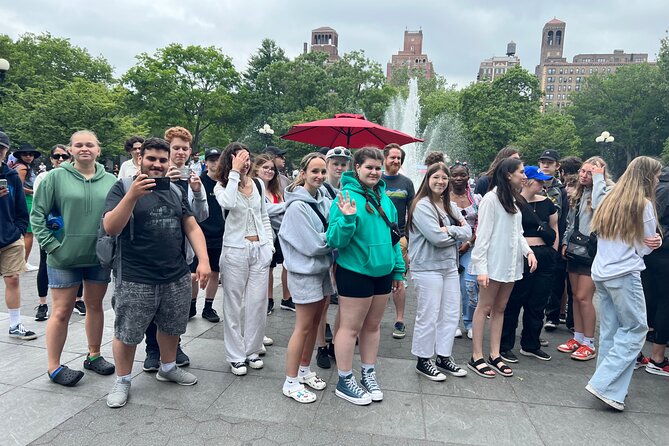
- Short, focused segments keep you moving while still covering big themes in 2 to 3 hours
- Stonewall Inn narration places LGBTQA+ history in context, before and after the uprising
- SoHo cast-iron street details give you something tangible to look for beyond shop windows
- Little Paris and neighborhood labels help you understand how areas get branded and why that matters
- Chinatown as a senses-first neighborhood turns the contrast into part of the fun, not a side note
Why This Greenwich Village to Chinatown Walk Works So Well
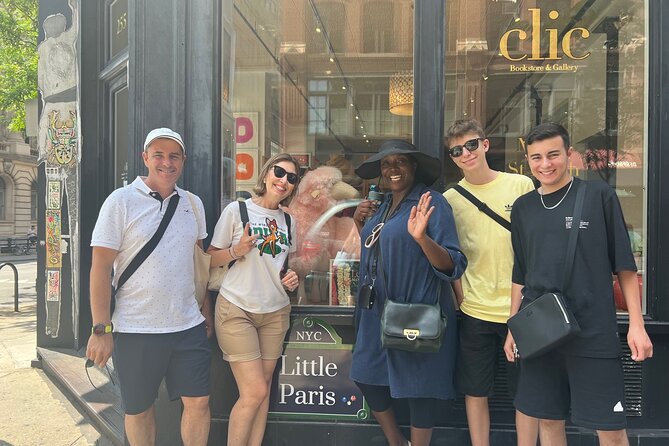
If your NYC plan is crowded, this is the kind of tour that helps you actually use your limited time. You are not trying to “do everything.” You are doing the right mix of places, in a logical path, and learning what each neighborhood has meant over time.
I like tours that help you read the city. Here, the guide does that with a historical lens. You start in Washington Square, a natural social hub where arts and street life have had multiple chapters. Then you hit the Stonewall Inn area and slow down the pace mentally, because the stories go from everyday nightlife to major social change. After that, the walk shifts to architecture and identity, with SoHo cast iron, a Little Paris area sign, and then the Italian and Chinese neighborhood rhythms.
You should also expect a real “get oriented” payoff. Even if you are back in the city a few times, you can still miss the thread that ties these areas together. This tour is designed to hand you that thread, plus practical ideas for shopping and eating while you are in the area.
You can also read our reviews of more walking tours in New York City



Price and Value: What $56 Really Buys You
At $56 per person for about 2 to 3 hours, this sits in the “worth it if it saves you time” category. You are paying for a guided route that hits six named stops and turns them into a story, not just a walk to a photo spot.
Here’s the value math that matters on the ground:
- The guide-led experience matters more than paid admissions, since the tour notes free admission at the listed stops.
- A speaker is included, which helps if you are dealing with street noise or want clear narration without leaning in the whole time.
- The group size is capped at 25 travelers, so you should generally get a more personal feel than the giant-bus crowd.
If your goal is to leave NYC feeling like you understand how neighborhoods evolve, $56 is a reasonable price for compression. You are basically buying time and context. The tour’s timing also helps you build the rest of your day, because it ends in Chinatown where you can keep going.
The Route From Washington Square to Apotheke Chinatown
The tour starts at the Washington Square Arch, then works its way through SoHo, Little Italy, and ends in Chinatown at Apotheke Chinatown, 9 Doyers St. That ending matters more than it sounds. You finish in the heart of Chinatown, so you can follow up right away with food, snacks, or browsing while the stories you just heard are fresh.
Expect a rhythm built on short blocks. Each stop runs about 30 minutes. That pacing is good for most people because it prevents the “stand around forever” feeling. It also means you will not get a museum-style deep lecture at any one site. Instead, you get snapshots that connect.
Also, you are walking on city streets. The tour asks for a moderate physical fitness level, and it is near public transportation, which is useful if you want an easy break point for your day.
Stop 1 at Washington Square Park: Bohemia, Beat Culture, and Live Music Energy
Washington Square Park is one of those NYC places where the vibe hits you before you even read the details. The tour uses it as a launch point with an audio tour component, focused on the artsy side of the neighborhood.
What to pay attention to here:
- The history theme centers on The Village as a place that has had several lives, not one single identity.
- You also hear about Bohemia and the Bitnik culture of the Village, which helps explain why the area keeps producing artists, performers, and countercultural scenes.
- The tour points to legendary locations in this area for listening to live concerts, so you have a better sense of why music and street culture are part of the neighborhood’s DNA.
This is also a smart first stop because it gives you a baseline for the rest of the walk. Once you understand that Washington Square is a cultural magnet, it becomes easier to see why Stonewall’s area sits in the same broader story of nightlife, community, and public space.
If you are the type who wants to soak up your surroundings visually, this stop is also a good mental warm-up before the more serious history at Stonewall.
Stop 2 at the Stonewall Inn: Pride History With Real Timeline Context
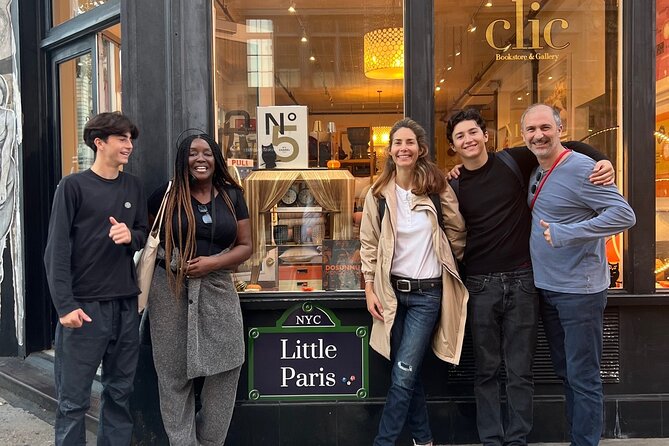
The Stonewall Inn stop is the emotional anchor of the tour. It is not just a name. You get a narrated account that moves through the timeline:
- The history of the LGBTQA+ community before the uprising
- The Stonewall Uprising itself
- What happened in the immediate aftermath
- How Pride rose from there
This is a stop that rewards attention. Even if you already know the headline story, the value here is how the guide frames it so it does not feel like an isolated event. You see the community context first, then the turning point, then the longer arc.
Practical tip: treat this area as a place of remembrance. Expect people to take photos, but also expect the neighborhood to feel like a living part of NYC history, not a theme park set.
The tour also does a nice job of keeping the tone grounded. The narration is built to help you understand how a community becomes visible, and how public pressure can change what a city is willing to tolerate.






Stop 3 in SoHo: Cast-Iron Details and How the Street Changed
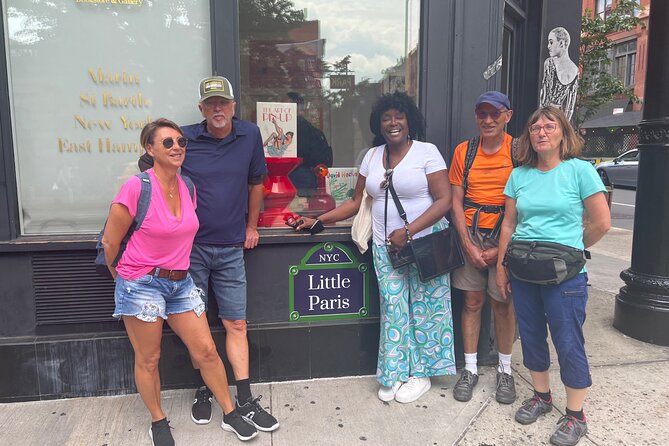
Next up is SoHo, and the focus is not random shopping streets. The tour calls out the cast iron that defines the area, now used in part by luxury boutiques.
Here’s why that matters on a walk:
- Cast-iron buildings are physical evidence of how industrial materials and new building styles can shape a neighborhood identity.
- Seeing the architecture through a guided lens helps you connect “SoHo as trend” with “SoHo as place with a building story.”
It also helps you read the streets like a local. You start to notice that storefront design and street layout are not just decoration. They are part of what makes SoHo feel like a destination, and destinations attract waves of different businesses over time.
SoHo can be a photo playground, but this stop is really about learning what you are looking at. If you like architecture and neighborhood evolution, you’ll get more out of it than just browsing shop windows.
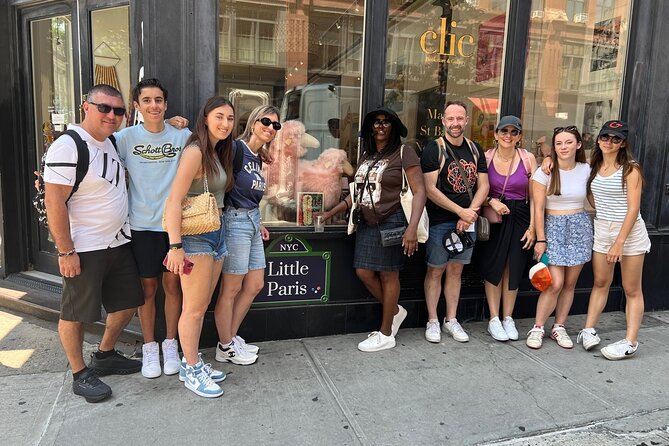
Stop 4 at Little Paris Sign: A Neighborhood Identity in Waiting
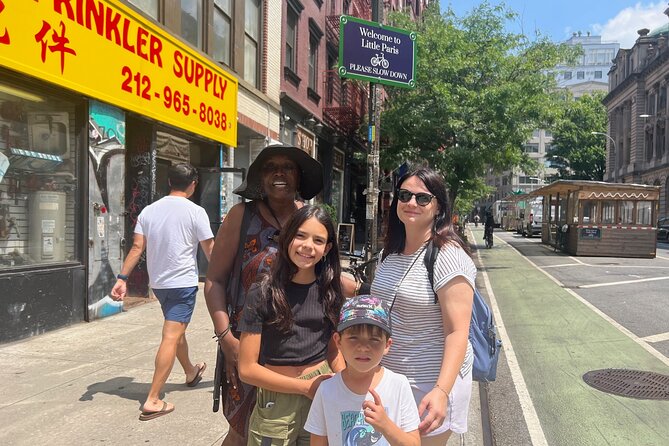
Between SoHo and Little Italy, the tour stops at the Little Paris sign. It is framed as a French enclave concept that is described as soon to be officialized.
This is one of the more interesting stops for how it teaches you to interpret NYC labels. Neighborhood identities here are not always fixed. They can be in motion, named by locals, pushed by marketing, or formalized over time.
What you should take from this stop:
- Pay attention to how the tour describes the area as a French-themed pocket.
- Use it to think about how cities brand spaces, and how those brands influence what people expect to see.
It is also a fun pause in the route, because it gives you a chance to reset your brain before you head into Little Italy and Chinatown, where the cultural contrasts become more intense.
Stop 5 in Little Italy: What Remains and Why the Mafia Story Lingers
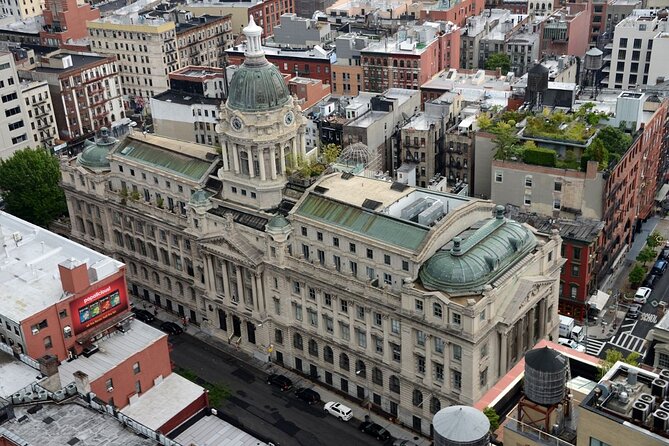
Little Italy is a neighborhood with a changing face. This stop focuses on what remains of the atmosphere and includes a look at the mafia that reigned supreme there.
This is not presented like a sensational side quest. It is used to explain why the neighborhood carries certain associations in the public imagination. Even if you are not seeking crime history, understanding that past gives context for how a place develops reputations and stereotypes.
Here’s what I think makes this stop valuable for you:
- You leave with a clearer sense that neighborhoods shift, but stories stick.
- You also get a better sense for how “old neighborhood” and “new visitor experience” can blend in the same blocks.
One practical upside: since the guide is also there to share shopping and eating ideas, you can ask yourself what kind of experience you want next. Is it the vibe? The food? The history? The tour helps you decide where to put your remaining energy.
Stop 6 in Chinatown: A City Within a City (and a Sensory Shift)
Chinatown is the grand contrast at the end, framed as a return trip to Shanghai, a city within a city. The narration leans into the feeling, the sights and sounds, and how the neighborhood changes your senses as soon as you cross into it.
This stop is where the “tour value” becomes very real, because you do not need a museum ticket to experience it. You just walk into a different rhythm.
What to expect:
- A sense of distance from the rest of Manhattan, created by density, street life, and the way the neighborhood organizes itself.
- A guided interpretation of Chinatown as something you can treat as its own world, not just a stop on the way to something else.
Since the tour ends in Chinatown, this is also your cue to keep exploring right away while you still have the narrative thread in your head. You can use the guide’s general hints about eating and shopping to steer your next choices without getting overwhelmed.
What Makes This Tour Feel Like a Real NYC Orientation
A lot of walking tours either go too fast with facts or too slow with standing around. This one aims for a middle that works: each stop gets enough time for context, but not so much that you lose momentum.
Another strong point is the way the guide links topics. The stories are not random. You can feel the intended connections:
- Artsy Village energy at the start
- Civil rights turning points at Stonewall
- Architectural identity in SoHo
- Changing labels in Little Paris
- Old reputation and shifting atmosphere in Little Italy
- New-world feeling in Chinatown
Also, the tour is offered in English and keeps groups to 25 people max, which usually means less chaos and more chance to follow the narration.
From the reviews, the guide Kaissa Tours is highlighted by name, and people call out her friendliness and passion for NYC neighborhoods. One reviewer also appreciated a critical lens on colonialism and capitalism themes in NYC history. That kind of framing is exactly what helps a tour feel more than just trivia.
Who This Walking Tour Is Best For
This tour fits you best if:
- You want a guided orientation that saves you decision fatigue.
- You care about neighborhoods as living stories, not just lists of attractions.
- You want a Pride history stop that gives timeline context, not just a landmark name.
- You like having food and shopping ideas ready for after the tour, especially since it ends in Chinatown.
It may not fit as well if:
- You hate walking and prefer long sit-down experiences.
- You need lots of time at a single site, since the format splits time across six stops.
Should You Book This Greenwich Village to Soho Little Italy/Paris Chinatown Walking Tour?
I think it is a smart booking if you want a compact, story-driven NYC loop that ends somewhere you can keep exploring. At $56, you are paying for guided context across multiple major neighborhoods, with free-admission stops noted along the way and a speaker included to keep the narration clear.
Book it if you are the type who likes to understand how a city got its personality, and you want your afternoon planned without over-scheduling. Skip it if you are looking for museum-level depth or you want one neighborhood only, because the pacing is built for coverage, not long lingering.
In short: if your goal is to leave with bearings and a better sense of NYC neighborhoods beyond the obvious sights, this walk is a strong value.
FAQ
Where does the tour start?
The tour starts at the Washington Square Arch, Washington Square N, New York, NY 10012.
Where does the tour end?
The tour ends in Chinatown at Apotheke Chinatown, 9 Doyers St, New York, NY 10013.
How long is the walking tour?
It runs for about 2 to 3 hours.
How much does the tour cost?
The price is $56.00 per person.
Is the tour offered in English?
Yes, it is offered in English.
How big is the group?
The tour has a maximum of 25 travelers.
What is included in the tour?
A speaker is included.
Are tips included in the price?
No, tips are not included.
Is the tour near public transportation?
Yes, it is near public transportation.
Is free cancellation available?
Yes, there is free cancellation, and you can cancel up to 24 hours in advance for a full refund.
More Walking Tours in New York City


More Tours in New York City




More Tour Reviews in New York City
Not for you? Here's more nearby things to do in New York City we have reviewed








More Greenwich Village Tours to consider.
 ★ 5.0Greenwich Village Food Tour with 6 Locals Favorites DishesTickets from $971,812 traveller reviews
 ★ 5.0Greenwich Village Walking and Food Tasting TourTickets from $941,572 traveller reviews
 ★ 5.0Artistic, Alternative Greenwich Village Walking TourTickets from $39971 traveller reviews
 ★ 5.0NYC Greenwich Village Italian Food Guided Walking TourTickets from $89627 traveller reviews
 ★ 5.0Greenwich Village Food Tour | Tasty Tours NYCTickets from $79549 traveller reviews
 ★ 4.5New York City Ghost Tour of Greenwich VillageTickets from $39466 traveller reviews
 ★ 5.0High Line Park and Greenwich Village Food TourTickets from $159398 traveller reviews
 ★ 4.8Greenwich Village Guided Walking TourTickets from $39300 traveller reviews
More useful New York routes