
Review · WALL STREET TOURS
The Outlaws Who Built NYC: Financial District Tour
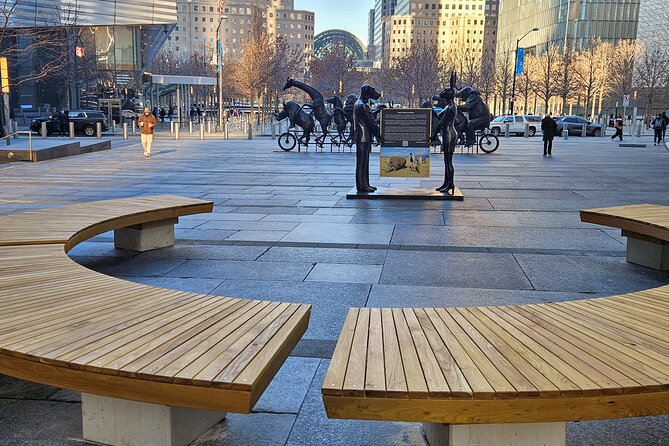
Forget the polite NYC origin story. This Financial District tour turns familiar landmarks into clues about the outlaws and operators who shaped Lower Manhattan, from the Oculus area to Trinity Church and the White Horse Tavern. You get a fast, story-driven route built around short stops you can actually see, photograph, and connect to the bigger forces behind the city.
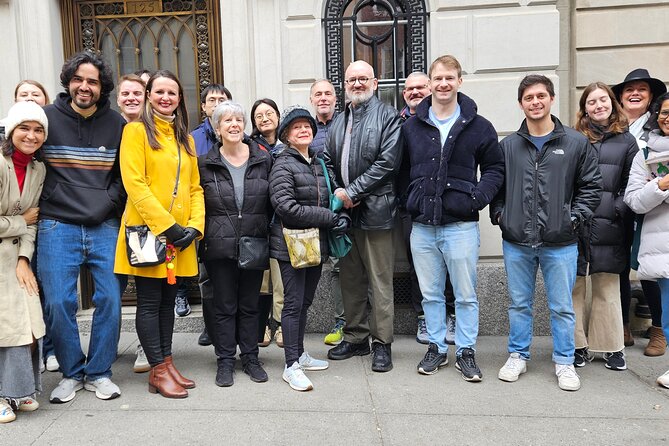
I like two things a lot. First, the tour is designed for photo stops, so you are not just walking past history. Second, the group stays intimate with a maximum of 15 people, which keeps the pace lively and the Q&A possible.
One thing to consider: it is about two hours, so you are moving quickly. If you want to linger for a long time at the 9/11 sites, you may feel slightly rushed.
Key highlights to look forward to
- Small-group storytelling with a maximum of 15 travelers, so the experience stays personal.
- Scheduled photo stops that make it easier to capture each location and remember the details.
- Free admission tickets at major stops, so you are not hit with extra site fees during the walk.
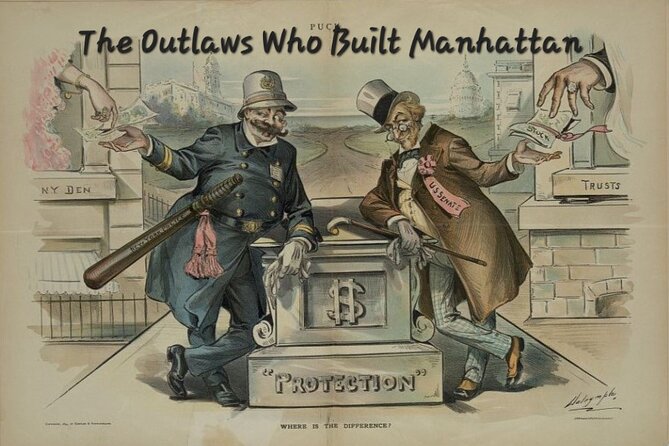
- A wide range of “shady influence” topics, from privateers and pirate-linked legends to police corruption.
- A practical route through core Lower Manhattan, with an end point near major subway and ferry access.
Start at M Social, end at the White Horse Tavern
This is a smart afternoon plan for anyone who wants to understand how New York got its power, not just how it looks on postcards. You meet at M Social Hotel New York Downtown (formerly Millennium Downtown New York), at 55 Church St, outside the entrance. The start time is 3:00 pm, which also helps if you want a slower morning and an early evening instead of a full day.
The tour ends at White Horse Tavern at 25 Bridge St, which is a great spot to transition into dinner nearby or to keep exploring the Financial District on foot. It is also close to the Bowling Green and South Ferry/Whitehall Street stations, plus ferry services, so you can get out of the area without stress.
One more practical note: the tour uses a mobile ticket, and it is offered in English. Service animals are allowed.
You can also read our reviews of more tours and experiences in New York City.

The “outlaws” theme, and why it works here
What I find most useful about the concept is that it gives you a lens. Instead of treating Lower Manhattan like a clean line of dates and governors, you see the city as something built through pressure, opportunism, and yes, wrongdoing.
The tour’s topics move through several types of “bad behavior,” from pirate-linked stories and political maneuvering to corruption and violence. That matters because the Financial District was never just commerce. It was also influence, enforcement, and money trying to protect itself.
You do not have to be a true-crime fan to enjoy it. If you like how cities actually run, you will enjoy the way the tour connects people to systems, like who controlled water, who controlled publicity, and how power got enforced.
Oculus World Trade Center stop: privateers and ship remains
Early on, you head into the Oculus World Trade Center area, where the story shifts from old docks to ocean-linked ambition. You will learn about the first privateers in the NYC area and hear about remains of ships embedded in the earth.
This is a strong stop for two reasons. First, the location itself is visually memorable, so the story has a backdrop you can picture later. Second, it sets the tone for the rest of the tour by framing the “outlaws” theme as something tied to trade, contracts, and power, not only street-level crime.
One drawback of stops like this is that they are short by design. You get the key points, but it is not a slow museum-style experience. If you want to read every plaque afterward, give yourself extra time after the tour to follow up.
The 9/11 Memorial sites: Madame Restell and a first millionaire
Then you transition into the National 9/11 Memorial & Museum area, and the tour uses the setting in an especially interesting way. It connects the modern memorial space to earlier, very different lives and businesses.
You make two separate stops at the memorial area. One focuses on the site of the former business of Madame Restell. Another stop covers the site of the former home of New York City’s first black millionaire.
This pairing is thoughtful if you pay attention to how it is framed. It reminds you that neighborhoods change, even when the streets stay in place, and that New York’s story includes people and enterprises that do not fit the clean, official narrative. It also gives you a broader sense of why the Financial District area has always attracted money and controversy.
Just be aware of the emotional weight of the space. The tour keeps it respectful and moves on quickly, but you still should plan for the fact that this is a moment that affects people. If you are visiting with someone who wants quiet time, you might step aside briefly when the group pauses for photos.
Trinity Church and the freedom of the press trial
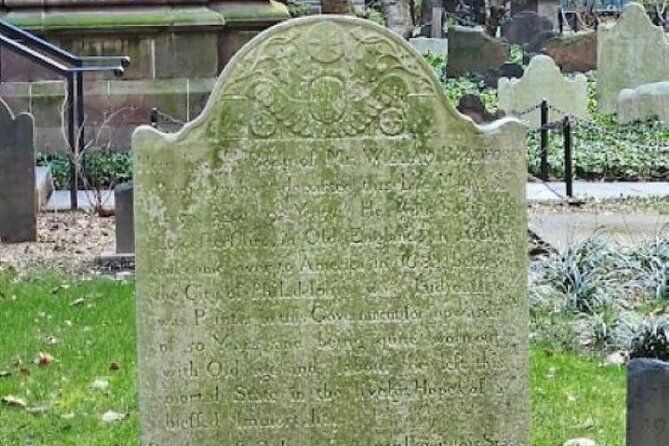
Next up is Trinity Church NYC, where you learn about a trial connected to the Freedom of the Press. This stop is valuable because it links outlaws and schemers to something you use every day: the ability to publish, argue, and challenge authority.
I like this part because it broadens your idea of crime and punishment. It is not only about violence or theft. It is also about power being threatened by information, and institutions trying to control what gets said.
The timing is brief, so your best strategy is to listen closely and then ask one good question if your guide invites it. If you care about media and politics, this stop will stick with you longer than you expect.


Wall Street: bombing history, then the bank and water story
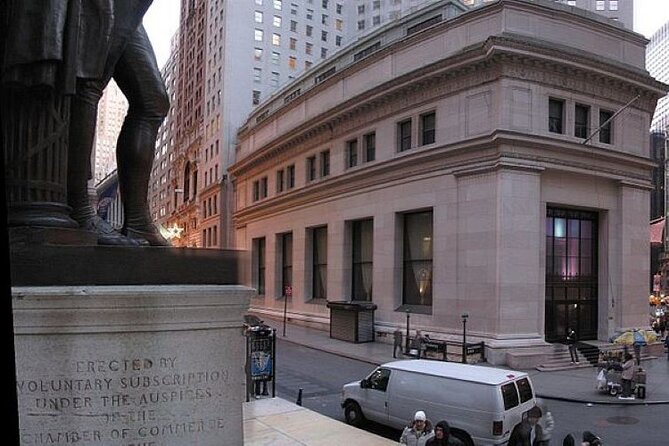
You hit Wall Street in two chunks, and the contrast is the point.
First, you learn about the 1920 Wall Street bombing. Then you move to another Wall Street stop tied to the Manhattan Company, with connections to NYC’s water supply and the formation of a bank. In other words, you go from a headline-style act of violence to the behind-the-scenes mechanics of how the city functioned.
This is where the tour’s “outlaws built NYC” approach really becomes practical. It helps you see that systems are built by decisions, and decisions are rarely neutral. If you understand the water and banking story, you start to see why Wall Street has always been more than a street with statues.
The only consideration here is that the area is busy. You will be outside, walking between corners, and stopping quickly. Bring your best patience for crowd noise, and treat it like a guided history walk, not a quiet lecture.
East River waterfront views: Brooklyn Bridge and its messy origins
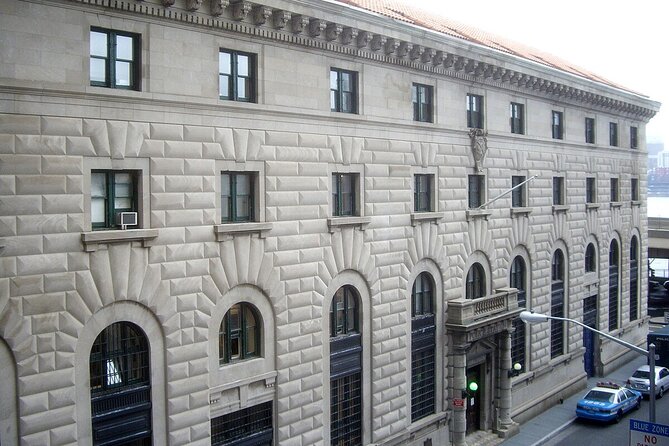
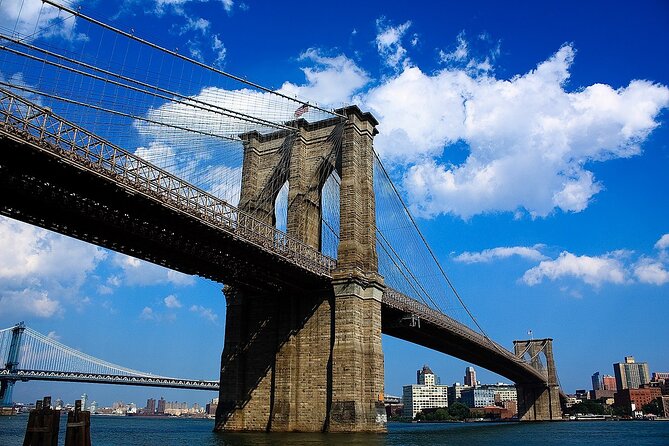
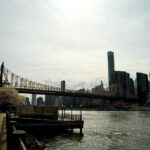
At the East River Waterfront Esplanade, you get a birds-eye view of the Brooklyn Bridge. The tour connects that view to the story of the bridge’s corrupt beginnings.
This is one of the most satisfying stops because it lets your brain do two jobs at once: look at the landmark and place it into a story about cost, influence, and shortcuts. Seeing the bridge from this angle makes it feel more like infrastructure than monument.
Also, photo-wise, this is where you can get your money shot. Even if the group moves fast, the scene is wide enough that you can find a frame without completely stopping the whole line.
First Precinct: 1970s police corruption
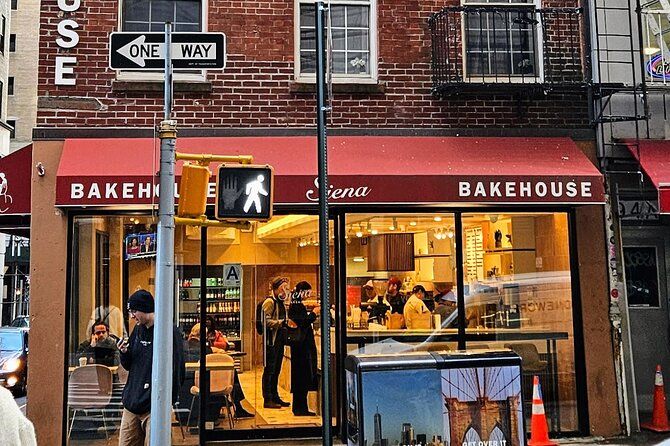
You then step into a different kind of “outlaw” territory with a stop at the First Precinct, focused on 1970s police corruption. This is a useful reminder that corruption is not a single era thing. It comes in waves, and it often shows up where authority is concentrated.
I think this stop works well because it makes the rest of the tour feel less abstract. When you hear earlier stories about power, you are basically preparing for this: what happens when the people who enforce the rules stop believing in them.
The stop is short, so you are not getting an encyclopedia. Still, it plants a clear idea: the Financial District’s history is tied to how policing, reputations, and enforcement shaped outcomes.
Hanover Square: Captain Kidd and colony development
At Hanover Square, the story turns toward legend and power. You hear about how local resident and criminal Captain Kidd had a hand in developing the colony.
This is one of those moments where the “outlaws” theme feels most like street storytelling. It gives you a character to attach to the era. And it helps you remember the basic idea that New York grew through traders, fixers, and people willing to bend rules if the rewards were big enough.
Just treat it as story plus context, not a single verified biography. The value is in how it connects a famous name to the larger theme of money and risk.
White Horse Tavern: New Amsterdam lawbreakers and the elite they created
You finish at White Horse Tavern at Bridge St, and the stop connects the location to New Amsterdam law-breakers who helped create the elite of New York City.
Ending here makes sense because the tavern gives you a human-scale ending. You can look at the walls and imagine the room where people traded information, made deals, and built reputations. It is a fitting capstone to the tour’s message that influence often starts with informal networks.
If you want to keep the momentum, this is also a convenient place to linger. You can grab food nearby, compare notes with your group if you want, and then decide what to explore next.
Price and value: is $40 fair for a 2-hour Financial District tour?
At $40 per person for about two hours, this feels fair, especially because the experience is built around multiple major stops and free admission tickets are indicated for key locations. You are basically paying for guided context plus a curated route through high-signal places, not for transportation or entry fees.
The real value is not just the number of stops. It is the way the guide’s narrative ties them together under one theme: how shady people and bold schemes helped shape the city’s institutions.
Group size also affects value. A maximum of 15 travelers means you are less likely to feel like you are trapped in a long line with no chance to ask anything. If you like history but find big group tours exhausting, this format is a good match.
Who this tour suits best
This is a great fit if you want to learn NYC history in a way that feels connected to human behavior. If you enjoy stories with edge, but still want them explained clearly, you will likely have a good time.
It is especially good for:
- First-time visitors who want a sharper angle on the Financial District than the usual skyline talk
- History lovers who like political and economic context
- People who prefer short, focused stops over long museum time
If you are the type who needs silence and deep reading time at memorial sites, you may find the pace a bit brisk. But if you like a guided walk that gives you a lot to think about while keeping things moving, this works.
Tips to get more from every stop
A few simple choices will make this smoother. Wear shoes you can stand in for short intervals, since the walk is within Lower Manhattan and the stops are brief. If you care about photos, keep your camera ready during the pauses, not after you realize you missed the best angle.
Also, when the guide points out a specific detail, try to repeat it in your own words. These stories cover privateers, ships embedded in earth, trials tied to press freedom, a Wall Street bombing, water and banking, police corruption, and Captain Kidd lore. Doing a quick mental recap helps it stick.
Should you book The Outlaws Who Built NYC Financial District Tour?
If you want a Lower Manhattan experience that treats the city like something built by decisions, not destiny, I would book this. For $40, you get an efficient route with free admission tickets at major stops, a small group size, and a clear storytelling theme that makes the Financial District feel less like a blur.
I would not book it if you need long stops, quiet time, or a slow museum-style pace. But if you are excited by how power, money, and wrongdoing shaped institutions, this tour is a strong use of a couple hours in the neighborhood.
FAQ
How much does the tour cost?
The tour costs $40.00 per person.
How long is the tour?
It lasts about 2 hours.
What group size should I expect?
The tour has a maximum of 15 travelers.
Where do I meet, and where does the tour end?
You meet at M Social Hotel New York Downtown at 55 Church St, New York, NY 10007, and the tour ends at White Horse Tavern at 25 Bridge St, New York, NY 10004.
Is the tour offered in English?
Yes, it is offered in English.
Are admissions included for the stops?
The stops are listed with free admission tickets, so you are not expected to pay separate admission fees for those included stops.
What is the cancellation policy?
You can cancel for a full refund if you cancel up to 24 hours in advance of the experience start time. Free cancellation is available per the policy terms provided.
More Tours in New York City

More Tour Reviews in New York City
Not for you? Here's more nearby things to do in New York City we have reviewed



More Wall Street Tours to consider.
 ★ 4.5NYC City Tour: Statue of Liberty, 9/11 Memorial, Wall StreetTickets from $392,059 traveller reviews
 ★ 4.5Wall Street Insider Tour with a Finance ProfessionalTickets from $39660 traveller reviews
★ 4.5Wall Street Insider Tour with a Finance ProfessionalTickets from $39571 traveller reviews
★ 4.5Wall Street Insider Tour with a Finance ProfessionalTickets from $39660 traveller reviews
★ 4.5Wall Street Insider Tour with a Finance ProfessionalTickets from $39571 traveller reviews
 ★ 5.0Manhattan Group Tour Including Wall Street and 911 MemorialTickets from $39408 traveller reviews
 ★ 4.6Wall Street Tour with 9/11 Memorial and Statue FerryTickets from $39367 traveller reviews
 ★ 4.9Wall Street and Financial District Walking TourTickets from $34284 traveller reviews
 ★ 5.0How Money Was Made Wall Street Walking TourTickets from $49185 traveller reviews
 ★ 5.0Wall Street and Financial District Walking TourTickets from $34116 traveller reviews
More useful New York routes