
Review · NEW YORK CITY TOURS
A Gilded Age Audio Guide: New York’s Millionaire Row
Millionaire Row feels cinematic on GPS audio. You start outside the Metropolitan Club, founded by J.P. Morgan, then work your way along Fifth Avenue as the Gilded Age comes to life through an easy self-guided GPS route.
I especially like the way the app keeps things moving, with location tracking that helps start the right story at the right spot. You also get offline access to audio and maps, which makes it less stressful when cell service is spotty.
One thing to plan for, though: you need to bring your own smartphone and headphones, since those are not included. And because it is a walk, you will want to pace yourself, especially if you pause often.
Key points to know before you go
- GPS tracking that handles the timing for you, including cues to look around and cross streets
- Offline audio and map access, so you can keep listening even with weak data
- A route built for pacing, with pause, rewind, and resume when you want
- Big-name sights in a tight loop, from private-club façades to The Met at the end
- Great value for $14.99, especially because you get unlimited lifetime use and replay
Why this Fifth Avenue walk feels different from a standard tour
This is not a “stand here and listen” kind of experience. It is a scripted audio walk that uses your location to tell the story as you pass each landmark, so you are not waiting on a guide’s schedule. The result is a smooth flow, with narration running while you move, so there is less dead time than you get with live tours.
If you like history tied to the real street, you will enjoy how the route links wealth, power, and architecture across the Upper East Side. You will also get a “millionaire-to-museum” arc, ending at The Metropolitan Museum of Art when you are ready for a payoff.
Getting started at East 60th Street and the Metropolitan Club moment
Your tour starts at East 60th Street, outside the Metropolitan Club. The whole concept starts strong, since the Metropolitan Club is described as being founded by J.P. Morgan, a symbol of the opulence of the Gilded Age elite.
Why that works: early on, you set the theme. You are not guessing what era you are in, and you are not just admiring pretty buildings. You are learning the motive behind the scenery, and that makes the later mansions hit harder.
Practical note: because this is GPS driven, take a minute when you arrive to be sure you are at the right spot. The tour includes directions to the starting point, and the app needs that baseline to cue the correct audio.
You can also read our reviews of more guided tours in New York City



Fifth Avenue, luxury façades, and the story behind the address
From the Metropolitan Club, you follow Fifth Avenue, described as the world’s most prestigious address. The audio frames the walk around the Gilded Age robber barons and how their mark shaped the city, so you are seeing the street as a result of power, not just as a backdrop for shopping.
You will also get a break from the “single-minded street view” because the narration encourages you to look around as you go. In the reviews, the GPS prompts you to cross the street and check to the left or right, which helps when buildings sit close to the curb and you cannot see everything on the first pass.
Drawback to consider: you will spend your time along an active corridor. That is part of the point, but it means you will want to keep moving and avoid stopping too long in the roadway.
Knickerbocker Club and the private-world contrast
Next up is the Knickerbocker Club, described as a private social club synonymous with the elite of New York City. Even though you are not entering anything, the tour uses this stop to underline a key Gilded Age theme: influence often operated behind closed doors.
What I like about this kind of audio choice is the perspective shift. You are not only learning names, you are learning how status looked in daily life, in club culture and social circles.
If you are hoping for inside access, manage expectations. This is a self-guided walk through the exterior experience, and the value is the story the audio gives you as you pass.
Central Park in the middle of wealth: a pause that matters
At one point you catch a glimpse of Central Park, described as a serene oasis in the heart of the bustling city, offering a retreat for wealthy residents along Fifth Avenue. The audio timing matters here. You get a visual mental exhale, then you move back into architecture and institutions.
Also, this is not just a scenic moment. The tour connects the park to the lives of the wealthy, so it feels like part of the same system, not a random detour.
In real terms, this is a good moment to slow down, stand at a safe spot, and absorb the contrast before you head back into the next stretch.
The Arsenal to the Central Park Conservancy
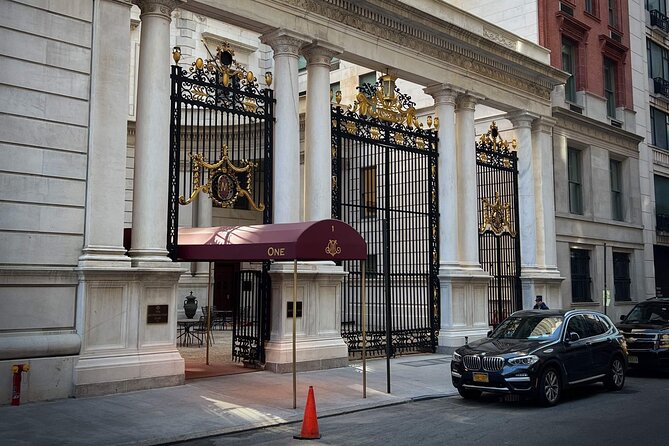
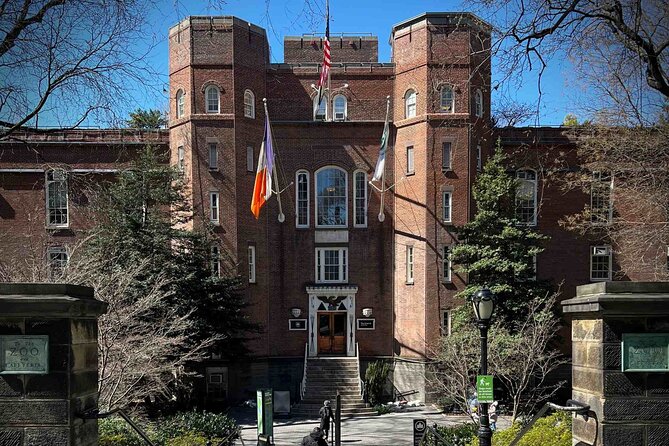
You then pass by The Arsenal, described as a historic building that once served as a military arsenal and now houses the Central Park Conservancy. This stop is useful because it shows how New York repurposes old power structures into civic uses.
You get a lesson in continuity without the tour having to lecture. You keep walking, and the audio keeps reframing what you see. That approach is one reason the pace works for solo visitors, since you are not stuck in someone else’s timetable.
If you are the type who likes facts to anchor your imagination, this is a good place to listen carefully rather than speed through.
More NYC tours and experiences for the shortlist






Beekman Mansion and the Vanderbilt Sloane White story blocks
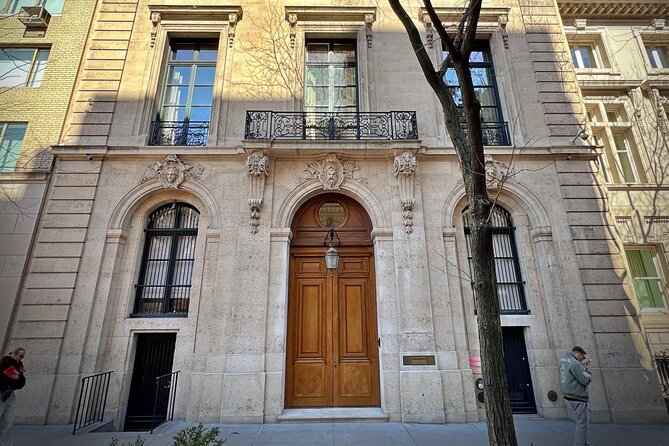
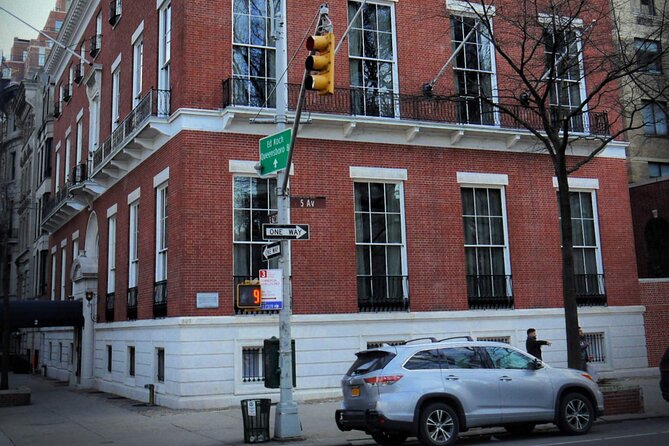
The route continues past the Beekman Mansion, described as an example of Gilded Age architecture once home to prominent New York families. The audio keeps your attention on what the buildings represent, not just what they look like.
Then you move to the Emily Thorn Vanderbilt Sloane White Mansion, described as a splendid edifice reflecting the wealth and social status of its former owners. Taken together, these mansion stops feel like a pattern: fortunes turned into statements, and those statements became part of the city’s identity.
A practical point: mansions can be partly blocked by trees, street angles, or neighboring façades. The best way to get value here is to let the GPS cues tell you when to look, and then spend the next few seconds actually scanning the building lines the audio refers to.
The Frick Collection: where the walk shifts from wealth to art
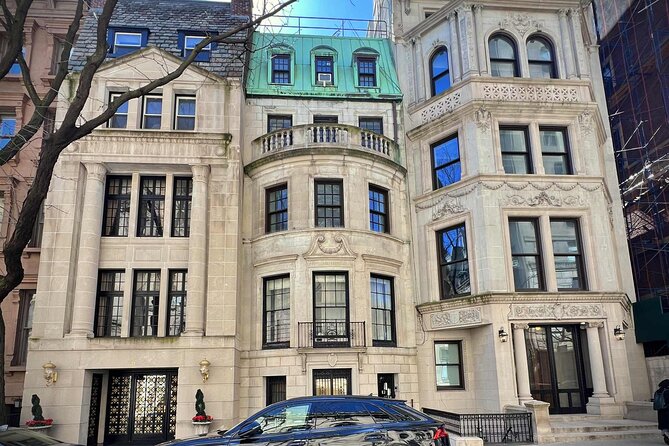
You pass by The Frick Collection, described as a renowned art museum housed in the former residence of industrialist Henry Clay Frick, showcasing European masterpieces. This is a big thematic payoff, because the tour’s story of wealth naturally connects to patronage and collections.
Even if art museums are not always your thing, this stop helps. It gives you a final reason to care about all the previous opulence. People with money did not only buy buildings. They also built institutions and collections.
Richard Morris Hunt Memorial and the architect’s imprint
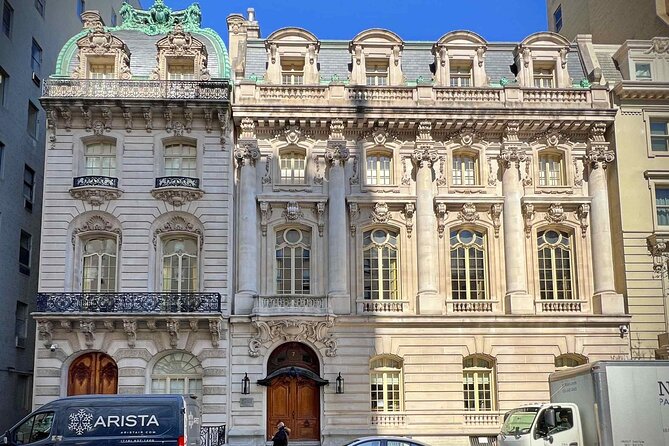
Next is the Richard Morris Hunt Memorial, dedicated to the renowned architect who played a significant role in shaping the architectural landscape of New York City. This is where the audio expands from owners and robber barons to the people who translated money into form.
You feel the difference because the narration shifts the focus from personal wealth to city shaping. That makes the architecture stops more than a photo op.
If you love how cities got designed and redesigned over time, you will appreciate the framing here. If you only want surface sightseeing, you might be tempted to move fast. Slowing down for a minute pays off.
Herbert N Strauss House and Edward S Harkness House on the Upper East Side
You then admire the Herbert N Strauss House, described as an architectural gem that exemplifies the grandeur and elegance of the Gilded Age era. After that, you pass by the Edward S Harkness House, described as a historic landmark showcasing the architectural splendor of New York’s Upper East Side.
The strength of grouping these into one “walk-through mindset” is that the audio makes you compare rather than memorize. You start noticing how the tour keeps returning to grandeur, elegance, and splendor, using different houses to reinforce the same era-defining idea.
Keep your pace steady here. You do not need to stand for long at every stop, but you should listen closely, since the narrative logic is building.
Madison Avenue shopping energy, then back to the Gilded Age names
The route continues along Madison Avenue, described as a bustling thoroughfare known for upscale shops, luxury boutiques, and elegant storefronts. It is a contrast point. After the quieter mansion imagery, you return to a street that feels commercial and current.
Then you discover the legacy of Stuyvesant Fish, described as a prominent figure in New York’s social and political circles during the Gilded Age. This is a key tonal shift: you go from architecture to people, from brick and stone to social influence.
What I like here: you are not only looking at buildings. You are learning who moved through them, who benefited from them, and how the same era produced both private wealth and public influence.
James B Duke House, Beaux-Arts style, and the final leg to The Met
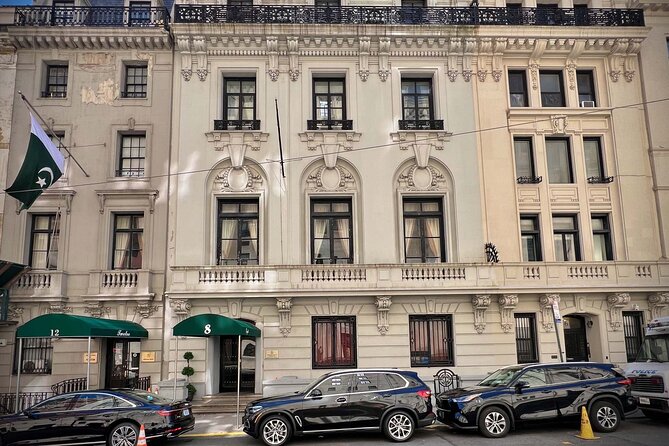
You pass by the James B Duke House, described as a magnificent mansion once belonging to the tobacco tycoon and philanthropist, showcasing exquisite Beaux-Arts architecture. This stop ties together money, industry, and public-minded giving, at least as the tour frames it.
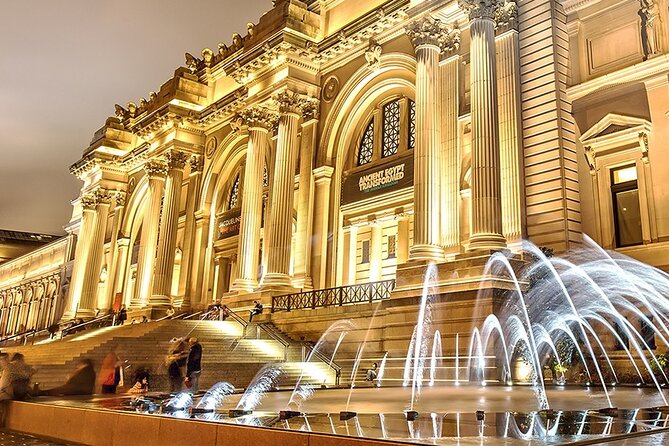
Then the walk ends at The Metropolitan Museum of Art, listed at 1000 5th Ave. The audio gives you a clear finishing point: The Met is described as one of the world’s largest and most prestigious art museums, with a vast collection of masterpieces spanning thousands of years.
This ending is not accidental. It makes your whole experience feel like a story arc. You start with elite clubs and wealthy addresses, pass art-adjacent stops like The Frick Collection, and finish at a world-class museum where you can turn “why they cared” into “what they collected.”
Timing and walking strategy for a 1 hour 20 minute to 1 hour 40 minute route
The tour duration is about 1 hour 20 minutes to 1 hour 40 minutes. That is a sweet spot for NYC, because it is long enough to feel like you did something real, but short enough that you can still do other plans the same day.
One trick that helps: treat it like an audio book with breaks, not like a sprint. The app allows pause, rewind, and resume, so it is fine to stop briefly for photos or to take your time where something catches your eye.
If you need reassurance, the audio experience includes ways to keep you oriented. The GPS tracks your location, starts the right story automatically, and even warns you if you walk off track. In practice, that means you can stay confident when you get momentarily distracted by a storefront or a street crossing.
Also, the app provides warnings about restroom stops. That matters more than you think, especially on a city day where you do not want to scramble later.
Price and value: why $14.99 can actually feel like a deal
At $14.99 per person, this is priced like an audio add-on, not a full live guide day. The real value comes from what is included beyond the one walk.
You get unlimited, lifetime use of the tour, both before your booking date and after it. You also get a virtual playback option, so you can listen like an audiobook from anywhere. On top of that, you get offline access to audio, maps, and geodata, which reduces friction and helps you plan even when you do not know your exact path day-of.
So the value question is not just cost per hour. It is cost per memory and cost per replay. If you want to revisit the route another season, or if you want a practice run before you return to the Met area, you can.
Who this is best for, and who might want something else
This fits best if you like control. You will like exploring at your own pace, starting when you are ready, and pausing whenever you want to look closer or regroup. It is also a strong choice for solo travelers, introverts, and anyone who dislikes the pressure of keeping up.
It also makes sense for couples or friends who want shared sightseeing without the stress of hearing one person’s commentary too late. Since it is private for your group only, you avoid the awkward “everyone hears different things” problem.
You might want a different format if you expect live interaction. This is self-guided audio, with no mention of a live guide. You can rewind, but you cannot ask questions on the spot.
Should you book this Millionaire Row audio guide?
Book it if you want a low-cost way to understand Fifth Avenue and the Upper East Side as a Gilded Age story, with GPS-guided cues and offline listening that keeps the experience smooth. The route ends at The Met, so you can naturally turn your walk into a longer museum day without switching gears.
Skip it or consider alternatives if you do not want to walk, or if you dislike using your phone as part of your experience. Since the smartphone and headphones are not included, you will need your own setup ready to go.
If you are planning a first-time visit to New York and want a focused, manageable route that connects wealth, architecture, and art, this is a solid booking. It is practical, flexible, and the kind of tour you can replay when you feel like revisiting the story.
FAQ
How long is the audio tour?
It runs about 1 hour 20 minutes to 1 hour 40 minutes.
How much does it cost?
The price is $14.99 per person.
Is the tour self-guided or led by a person?
It is self-guided. You follow the GPS-enabled audio route at your own pace.
What language is the audio offered in?
The audio is offered in English.
Where does the tour start and end?
It starts at East 60th Street, and it ends at The Metropolitan Museum of Art at 1000 5th Ave.
Do I need to bring headphones and a smartphone?
Yes. Smartphone and headphones are not included.
Can I use it offline?
Yes. Offline access includes audio, maps, and geodata.
Is it a private experience?
Yes. It is private, and only your group participates.
What is the cancellation policy?
It is non-refundable and cannot be changed for any reason.
More Self-Guided Tours in New York City
More Guided Tours in New York City



More Tour Reviews in New York City





Not for you? Here's more nearby things to do in New York City we have reviewed











More New York City Tours to consider.
 ★ 4.7SUMMIT One Vanderbilt TicketsTickets from $4751,195 traveller reviews
 ★ 4.7Empire State Building Tickets – Observatory & MuseumTickets from $4725,757 traveller reviews
 ★ 4.6Statue of Liberty & Ellis Island with FerryTickets from $1918,683 traveller reviews
 ★ 4.5American Museum of Natural History TicketTickets from $3715,447 traveller reviews
 ★ 5.0New York in One Day Guided Sightseeing TourTickets from $9913,166 traveller reviews
 ★ 4.6Museum of Modern Art (MoMA) Entry TicketTickets from $3012,540 traveller reviews
 ★ 4.7One World Observatory Skip-the-Line TicketTickets from $3012,329 traveller reviews
 ★ 4.7New York CityPASS®: Save up to 41% at 5 Top AttractionsTickets from $15410,548 traveller reviews
More useful New York routes