
Review · NEW YORK CITY TOURS
New York Soho and the Village Art and Architecture Tour
Stop and look up in SoHo. This 2-hour evening walk turns NYC architecture into something you can actually spot and understand, with professional headsets so you hear your guide clearly and a small group setup that makes questions easy. I like that the route is tight and practical, covering SoHo plus the West and East Villages, the Lower East Side, and key stops around Washington Square, so you can fit it into a busy day. The main consideration is simple: the pace is active, so if you prefer to linger for long photo sessions, you may want more time on your own after the tour.
What makes this feel worth it is the mix of big-name architecture and everyday city texture. You start at Cooper Square and finish near Washington Square Park, under the Arch, with plenty of built-in momentum to keep exploring after 5:30 pm. The tour is capped at a maximum of 15 travelers, and you use a mobile ticket, which keeps things smooth when you meet up.
At $49 per person, the value comes from how much you get in a short window, not from trying to cover everything in NYC. You pay for an in-person guide, all fees and taxes, and headsets for each guest, and several stops include free admission tickets listed for the experience. Tips are not included, so budget a little extra if you want to thank the guide properly.
Key Points at a Glance
- Hear every word with professional individual headsets for each guest
- Small group size (max 15) keeps the experience interactive and more personalized
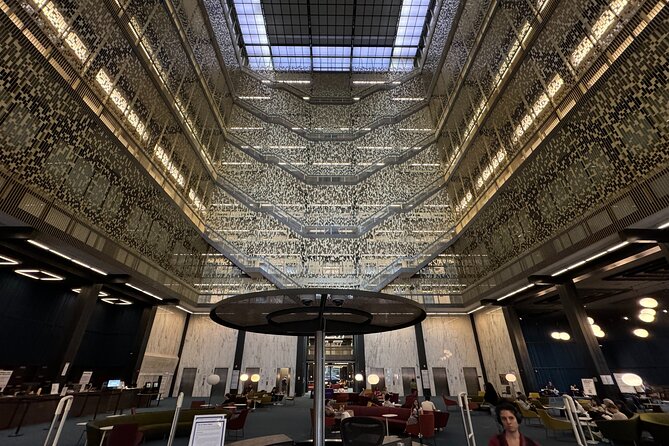
- Free admission ticket stops are built into the route, including Cooper Union and the Bobst Library entry
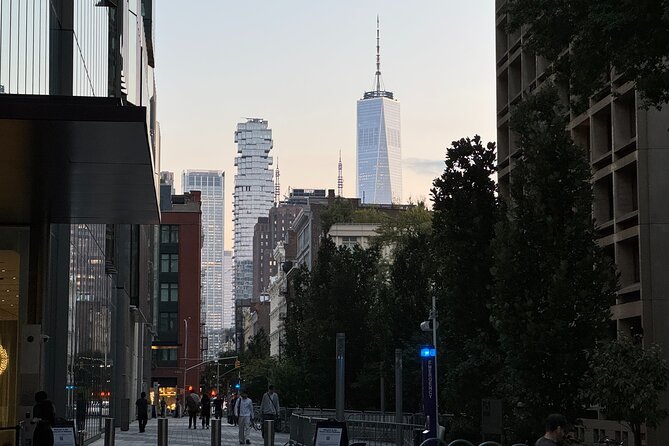
- Architecture across eras and uses from civic institutions to contemporary art, hotels, and university buildings
- Ends under the Washington Square Arch, a perfect launch point for more wandering
A 2-Hour Architecture Walk That Respects Your Time
This is the kind of tour that helps you see New York without demanding half your day. With a duration of about 2 hours and travel time included, you are moving at a steady walking pace, with enough stops to keep the story going. The evening start time, 5:30 pm, also means you can pair it with dinner plans nearby.
You will cover SoHo and the Villages plus parts of the Lower East Side, so you get variety without bouncing across the entire city. The route is designed to show contrast, how buildings behave at street level, and how public spaces connect everything. And because the group is small, you are not swallowed by a big herd of tourists.
The headset piece matters more than it sounds. On walking tours, sound issues can ruin the experience, especially near crosswalks and busy corners. Here, you get personal headsets, so the guide stays clear even when you are close to noise and traffic.
You can also read our reviews of more tours and experiences in New York City.



Why the Route Starts at Cooper Square and Ends at Washington Square
Starting at Cooper Square (Cooper Sq, New York, NY 10003) is smart because it sets you up for a walk that gradually builds toward Washington Square. You finish at Washington Square Arch, under the Arch at Washington Square Park, so the ending feels like a natural “you did it” moment. It is also convenient, because you can easily decide what to do next, whether that means food, shopping, or just more people-watching.
The tour also takes you through a neighborhood mix that is easy to misunderstand if you are going solo. On your own, you might notice pretty facades, but you can miss the urban-design logic, like why certain buildings sit where they do or how institutions shape the streets around them. This tour helps you look in a more deliberate way.
One practical tip: wear shoes you trust. The experience is walking-focused, and most stops are brief, often about 5 to 10 minutes. That short stop format works well for getting oriented, but it means you will want to mentally save your deeper questions for your guide while you are there.
Cooper Union Foundation Building: Civic Architecture You Can Feel
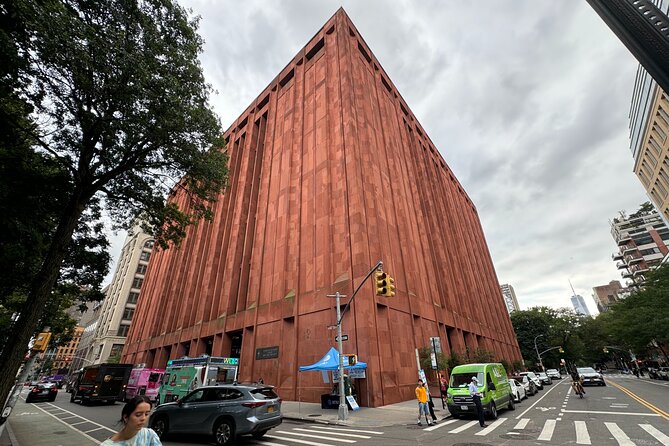
Stop 1 is the Cooper Union Foundation Building, with a free admission ticket included. This is a strong starting point because it is a civic institution, not just scenery. You will get a guided look at the building as part of the city’s fabric, and you are also setting a theme for the rest of the walk: NYC’s architecture is not only about style, it is about purpose.
The stop is listed at 10 minutes, which is just enough time to get your bearings and learn what to look for. If you tend to miss architecture details, this opening helps you shift from vague noticing to focused observing. You learn how to read the building as an object in the street, not just a photo background.
A possible drawback here is that the time is limited. If you came hoping for a long interior visit right at the start, this is not that kind of tour. Instead, it is structured for variety, and you will get more “inside” time later at Bobst Library.
40 Bond St by Herzog and de Meuron: Modern Residential Form
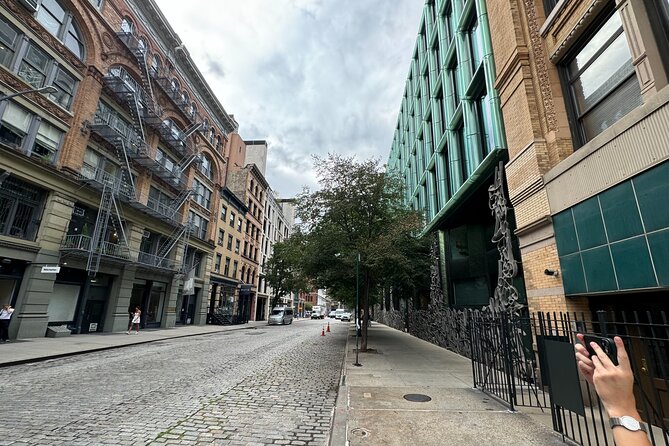
Stop 2 is 40 Bond St, featuring residences by Herzog and de Meuron. This is the kind of stop that works well on a short architecture walk because it gives you a clean comparison point. You can see how a contemporary residential building treats the street and nearby context, and your guide will likely point out design choices that you would otherwise overlook.
It is a 5-minute stop, so think of it as a quick visual lesson rather than a full deep-dive. The value is in learning a few specific cues, so when you glance at other buildings later, you start noticing similar patterns.
For photo fans, 5 minutes can feel short. But because you will move on quickly, you also avoid that “stuck at one corner” feeling that sometimes happens on self-guided architecture wandering.
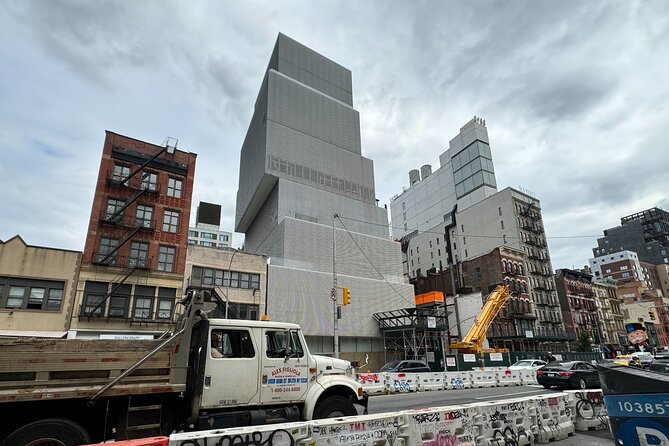
The New Museum by SANAA: Art Institutions as Design Statements
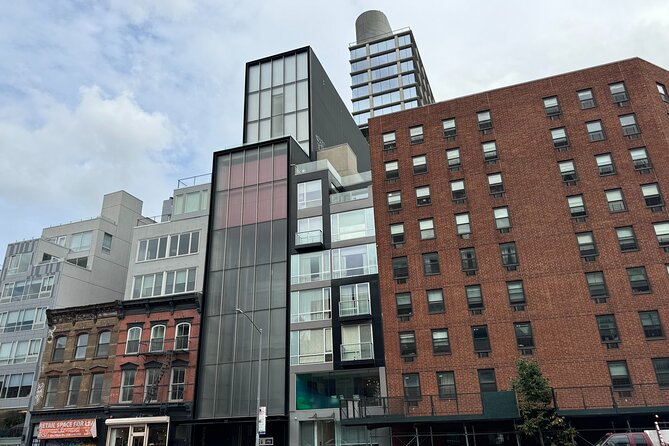
Stop 3 is the New Museum of Contemporary Art by SANAA, again listed with a free admission ticket. This stop is useful because it ties architecture to culture. Museums in NYC are not just places to look at exhibits, they are also meant to shape how you move, where you pause, and how you enter the art world.
Your guide’s job here is to help you see the building as an interface between the neighborhood and the art inside. Even if you are not an architecture super-fan, this is where the tour often clicks, because contemporary design can feel more immediate than older monuments.
Time is 5 minutes, so you will not have a long museum break. Still, the stop can give you direction, so you might want to return later with more time to see the exhibits.





PUBLIC Hotel and Capitale: Hotels and Adaptive Reuse
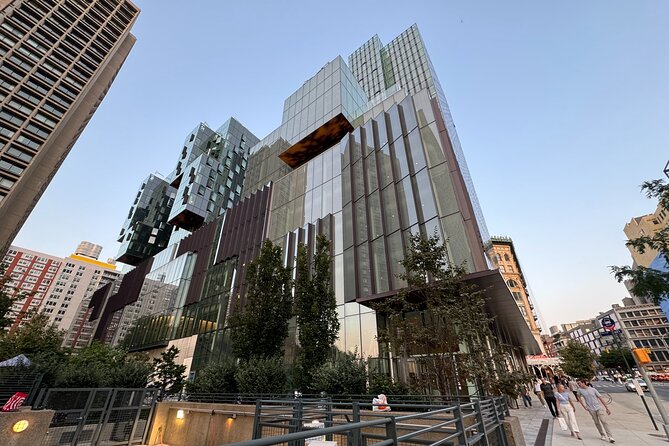
Stop 4 is the PUBLIC Hotel. A hotel is a great “real life” architecture stop, because it shows how design meets daily use. Your guide will help you interpret how the building works in the flow of the neighborhood, not just from the outside but as a functioning piece of city life.
Then you hit Stop 5: Capitale, the former Bowery Savings Bank, designed by McKim, Mead & White in 1895. This is where adaptive reuse becomes more than a buzzword. Your guide helps you connect the building’s earlier identity as a bank to its later role, so you can see how a big civic-style structure can be reinterpreted for new purposes.
This stop is listed at 5 minutes too, so you will likely focus on the exterior and the cues your guide gives you for what matters. If you are the type who loves restoration stories, you may end up wanting more time here. The tour format prevents that, but it also keeps things moving so you see more variety overall.
Little Singer Building, Scholastic Building by Aldo Rossi, and an Old Cathedral
After Capitale, the tour continues with several notable architecture moments:
- Visit the Little Singer Building
- Pass by the Scholastic Building by Aldo Rossi
- Visit NY’s old cathedral
These stops are shorter or more “pass by” style, but they are important for building a sense of place. When you see different architects and building types in a row, you start to understand that neighborhoods like these are layered. That layering is what makes walking the area feel rewarding, even when you have walked it before.
The Scholastic Building by Aldo Rossi is included specifically by architect name, which usually signals the guide will spotlight design and intent. Even without long time at each site, those quick architectural labels give you a mental filing system, so later you can say, I remember this one.
The old cathedral stop adds a different kind of pause. Religious buildings often change the mood of a street, and a guided visit helps you notice details you might otherwise treat as background. Because this stop is listed as a visit, you should expect a real look rather than only a photo pass.
NYU Main Campus Along Houston Street: How Universities Shape Streets
Stop 6 is NYU Main Campus, focusing on new additions and residences along Houston Street and around Washington Square. This is one of the best parts of an architecture walk because universities are living ecosystems. Buildings evolve, populations shift, and design influences how people gather.
You get about 5 minutes here, but the value is that the guide keeps the focus on how the campus edge meets the neighborhood. It is a good reality check if you usually think of architecture as static and finished. Universities are always changing, and you can see how that change affects the street rhythm.
If you care about urban design, you will probably find this stop especially useful. It helps you see that sidewalks and street corners are not accidents. They are shaped by institutions, even when the institution is just around the block.
Silver Towers and Public Spaces: Architecture With a Human Scale
Stop 7 is Silver Towers, with a focus on the buildings and the public spaces and art around them. This is a smart inclusion because not every architecture tour spends time on the “in-between” areas.
Your guide helps you see why public space matters. Benches, courtyards, and art placements are part of how a neighborhood functions. They also change how a housing or commercial project feels day to day.
With a 10-minute stop, you get a bit more time here than at some of the earlier quick corners. That extra time can let you notice details, not just a single facade. If you like architecture that connects to daily life rather than only monuments, you will likely enjoy this segment.
Bobst Library Entry: The One Stop You Actually Step Inside
Stop 8 is Bobst Library, and this one includes entry, also listed at 5 minutes. This is a key reason the tour feels more than a sight-seeing walk. Going inside lets you compare outside expectations with interior design, and a library is one of the best “architecture for real use” examples.
Even if your time inside is brief, the guide’s focus can help you notice how spaces guide movement and how form supports function. If you love when a building teaches you how to behave inside it, this stop can be a highlight.
After stepping inside, the route to Washington Square Park feels more grounded. You carry that interior awareness back to the street, and the final park stop lands better.
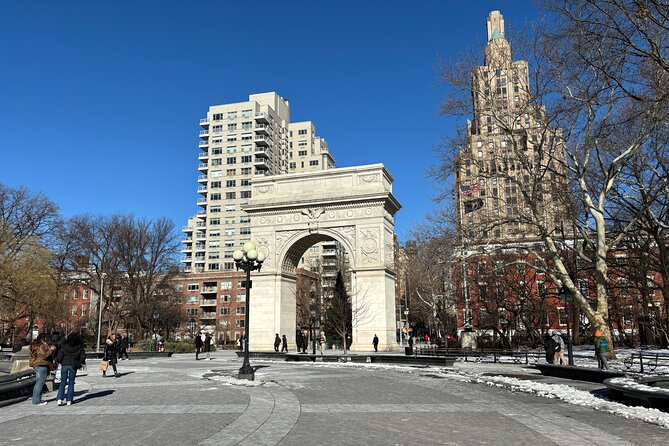
Washington Square Park Under the Arch: Closing the Loop
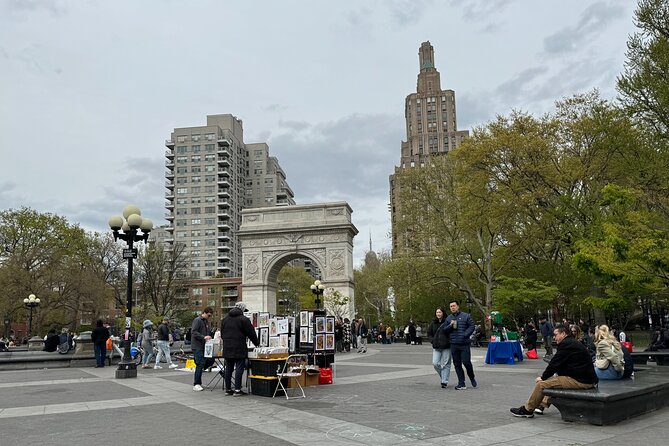
Stop 9 is Washington Square Park, with about 10 minutes listed. Ending under the Arch is a classic NYC moment, but the tour framing helps you see it like an urban design lesson rather than only a postcard.
This is where you connect the dots. Earlier stops were about buildings and institutions, and now you are looking at how public space and architecture meet at street level. You also get a sense of how the area’s energy changes when you understand what you are looking at.
If you want to extend the experience, the ending location is practical. You are already in the most convenient spot to keep walking, grab food, or loop back for a closer look at any building you found most interesting.
Price and Value: What $49 Buys You in NYC
$49 per person sounds straightforward until you compare it to how much time, expertise, and comfort you get. For an experience lasting around 2 hours, you are paying for an in-person guide plus all fees and taxes, not just “someone leading a walk.” You also receive professional individual headsets for each guest, and that is a real quality upgrade.
Several stops list free admission tickets for the experience, including Cooper Union Foundation Building and the New Museum of Contemporary Art, and Bobst Library includes entry. That matters because architecture tours can get expensive when each stop requires a separate ticket or when you only look from the street.
So the value equation is pretty clean:
- You pay for guided time
- You pay for the listening comfort
- You get free admission at multiple stops that are actually part of the tour narrative
- You leave with a better understanding of what you are seeing on repeat walks
Tips are not included, so keep that in mind. Also, because the average booking lead time is about 71 days, earlier reservations can help if you are aiming for a specific date.
Who This Tour Suits Best
This tour fits you if you want an architecture orientation without needing a full day. It is also a good choice if you are traveling with someone who likes different things, because the stops cover institutions, contemporary art, residential design, and public space.
I also think it works for locals. Even if you live in NYC, neighborhoods like SoHo and the Villages can blur together visually. A guided approach makes you notice patterns you missed before, and it encourages you to look up and around, not only at street-level storefronts.
It might not be your best fit if you dislike structured itineraries. The stops are often short, and the experience is designed for breadth over lingering depth. If you want long interior time or you plan to spend most of your two hours photographing the same corner, you might feel rushed.
The Guide Factor: Clear Explanations, Real Questions, Tailored Attention
One theme in the experience is how personal it feels for a small group. The guide Ivan is specifically mentioned as incredibly knowledgeable about architectural design and history, and more importantly, as someone who keeps the route from turning into a lecture. The tone stays energetic and never boring, with time for questions.
Because the group is capped at 15, you can actually speak up. You are not just collecting facts, you are learning how to look. Ivan also tailors the tour to interests, which is a big deal if your priorities are architecture first, urban planning first, or simply wanting to understand what you see on your own.
Headsets also support this. Clear audio means the guide can explain without repeating. It also helps you feel included, even when the street is busy and visual focus fights with noise.
Should You Book This SoHo and Village Art and Architecture Tour?
Book it if you want a fast, structured way to see SoHo plus the West and East Villages through architecture and design eyes. At $49, the combination of small group attention and individual headsets is the strongest reason to choose it, and the free admission stops plus Bobst Library entry give you more than just exterior photos.
Skip it or consider another format if you prefer long museum-style visits or you hate moving on quickly. The tour is built for short, meaningful stops, so it is best when you treat it as orientation plus inspiration, then continue exploring on your own after you finish under the Washington Square Arch.
If you are the kind of traveler who loves getting your bearings fast, this is a smart use of an evening in NYC.
FAQ
How long is the tour?
The tour runs for about 2 hours (approx.), and travel time is included.
Where does the tour start and end?
It starts at Cooper Square (Cooper Sq, New York, NY 10003) and ends at Washington Square Park under the Arch (Washington Square N, New York, NY 10012).
What time does it start?
The start time is 5:30 pm.
How much does it cost?
The price is $49.00 per person.
Is admission included for the stops?
All fees and taxes are included, and the listed stops include admission ticket free where noted on the itinerary.
Will I have headsets during the tour?
Yes. Professional individual headsets are provided for each guest.
How large is the group?
The tour has a maximum of 15 travelers.
Are service animals allowed?
Yes, service animals are allowed.
More Tours in New York City




More Tour Reviews in New York City
Not for you? Here's more nearby things to do in New York City we have reviewed











More New York City Tours to consider.
 ★ 4.7SUMMIT One Vanderbilt TicketsTickets from $4751,195 traveller reviews
 ★ 4.7Empire State Building Tickets – Observatory & MuseumTickets from $4725,757 traveller reviews
 ★ 4.6Statue of Liberty & Ellis Island with FerryTickets from $1918,683 traveller reviews
 ★ 4.5American Museum of Natural History TicketTickets from $3715,447 traveller reviews
 ★ 5.0New York in One Day Guided Sightseeing TourTickets from $9913,166 traveller reviews
 ★ 4.6Museum of Modern Art (MoMA) Entry TicketTickets from $3012,540 traveller reviews
 ★ 4.7One World Observatory Skip-the-Line TicketTickets from $3012,329 traveller reviews
 ★ 4.7New York CityPASS®: Save up to 41% at 5 Top AttractionsTickets from $15410,548 traveller reviews