
Review · MANHATTAN TOURS
3 Hour Midtown Manhattan Architectural Tour
Skyscrapers are the headline, but lobbies are the story. This 3-hour Midtown Manhattan Architectural Tour threads together Fifth Avenue glamour and office-tower design in a way that makes you notice the city again. I love how you get iconic buildings plus the details most people walk past, and I also love that it ends at Grand Central Terminal, so you naturally finish with a landmark that feels alive. One thing to keep in mind: not every stop includes entry, and the Empire State Building has an extra ticket cost.
Your guide, Annabelle, works like a friendly New York neighbor who happens to know architecture by heart. She adjusts the flow to what your group cares about, and the small group size (up to 8) makes it easy to ask questions instead of just listening. A possible drawback is the walking and stop-and-go pace, so if you prefer long sit-down breaks, you might want to bring extra patience for standing time near busy streets.
Key Takeaways From a Midtown Architecture Walk
- Small group size (max 8): more conversation, less rushing.
- Mostly free admission stops: you can see and often enter public-facing spaces without paying at most stops.
- Design eras, not just landmarks: you connect Art Deco, corporate modernism, and luxury hotel opulence into one timeline.
- Fifth Avenue to Grand Central: the route is built around a clean start and an easy finish.
- A guide who tailors the tour: Annabelle adjusts for interests, ages, and curiosity level.
Midtown Architecture Without the Museum Lines
Midtown can feel like a giant to-do list. This tour is a smart way to turn that list into a story. You start on 5th Avenue at The Plaza and end at Grand Central Terminal, which keeps the day moving in a logical, sight-rich arc.
The practical win is that the tour is structured with short visits at major landmarks, about 15 minutes each. That keeps your attention fresh and gives you enough time to look closely at facades, then switch your focus to what’s happening at street level. And because this is a walking tour, you’re not stuck staring at buildings from one spot. You pass them, angle around them, and naturally get better views as you move.
At $85 per person for about 3 hours, the value comes from stacking a lot of well-known sights into one morning. Most stops are listed as free to enter, so you’re not burning the budget just to get close. The Empire State Building is the one notable exception where admission is not included.
More NYC tours and experiences for the shortlist



Meeting at The Plaza, Ending at Grand Central
The meeting point is easy to find and iconic. You meet at The Plaza (768 5th Ave, New York, NY 10019) at 9:00 am. That morning start matters. Midtown streets are already active, but you’re ahead of the heaviest crowds that build later.
The walk concludes at Grand Central Terminal (89 E 42nd St, New York, NY 10017). Finishing here is more than convenient. It’s also a built-in wind-down. When you’re done, you’re right inside one of the city’s most dramatic interiors, with transit options if you want to keep exploring.
This tour runs in English, and you’ll get a mobile ticket. Service animals are allowed, and the itinerary calls for a moderate physical fitness level. With up to 8 people total, it feels manageable, even though you are on your feet for the full route.
Annabelle’s Approach Makes the City Feel Personal
If you’ve ever done a tour where the guide talks nonstop, this won’t be that vibe. The standout here is how Annabelle connects the architecture to the people and the money behind it, and then brings it back to what you can actually see today.
She also tailors the route inside the broader plan. If you’re more interested in hotels and public lobbies, you’ll get extra attention there. If you’re drawn to office design and the evolution of skyscrapers, she leans into that. Several groups got more interactive pacing, including private-feeling moments when the group size was very small. That matters in a city where you can otherwise feel like a spectator.
One small practical tip from how this tour flows: if you can, arrive a few minutes early and take a quick breath before you start. Street noise is real on busy avenues, and the best way to absorb the first facts is to be settled when the tour begins.
Stop 1, The Plaza: A French Chateau Personality
You begin with The Plaza, one of Midtown’s most cinematic landmarks. The design is known for its pomp, glory, and opulence, with an atmosphere that has shown up in countless films. Even if you’ve walked past it before, this stop gives you a reason to look closely.
What I like about starting here is that you get an immediate contrast. Before the tour turns into towers and modern office design, you’re reminded that luxury in Manhattan has a visual language. It’s not only about height. It’s about materials, symmetry, and the feeling of arrival.
Even the short stop is useful. You learn how buildings like this function as social stages, places where wealth and status were made visible to the street.
Stop 2, The Sherry-Netherland: A Vatican Library in a Midtown Lobby
Next is The Sherry-Netherland, a name you’ll recognize and a lobby you’ll want to see once you know the story. The lobby is noted for being modeled after the Vatican Library, which is such a specific detail that it turns this stop from pretty façade to real design inspiration.
This is the kind of fact that changes how you see the place. When you hear the Vatican Library connection, you start looking for the elements that make a space feel scholarly, formal, and grand. It’s also a reminder that the city’s luxury hotels weren’t just built for comfort. They were built to project taste and authority.
The other design lesson here is about imitation and adaptation. Manhattan designers borrowed big European ideas and translated them into a place with its own energy and rules.





Stop 3, The St. Regis: From Millionaires Row to Commerce
At The St. Regis New York, you’re tied to a key moment in Fifth Avenue history. It was built by John Jacob Astor IV, and the story centers on how Fifth Avenue changed from an exclusive residential street, often called Millionaires Row, into a fashionable commercial thoroughfare.
This stop isn’t only about the building’s face. It’s about the shift in what the city was for. Manhattan didn’t just grow taller. It changed who it served and why. Luxury architecture tells you which class had power at the time, and how quickly the city made new fortunes into new business patterns.
Stop 4, Seagram Building: Corporate Modernism With Rules
Then you hit a different world: the Seagram Building. This is presented as an architectural milestone, with a design that helped set a standard for office towers around the world. It’s also described as one of the best-known examples of corporate modernism.
When you look at it with those words in mind, you start noticing the features that modernism relies on. The building reads like an argument. It says: function matters, design can be sleek, and corporate identity can be its own style.
For me, this is one of the best “turning points” on the walk because it helps you stop treating skyscrapers like random winners of height. Instead, you start seeing them as design movements that spread.
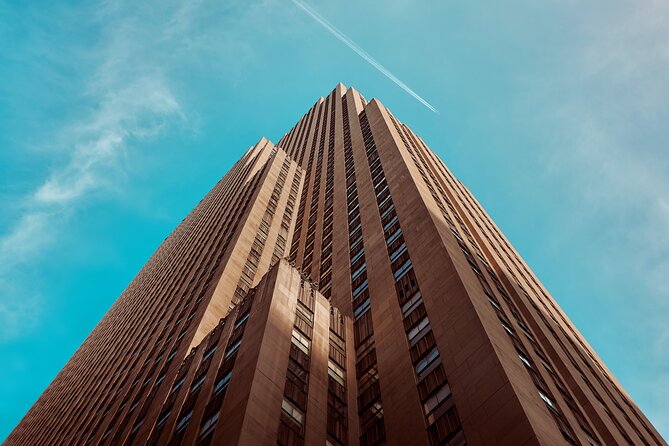
Stop 5, General Electric Building: Marble, Chrome, and Radio Waves
Across the route comes the General Electric Building, originally the RCA Building. This stop is built around contrasts: the chrome and marble lobby, plus a crown tied to radio waves.
That combination matters because it shows how corporate power expressed itself through both materials and imagery. The building isn’t trying to be polite. It tries to be memorable and modern.
If you like design that feels tied to a specific moment in technology, this is a strong stop. It also connects the idea that skyscraper branding was never just about logos. It was about symbolism.
Stop 6, Waldorf Astoria: Luxury Hotel Power
Next is Waldorf Astoria New York, introduced as an opulent legendary hotel with deep historical guest lists. The design is linked to the luxury hotel firm behind other famous properties, and the story includes the fact that the hotel has hosted U.S. presidents, world leaders, famous celebrities, and foreign dignitaries.
This is one of those Midtown stops where the architecture is the backdrop for status. Even if you don’t tour every interior room, the framing helps you understand why these hotels were built like landmarks. They were meant for official visits, deal-making, and worldwide attention.
You’ll also feel the tour’s rhythm here. The walk keeps the stops short, but the stories make them stick.
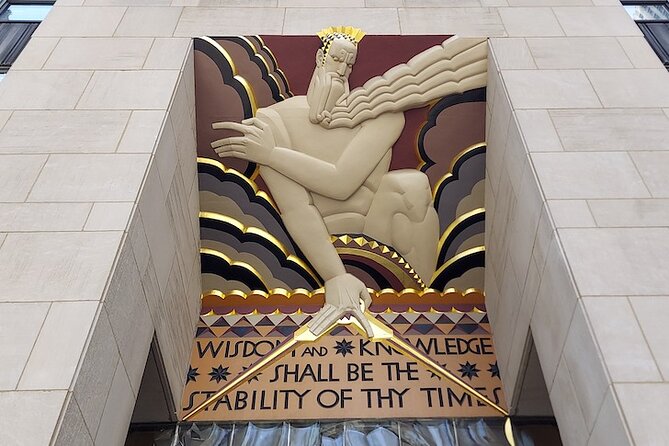
Stop 7, Rockefeller Center: 22 Acres of Depression-Era Ambition
Then comes Rockefeller Center, and this stop has scale. It’s described as a large complex with 19 commercial buildings spanning 22 acres, with over 100 artworks. It was also framed as the largest and most expensive development project of its time, providing 60,000 jobs during the Great Depression.
When you hear those numbers, you stop viewing Rockefeller Center as only a photo spot. It becomes a case study in how cities invest under pressure.
This is also a place where you’ll likely see different styles layered together. The complex shows how planning, art, and commercial goals can merge into one “whole city within a city” effect.
Empire State Building Stop: Admission Not Included, So Plan Your Choice
Now you reach the Empire State Building. Two big facts anchor it here: it was the tallest building in the world for 40 years, and it was built in 410 days under budget. Its name comes from the nickname of New York State, the Empire State.
Here’s the practical part. The tour lists admission ticket not included for this stop. That means you should decide in advance whether you want to pay for access. If you’re mainly there for exterior architecture and the historical facts, you can enjoy this stop without spending more. If you want the view or interior experience, budget for the ticket.
Even with the short time, it’s a memorable point in the walk because the building is so culturally “loud.” You end up noticing the lines and proportions more than you’d expect, especially after the tour has already taught you to spot design eras.
New York Public Library: Reading Rooms as an Architectural Mission
Then you arrive at the New York Public Library, Stephen A. Schwarzman Building. This stop is a lesson in how public institutions shaped the city. The tour notes that the library was formed by consolidating the Tilden Trust and the Astor and Lenox libraries on May 23, 1895, with 350,000 volumes when it opened in 1911.
That’s not just trivia. It gives you a sense of how ambitious the library was at the start. And it continues to grow, now described as having over 55 million books and other items spread across 7 floors.
If you like architecture that represents civic identity, this stop lands well. It also provides a quiet contrast to the office towers and hotel lobbies, even though you’re still deep in Midtown.
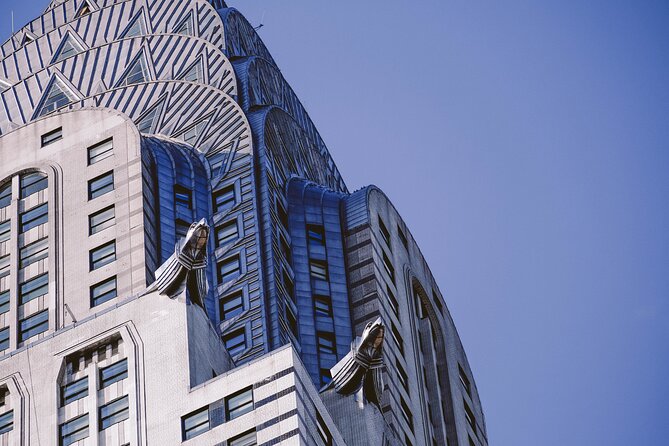
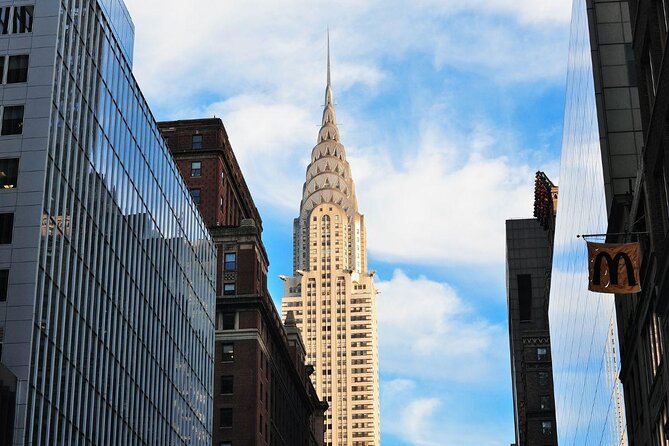
Stop 10, Chrysler Building: Art Deco With Attitude
The Chrysler Building is next, tied to automobile titan Walter Chrysler and the strength of his corporation. It’s described as often cited as a classic example of Art Deco architecture.
There’s also a fun line tied to the building’s identity: jhotazz in stone and steel. It’s a punchy reminder that the Chrysler isn’t trying to blend in. It’s trying to say something about speed, power, and modern industry.
This stop is great if you enjoy the idea of buildings as branding. Art Deco does that especially well, and this is one of the city’s clearest examples.
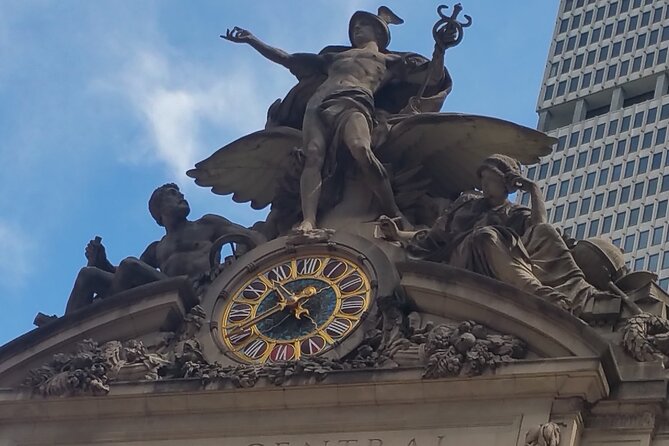
Stop 11, Grand Central Terminal: Transit Design That Changed the Game
You finish at Grand Central Terminal, and it’s not just famous for its clock and crowds. The tour describes it as a world-famous transport hub with 44 platforms and 67 tracks, plus innovations that influenced decades of American planning, architecture, engineering, and culture.
Ending here feels earned. You start with luxury and European-inspired grandeur, move through modern office design and tech-era corporate symbolism, then land at a transportation machine designed to move people efficiently and elegantly.
If you’re using the tour to plan your whole morning, this is a strong finish point. You’re at a transit hub, and the interior itself is worth slowing down for.
What the Free Admissions Actually Means for Your Day
Most stops on this route list admission ticket free. In practical terms, that reduces friction. You can spend your energy on seeing and understanding, not on ticket math every few blocks.
That said, don’t assume every building guarantees entry to the same parts of the interior during your stop time. The tour is built around short visits and outside-to-interior transitions when access is available. So your best approach is simple: plan to enjoy the street-level architecture first, and treat interior access as a bonus when it happens.
The one stop that breaks the “free” pattern is the Empire State Building, where admission is not included. I’d treat that as your only add-on decision.
Who This Tour Fits Best (And Who Might Want Something Else)
This tour fits best if you like seeing a lot of Midtown quickly but want context, not just names. It’s also a strong match for people who care about design style and how buildings reflect the era that built them.
Because the route is about walking and moderate fitness, it also suits many couples and solo travelers. It can work for families too, especially if kids can handle short stop times and like asking questions. A group with mixed ages is a good sign here, because Annabelle’s pacing can adjust to different attention spans.
If you prefer zero walking and lots of seating, you might feel rushed. But if you can handle a steady pace for a half day of sightseeing, you’ll probably love the flow.
Price and Value: What $85 Buys in Midtown
Let’s talk value in plain terms. You’re paying $85 for about 3 hours with a small group. You get a route that hits major landmarks across several architectural eras, plus short stops at places where the story behind the building matters.
The value gets even better because so many stops list free admission. Even if you already know these buildings from photos, you’re paying for the way the guide connects:
- luxury hotels to changing Fifth Avenue power
- corporate modernism to office-tower standards worldwide
- transit design to how the country planned later projects
That’s the difference between seeing Midtown and learning how Midtown works.
Should You Book This Midtown Architecture Tour?
I’d book it if you want a focused architecture tour that feels human, not robotic. This one is small-group, runs on a clean route, and the guide style is conversational. Annabelle’s attention to details like the Sherry-Netherland lobby connection to the Vatican Library, and the Seagram Building’s role in corporate modernism, makes you look harder once you’re out on the sidewalk.
Book it also if you’re short on time. You get a lot of Midtown landmarks in one morning, with a finish at Grand Central that makes your next steps easy.
Skip or pair differently if the Empire State Building is your top goal and you already know you’ll want to go up. You’ll likely need to plan for that ticket separately since it’s not included.
If you like architecture and history, and you want a route that teaches you what to notice, this tour is a very good use of a morning in Midtown.
FAQ
How much does the Midtown Manhattan Architectural Tour cost?
It costs $85.00 per person.
How long is the tour?
The tour is approximately 3 hours.
What time does the tour start, and where does it begin?
It starts at 9:00 am. You meet at The Plaza, 768 5th Ave, New York, NY 10019.
Where does the tour end?
The tour ends at Grand Central Terminal, 89 E 42nd St, New York, NY 10017.
Is the tour offered in English?
Yes, it is offered in English.
Do I get a mobile ticket?
Yes, the tour uses a mobile ticket.
How big is the group?
The maximum group size is 8 travelers.
Are admissions included for the stops?
Most stops are listed as free with an admission ticket. The Empire State Building stop is listed as ticket not included.
What if I need to cancel?
You can cancel for a full refund if you cancel at least 24 hours before the experience’s start time. If you cancel less than 24 hours before, the amount paid is not refunded.
More 3-Hour Experiences in New York City




More Tours in New York City




More Tour Reviews in New York City



Not for you? Here's more nearby things to do in New York City we have reviewed












More Manhattan Tours to consider.
 ★ 4.7Manhattan Helicopter TourTickets from $2997,076 traveller reviews
 ★ 4.8Manhattan Sightseeing Helicopter TourTickets from $2995,826 traveller reviews
 ★ 3.0JFK to Manhattan: One Way Shared Arrival TransferTickets from $313,687 traveller reviews
 ★ 4.5Circle Line: 2.5hr – Complete Manhattan Island CruiseTickets from $343,488 traveller reviews
 ★ 4.6From Manhattan: 4-Hour Dyker Heights Holiday Lights Bus TourTickets from $632,426 traveller reviews
 ★ 3.5Manhattan to JFK: One Way Shared Departure TransferTickets from $312,030 traveller reviews
 ★ 4.5The Manhattan Helicopter Tour of New YorkTickets from $2361,842 traveller reviews
 ★ 3.5Private Transfer from Manhattan to NYC Airports (JFK/EWR/LGA)Tickets from $361,683 traveller reviews
More useful New York routes