
Review · NEW YORK CITY TOURS
Half Day Tour in New York
Manhattan makes sense fast. This half-day ride with a licensed Italian guide helps you stitch together big, famous sights into one clear mental map, from Lincoln Center and Central Park down to Wall Street and Battery Park. I like the way the route balances famous landmarks (think Rockefeller Center, the Flatiron Building, and the Empire State Building) with neighborhood texture, including Little Italy and Chinatown. The one potential drawback is that your experience can rise or fall with guide quality, since not every past group described the Italian explanations the same way.
Expect a smooth pace built around a bus route with a few outside moments and short walk-ins, plus stops where you can look around and ask questions. It runs about 4 hours, uses a mobile ticket, and the group size is capped at 50, so it is not a giant crowd situation. I also appreciate that the tour stays practical: you get orientation without being locked into a single museum or long entry line.
At $75 per person, this is a value play for seeing a lot of Manhattan in one go, especially if you do not want to spend your morning hopping between subway lines. One thing to budget for, though: attraction admission is not included, so if you want observatory tickets or museum entry, you will pay extra on top.
Key highlights you should know before you go
- A licensed guide who uses stories and practical tips at each major stop
- Midtown to downtown in one loop, with icons like Central Park, Rockefeller Center, and the Flatiron Building
- Neighborhood stops that feel real, including Little Italy and Chinatown
- World Trade Center area included, with an emotional, reflective tone
- Smaller group size (max 50), which usually means better Q and A time
- Admission not included, so you choose what you want to pay for once you are in view
The big-picture advantage of a half-day Manhattan loop
Manhattan is hard to wrap your head around when you arrive for the first time. This tour is built to solve that problem quickly. In a few hours, you see a chain of landmarks that normally require multiple days, multiple rides, and a lot of guessing.
The route is designed like a guided timeline. You start in the Midtown orbit, where the city feels like a stage set of towers and theaters, then you move toward the grid and the financial core. Along the way, you pass through places that instantly change the mood, like the jump from classic Midtown landmarks into neighborhoods such as Little Italy and Chinatown.
What makes this work well is the guide. Strong guides, like Luigi and Laura from past departures, are the difference between seeing buildings and understanding the city. In good hands, you get little “why it matters” stories and tips that help you notice more on your own later.
If you have limited time, this is a smart way to spend it. If you want a slow, deep, museum-heavy day, you may find the pace a bit fast. But for getting your bearings and building a sightseeing shortlist for the rest of your trip, the format is a winner.
You can also read our reviews of more tours and experiences in New York City.



Boarding, pace, and how much time you get outside
You should think of this as a bus tour with moments of real street-level viewing. The experience moves in sections: driving time, guided viewpoints, then a few stops where you can look around. One past group described it as partly by bus and partly on foot, which matches what you should expect: you are not stuck on the bus the entire time, but you also are not signing up for a long walking day.
That matters because Manhattan can be tiring fast. A half-day format keeps your energy for later. You also get the benefit of having someone else handle the navigation, so you can focus on what you are seeing, not on where to stand.
The tour is designed for most people. The group limit is 50, which helps keep questions moving. And because it uses a mobile ticket, you are not scrambling for paper day-of.
One more practical note: traffic can affect the exact stops and timing. So, keep expectations flexible. You might get the same key neighborhoods and landmarks, but the order can shift.
Midtown power stops: Lincoln Center, Central Park, Trump Tower
Midtown hits you like a wall of ambition. The tour starts with big anchors and city-scale landmarks that give you instant context, and it starts strong with Lincoln Center. Even from street level, you can see why this is the performing-arts center of gravity, with buildings and plazas that feel purpose-built for audiences.
Then you move toward Central Park. You will not be in the park for a full stroll in this half-day format, but you do get the key orientation: you see how Central Park slices through the island and how nearby landmarks frame the edges. That “aha” is useful later when you decide if you want to return for walking routes or photo time.
Next comes Trump Tower, a classic “New York is New York” stop. The point is not just the name on the building. It is the contrast: the city’s glitzy-corporate face beside cultural landmarks and the park’s calm geometry.
This Midtown run is also where your guide’s storytelling matters most. Luigi and Laura were singled out for adding curiosity and practical tips at each stop, and that is exactly what you want when you are seeing multiple famous locations back-to-back. Without that, it can turn into a quick drive-by parade.
If you like to build your own photo plan, this Midtown section is your starting map.
St. Patrick’s to Rockefeller Center: the city’s public stage
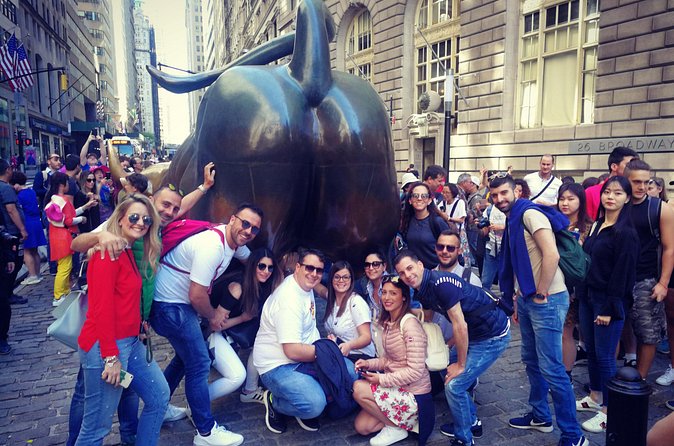
After the Midtown landmarks, you head into classic “New York postcard” territory. Saint Patrick’s Cathedral is one of the big moments, because it shifts you from corporate skyline to a more ceremonial, landmark-heavy view. Even without entry, being there in the flow of the city helps you understand why it is such a magnet for visitors and locals alike.
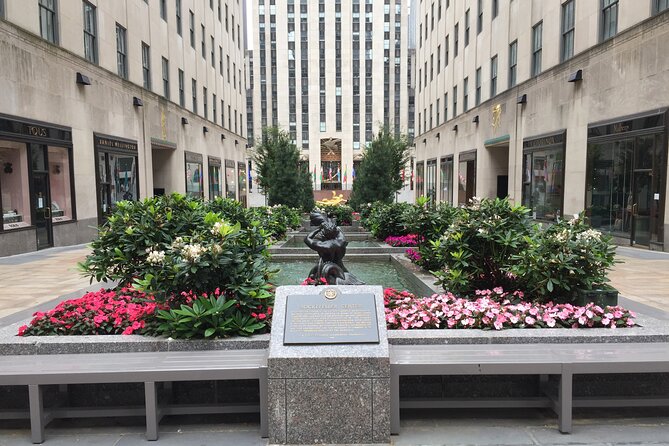
Then you get to Rockefeller Center, another major anchor. This area works as a spatial checkpoint. You can feel the plaza layout, see how the buildings relate, and understand the central role it plays in Midtown sightseeing. It is also a place where later planning gets easier, since you will recognize what is nearby once you have seen it from the tour.
One of the best guide approaches is to point out what to notice in each spot. Renée, for example, was praised for explaining in Italian and French so the group could follow along, which is a big deal in a multilingual setting. If you are traveling with friends who speak different languages, this kind of adaptability makes the tour feel inclusive.
Also, this part of the route helps you understand the city’s rhythm. Midtown landmarks are not random. They line up in a way that makes it possible to stitch together your own “day two” itinerary after the tour ends.
Flatiron to the Empire State Building: photo stops that help planning
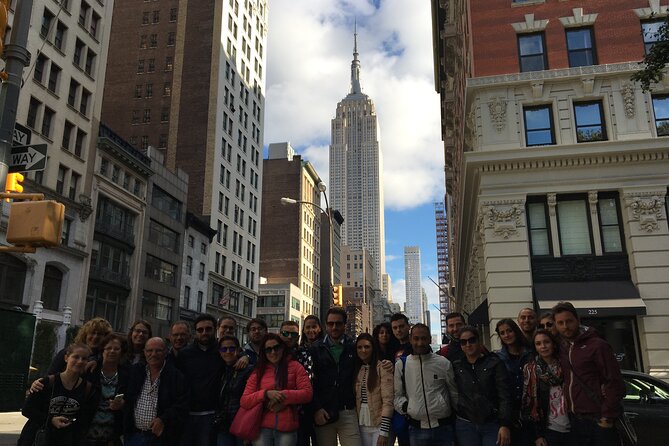
The Flatiron Building is the “wait, I know that shape” moment. It is one of those places where the skyline instantly becomes familiar once you see the silhouette in person. The tour gives you the chance to connect the icon to the surrounding blocks, which is more useful than simply recognizing it in photos.
Then you move toward the Empire State Building area. The tour is positioned as an admiration stop, meaning you get the view and the context rather than an included observatory ticket. That fits the half-day concept, but it also means you should plan ahead if you want to go up. A past group mentioned visiting observatories as part of their overall outing, and in this format you would likely handle those entries separately.
This segment is where the “orientation” value becomes obvious. After you have stood near the Flatiron and seen where the Empire State sits, you can better judge distances and travel time for the rest of your trip. Manhattan is not huge, but it is deceptive. Landmarks reduce that confusion.
If you care about architecture, this is also a great checkpoint for learning what kind of streetscape each landmark creates. Some blocks feel straight and sharp. Others feel like little corridors that funnel crowds. The tour helps you notice those patterns quickly.






Downtown drama: Wall Street Bull, City Hall, and the Financial District
Once the tour shifts downtown, the vibe changes. Midtown feels like spectacle and culture. Downtown feels like focus, density, and power.
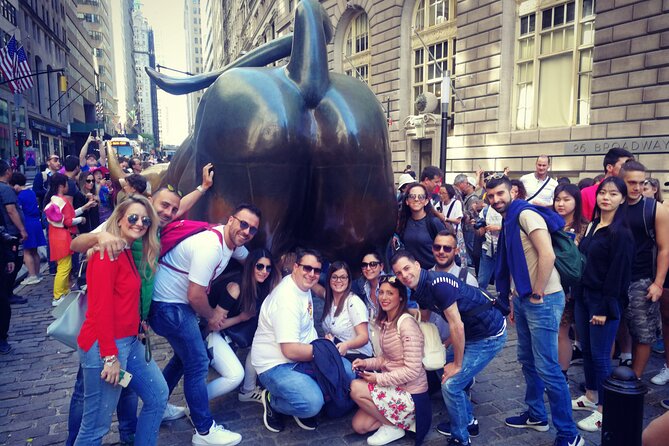
You will pass by Wall Street Bull, a small but famous stop. It is easy to miss if you are rushing, which is why including it in a guided loop is helpful. It is one of those details that becomes a memorable marker once you learn what it represents in the city’s modern identity.
Then you move into the Financial District and City Hall area as part of the broader downtown story. Seeing these in sequence helps you understand that the city is layered. You have older civic structures side-by-side with corporate and commercial intensity.
One practical benefit here: it gives you a realistic sense of how you might want to spend future time. Do you prefer quiet corners near civic buildings, or do you want to double down on skyline views near the harbor? This tour does not force one answer. It gives you enough reference points to decide.
Also, keep an eye on your guide’s pacing in this section. Downtown traffic can be unpredictable, and the tour notes that stops and route may shift due to traffic. If you are flexible and attentive, you will still get the key highlights.
Battery Park and the World Trade Center area: a reflective stop
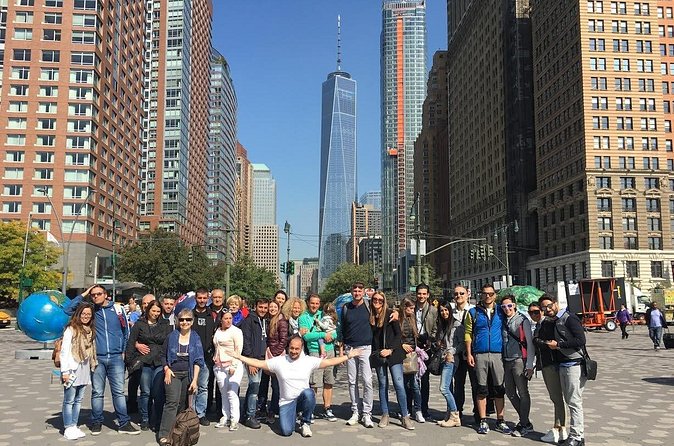
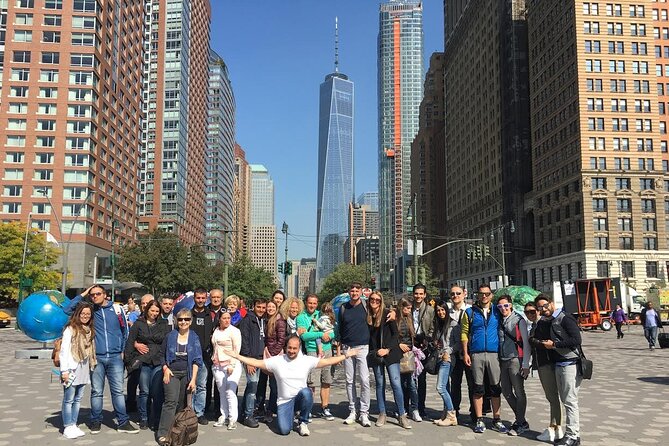
This is the emotional core of the day. You end up at Battery Park, where you can admire the Statue of Liberty from the waterfront area. Even without any island visit included, the shoreline view gives you a grounding sense of how the harbor frames Manhattan.
Then the route continues toward the World Trade Center area. This stop is not just sightseeing. The setting tends to hit people differently, and it is easy to see why. One group described being moved by the memory of 09/11/01, and that feeling makes sense given what you are looking at and the scale of the location.
On some departures, the route can bring you closer to the 9/11 Memorial museum area for additional context. The key point for you is this: even if the stop is brief, it is treated as a meaningful part of the tour rather than a quick photo break.
If you need something upbeat and distraction-free, you might find this portion heavy. But if you want your Manhattan day to include a real moment of reflection, this is where it happens.
Little Italy and Chinatown stops for snacks and people-watching
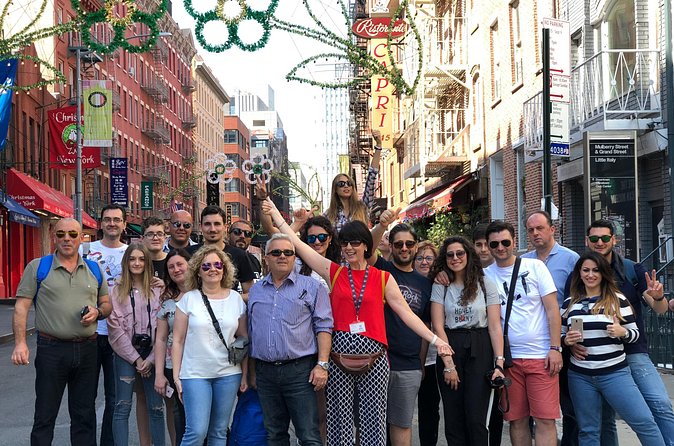
The best part of the neighborhood stops is how fast they change your perspective. You get more than a checklist of Manhattan icons. You get street-level texture.
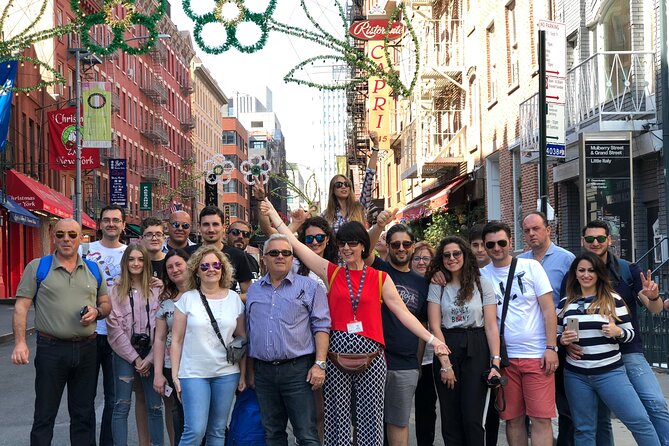
Little Italy is one of the highlights, and you may have time near Ferrara Bar for a decent espresso. That kind of stop matters because it grounds the day. When you have been watching buildings all morning, a quick coffee break in a real neighborhood makes the city feel like a place you can live in, even for an afternoon.
Then you head to Chinatown, another neighborhood that gives you a different Manhattan layer. The street energy, signage, and food-forward atmosphere help you understand how immigration and community shape what you see in these districts.
These neighborhood segments are also where the guide’s explanations feel most personal. A great guide will connect landmarks to everyday life, and it is easier to do that when you are walking past real businesses instead of only viewing monuments from the curb.
If you are trying to plan a future food or photo walk, these stops give you a short list of what to revisit. If you just want to feel the city’s variety, they deliver that too.
Price and value at $75: what you get, and what you pay extra for
At $75 per person for about 4 hours, the value depends on your goals. You are paying for two things: a licensed guide and bus transportation. That combination saves you energy and reduces decision fatigue. Instead of building a multi-stop plan yourself, you get a guided route connecting major Midtown to downtown.
What you should not assume is that you are buying attraction entry tickets. Admission to attractions is not included. So if you want to go inside major sights or up to an observatory level, you will need to budget separately.
This is where the tour format can still make you money. Even without included admission, being guided to the right viewpoints and landmarks helps you decide what is actually worth paying for later. You will not waste time buying tickets for something you do not care about once you see it from the right angle.
Also factor in group size. With a maximum of 50, you are not fighting for space like you might on larger mass tours. That can make the $75 feel more reasonable because the experience stays interactive.
One last cost note: tips are not included. That is standard for guided tours in many places, and it is a reminder to plan a little extra for the guide.
Who this tour suits best, and who might not love it
This tour suits you if you want Manhattan orientation without committing to a full day of walking and museum hopping. It is also a good fit if your schedule is tight, you want a guided framework, or you are traveling with someone who prefers structure.
It is also a strong option if you care about storytelling and context. Past guides like Luigi and Laura were praised for being engaging and dynamic, and that is exactly the kind of energy that turns a list of sights into a city lesson.
But it might not be your best choice if you want detailed deep stops. The half-day format is designed for “see the major stuff, understand the layout, choose your next moves.” If you want long stays at one attraction, you will likely prefer a different style of tour.
Finally, be aware that language experience can vary. One group was disappointed due to Italian delivery, so if language comprehension matters a lot to you, you should confirm expectations before you go and consider choosing other activities where language needs are fully supported.
Should you book this half-day Manhattan bus tour?
If you are deciding between a self-guided scramble and a structured morning, I would lean toward booking this. It is a solid way to build your bearings quickly, especially because you cover Midtown icons, downtown highlights, and neighborhood flavor in one managed loop.
Book it if you want the guide’s help to make the city feel connected, and if you are okay paying extra for any specific observatory or museum entries later. Skip it if your priority is slow wandering, long museum time, or you want guaranteed entry to specific attractions.
If your schedule allows, use the tour as your planning day. After you see Central Park edges, the Rockefeller Center area, the Flatiron skyline shape, and the downtown waterfront mood, your next decisions get easier and cheaper. You will know what to return to, and what to pass on.
FAQ
How long is the Half Day Tour in New York?
It runs about 4 hours.
What is included in the price?
The tour includes a New York licensed tour guide and bus transportation.
Are attraction tickets included?
No. Admission to all attractions is not included.
Where does the tour start and when?
It starts at 21 W 46th St, New York, NY 10036, USA, with a start time of 8:45 am. It ends back at the meeting point.
Is the tour in Italian?
Yes, the guide explains in Italian. In some cases, the guide may also explain in French depending on the group.
Is there a cancellation option if my plans change?
Yes, you can cancel for a full refund up to 24 hours before the experience start time.
More Tours in New York City




More Tour Reviews in New York City
Not for you? Here's more nearby things to do in New York City we have reviewed












More New York City Tours to consider.
 ★ 4.7SUMMIT One Vanderbilt TicketsTickets from $4751,195 traveller reviews
 ★ 4.7Empire State Building Tickets – Observatory & MuseumTickets from $4725,757 traveller reviews
 ★ 4.6Statue of Liberty & Ellis Island with FerryTickets from $1918,683 traveller reviews
 ★ 4.5American Museum of Natural History TicketTickets from $3715,447 traveller reviews
 ★ 5.0New York in One Day Guided Sightseeing TourTickets from $9913,166 traveller reviews
 ★ 4.6Museum of Modern Art (MoMA) Entry TicketTickets from $3012,540 traveller reviews
 ★ 4.7One World Observatory Skip-the-Line TicketTickets from $3012,329 traveller reviews
 ★ 4.7New York CityPASS®: Save up to 41% at 5 Top AttractionsTickets from $15410,548 traveller reviews