
Review · MANHATTAN TOURS
Wall Street and Lower Manhattan, New York History Walking Tour
Wall Street has layers, and this tour shows them. I love how it turns the Financial District into a clear timeline, from Dutch-era moments to early American power. I also love the small group size, max 10, which makes it feel more like a guided walk with real conversation than a cattle-line. The only real drawback is that it requires good weather, so plan for delays if it is rainy or windy.
One highlight I’d zero in on is the mix of famous landmarks and less-famous clues on the street. You’ll also get real storytelling, and in one recent group the guide Tom was especially strong at answering questions and even giving extra time when the group was tiny.
Key things I found especially good about this Wall Street walk
- Battery Park and Peter Minuit’s 24 beads: You start with a dramatic origin story that sets up the whole Dutch-to-American theme.
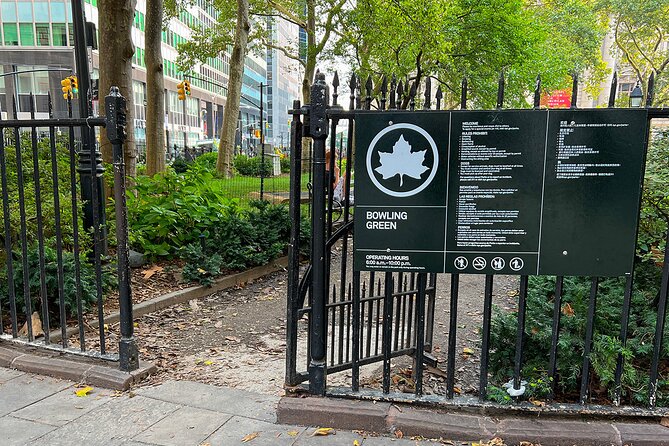
- Bowling Green with the original 1773 fence: It is not just a park stop, it is a physical link to the city’s early layout.
- Charging Bull plus the Fearless Girl context: You get the full modern-street-art controversy, not just the photo spot.
- Federal Hall as the first U.S. capital space: The Washington connection lands better when you hear it where it happened.
- The Federal Reserve building and its gold below: You get the practical money story, including the figure of $400 billion in gold.
- Fraunces Tavern Museum ending: The finale ties the walk back to Washington-era moments, right where history fans can linger.
Lower Manhattan as a living timeline

This is a focused history walk through Lower Manhattan, built around one simple idea: the city did not invent itself overnight. It grew in layers. You see that growth in how each stop points to a different stage of power, trade, and politics, from the Dutch period to British control, then straight into early U.S. government and modern global finance.
What I like is that you are not left with dates floating in the air. Each landmark comes with a human story. That makes it easier to remember things later, especially if you are hopping between neighborhoods and want a mental map that actually sticks.
The walk is also timed so you do not get stuck in one place. Expect about 10 minutes per stop, for roughly two hours total.
You can also read our reviews of more walking tours in New York City



Meeting at 1 State St, and why small groups matter
You meet at 1 State St, New York, NY 10004, and the tour ends back near the same starting area. It runs on a mobile ticket, and it is near public transportation, so you can keep your day flexible.
The standout practical detail is the group limit: maximum 10 travelers. That does two useful things. First, it makes the guide easier to hear on crowded sidewalks. Second, it creates space for questions. In a very small group situation, the guide Tom reportedly answered a lot and even had time for extra questions. That is the kind of difference you feel immediately if you care about getting answers, not just photos.
Battery Park: Peter Minuit and the start of the story
The tour begins at Battery Park, where you hear the story of Peter Minuit and the famous claim about Manhattan being purchased for $24 in beads. It is a legend with bite, and it matters because it sets up the larger theme of power and exchange. Who controls land? What does trade look like when the value system is wildly different?
Battery Park also works as a strong kickoff spot because it anchors the geography. You get oriented fast, then you can track the city’s development forward through the rest of the walk.
It is also listed as a free admission stop, so you are not paying extra to start building the context.
Alexander Hamilton U.S. Custom House: from a 1625 fort to empire shifts
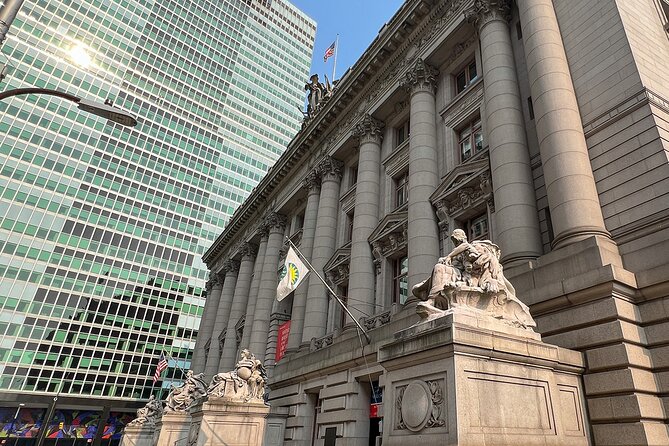
Next up is the Alexander Hamilton U.S. Custom House. The point here is not only the grand building. It is what it replaced and what it passed through.
You will hear how a fort stood in 1625, and how control shifted across empires, moving from the Dutch to the British, and eventually turning into an American symbol. That arc helps you understand why so many Lower Manhattan sites feel layered. The buildings might look modern, but the ground around them carries older footsteps.
This is a good stop if you like political history, trade history, or both. Custom houses and forts are where big money and big decisions intersect.
Bowling Green and the original 1773 fence
At Bowling Green, the focus is the city’s oldest park and its original 1773 fence. That is a detail you feel in your head, because it is one thing to visit a “historic” site, and another to see something with an identified original boundary from the 1700s.
You also get a sense of how early civic space looked. Parks, meeting points, and public areas often reflect how a city organizes power. This stop gives you that early-city logic before you hit Wall Street and the modern financial core.
Again, it is a free admission stop, so it is easy to enjoy even if you are watching your budget.
You can also read our reviews of more historical tours in New York City






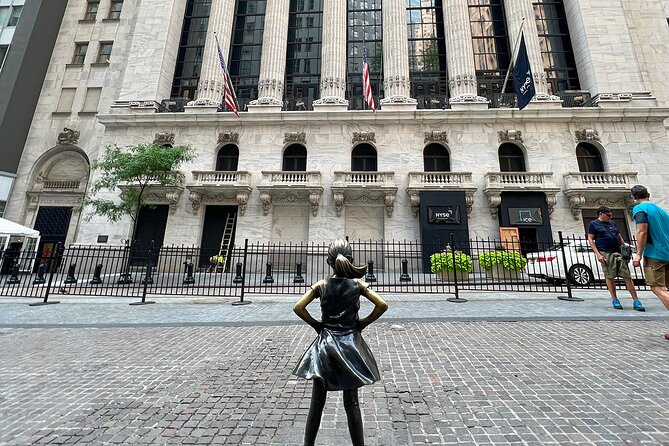
Charging Bull at Wall Street, plus Fearless Girl context
The tour hits Charging Bull, the iconic Wall Street bull statue. If you have seen the statue in photos, this stop gives you something more useful than a landmark checklist: the story around Fearless Girl and why it was controversial.
This is where the walk shows its strength in modern context. Public art on Wall Street is not just decoration. It signals narratives about finance, corporate behavior, and who gets to claim the moral spotlight.
Practical note: this area tends to draw cameras. The small group size helps you stay focused while you move through it without getting swallowed by the crowd.
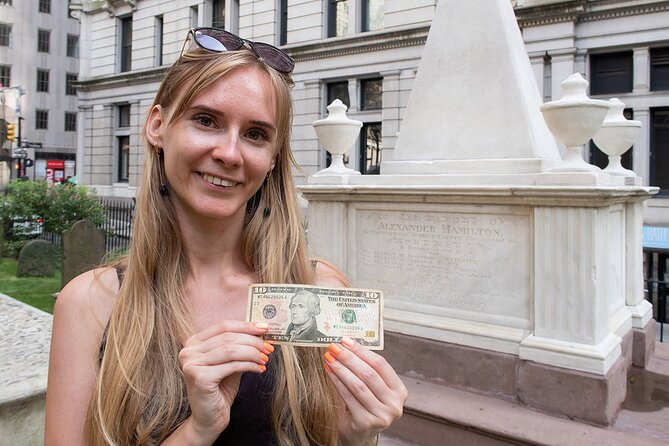
Alexander Hamilton’s gravesite: the duel you can’t ignore
Next you visit Alexander Hamilton’s gravesite, tied to his role as the first Secretary of the Treasury. You also hear the story of his demise in a duel with Vice President Aaron Burr.
This stop is intense in a quiet way. Hamilton is not just a name on a U.S. history worksheet. Hearing the duel context here makes his story feel immediate, and it also ties neatly into the financial theme. Hamilton helped shape early U.S. financial thinking, and that makes the gravesite connection more than trivia.
It is also listed as free admission, so you get the payoff without needing any extra add-ons.
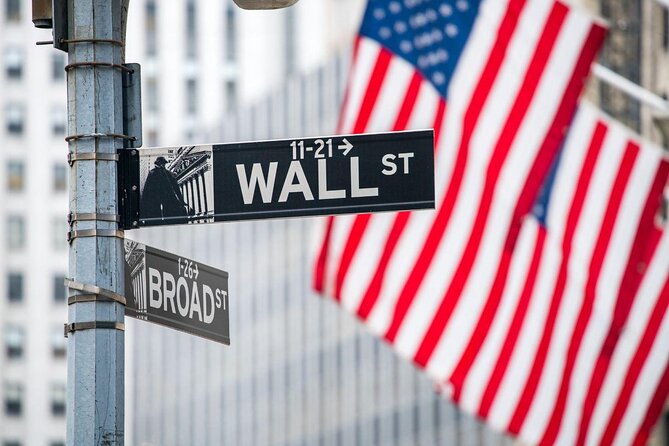
Walking Wall Street and decoding the name
Then you walk down Wall Street itself and learn how the name came to be. This is a simple stop, but it is powerful because street names are city memory. When you understand what the name refers to, the street becomes more than a photo corridor.
For me, this is one of those “small detail, big effect” parts of the tour. Once you learn the origin, you start seeing other place-names with different eyes across New York.
New York Stock Exchange: the grandeur, plus what it represents
The tour brings you to the New York Stock Exchange. The focus here is its grandeur and the idea it symbolizes: global financial power.
Even if you do not follow stocks day-to-day, this stop helps you understand why people treat this corner like a world stage. The stock exchange is not only a building. It is a signal. It says, this is where capital, regulation, and big decisions connect.
Listed as free admission, so you can take in the architecture and meaning without a separate ticket.
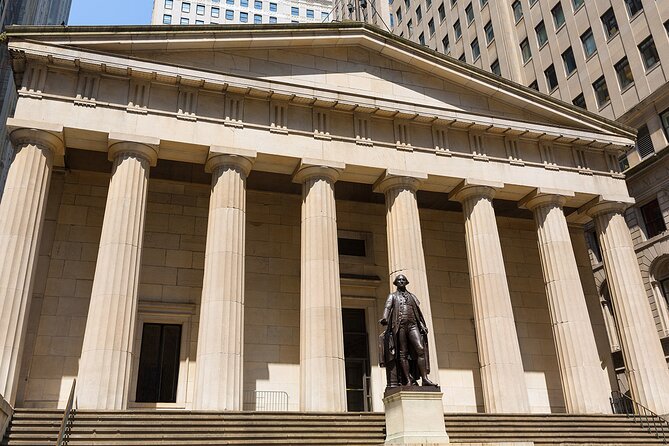
Federal Hall: where Washington took the oath and early government took shape
At Federal Hall, you connect the space to the first U.S. government moment tied to George Washington. You will hear about the inaugural oath resounding there, and that the building served as the country’s first capital.
This is one of the most important “why” stops on the walk. A tour that starts with land purchase legends and empire shifts would feel incomplete without showing the birth of the American political center. Federal Hall gives you that turning point.
If you like clear cause-and-effect, this stop delivers. You go from finance symbolism at the NYSE to the origin of U.S. governance in one smooth chain of ideas.
Federal Reserve Bank of New York: $400 billion in gold beneath your feet
One of the more memorable facts from this walk is the visit to the Federal Reserve Bank of New York, with the detail that the building conceals $400 billion of gold beneath its foundations.
That is the kind of number that snaps your brain into a reality check. Money is abstract until you hear how physical it is, even in the modern age.
This stop also helps balance the emotional tone of the tour. Charging Bull can feel like a symbol of risk and optimism. Federal Reserve gold makes it feel like stability and control. Together, they show how finance is both story and infrastructure.
Stone Street: New York’s first paved street, now full of everyday life
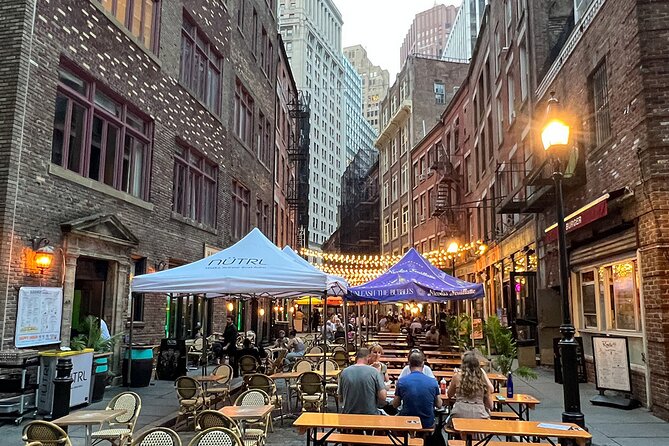
Next you walk through Stone Street, described as the city’s very first paved street. The tour frames it as a spot where history meets day-to-day energy, with cafes and lots of activity now.
This part matters because it shows how cities reuse spaces. A street can change its function, but the original engineering decisions can still shape the way the area feels. Stone Street is a good reminder that “old” does not mean “stopped.” It means reused.
Portal Down to Old New York: the footprints under the pavement
You then get a more unusual stop: Portal Down to Old New York. Here, the focus is on footprints of a 17th-century tavern and remnants of the old City Hall of New Amsterdam.
This is a neat moment in the tour because it shifts from visible landmarks to what is basically archaeology in the urban setting. You get to think about what was here, not just what is still standing.
It is listed as free admission, but the value is in the idea: the city preserves layers even when the surface keeps changing.
Fraunces Tavern Museum: ending with Washington’s farewell to officers
The tour ends at Fraunces Tavern Museum, the oldest tavern in New York. The story connected to the site includes George Washington’s farewell to his officers, which gives the walk a strong finish.
This is a smart way to end, because the last stops bring you back to personal leadership rather than institutions only. Taverns are where stories travel, plans form, and the public sphere breathes. Ending here closes the loop from Dutch trade and political shifts to the American leadership mythos.
If you like being able to picture history as human scenes, this ending makes the whole walk feel more complete.
Price and value: $30 for a two-hour Lower Manhattan history line
At $30 per person for about two hours, this tour is priced for people who want structure without a big budget. You get multiple major landmarks in one go: Battery Park, Bowling Green, Wall Street, the NYSE area, Federal Hall, the Federal Reserve building, Stone Street, Portal Down, and Fraunces Tavern.
Two things drive the value here. First, many stops are listed as admission ticket free, so you are not paying for each location. Second, the group is capped at 10, which usually means you spend more time understanding and less time waiting for your turn.
If your day in New York is short, or you want a guided spine to connect scattered sights, this fits well. It is not a long, slow museum day. It is a walking lesson you can absorb fast.
When this tour makes the most sense
This tour fits best if you:
- Want a street-level history focus without committing to a full museum schedule.
- Like the crossover of finance and early American politics.
- Prefer smaller groups for easier hearing and more question time.
- Are visiting New York for the first time, or you want a refresher even if you know the city.
It is also listed as suitable for most travelers, and it allows service animals. Since it requires good weather, it is smart to book with an eye on your forecast.
Should you book this Wall Street and Lower Manhattan History Walking Tour?
I’d book it if you want a guided walk that connects the city’s origin story to the places you already recognize. The mix of Battery Park, Wall Street, Federal Hall, and the tavern ending gives you a complete arc from Dutch-era control to U.S. government power and modern finance.
Skip it if you hate weather-dependent plans or you do not want to spend about two hours on foot. Also, if your style is mostly art or only one specific topic, this walk blends several eras and themes, so you’ll want to be in the mood for that variety.
If you can handle a brisk history walk and you like understanding what you see, this one is a solid value play at $30, especially with the small group cap and a guide like Tom who can answer questions.
FAQ
How long is the Wall Street and Lower Manhattan History Walking Tour?
It runs for about 2 hours.
What does the tour cost?
The price is $30.00 per person.
Is the tour ticket mobile?
Yes, the tour uses a mobile ticket.
Where do I meet, and where does the tour end?
You meet at 1 State St, New York, NY 10004, and the tour ends back at the meeting point.
How many people are in a group?
The group maximum is 10 travelers.
Do I need to pay separate admission for stops?
The stops listed on the tour are marked as admission ticket free.
Is the tour near public transportation?
Yes, it is near public transportation.
What are the weather requirements?
This experience requires good weather. If it is canceled due to poor weather, you will be offered a different date or a full refund.
Is the tour suitable for most travelers, and are service animals allowed?
Most travelers can participate, and service animals are allowed.
What is the cancellation policy?
There is free cancellation. You can cancel up to 24 hours in advance for a full refund, and cancellation cut-off is based on local time.
More Walking Tours in New York City



More Tours in New York City






More Tour Reviews in New York City



Not for you? Here's more nearby things to do in New York City we have reviewed












More Manhattan Tours to consider.
 ★ 4.7Manhattan Helicopter TourTickets from $2997,076 traveller reviews
 ★ 4.8Manhattan Sightseeing Helicopter TourTickets from $2995,826 traveller reviews
 ★ 3.0JFK to Manhattan: One Way Shared Arrival TransferTickets from $313,687 traveller reviews
 ★ 4.5Circle Line: 2.5hr – Complete Manhattan Island CruiseTickets from $343,488 traveller reviews
 ★ 4.6From Manhattan: 4-Hour Dyker Heights Holiday Lights Bus TourTickets from $632,426 traveller reviews
 ★ 3.5Manhattan to JFK: One Way Shared Departure TransferTickets from $312,030 traveller reviews
 ★ 4.5The Manhattan Helicopter Tour of New YorkTickets from $2361,842 traveller reviews
 ★ 3.5Private Transfer from Manhattan to NYC Airports (JFK/EWR/LGA)Tickets from $361,683 traveller reviews
More useful New York routes