
Review · CENTRAL PARK TOURS
Central Park: Scandal & Vice Walking Tour
Dark stories can change how you see a familiar place. This Central Park walk puts NYC’s more scandalous moments under your feet, with a clear focus on crime, vice, and the people who shaped the park before it became the postcard favorite. I liked the small-group feel, because it makes it easier to ask questions, and I really valued how the tour goes beyond the usual sightseeing patter. One drawback to consider: if you want a light, purely scenic stroll, the themes can feel gritty.
I also like that the pacing is tight but not rushed on purpose. Each stop gets a short, focused story, so you stay oriented and don’t spend the whole time waiting around. The route starts at the Arsenal on 5th Avenue and ends at the Ramble Stone Arch, so you finish deep in the park rather than back at the entrance. For $40, you are paying for a guided story track, not for museum access or extra perks, and you should plan to bring your own water.
Key Things That Make This Tour Worth Your Time
- Small group format (up to 15), so guide Q and A is actually possible
- Focused dark-history storytelling, not generic Central Park trivia
- A stop list that covers the park edge to the heart, from the Arsenal to the Ramble
- An English guide and a mobile ticket for smoother check-in
- Lots of “wait, what?” moments, including statues, policing, and crime-adjacent stories
Dark History in Central Park, Without the Usual Pat-Answers
Central Park is built for romantic walks, first dates, and photos that look like you hired a professional. But the park is also a real, lived-in space. Long before it was a safe-feeling green escape, it was a magnet for conflict, rules, and rumor, and that is exactly what this tour spotlights.
What I like most is the tone. This is not horror-movie theater. It feels like local history told with street-level honesty: how institutions reacted, how people pushed boundaries, and how the park became a stage for everything from public art controversy to vice and policing. You learn that “nature in the city” has always had an urban shadow attached to it.
Also, you get a deeper layer than typical sightseeing because the tour is structured around themes, not landmarks. You are not just walking from one “must see” photo spot to the next. You are moving through story beats that link crime, social behavior, and changes to the park’s fabric over time.
You can also read our reviews of more walking tours in New York City


Price and Value: $40 for an Offbeat Two-Hour Walk
At $40 per person for about two hours, this tour sits in the “worth it if you like guided context” category. This is not a bargain if you only want views and photos. But if you enjoy learning the background behind places, it is a fair price.
Here is why the value holds up:
- All fees and taxes are included, so you do not get a surprise at checkout.
- Admission at the stops is listed as free, which matters because you are paying for the guide’s storytelling, not paying entry fees at each location.
- The group is capped at 15, which is a meaningful quality upgrade in a city where “small group” sometimes turns into “mostly crowded.”
What you should plan for: bottled water is not included. That sounds minor, until you realize Central Park walking adds up fast. I would bring a reusable bottle or buy water nearby before the tour.
Meet at the Arsenal, End at the Ramble Stone Arch
The tour starts at The Arsenal, 830 5th Ave, New York, NY 10065 at 11:00 am. You’ll want to arrive a few minutes early so you can orient, use the restroom if needed, and be ready when the group gathers.
The finish point is the Ramble Stone Arch in Central Park. You are escorted out of the Ramble at the end of the tour unless you want to stay behind. If you are planning the rest of your day, it helps that the tour includes a clear idea of where you will end up, and it lists a practical exit route near West 77th Street and Central Park West, close to the 81 St-Museum of Natural History subway station (B, C).
One small thing to consider: because the ending is inside the park, you may feel a bit “forward-deployed.” That can be great if you want a little extra wandering. If you are trying to catch a specific reservation right after, give yourself a buffer for walking back out.
Stop-by-Stop Walk: Arsenal to the Ramble
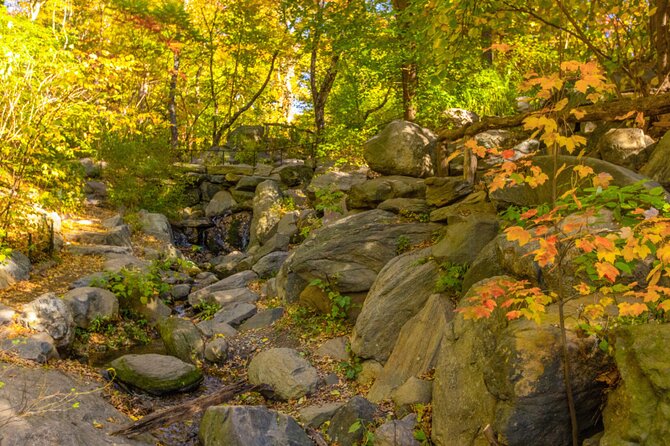
This is a story-driven loop with about ten stops, each with a short timing window. The format keeps your attention on the essentials, but it also means you cannot expect long, slow lectures. Think of it as a guided sampler that gives you names, themes, and a reason to come back and read more later.
Stop 1: The Arsenal, and the Park’s Violent Prequel
You begin at the Arsenal with a brief setup for how Central Park came to be. You will hear about its 19th century infamy and violence, and you’ll also get the uncomfortable part about evictions in the area prior to the park’s construction.
This stop matters because it frames everything else. If you start with the idea that land and institutions were contested, then later stories about policing, crime, and vandalism make more sense. You see the park not as a static backdrop, but as something made and remade.





Stop 2: Central Park Zoo, Strange Origins and Arrests
Next up is the Central Park Zoo, where the tour focuses on the strange origins of the zoo and arrests for indecency that happened there.
Even if you have zero interest in zoos, this is a lesson in how public spaces enforce social boundaries. You start to connect the dots between leisure, moral scrutiny, and the city’s habit of turning behavior into headlines.
Stop 3: The Balto Statue, Plus the Dark Side of Public Art
At the Balto statue, you hear about controversy around the city’s first dog statue and get scandalous stories connected with other Central Park statues.
Public art sounds clean and uplifting on the surface. Here, you learn how statues can cause disputes, spark controversy, and become shorthand for larger arguments. If you like art, this gives it a street-level edge. If you dislike art chatter, it is still useful because it shows how the park expresses values and tensions.
Stop 4: Rumsey Playfield, Wisteria Pergola Quarrels and a Prohibition-Era Nightlife Angle
The Rumsey Playfield stop brings in the Wisteria Pergola quarrels and mentions a prohibition nightclub that used to exist in the park.
This is one of those sections that makes you look at the park differently. It is easy to think of the park as always daytime and always wholesome. This story line adds a second Central Park: the one where people treated it like an escape hatch after hours, and where conflict followed.
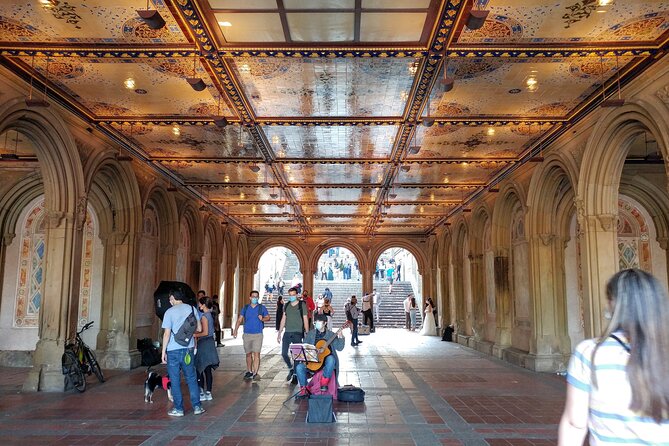
Stop 5: Bethesda Terrace, Jacob Wrey Mould and the Crime-Vandalism Catalyst
At Bethesda Terrace, the tour discusses the scandalous affair of Jacob Wrey Mould, described as the unsung third designer of Central Park. It also points to the history of crime and vandalism that became a catalyst for the Central Park Conservancy.
This stop is practical, even if the subject matter is not. It shows how preservation does not come from vibes and goodwill alone. Maintenance, policing, and community control are part of the park’s story, not just an operations detail.
Stop 6: Sheep Meadow, Hooverville and Protest History
Sheep Meadow is where the tour shifts into social history, including Central Park’s Hooverville settlement during the Great Depression. You will also hear about Sheep Meadow’s protest and demonstration history.
This is where the park stops being just a “crime locations” map and becomes a human story. If you have ever wondered how people lived through the worst economic periods while surrounded by a landscape that looked like leisure, this stop gives you a grounded answer.
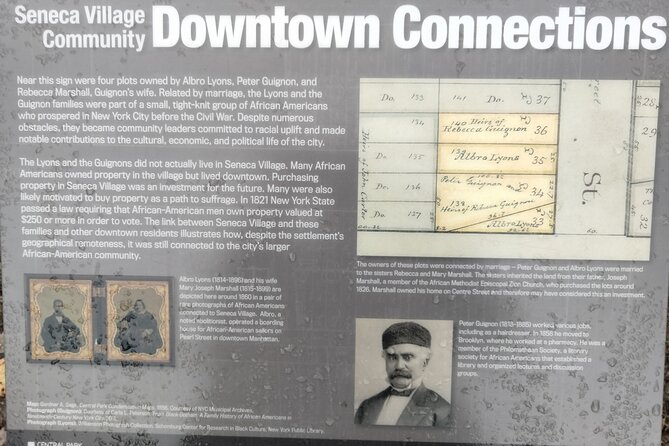
Stop 7: Strawberry Fields, a Murder Linked to Class and Subculture
At Strawberry Fields, you will hear about a gruesome murder connected with the location, intersecting with class and subculture.
This stop has a strong reason for existing in a tour like this. It connects what you see today, like a memorial-style space, to the social forces that shaped what happened there. You will probably leave looking at Strawberry Fields with more awareness than you started with.
Stop 8: The San Remo, Accidents, Stunts, and Suspicious Deaths
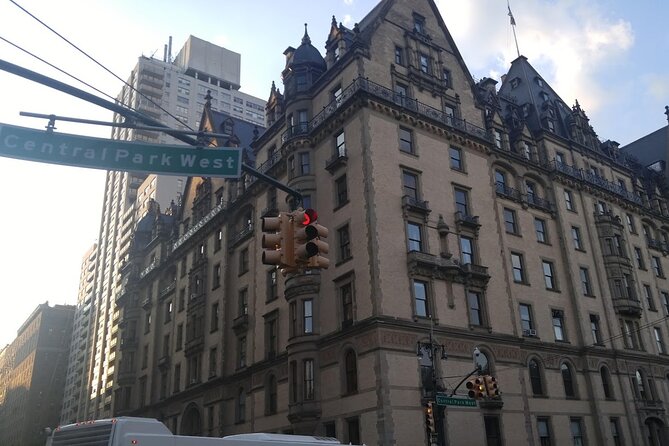
The San Remo stop is about the interconnecting history of Central Park-related accidents, stunts, and suspicious deaths.
This is where the tour turns slightly more rumor-flavored, but it stays tied to place. It helps you notice how city myth forms around real streets, real people, and real events. Even if you never repeat the exact story, you will remember the idea that the park has always been watched, used, and sometimes exploited.
Stop 9: Near the American Museum of Natural History, Heist and a Witness Protection Incident
Next, the tour moves to the American Museum of Natural History area with talk of a notorious park-adjacent heist and another tale about a witness protection incident gone horribly wrong.
I like this stop because it shows how “Central Park stories” are not confined to park paths. The park interacts with nearby institutions and the surrounding city grid. If you want to understand why so many headlines in NYC orbit around parks and landmarks, this is a clear example.
Stop 10: The Ramble, Cruising History, Police Raids, and Film/TV Influence
Finally, you reach the Ramble, where the tour covers the history of cruising, nighttime incidents, police raids, and films and TV shows that the activity inspired.
This last stop is the emotional and thematic finish. It ties the tour together by focusing on privacy, public space, and how the city responded. You also get the cultural ripple effect, because it did not just happen in real life, it showed up in storytelling.
And yes, the Ramble is still a place to pause and look around, even after the last story. When the escort out happens, you will feel like you just spent two hours learning how the park works after dark and how people shaped it.
The Guide Factor: Why the Tour Feels Better Than a Script
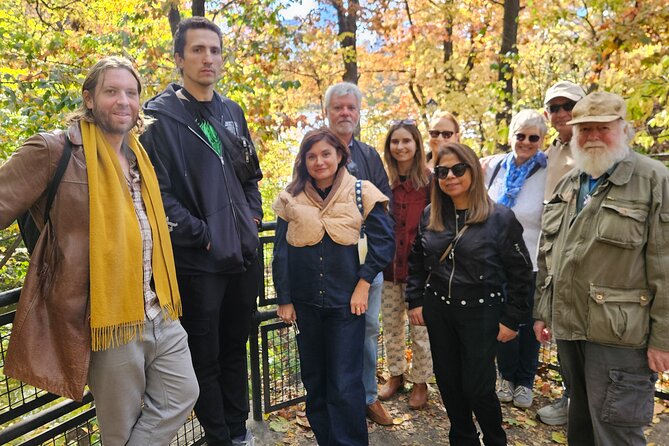
A big part of this tour’s appeal is the guide. The experience is designed as a small group, and that means you get more back-and-forth than you do on big-bus style walking tours.
You can expect a guided flow that keeps questions open. That matters because dark history can raise curiosity fast. You might want to ask how something connects to something else, or why certain events changed how the park was run. This tour format gives you that chance.
Also, the guide’s approach is described as great and accommodating. In practice, that usually means you do not feel stuck with a one-way lecture. You feel like the guide is there to help you connect the dots.
Tips to Get the Most From Your Dark-History Stroll
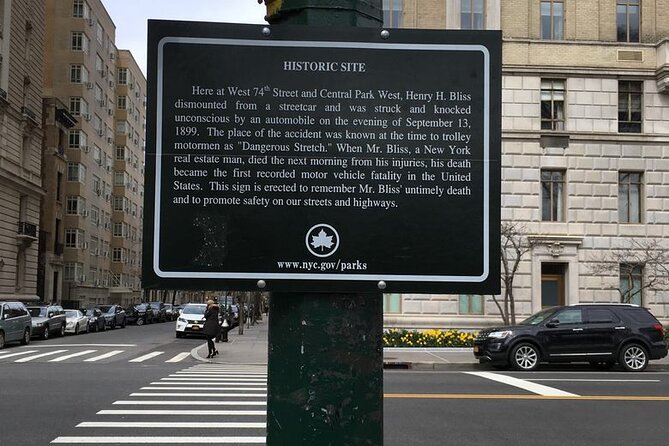
Here are a few practical things that will make the tour more enjoyable, even if you are not a “morbid history” person.
- Wear comfortable shoes. This is a walking experience through park terrain.
- Bring a water plan since bottled water is not included.
- If you prefer classic scenic sightseeing, treat this as a contrast tour. Do it on a day when you are okay with heavier themes.
- Keep your phone charged if you rely on the mobile ticket. It is part of the process.
- Arrive a few minutes early at 830 5th Ave so you can settle in.
Who This Tour Fits Best (and Who Might Skip It)
This is a strong match if you:
- want Central Park context that goes beyond the obvious
- like scandal, crime stories, and social history
- enjoy smaller groups where you can ask questions
It may be less ideal if you:
- want a relaxed, purely scenic walk with minimal heavy topics
- do not like guided storytelling, and prefer self-guided wandering
Think of it like this. If Central Park is the stage set, this tour looks at the backstage work, the arguments, and the consequences.
Should You Book the Central Park Scandal and Vice Tour?
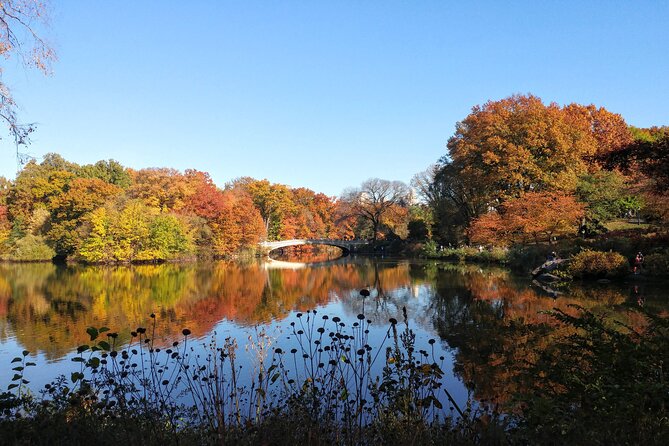
Book it if you like your NYC with layers. The route covers well-known Central Park areas, but the way you experience them is different, because each stop is a story about behavior, conflict, and how the park became what it is. For $40, with a group size capped at 15 and an English guide, it is a solid value if you want real context, not just photos.
Skip it if you mainly want scenery, quiet, and light vibes. You will still enjoy the walking, but you might feel the tone is too dark for your mood.
If you are torn, my advice is simple: choose it when you have curiosity to spend, not when you only have time to “see the highlights.”
FAQ
How long is the Central Park Scandal and Vice Walking Tour?
The tour is about 2 hours.
How much does the tour cost?
It costs $40.00 per person.
What language is the tour offered in?
The tour is offered in English.
Where does the tour start?
The tour starts at The Arsenal, 830 5th Ave, New York, NY 10065.
What time does the tour start?
The listed start time is 11:00 am.
Where does the tour end?
The tour ends in the Ramble at the Stone Arch in Central Park. The group is escorted out of the Ramble at the end unless you choose to stay.
Is there a group size limit?
Yes. The tour has a maximum of 15 travelers.
Is bottled water included?
No. Bottled water is not included.
Are the stops ticketed?
The tour information lists admission for the stops as free.
What is the cancellation policy?
Free cancellation is available up to 24 hours in advance for a full refund. If you cancel less than 24 hours before the start time, the amount paid is not refunded.
More Walking Tours in New York City


More Tours in New York City




More Tour Reviews in New York City



Not for you? Here's more nearby things to do in New York City we have reviewed









More Central Park Tours to consider.
 ★ 5.0Central Park Pedicab Guided ToursTickets from $387,108 traveller reviews
 ★ 5.0Private Central Park Pedicab TourTickets from $386,981 traveller reviews
 ★ 4.2Central Park Bike RentalsTickets from $92,528 traveller reviews
 ★ 5.0Official NYC Horse Carriage Rides in Central Park since 1979 ™Tickets from $992,365 traveller reviews
 ★ 4.1Central Park Bike RentalTickets from $81,651 traveller reviews
 ★ 4.9Private Central Park Pedicab TourTickets from $401,637 traveller reviews
 ★ 4.7Central Park Bike RentalTickets from $91,509 traveller reviews
 ★ 4.0Carriage Ride in Central Park (VIP – PRIVATE) Since 1964™Tickets from $141,074 traveller reviews
More useful New York routes