
Review · NEW YORK CITY TOURS
NYC’s History of Comedy Tour
Comedy history starts on a street corner. This 1 hour 15 minute Greenwich Village walk turns famous comedy rooms into a real timeline, from vaudeville to TV. It is also easy to fit into a day because you move fast, but the story stays clear.
What I like most is the straightforward, visual storytelling. You get photo-based narration at several iconic spots, so the names mean something right away. The second big win for me is the bonus free stand-up access later that evening, which adds real entertainment value after the walk.
One thing to consider: this is an outside walking tour with short stops, so if you are hoping for lots of time inside each venue or a full comedy set during the tour, you may feel a bit rushed by the pace.
Key Highlights You Should Know Before You Go
- Greenwich Village route with comedy stop-by-stop context so the neighborhood feels meaningful, not random.
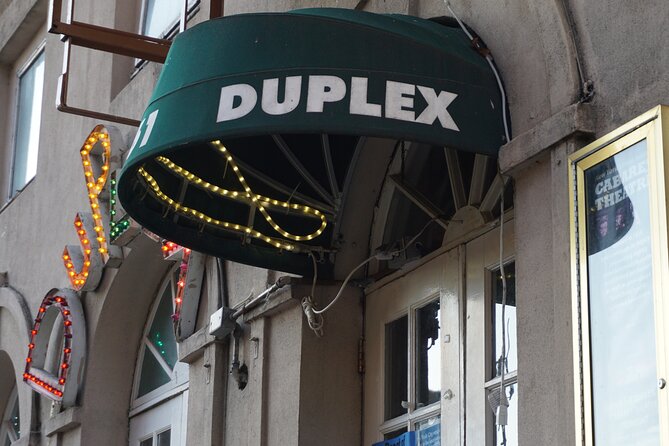
- Legendary venues on the route, including The Duplex, Cafe Wha?, The Bitter End, and The Comedy Cellar.
- How comedy shifted across eras, from early vaudeville through dinner clubs, radio, and then TV in the 1960s.
- Saturday Night Live origin talk, tied directly to where television comedy took shape.
- African American contributions to comedy discussed at the television era stop, with the focus on the people behind the progress.
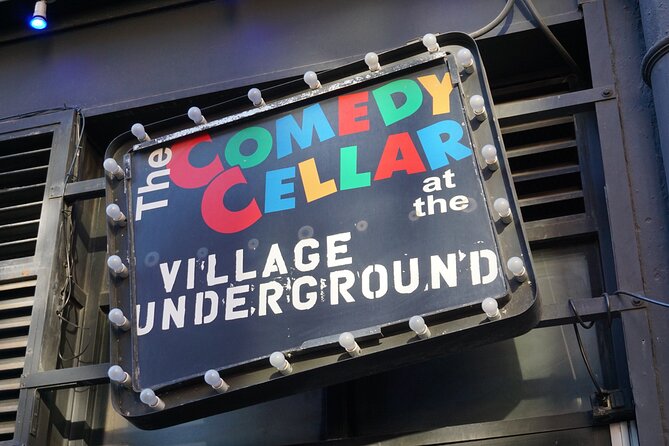
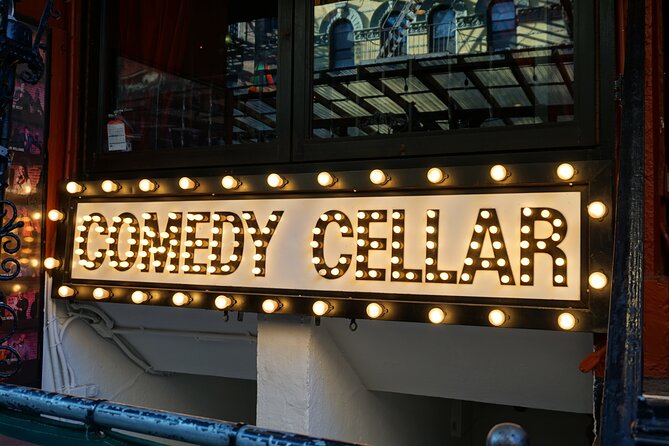
- Photo moment at The Comedy Cellar marquee, plus a second Comedy Cellar location at Village Underground.
Greenwich Village Turns into a Comedy Timeline
If you like show business and want more than trivia, this tour has a solid hook: it treats comedy venues like chapters. You start at the famous intersection of Christopher Street and Gay Street, then you follow the thread of how comedians built careers across changing formats.
The neighborhood is compact, so the hour and a bit feels efficient. You are not stuck in a long ride waiting for the next stop, and you keep moving on foot through the Village.
This format also makes the history easier to remember. You are not reading facts off a screen. You are standing near the places where those eras played out, even if the rooms are not always open to the public during your visit.
You can also read our reviews of more historical tours in New York City



Price and Timing, Plus Why $30 Works Here
At $30 per person for about 1 hour 15 minutes, the best way to judge value is what you get for that time. You cover multiple legendary comedy locations, learn the reasoning behind their influence, and finish at a second Comedy Cellar stop with a benefit for later.
The tour also runs in morning and afternoon options, which helps if your NYC schedule is packed. If you want to plan your evening around comedy, the timing matters because the walk ends at Village Underground, where you can connect your next steps more naturally.
Group size is limited to a maximum of 20, which usually helps keep questions possible and the pace more human. You also get a mobile ticket, so you are not scrambling for paper right before you meet.
One more practical note: the experience tends to be booked about 21 days in advance on average, so if you have a specific day in mind, do not wait until the last minute.
Where You Start, Where You End, and How to Plan Your Day
Your tour begins at 13 Christopher St, New York, NY 10014. It ends at Village Underground, 130 W 3rd St, New York, NY 10012, at one of the Comedy Cellar locations there.
That end point is handy. If you are trying to build a mini itinerary around comedy, you are not finishing in the middle of nowhere. You are right near another key venue location, and the guide also includes a free access option to a local stand-up show later that evening.
Plan your day with this in mind. If you want that bonus show, leave yourself buffer time to get there, grab a snack nearby, and settle in. Also, bring comfortable shoes. The stops are short, but this is still a walk through the Village.
Stop One at Christopher and Gay Street, The Vaudeville to Radio Jump
You begin at the intersection of Gay Street and Christopher Street. The guide starts by narrating New York comedy history using visuals, beginning in the early 1900s vaudeville era.
Then the story keeps moving forward through the dinner clubs and into radio in the 1930s and 40s. The useful part for you is that this stop explains the “why.” Comedy did not just change because new comedians arrived. It changed because the audience and the delivery system changed too.
This first stop sets expectations for the rest of the walk. It trains you to listen for patterns: room types, stage styles, and how performers adapted as entertainment shifted from live variety to broadcast-friendly formats.
The Duplex Stop, Where Comedians Rose Through a Room
Next you hit The Duplex for a short stop with narration and photos. The emphasis here is on the venue as a career maker, and the famous comedians associated with it.
This is the kind of stop that can work well for beginners, because you are not required to already know names. You get enough context to understand why one club becomes a launchpad while another becomes a footnote.
The practical drawback is also clear: you spend only about 5 minutes here. If you want more time at each location, this tour is better for you if you prefer fast, structured storytelling rather than slow wandering.




Cafe Wha? and The Bitter End, How Club Culture Built Careers
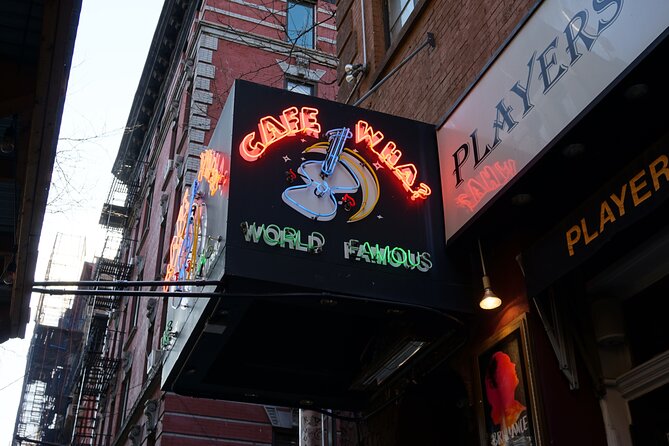
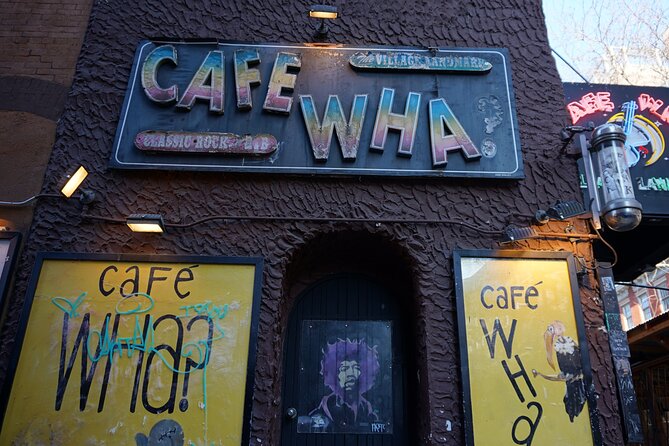
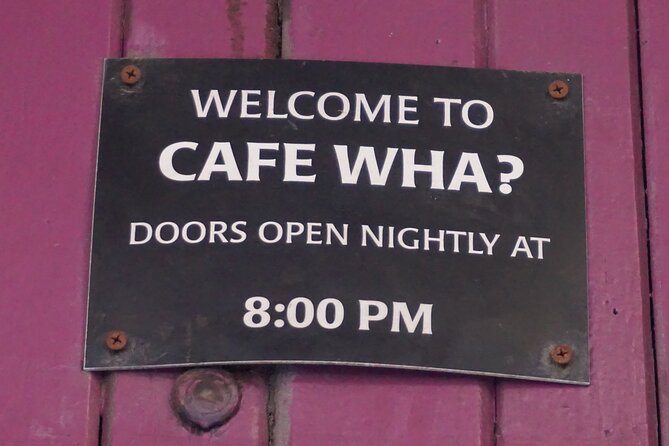
You move to Cafe Wha? for another brief but focused stop. Again, you get narrated history and visuals, plus the comedians known for rising through this kind of scene.
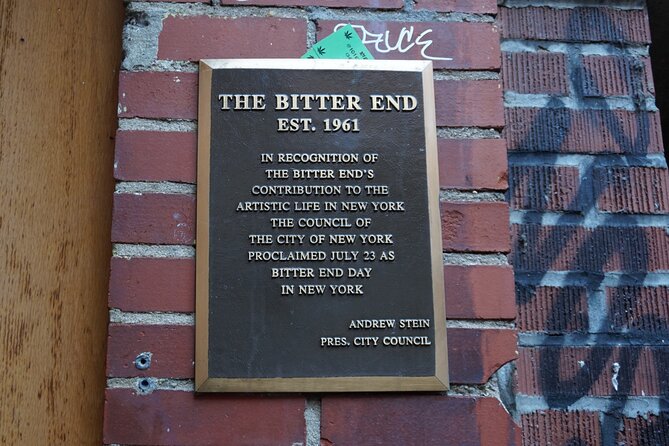
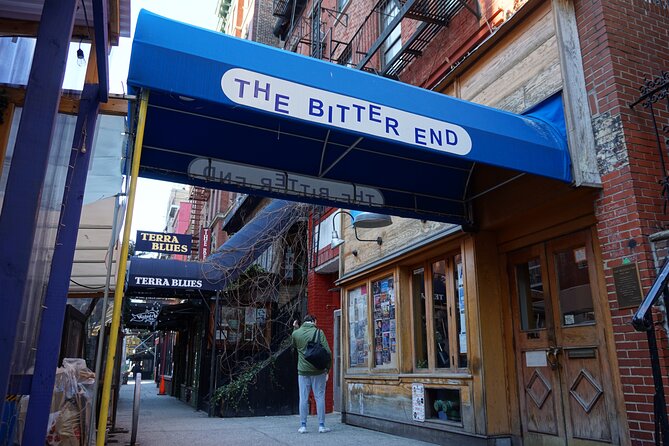
Then the route shifts to The Bitter End, where the guide talks about the comedy history tied to both The Bitter End and Cafe Au Go Go. This stop is also where the guide points out how comics used these rooms as platforms.
Why these two stops matter: they show you the link between location and creative freedom. In club culture, you are often seeing a mix of audience expectations, local energy, and a risk-friendly stage. That helps explain how certain voices found their moment.
Time is short at each stop, roughly 5 minutes at Cafe Wha? and about 10 minutes at The Bitter End. You get enough to connect the dots without getting stuck in one spot.
Grisly Pear and the TV Era, Including SNL and African American Contributions
At The Grisly Pear Comedy Club, the narration leans into a different turning point: the rise of television in the 1960s. This is where the tour connects the neighborhood comedy ecosystem to the bigger media shift that changed what made comedians famous.
This stop also covers the creation of Saturday Night Live and highlights African American contributions to comedy. That part matters, because it moves the story beyond a single “who was the funniest” angle and into how performers shaped mainstream comedy.
You also get a snapshot of modern comedy life in New York at this stage, with the guide noting the most famous modern comedy clubs. For you, that is useful because it helps you translate past influence into what you should try next.
If you are a comedy fan who likes context, this stop is one of the best reasons to take the tour at all. It ties the Village to a national story, without losing the local perspective.
The Comedy Cellar Stops, History Plus a Marquee Photo Moment
Then you head to The Comedy Cellar for a narrated stop with visuals. The guide shares the venue’s history, and you also get a photo moment in front of the famous marquee.
That small detail is surprisingly valuable. A lot of tours toss you a photo spot at the end. Here, you get one in the middle, which helps you mark progress and keep your energy up.
After that, you move to Village Underground, where the guide shows you the second Comedy Cellar location there. You also get another practical bonus: the guide points out a local stand-up comedy show for which you receive free access later that evening.
This is a big part of the tour’s real-world value. You finish the walk and you already have a plan to turn history into an actual night out.
The Guide Style, What Makes This Tour Feel Fun Not Lecture-Like
A key strength in this experience is the guide’s delivery. In multiple high ratings, the guide is described as friendly, polite, engaging, and quick to answer questions about neighborhoods, clubs, and history. There is also mention of humor and interaction, which matters on short walking tours.
The guide also uses visuals at several stops, which keeps your attention. That technique helps when you are moving quickly, because it anchors each topic in something you can actually see.
There is also reassurance baked into the real-life pacing. The tour is designed so you are not constantly sprinting to catch up. Stops are timed, but the story pacing is meant to keep you oriented rather than overloaded.
If you are sensitive to feeling rushed, you should like the structure. If you prefer long museum-style explanations, you may find the format more “scan and connect” than slow study.
Who This Tour Fits Best (And Who Might Prefer Something Else)
This works especially well for:
- Comedy fans who want context, not just names
- First-time NYC visitors who want to understand why the Village is tied to stand-up culture
- People planning a comedy night, because the walk includes a path to a later show
- History of entertainment lovers, especially those interested in how media formats changed from vaudeville to radio to TV
It may be less ideal if:
- You want a seated performance during the tour
- You need lots of time inside venues to explore
- You dislike short stops and prefer long, unstructured wandering
Also, it is near public transportation, and it is described as suitable for most travelers. Service animals are allowed, which is a helpful, clear point for planning.
Smooth Booking and Day-of Practicalities
You receive confirmation at time of booking, and you use a mobile ticket. That’s convenient in NYC, where it is easy to misplace paper. The tour also limits size to 20 people, which typically makes it easier to stay oriented.
If you are the type who likes having options, remember there are morning and afternoon tour times. Choose the one that best matches your energy and your evening plans.
For planning confidence, the experience offers free cancellation with full refund if you cancel up to 24 hours in advance. That is a comfort factor if your schedule changes or you are still deciding between show options.
Should You Book This NYC History of Comedy Tour?
Book it if you want a high-signal, walkable way to learn why Greenwich Village became a comedy center. For $30, you get multiple iconic venues linked into a clear timeline, plus a finish point at Village Underground that supports a real comedy night afterward.
Skip it if your main goal is to attend a big comedy set immediately, or if you want long time inside venues instead of short outside stops with guided storytelling.
If you are trying to make the most of a limited NYC window, this is a smart pick. You leave with names, context, and better instincts for where to go next for stand-up.
More Historical Tours in New York City



More Tours in New York City




More Tour Reviews in New York City



Not for you? Here's more nearby things to do in New York City we have reviewed











More New York City Tours to consider.
 ★ 4.7SUMMIT One Vanderbilt TicketsTickets from $4751,195 traveller reviews
 ★ 4.7Empire State Building Tickets – Observatory & MuseumTickets from $4725,757 traveller reviews
 ★ 4.6Statue of Liberty & Ellis Island with FerryTickets from $1918,683 traveller reviews
 ★ 4.5American Museum of Natural History TicketTickets from $3715,447 traveller reviews
 ★ 5.0New York in One Day Guided Sightseeing TourTickets from $9913,166 traveller reviews
 ★ 4.6Museum of Modern Art (MoMA) Entry TicketTickets from $3012,540 traveller reviews
 ★ 4.7One World Observatory Skip-the-Line TicketTickets from $3012,329 traveller reviews
 ★ 4.7New York CityPASS®: Save up to 41% at 5 Top AttractionsTickets from $15410,548 traveller reviews
More useful New York routes