
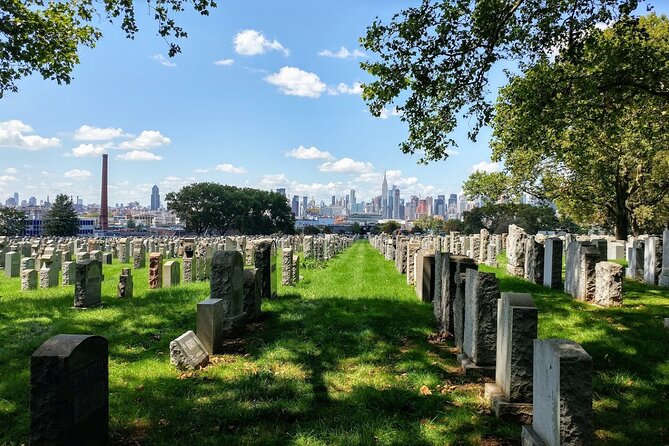
Review · MANHATTAN TOURS
Twilight Tour: Death in New York (Lower Manhattan)
Death sounds heavy. Here, it’s practical.
On this Twilight Tour: Death in New York (Lower Manhattan), you walk past iconic sights and hear the darker layers underneath, from Lenape burial sites to pirate justice. I love how the guide ties together big city drama and everyday death care. I also like the small size, capped at 15 travelers, so questions actually get answered. One drawback to consider: the topic is literally death, so it is not for you if you want a light, casual walk.
This is not a paranormal ride. The focus is historical and human, covering epidemics, war heroes, prisoners, Catholic burial rules, and even what happens to bodies when a city panics. You’ll get a 1 hour 45 minutes loop through Lower Manhattan, with stops that are mostly free to access, so the $36 price feels like you’re paying for storytelling and local perspective.
If you enjoy New York for what it hides under the postcard, this tour fits. Just wear good shoes, because even with a short walking route, you’re still moving around the FiDi at night.
Key reasons this Twilight Tour is worth your evening
- Iconic landmarks with controversy attached, like the Liberty view and the Charging Bull area
- A death-history approach that stays factual, with humor that keeps it human
- Indigenous, Catholic, and civic stories in one route, not just one tradition
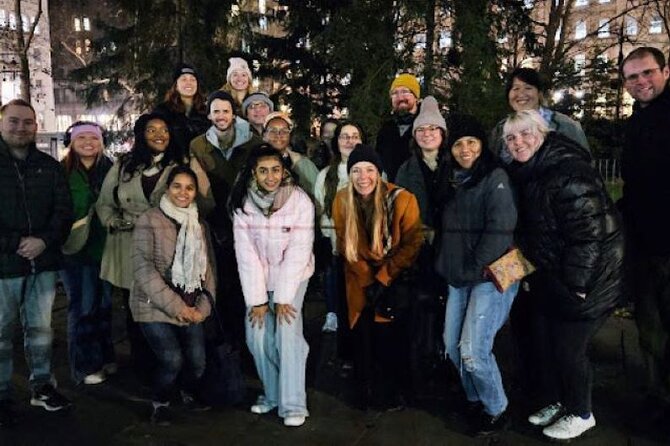
- Small group size (max 15), which helps the guide keep the pace and answer questions
- Free-access stops, since each listed stop is marked with admission ticket free
- A focused Lower Manhattan loop, starting at Whitehall Terminal 4 and ending at City Hall Park
Why this Lower Manhattan tour works better at night
Lower Manhattan at twilight has a different tempo. Daytime crowds rush right past the details, but in the evening you can actually hear the explanations and read the atmosphere of the streets.
This tour also matches the subject. Death, burials, epidemics, and memorials are not abstract when you stand near where they happened. Even when you’re looking at something famous, like the Liberty area or Wall Street, you’re also hearing about the people New York tried to manage, hide, or honor.
Best of all, the tone tends to be steady and grounded. One theme you’ll hear is that cities build systems around death, whether those systems are medical, religious, or legal. That turns the walk into something like a live lesson you can carry home.
You can also read our reviews of more tours and experiences in New York City.



The $36 value: what you really pay for
At $36 per person for about 1 hour 45 minutes, the price can look either steep or fair, depending on what you expect from a walking tour. Here’s the honest math: you’re paying mainly for expert storytelling, a tight route, and a group size small enough that you do not get drowned out.
Also, the stops are marked as admission ticket free. That matters in New York, where “walking tour” sometimes turns into a pile of paid museum entrances. You still get a structured experience, but you’re not stacking extra costs for every location.
If you are the kind of traveler who hates wasting time repeating facts you could read online, this is a good bet. The content is built around how people in different eras handled death, and the route is chosen to make those themes land in real places.
Meeting at Whitehall Terminal 4, ending at City Hall Park
Your evening starts at Whitehall Terminal 4, 4 Whitehall St, with a 7:00 pm start time. The walk ends at City Hall Park at Broadway and Chambers St. That matters because you do not feel stuck inside one neighborhood loop that traps you in the same area.
This is a near-public-transportation kind of tour, which helps if you’re juggling other plans that night. It also uses a mobile ticket, so you’re not fumbling for paper.
The physical level is listed as moderate fitness. So plan for a steady walking pace and cool-down breaks that come from the schedule, not from endless lingering. If you want an evening with minimal steps, this may not be the one.
Stop 1 at the Statue of Liberty View Point: Indigenous burial to pirate executions
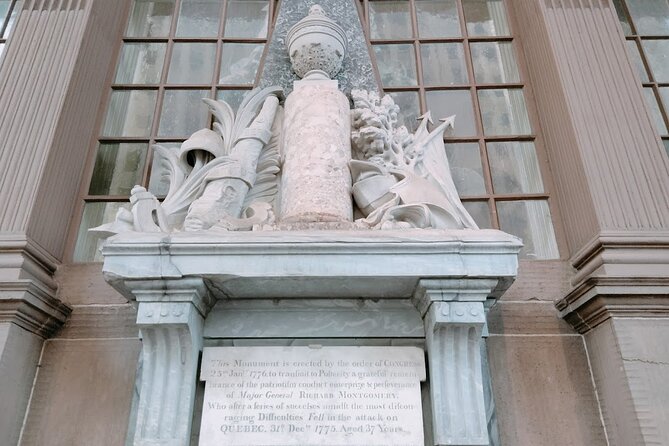
You begin with one of the most recognizable city views in the world, the Statue of Liberty area. But the talk is not about souvenirs or photos. You get a set of layered stories, including Lenape history and ancient burial sites.
Then the narrative turns toward the darker edges of New York’s maritime past. You learn about the last NYC pirate execution, and you also hear about Civil War prisoners tied to the area’s history. In other words, this is not just “Liberty as an icon.” It’s Liberty as a location that has seen punishment, confinement, and burial practices play out over time.
A practical note: bring your phone camera if you like night skyline shots, but keep your eyes up and forward. This stop is about learning, not lingering at a scenic overlook for long.
Stop 2 at Seton Shrine: saints and the Catholic way of death
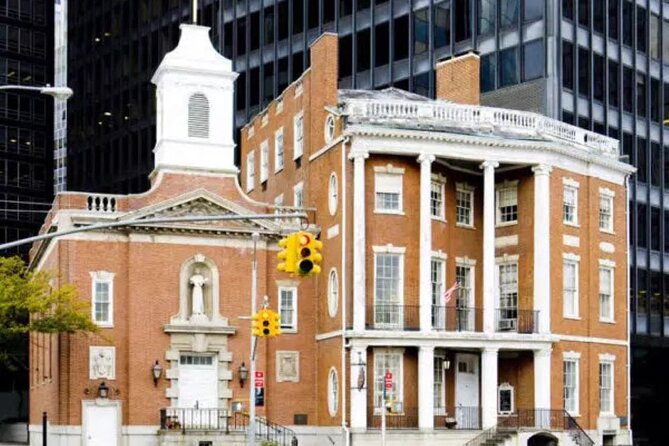
Next you visit Seton Shrine, where you’ll see a Catholic shrine to a New York saint. The story here is how Catholicism thinks about death, and how canonization fits into that worldview.
This stop is short, but the point is clear: religious systems are not only about worship. They shape end-of-life rituals, burial expectations, and what a community believes a death should mean.
If you grew up with a secular view of history, this is one of the most eye-opening stops. It shows how a city’s rules around death are often built from theology and community practice, not just from medicine or law.





Stop 3 at Battery Park City: cenotaphs and Titanic connections
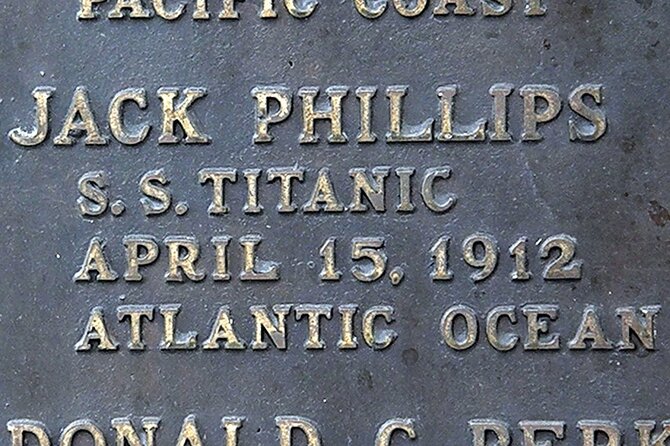
In Battery Park City, you visit a cenotaph and hear how Titanic history connects to the memorial landscape. A cenotaph is a special kind of monument, built to mark loss even when bodies are not laid out in the same way.
This stop helps you understand something that keeps showing up throughout the tour: New York often had to create public meaning for deaths that were messy, distant, or complicated by logistics. The story ties tragedy to the city’s need for collective remembrance.
Because this stop is brief, focus on the main idea. The goal is to recognize the difference between a memorial that holds remains and one that holds memory.
Stop 4 at the National Museum of the American Indian: funerary collections and ownership
At the National Museum of the American Indian, you hear more Indigenous history and learn about stories connected with funerary museum acquisitions. This is one of the most sensitive stops on the route, and it also feels like the tour taking responsibility for how museums became part of death history.
What I like here is that you’re not just hearing “Indigenous culture.” You’re hearing about how objects and human-related materials moved, and how that movement affected communities.
Even if you are not a museum person, this stop works because the tour frames it as a cultural and ethical issue, not a trivia fact.
Stop 5 at Charging Bull: New Amsterdam burial history under Wall Street
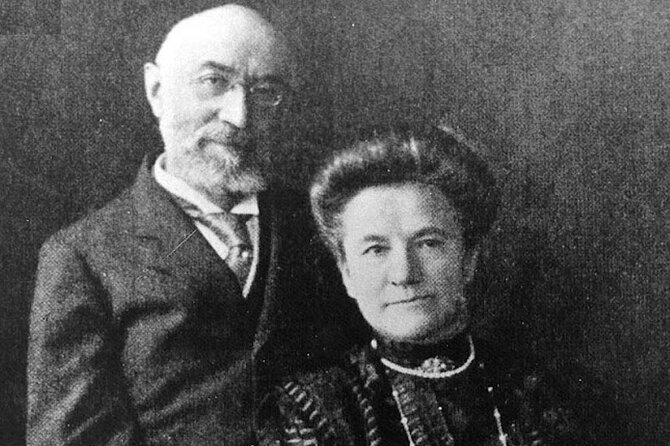
From there you step into one of the most photo-frequent spots in the city, Charging Bull, and flip the script. You hear about New Amsterdam burial history and visit the site of the first city cemetery.
This is where the tour gets extra satisfying, because you realize how much of Lower Manhattan is literally layered. A place you associate with finance is also tied to early city life, including where people were laid to rest.
If you like your history grounded in geography, you’ll love this stop. It also keeps you from thinking of burial as something separate from the city’s growth. In this route, burial is part of the city’s infrastructure.
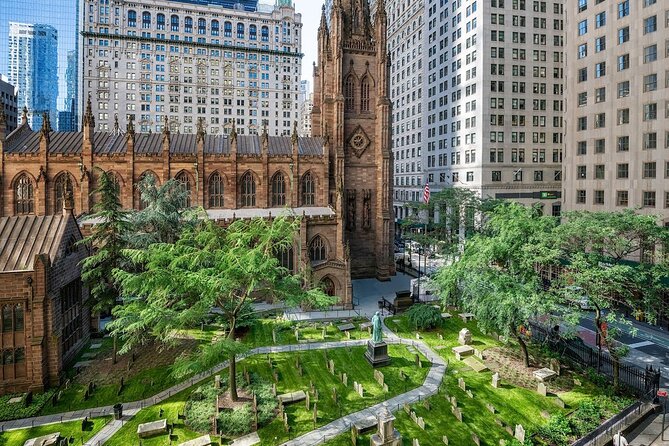
Stop 6 at Trinity Church NYC: epidemics, burial prohibitions, and potters fields
At Trinity Church NYC, you hear about epidemic history and burial prohibitions, plus stories involving potters fields. This is where the tour shifts into a kind of public health and social policy mode.
The big takeaway is that a city’s crisis changes its rules. When epidemics hit, death handling becomes less about individual custom and more about crowding, risk, and enforcement.
This stop also helps you connect earlier religious themes with civic reality. Even when the motivation is religious, communities still have to manage bodies at scale.
If you are prone to getting bored by “serious history,” this is a good moment to pay extra attention. The tour’s humor tends to soften the mood, but the facts stay clear.
Stop 7 at St. Paul’s Chapel and St. Peter’s Church: Irish representation and bans on Catholicism
The route gives you two church stops back-to-back, and they complement each other.
At St. Paul’s Chapel, you hear about Irish representation at the graveyard of St. Paul. That focuses on how immigrant communities shaped local burial identity and memory.
Then at St. Peter’s Church, the story moves into Catholic history and the New York ban on Catholicism, plus the first New York Catholic burial ground. This stop ties law and religion into the same moral map of the city.
These are not just architecture stops. They’re about how the city’s power structures decided who got buried where, and what conditions shaped burial options over time.
One consideration: church stops can mean you spend some time listening in settings with foot traffic and evening noise nearby. I’d treat this like a “pay attention, don’t speed” moment.
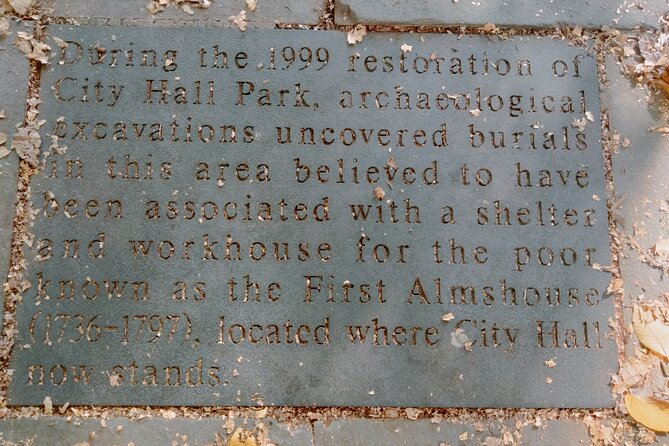
Stop 8 in City Hall Park: the first almshouse, Bellevue Hospital, and Lincoln’s funeral
Your finale is City Hall Park, where you visit the site of the first NYC almshouse. From there, the tour connects the dots to stories related to Bellevue Hospital, embalming, President Lincoln’s funeral, and even excavating the dead.
This is a powerful closing sequence because it blends civic care with the hard realities of mass death. Almshouses and hospitals weren’t only for charity. They were part of the city’s system for dealing with people society considered vulnerable or unwanted.
The mention of Lincoln’s funeral raises the stakes. You’re not only learning about anonymous deaths, you’re seeing how national events affected the city’s handling of bodies and public ritual.
By the time you finish near Broadway and Chambers St, you’ll likely feel the city differently. Not heavier in a scary way, just more aware of what sits under your feet.
The guide vibe: humor, questions, and a non-paranormal tone
The best part of this tour is how it’s delivered. The tone is often described as fun, personable, and humorous, with a guide who stays open to questions and adds asides.
It also helps that the tour is not built around ghost stories. You’re getting factual explanations about who, how, and why, in an historical and social context. That approach makes it accessible even if you usually avoid macabre themes.
With a max of 15 people, it feels manageable. You’re not waiting for the group to catch up every two minutes, and the guide can actually steer conversations rather than just read a script.
If you like thoughtful humor and you prefer real history over spooky theater, you’re in the right place.
Who should book this Twilight Tour (and who should skip it)
You should book if you want a Lower Manhattan walk that changes how you see the icons. This is ideal for solo travelers, couples, and anyone who likes cultural history with a human lens.
It’s also a strong pick if you are interested in how death care differs across groups, including Indigenous communities, Catholic traditions, immigrant populations, and civic institutions.
You might skip if you want a purely scenic sunset stroll, or if you’re uncomfortable with death as a topic. This tour deals with epidemics, prisons, burials, and excavating remains, even when the tone is light.
Should you book Death in New York (Lower Manhattan)?
I think this tour is a smart buy if you like New York stories that connect places to systems. The route is tight, the stops are mostly free-access, and the timing at twilight makes it feel calm enough to actually listen.
If you have one evening free and you want more than the usual skyline photos, book it. Wear shoes for night walking and come ready to learn how a city handles death in public.
If you are looking for paranormal thrills, this will not deliver that. But if you want the real, often surprising history of burial and memorial in Lower Manhattan, this is a strong choice.
FAQ
How much does the Twilight Tour: Death in New York cost?
It costs $36.00 per person.
How long is the tour?
The duration is approximately 1 hour 45 minutes.
Where does the tour start and end?
The tour starts at Whitehall Terminal 4, 4 Whitehall St, New York, NY 10004 and ends at City Hall Park at Broadway and Chambers St, New York, NY 10007.
What time does the tour run?
The start time is 7:00 pm.
How big is the group?
The tour has a maximum of 15 travelers.
Is the tour in English, and do I get a ticket on my phone?
Yes, it is offered in English, and you receive a mobile ticket.
Is there free cancellation?
Yes. You can cancel for a full refund up to 24 hours in advance of the experience start time.
More Tours in New York City




More Tour Reviews in New York City
Not for you? Here's more nearby things to do in New York City we have reviewed











More Manhattan Tours to consider.
 ★ 4.7Manhattan Helicopter TourTickets from $2997,076 traveller reviews
 ★ 4.8Manhattan Sightseeing Helicopter TourTickets from $2995,826 traveller reviews
 ★ 3.0JFK to Manhattan: One Way Shared Arrival TransferTickets from $313,687 traveller reviews
 ★ 4.5Circle Line: 2.5hr – Complete Manhattan Island CruiseTickets from $343,488 traveller reviews
 ★ 4.6From Manhattan: 4-Hour Dyker Heights Holiday Lights Bus TourTickets from $632,426 traveller reviews
 ★ 3.5Manhattan to JFK: One Way Shared Departure TransferTickets from $312,030 traveller reviews
 ★ 4.5The Manhattan Helicopter Tour of New YorkTickets from $2361,842 traveller reviews
 ★ 3.5Private Transfer from Manhattan to NYC Airports (JFK/EWR/LGA)Tickets from $361,683 traveller reviews
More useful New York routes