
Review · NEW YORK CITY TOURS
Oppenheimer in New York: Upper West Side Walking Tour
Atomic age stories start on quiet sidewalks. This 2.5-hour walking tour connects J. Robert Oppenheimer to the people, ideas, and places around the Upper West Side and Riverside Drive, ending near Columbia University. I like the small-group size (capped low teens) because the pace stays friendly and the guide, Krombie, can explain connections without rushing. I also love that it focuses on real neighborhoods and real names, including a stop at the place where Oppenheimer was born, not just big-picture museum talking.
Two other things make it feel worth the time. First, it’s packed into short stops where you’re getting a focused story at each address, so you’re not stuck with long stretches of filler. Second, the tour uses moral and political context as part of the science conversation, including a thoughtful stop connected to cause and effect. The one possible drawback to plan for: it’s still a walking tour with a moderate fitness level and a tight schedule, so if you want long sightseeing pauses, you’ll need to use the brief stop times to ask questions.
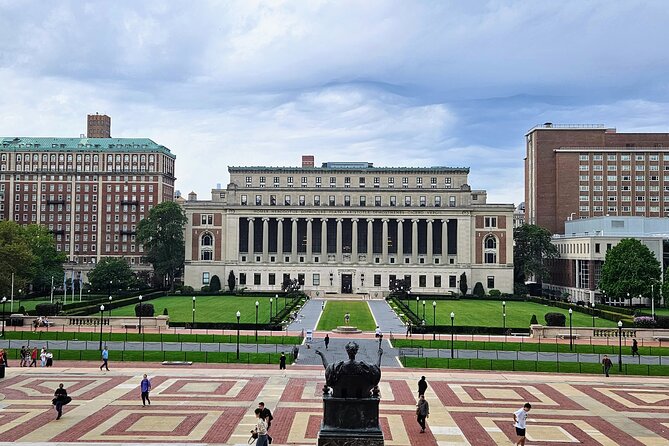
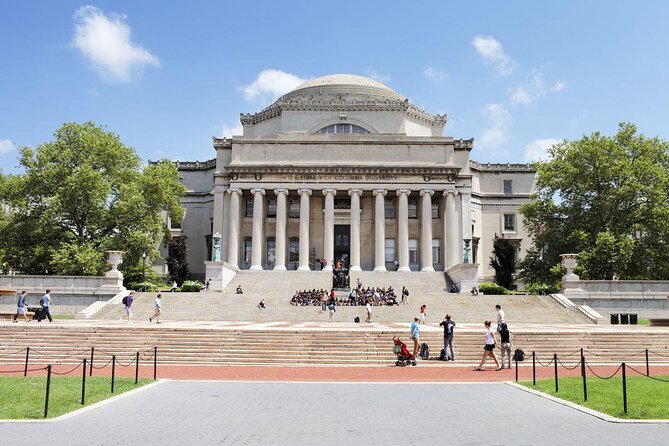
You’ll meet at 94 Corner Cafe on Broadway at 1:00 pm, and you’ll finish at Columbia University Plaza (116th and Broadway). You’ll get a mobile ticket, the tour is offered in English, and service animals are allowed, which keeps it practical for many visitors.
Key Highlights You’ll Feel Right Away
- Oppenheimer’s birth location as an anchor point for the entire story
- Ella Oppenheimer’s premarital home to explain immigrant ancestry and family context
- Ethical Culture education links through Edwin R. A. Seligman’s former home
- Riverside Drive realism, including the Soldiers’ and Sailors Monument and nearby childhood surroundings
- New Deal-era thinking at the Master Apartments, tied to ideologies that shaped a young Oppenheimer
- A cause-and-effect discussion at the New York Buddhist Church’s Shinran Statue
From 94 Corner Cafe to Columbia University Plaza: How the Route Works
The tour runs about 2 hours 30 minutes and stays in two areas you can actually picture: the Upper West Side and nearby Riverside Drive. Starting at 94 Corner Cafe on Broadway makes it easy to find, and ending at Columbia University Plaza puts you in a good spot to keep exploring after. The fact that it’s capped to a small group matters more than you might expect. With a maximum of 15 people (and a tour feature that caps at 13), Krombie can keep the conversation moving, not turning into a lecture you can’t interact with.
The pace is also built for attention. Each stop is short, often around 10 to 15 minutes, and all of them are tied to a specific theme: family background, education, neighborhood influences, New Deal thinking, and the wider moral questions around the atomic bomb. Admission at each stop is free, so you’re not spending your limited time standing in lines or paying extra. You should still wear comfortable walking shoes, because the value here comes from moving through the streets where the story took shape.
You can also read our reviews of more walking tours in New York City


Why Oppenheimer’s Upper West Side Life Story Feels Different
Most Oppenheimer coverage leans heavy on laboratories, politics, and the final choices that came with wartime science. This tour does something smarter with its geography. It starts with the private and social side: parents, education, and the neighborhoods and institutions that shaped early beliefs. Then it links those influences forward, so the Manhattan Project era doesn’t appear out of nowhere.
What makes it work for me is how it connects science to human reasoning. You get discussions that are explicitly about ancestry, schooling, political ideology, and moral thinking, not just dates and names. That approach helps you see Oppenheimer as a product of a place and a period, including connections to other major figures in 20th-century thought.
And yes, the tour also keeps an emotional edge. One of the stop themes points toward a darker side of Riverside Drive, which is a reminder that an elegant city street can still hold complicated history. It’s not just heritage sightseeing. It’s a story with tension.
Stop 1: Ella Oppenheimer’s Premarital Home and Immigrant Roots
Your first real narrative anchor is a premarital home connected to Ella Oppenheimer, Robert Oppenheimer’s mother. This isn’t a random starting point. It sets the tone by focusing on immigrant ancestry and the family background behind the future physicist.
Even if you already know the big headlines, this kind of opening matters. It trains you to notice how identity forms before career. On the sidewalk, you’re being asked to connect a personal origin story to later thinking, which is often where history lessons get skipped. The stop is short, about 10 minutes, so don’t expect a full family biography. Expect an orientation: who Ella Oppenheimer was in context, and how ancestry becomes part of a larger New York story.
Stop 2: The Place of Oppenheimer’s Birth and His Parents in New York
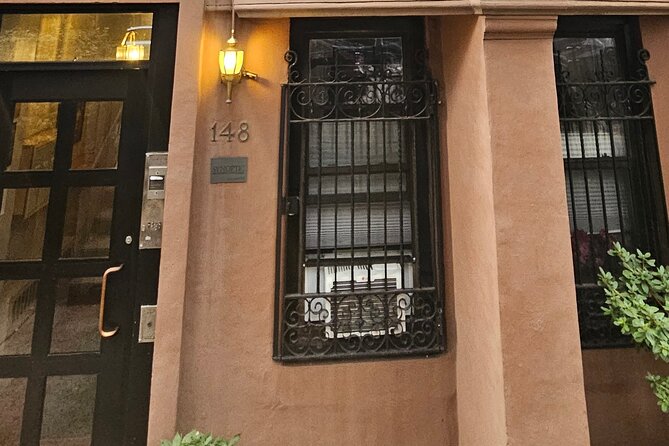
Then you move to the site of Oppenheimer’s birth, again on the Upper West Side. Here the discussion shifts from roots to roots in action, focusing on his parents’ lives in New York.
This is where you get a sense of timing and environment. Being shown the birth site is more than a trivia stop. It gives you a physical reference point so the rest of the route feels like a journey through influences, not a list of unrelated stops. With a 10-minute window, Krombie keeps it tight, so you’ll want to listen for the specific connections being drawn rather than trying to memorize everything at once.
Stop 3: Edwin R. A. Seligman and Ethical Culture School
Next is the former home of Edwin R. A. Seligman, used to discuss Oppenheimer’s education at the Ethical Culture School. This is a key piece if you want the tour to make more than one kind of sense.
Ethics-focused education is a helpful lens for understanding how a scientist might think about consequences. The tour doesn’t frame this as a dry institutional detail. It frames it as an influence on worldview. The stop is about 15 minutes, which signals it’s meant to give you a little more time to absorb the idea.
Practical tip for you: this is a good moment to pay attention to the names and the institutions being linked. Later stops build connections across education, ideology, and friendships. If you catch the early thread here, the later chapters land harder.





Stop 4: The Clarendon, William Randolph Hearst, and Childhood Neighborhood Noise
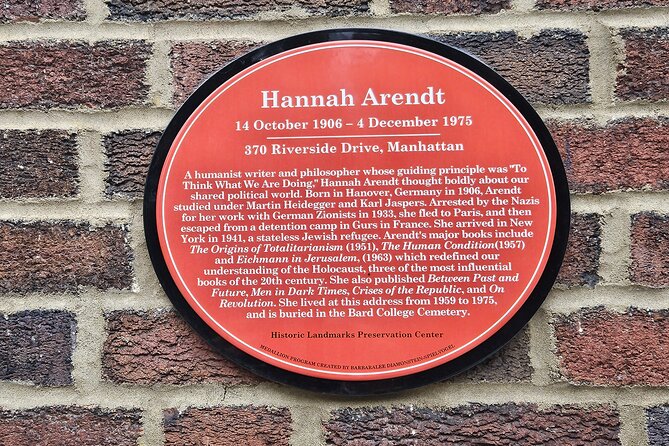
A quick shift brings you to the Clarendon, the former home of William Randolph Hearst. The tour uses it to describe the buzz of Oppenheimer’s childhood neighborhood and the ties to world leaders connected to WWII.
Hearst is a strong choice for this route because he represents power and media influence in a way that’s visible in a city. Even without stepping inside a museum, the neighborhood context can help you understand how a young person in that setting might absorb the world’s big arguments early.
This stop is around 10 minutes. That means the takeaway is less about exhaustive detail and more about atmosphere: who mattered in the local social world, and how global events were already shaping public life in daily New York.
Stops 5 and 6: Riverside Drive Homes and the Soldiers’ and Sailors Monument
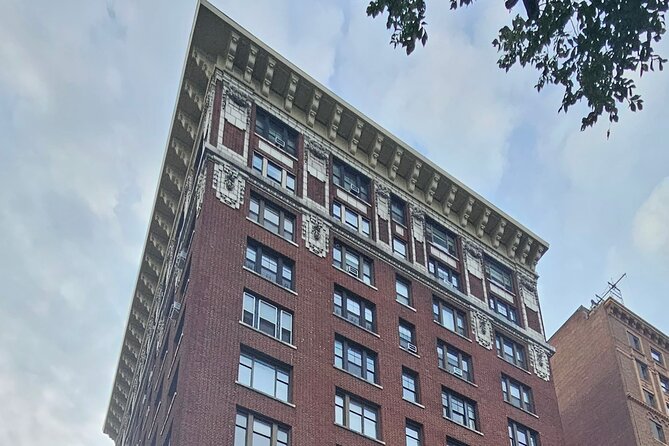
From there, you head to Riverside Drive for two linked stops. First is the childhood home of J. Robert Oppenheimer, then comes the Soldiers’ and Sailors Monument, where you’ll learn about the history of Riverside Drive aligned with his formative years.
These stops are doing a lot at once. They place Oppenheimer’s early life in a physical setting, and then they connect that setting to the civic story of the area. The monument stop is about 15 minutes, which gives you time to understand the street’s role beyond scenery.
This is also where some of the tour’s moral tension shows up, hinted through discussion of the darker side of Riverside Drive. That contrast helps the tour avoid becoming a polite stroll through historic addresses. It becomes a walk that asks you to think about how environments hold contradictions.
Stop 7: The Master Apartments, FDR, and Ideologies That Shaped Young Oppenheimer
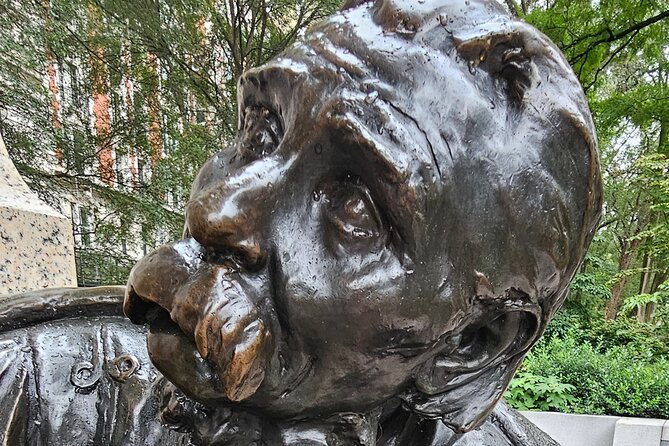
Back on Riverside Drive, you visit the Master Apartments to talk about FDR’s New Deal and the ideologies of that era that prospered and informed Oppenheimer as a young man.
This is where the tour becomes especially useful if you’re trying to understand cause and effect, not just historical sequence. The New Deal theme is about social and political ideas gaining momentum. And the tour’s framing is that those ideas didn’t sit in a textbook somewhere. They were part of what a young person encountered in the world.
The stop is about 10 minutes, so you’re not getting a full political science lecture. You are getting enough context to understand why ideology shows up later when the stakes become scientific and moral. It’s a good example of how the tour blends place, politics, and personal development.
Stop 8: New York Buddhist Church and the Shinran Statue (Cause and Effect)
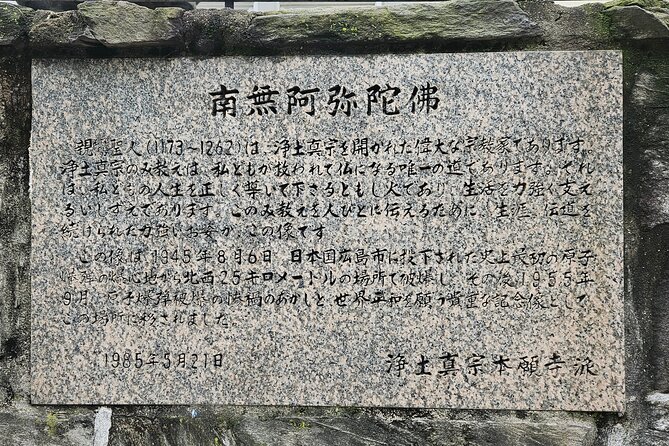
One of the most distinctive stops is at the New York Buddhist Church, where you’ll look at the Shinran Statue. The guide connects it to the cause and effect theme related to the atomic bomb.
Even if you don’t know much about Shinran, the tour’s point is clearer than it might sound. It’s not about religious tourism. It’s about moral reasoning. Atomic decisions come with consequences, and cause and effect is a way to talk about that responsibility without hiding behind technical jargon.
This stop is about 15 minutes, suggesting it’s meant to slow down slightly compared to more factual address stops. If you’re the type who likes to process big questions, this is likely to be the emotional center of the route.
Stop 9: Isidor Rabi, Nobel Science, and Friendship Threads
The final Riverside Drive stop visits the home of Isidor Rabi, described as a pioneer in 20th-century physics, a Nobel Prize winner, and a close friend of Oppenheimer.
This is the stop that gives the tour its science network shape. It reminds you that major breakthroughs usually travel through relationships, not only through individual genius. By connecting Rabi to Oppenheimer through friendship, the tour helps you see collaboration and scientific community as part of the story’s engine.
It’s about 10 minutes, so again it’s not a full biography. But it lands as a satisfying wrap-up: you start with ancestry and childhood environments, then move through education and ideology, and end with a scientific peer connection.
What You’ll Learn, and the Best Way to Enjoy the Stops
If you want the tour’s value, listen for how Krombie links each location to a theme. The strongest moments are when you can connect one stop’s idea to the next stop’s idea. For example, you’ll hear family background early, education and ethics next, then ideology and civic context, and finally moral consequence and scientific relationships.
One reason people rate this tour so highly is the way the guide’s storytelling style makes complexity feel manageable. The route never feels random. It’s built like a set of arguments you can walk through. Even if you’re not a hardcore physics fan, the emphasis on moral philosophy, political ideologies, and personal influence keeps the experience accessible.
For you, that means you can engage at two levels:
- As a history fan, focusing on the names and context.
- As a thinker, focusing on the cause-and-effect question and how ideas travel from youth to wartime decisions.
Price and Value: $42 for a Small-Group, Historian-Led Walk
At $42 per person, this tour is priced like a premium walking experience, not like a budget street stroll. The value comes from three places.
First, the group size stays small, capped at around the low teens. That makes it easier to actually hear explanations and ask questions. Second, the tour includes multiple themed stops with free admission, so you’re not paying extra at each address. Third, it’s led by a professional historian style guide, Krombie, who builds connections between people and ideas rather than just listing facts.
Two and a half hours for $42 also works well if you’re trying to use a limited travel day efficiently. It’s long enough to feel like a real experience, but short enough to fit into an afternoon without stealing your whole evening.
Who Should Book This Tour
This tour is a great fit if you:
- Like biography that connects to neighborhood context
- Want more than the headline version of Oppenheimer
- Enjoy thoughtful discussions that connect science to ethics and politics
- Prefer small groups and walking tours where you can stay engaged
It may feel less ideal if you need lots of downtime or prefer museums over outdoor stops. The tour is built for movement and quick, focused talks.
Should You Book the Oppenheimer in New York Upper West Side Walking Tour?
Yes, I’d book it if you want an intelligent, place-based way to understand Oppenheimer. The route hits the essentials: his birth site, key family context through Ella Oppenheimer, education through Ethical Culture links, childhood neighborhood power connections through William Randolph Hearst, and the Riverside Drive framing that includes civic history and era ideologies. The Shinran Statue stop adds an extra layer that makes the atomic bomb discussion feel grounded in moral questions, not just outcomes.
If you’re deciding on a walking tour during your NYC trip, this one is a strong bet. You’ll walk away with names, connections, and a clearer sense of how a person’s early world can shape later choices.
FAQ
How long is the Oppenheimer in New York Upper West Side Walking Tour?
It lasts about 2 hours 30 minutes.
Where does the tour start and end?
It starts at 94 Corner Cafe, 2518 Broadway, New York, NY 10025, and ends at Columbia University, 116th and Broadway (Columbia University Plaza).
What is the price per person?
The price is $42.00 per person.
Is the tour offered in English?
Yes, the tour is offered in English.
How big is the group?
The maximum group size is 15 travelers.
Can I get a full refund if I cancel?
Free cancellation is available. You can cancel up to 24 hours in advance for a full refund, but cancellations made less than 24 hours before the experience start time are not refunded.
More Walking Tours in New York City


More Tours in New York City




More Tour Reviews in New York City


Not for you? Here's more nearby things to do in New York City we have reviewed











More New York City Tours to consider.
 ★ 4.7SUMMIT One Vanderbilt TicketsTickets from $4751,195 traveller reviews
 ★ 4.7Empire State Building Tickets – Observatory & MuseumTickets from $4725,757 traveller reviews
 ★ 4.6Statue of Liberty & Ellis Island with FerryTickets from $1918,683 traveller reviews
 ★ 4.5American Museum of Natural History TicketTickets from $3715,447 traveller reviews
 ★ 5.0New York in One Day Guided Sightseeing TourTickets from $9913,166 traveller reviews
 ★ 4.6Museum of Modern Art (MoMA) Entry TicketTickets from $3012,540 traveller reviews
 ★ 4.7One World Observatory Skip-the-Line TicketTickets from $3012,329 traveller reviews
 ★ 4.7New York CityPASS®: Save up to 41% at 5 Top AttractionsTickets from $15410,548 traveller reviews
More useful New York routes