
Review · PRIVATE
Private Theatre District Tour
Broadway can feel like information overload. This tour is a smart way to get your bearings fast, with a local, industry-professional guide walking you past major landmarks and giving you the story behind the shows. I like how it keeps the focus on what makes live theater tick and how the buildings along the route connect to real creative work over more than 100 years. One big plus is the private format, so you can ask questions and move at your group’s pace.
The route is packed with theater icons, from the Majestic Theatre (home to The Phantom of the Opera) to Sardi’s and then the cluster of venues along 45th Street. I also like that you end at the Gershwin Theatre, Wicked’s home base, which is a great closer if you’re a fan. The main drawback to plan around: entrance to the theaters is not included, so this is a look-and-listen walk, not a ticketed inside tour.
Key Things I’d Prioritize on This Tour
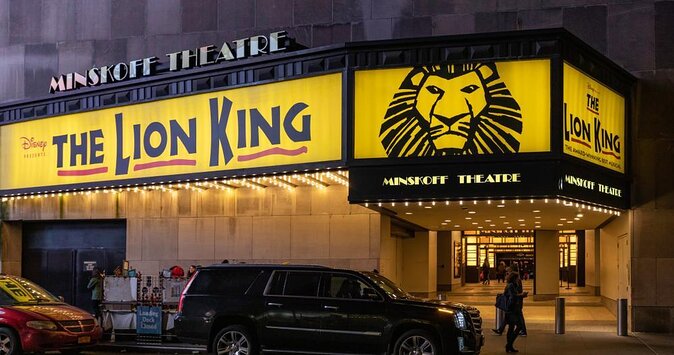
- Start at the Majestic Theatre for an immediate Broadway anchor, since it’s tied to Phantom and the Theatre District story begins right there.
- Sardi’s stop for theater-world atmosphere, a classic meeting spot for performers and fans, and the perfect pause point in the middle of the route.
- 45th Street theater lineup, where your guide points out the kind of venues that shape the Broadway mix.
- A Hamilton connection at the Richard Rogers Theatre, with context for why this block became a modern cultural magnet.
- A guided finish at the Gershwin Theatre for Wicked fans, so the last stretch has meaning even if you are not catching a show that day.
Entering The Theatre District Without Feeling Lost
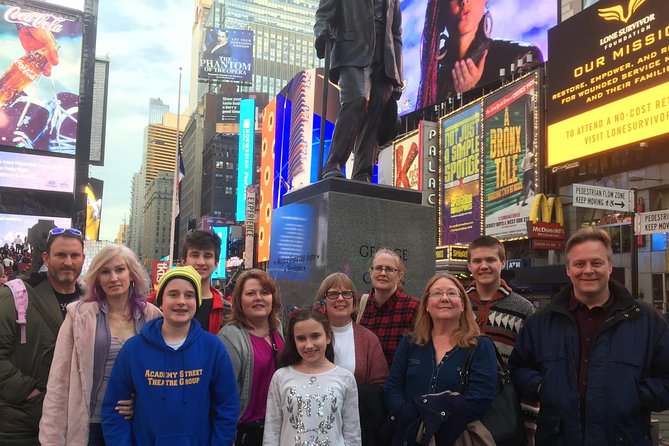
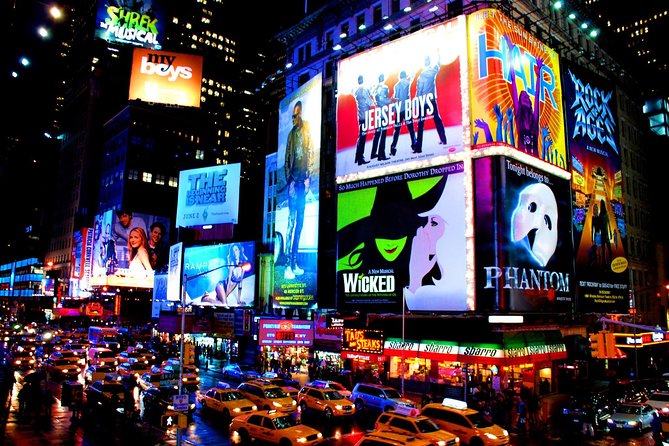
New York’s Theatre District can overwhelm you in two ways. First, there are a lot of marquees, and second, people tend to rush past them like they’re just scenery. This private walking tour gives you structure. You start with a real Broadway reference point and then move theater to theater with commentary that explains what you are looking at and why it matters.
You are on the move for about two hours, and it is intentionally designed as a slow, readable tour of a tight area. You will spend your time outside, building context around the buildings where actors, directors, producers, choreographers, and composers have shaped the art form for generations. It’s also offered in English, and you get a mobile ticket, which makes it easier to show up and get going without extra fuss.
One practical note: the tour operates in all weather conditions. Dress for the day you get, bring good shoes, and expect a decent amount of walking. If you are the type who hates standing around, this is still not a “sit-and-sip” sightseeing plan. It’s active, guided, and intentionally story-driven.
You can also read our reviews of more private tours in New York City



Majestic Theatre, Phantom Energy, and the First Big Story Drop
Your tour begins outside the Majestic Theatre at 245 W 44th St. That’s a smart choice, because it instantly places you at the start of a big Broadway headline. The Majestic is where The Phantom of the Opera is at home, and your guide starts there with what’s opened here and what makes this spot such a magnet for theater love.
From that first stop, the tone becomes clear. This is not just “here’s a building, here’s a year.” It’s more about how the theater industry works and how long-running creative traditions build on each other. You’ll get commentary on other shows that have opened at this address, plus quick context to help you understand why the Theatre District became the mecca it is today.
Then you walk down the street toward other well-known theaters. The route is paced so you can actually hear the guide. It’s a good reminder that Broadway isn’t only about the stage. It’s also about the streets that funnel fans toward curtain calls and the history embedded in the brick and marquee lighting.
Sardi’s and the Theater Industry Hangout Moment
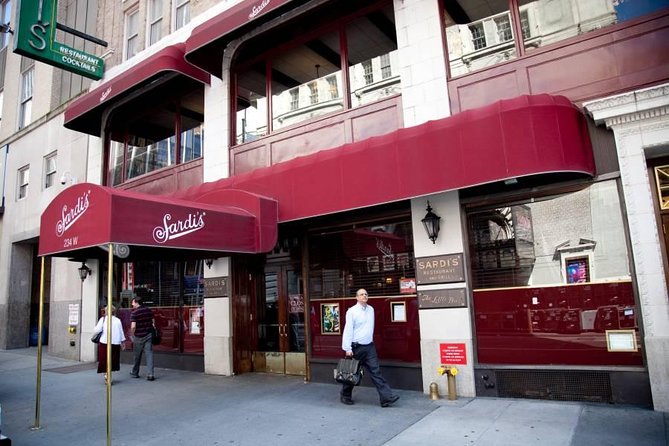
At some point early in the walk, you stop outside Sardi’s, an iconic watering hole for the theater industry and fans. This is one of my favorite parts of the itinerary because it breaks the pattern. You are not only looking at venues, you are getting a sense of where the culture gathers offstage.
A stop like this also helps you reset. After a string of facades and details, you get a place that feels like part of the same story. Your guide ties it back to the broader industry world, where performers, writers, and theater people intersect long before a show becomes a headline.
It’s also a useful moment for photos, and for stretching your legs if you need it. Since the tour ends with another major marquee area, these small pauses are not random. They help you keep your energy for the later blocks.
45th Street Venues: Booth to Music Box (One Street, Many Personalities)
The tour continues as you listen to the guide talk through the Shubert Theatre area and then turn onto 45th Street. This stretch is lined with a concentrated row of venues, and you get a true sense of Broadway’s variety just by walking.
On this portion of the route, you’ll pass and get context for theaters including:
- Booth Theatre
- Jacobs Theatre
- Golden Theatre
- Imperial Theatre
- Hirschfeld Theatre
- Music Box Theatre
Why this section works: 45th Street isn’t just a collection of addresses. It’s where you can see how Broadway evolved into different styles and audience expectations. Your guide helps you connect the dots between what kind of productions became popular and how the neighborhood developed a reputation for live entertainment that people worldwide chase.
There’s also a practical benefit here. If you only had time to do a “marquee crawl,” you might miss the patterns. This guide-led walk makes the same street feel more meaningful, because you are not trying to read it all on your own.
Marriott Marquis and the Marquis Theatre Stop: A Place With Layers
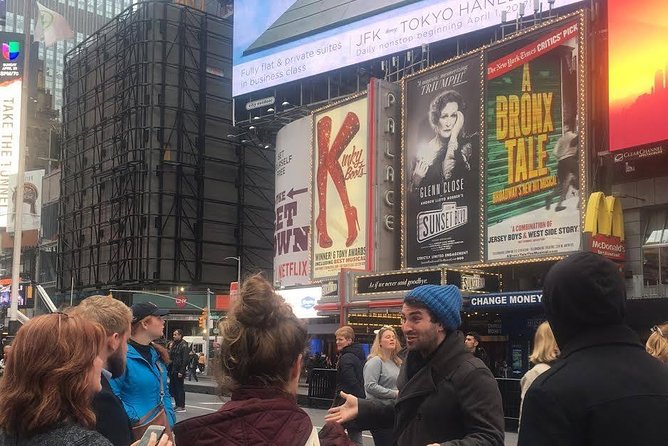
As you move along, you’ll see the Marriott Marquis Hotel. Then the tour includes a visit around the Marquis Theatre, with your guide sharing the history of the hotel and what used to stand there.
This kind of story stop matters because New York theater is not isolated from the city around it. It’s a living neighborhood. Buildings change. Space gets repurposed. The audience grows. The creative industry adapts. Learning what was there before helps you understand why the Theatre District feels both classic and constantly updated.
If you like your sightseeing with a hint of urban archaeology, this is a good moment. It gives you the sense that Broadway is a result of real planning and real change over time, not just a string of show posters.





Richard Rogers Theatre and the Hamilton Moment
Next, you head toward the Richard Rogers Theatre, which is home to smash hit Hamilton. This is one of the most instantly recognizable modern anchors on the route, and your guide uses it to talk about what happened when a cultural phenomenon took over the block.
Even if you already know the show, this stop is valuable because you are hearing it placed into the larger Broadway timeline. The guide connects the present to earlier eras of musical theater and to how new productions can still fit into a much longer tradition.
This is also where I’d expect a lot of your “oh, I didn’t realize that” moments. The Theatre District tends to feel like a loop of famous titles. A good guide breaks that loop by showing how today’s hit is linked to the way theater storytelling and production ideas have evolved.
Duffy Square, Times Square Center Energy, and How It Became a Magnet
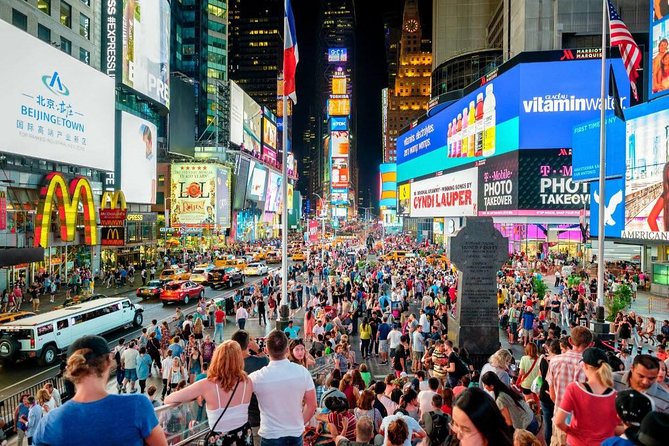
The tour continues to Duffy Square, which is centered on Times Square. Your guide shares the history of how this part of Manhattan became such a famous location.
This is a smart inclusion because Times Square can feel like pure noise if you only experience it as a tourist crush. When you hear the origin story, it becomes easier to understand why the area became what it is: a stage for the city’s image, and a funnel for visitors heading to the theaters.
You keep walking past more theaters as the tour adds neighborhood context, including a bit about Hell’s Kitchen and a short look at the Off-Broadway scene. That matters because Broadway is only one slice of New York theater life. Off-Broadway is where a lot of creative experiments and smaller-scale storytelling live, and you get just enough to understand why people care about both worlds.
If you’re planning to see any theater later in your trip, this section helps you choose what you’re in the mood for. Broadway can feel big and glossy. Off-Broadway can feel sharper and more intimate. After this walk, you’ll be better at describing what you want to watch next.
Ending at the Gershwin Theatre: Wicked Fans Get a Proper Finale
The tour ends outside the Gershwin Theatre at 222 W 51st St. That is the home of Wicked, so the finish gives the walk a clear emotional payoff if you are a fan.
Ending here is also practical. You are in the heart of the same theater area where it is easy to continue your evening plans. You can pair this with dinner nearby, or use the last minutes to take a longer look at the marquee you probably passed earlier without fully understanding the background.
The guide’s final stretch is designed to tie the route together. You started with a classic icon, then moved through the theater cluster streets, then closed near another major contemporary headline. That “bookends” feel keeps it from turning into a random list of stops.
Price and Value: Is $80 Per Person Worth It?
At $80 per person for about two hours, this tour isn’t a budget stroll. But private tours in New York cost money, and theater knowledge costs time. What makes it feel more reasonable is the way the guide uses that time: you’re getting an industry-professional perspective, you’re getting a tight route in a compressed area, and you’re getting context that you usually would not learn from just reading plaques.
Also, it’s explicitly private. You are not blending into a crowd where you can barely hear the story. That private element matters on this type of tour, because the difference between hearing the guide and missing key details is what makes the walking time feel worth it.
Here’s the tradeoff to understand up front: you do not get theater entrance. Backstage and lobby access is not guaranteed. So you are paying for guided storytelling and location context, not for additional experiences inside venues.
If you are someone who wants to see everything with minimal talking, this might feel like too much commentary. If you love theater culture and you want the “how did we get here” explanation, it is a strong value.
What Guides Like Lucas and Patrick Add to the Experience
The best part of this kind of tour is usually the person doing the talking. In the feedback for this experience, guides named Lucas and Patrick stand out for exactly the qualities you want in a Broadway guide.
Lucas is praised for being very knowledgeable about Broadway theaters and for making the whole walk feel memorable. Patrick gets extra credit for storytelling, for weaving in theater anecdotes with the facts, and for going above and beyond. That matches what you should look for when you book: clear voice, good pacing, and a guide who can connect the buildings to the human work behind them.
You can also take a small hint from the review pattern. People loved the blend of historical background plus the kind of insider vibes you only get when someone truly cares about theater. When a guide clearly loves the subject, your two hours feel faster.
Planning Tips So You Don’t Waste Your Two Hours
A theater district walk works best when you treat it like a timed route, not casual strolling.
Here’s how I’d plan around it:
- Wear shoes you can walk in for a while, since the tour notes a decent amount of walking.
- Check what time you start, since the day’s weather affects comfort and visibility, and the tour operates in all weather conditions.
- Arrive a little early at the Majestic Theatre, so you’re not stressed when you should be listening.
- If you plan to see a show, use the tour as a way to decide what to prioritize. You’ll have a clearer sense of what each venue means.
One more practical detail: this experience is often booked about 14 days in advance on average. If your trip is short, book early rather than waiting for last-minute theatre excitement.
Who This Tour Is Best For
This tour fits best when you want a guided pass through the Theatre District with meaning.
It’s a great choice if:
- you love musicals and want context beyond the stage
- you want to understand how Broadway evolved over time
- you enjoy walking tours that include real storytelling
- you’re traveling with a theater fan, including kids who can get pulled into the history and themes
It might be less ideal if:
- you hate walking tours and want transportation included
- you expect guaranteed inside access to theaters
- you’re mainly looking to see the buildings and skip the explanations
Kids under 18 must be accompanied by an adult at least 21 years of age, so plan accordingly if you’re bringing family.
Should You Book This Private Theatre District Tour?
I’d book it if you want Broadway context without spending your whole day bouncing between ticket lines and museum-style reading. The private format, the industry-professional guide, and the tight two-hour route from the Majestic to the Gershwin make it a practical way to get theater literacy fast.
I would hesitate if you expect to enter multiple theaters, hunt for backstage access, or you need a fully sedentary sightseeing plan. This is an outside walking tour with smart commentary, not a ticketed inside circuit.
FAQ
How long is the Private Theatre District Tour?
It runs for about 2 hours.
Where does the tour start and end?
It starts outside the Majestic Theatre at 245 W 44th St, New York, NY 10036. It ends outside the Gershwin Theatre at 222 W 51st St, New York, NY 10019.
Is the tour in English?
Yes, it is offered in English.
Is admission to the theaters included?
No. Entrance to the theatres is not included.
Do I get an audio guide?
No audio guide is included.
What should I wear or bring since it includes walking?
The tour includes a decent amount of walking, so wear appropriate shoes. It operates in all weather conditions, so dress appropriately for the day.
What happens if the tour is canceled due to weather?
If it is canceled because of dangerous weather, you are offered the option of an alternative tour date or a full refund. You can also cancel for a full refund up to 24 hours before the experience starts.
More Private Tours in New York City



More Tours in New York City



More Tour Reviews in New York City



Not for you? Here's more nearby things to do in New York City we have reviewed










More Private to consider.
 ★ 5.0Private Central Park Pedicab TourTickets from $386,981 traveller reviews
 ★ 3.5Private Transfer from Manhattan to NYC Airports (JFK/EWR/LGA)Tickets from $361,683 traveller reviews
 ★ 4.9Private Central Park Pedicab TourTickets from $401,637 traveller reviews
 ★ 4.0Carriage Ride in Central Park (VIP – PRIVATE) Since 1964™Tickets from $141,074 traveller reviews
 ★ 4.9Private Central Park Horse Carriage Ride with GuideTickets from $13790 traveller reviews
 ★ 4.7JFK Airport to Manhattan Private Transfer Up to 5paxTickets from $103786 traveller reviews
 ★ 4.6Private Walking Tour with a LocalTickets from $55771 traveller reviews
 ★ 5.0Private Statue of Liberty and Ellis Island TourTickets from $139656 traveller reviews