
Review · CENTRAL PARK TOURS
Official Private New York City Central Park Horse Carriage Ride Since 1965™
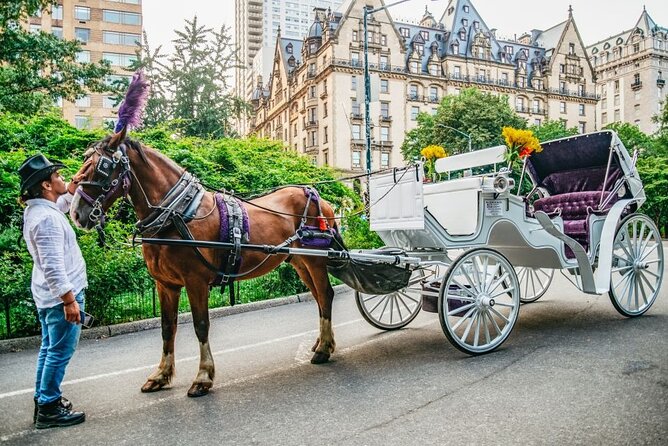
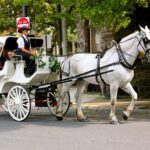
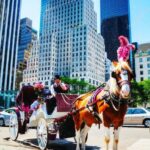
Central Park feels different when you hear hooves. This private carriage ride gives you easy access to iconic spots, plus carrot feeding and warm blankets when it is cold, but the 40 minute loop can feel a bit short if you are comparing by the hour.
I like that the carriage size stays small, fitting up to four adults, so your group can actually talk, take photos, and soak it in. A possible drawback to plan around, especially in winter, is that the ride depends on good weather.
In practice, you will start at Central Park South and 7th Avenue and return there, with the driver guiding you through the park’s most recognizable scenes.
Key highlights to know before you go
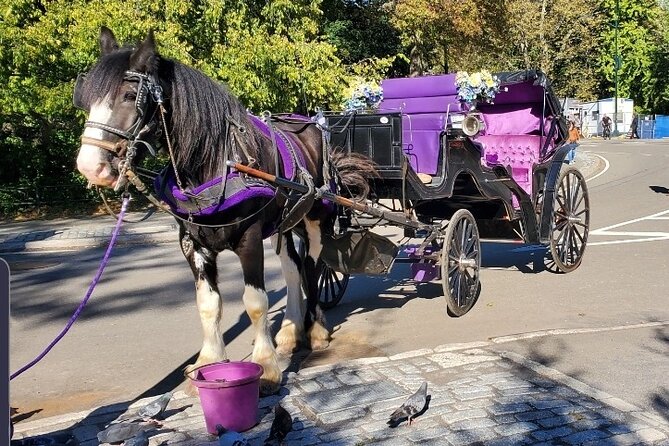
- Private group comfort with room for up to 4 adults (or 3 adults and 2 kids under 12)
- Carrot feeding for your horse (included) plus a calmer, hands-on moment
- Warm blankets provided in colder weather
- Planned photo stops, including a walk-up chance at Bethesda Fountain and Cherry Hill
- A tight route through famous landmarks, from the Carousel to Loeb Boathouse
- Driver-led storytelling and pictures, with help getting good group shots
A slow, smart way to see Central Park’s biggest movie moments
A horse carriage is a funny kind of time machine. It turns Central Park from something you rush through into something you can actually look at, from the first turn near Central Park South to the final return to your starting spot.
What makes this one work is the balance of movement and pauses. You are not stuck watching a screen of facts, you are rolling through the park, stopping for photos, and getting a driver’s story in between the sights.
You also get practical creature comforts built in. Carrot feeding is included, and in winter you get warm blankets. That combination is why so many people rate this ride so highly.
You can also read our reviews of more city tours in New York City

Price and group size: is $148 per group really good value?
The price is $148 per group for up to 4 people, and that matters because Central Park is big. A carriage is not trying to cover every corner. It is trying to connect you with the park’s most recognizable areas without you needing to map, hike, or constantly stop for directions.
For your money, you also get more than a ride. The cost covers all fees and taxes, you get a carrot for the horse, and your driver will take memorable pictures of your group. In winter, the blankets are included, not an optional add-on.
Here is the honest tradeoff. Since the ride is about 40 minutes, it is not a long sightseeing tour. If you expect an hour-plus of wandering, you may feel the time limit. That is the main value question to weigh.
Where you meet and what the ride feels like in real life
You meet at Central Park South and 7th Avenue, and the tour ends back at the same meeting point. That simple start and finish is underrated. It saves you from the stress of figuring out how to get across the park at the end when you are tired, hungry, or just done with crowds.
Your carriage fits up to four adults max, or three adults with two children under 12. That size is key because it keeps the experience from becoming a squeeze. You will still want to be ready for a slower pace, because this is not a sprint.
It is also offered in English, so you can relax into the storytelling. A mobile ticket is part of the setup, which is convenient when you are juggling subway navigation and park entrances.
Winter comfort: blankets, photo pacing, and staying warm without fuss
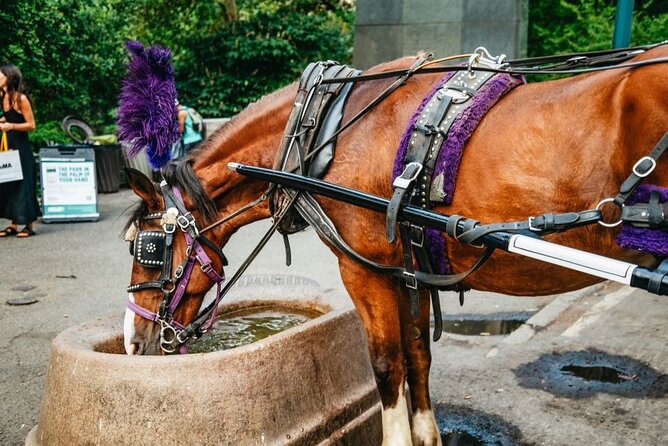
This is the practical reason to consider a cold-season ride. Warm blankets are provided, and people consistently mention how heavy and warm they feel in winter. You do not need to guess the cold level or buy last-minute gear.
Photo timing is another comfort factor. The driver will stop for picture opportunities, including short walk times at certain landmarks. In winter, those short walks can actually be enjoyable because you get brief stretches away from the carriage, without getting exposed for too long.
Also, the pace tends to be calm. Even if it is windy, you will feel like you are moving through the park with a buffer, not standing in one spot for ages.
The famous carousel area and why it sets the tone fast
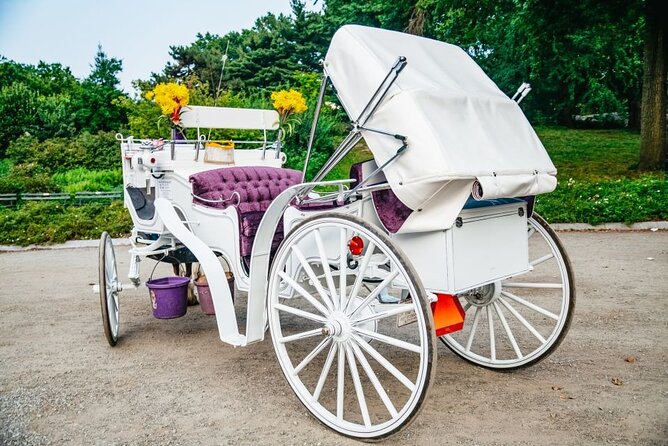
As you head deeper into the central park vibe, you pass the carousel area, the kind of scene that instantly looks like Central Park on postcards. The carousel itself is originally crafted in 1908, and it is one of the nation’s largest, with 57 hand-carved horses and two decorative chariots.
This stop matters because it gives you an immediate sense of the park’s character. You are not starting with just generic greenery. You are starting with something built for wonder, then moving into the park’s bigger landmarks.
If you are traveling with kids, this kind of recognizable, playful scene usually lands well, even if you are not riding the carousel itself. It also helps adults, because it makes the park feel staged in the best way, like there is a story behind the scenery.
You can also read our reviews of more private tours in New York City

From Wollman Rink to the checker tables: sights that feel like pop culture
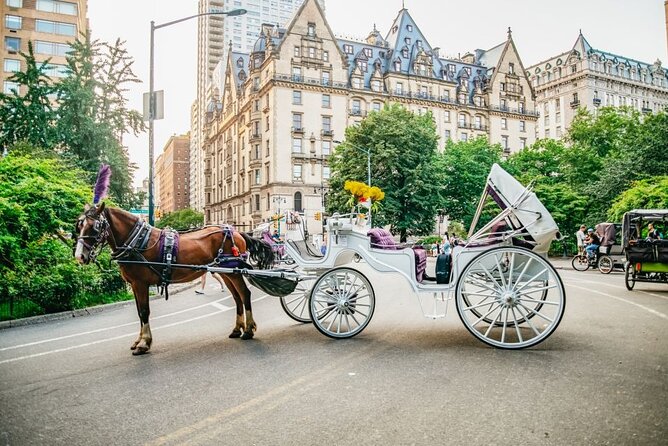
You will also see Wollman Rink, which is the largest public ice rink in NYC. It is famous for appearing in movies like Home Alone 2, Limitless, and Serendipity, so it is one of those places where people start pointing before the driver even finishes the fact drop.
Another small detail worth enjoying is the setup around the rustic pagoda and its shaded tables. There are 24 tables, and they are a fun spot for a checkers game any time of year. Even if you are not playing, the shade and the park picnic energy are real.
This is a good example of how the ride feels different from walking. You get a guided path through the park’s most recognizable “you’ve seen this before” moments, without having to hunt for them.
The Dairy and the Mall promenade: the park’s story gets specific
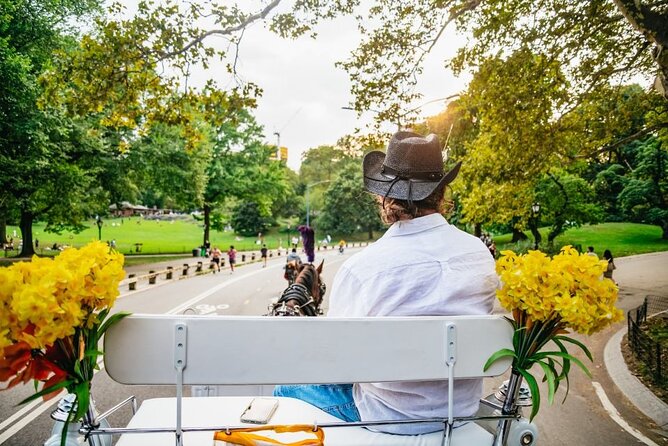
One of my favorite parts of this route is how it uses the park to explain New York. You pass the Dairy, which you can think of as a visitor center today, but it has an older job story behind it. It was built as a response to a time when fresh milk for traveling families was a need, and public health concerns had put dairy under suspicion.
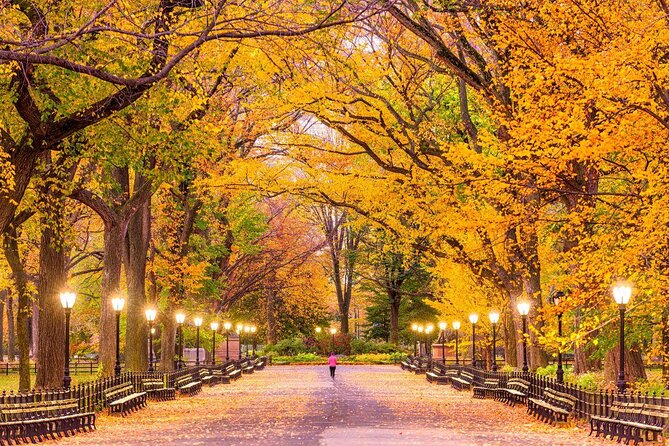
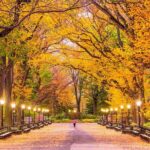
Then you move toward the Mall, Central Park’s formal promenade. You get a quarter-mile walk-feel experience through the famous elm corridor. The American elms create that interlocking canopy effect, with sunlight trickling to the ground like stained glass.
This is where the ride gives you more than thumbnails. The scenery makes more sense once someone explains what the designers were aiming for and why this promenade is so important within the park.
Balto and Rumsey Playfield: the charming, less obvious stops
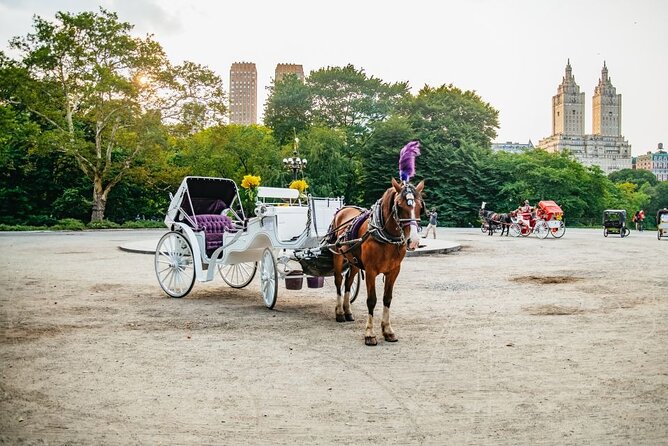
Not every carriage route hits the human-scale details, but this one does. You see Balto, the bronze sled dog statue that is a beloved fixture in Central Park. It is the kind of stop where a quick look turns into a smile, especially if you have kids or if you are a classic-snow-dog fan.
Then you head toward Rumsey Playfield, a spacious outdoor entertainment venue just off the eastern edge of the Mall. It is a cultural stage for music, dance, spoken word, and film. Even when events are not happening, it still has that open-air “something always goes on here” feeling.
These stops work because they break the sightseeing pattern. You are not only collecting fountains and skylines. You are getting the park’s everyday energy.
The Loeb Boathouse area and the model-boat pond views
Central Park’s water features are a big deal, and this ride touches them in two interesting ways.
First, you pass the ornamental pond that began life as a reflecting pool for a glass conservatory plan that never happened. In the tradition of Parisian parks, it became a model boat playground, and it is still one of the park’s most beloved children’s attractions.
Then you reach Loeb Boathouse, known as the launch point for rowboats on Central Park Lake. From there, you can also take an authentic Venetian gondola ride, or grab a meal at the Lakeside Restaurant. If you want something simpler, the Boathouse Express Cafe is the casual option, and in winter there is even a fireplace for warming up.
Even if you do not stop to eat or ride something at the boathouse, the sights alone are worth it. You get classic park imagery that feels like a scene from a movie, which is exactly what Central Park sells at its best.
Bethesda Fountain and Cherry Hill: when the ride turns into a real photo break
Two stops get special walk time, and that is one reason this tour earns its high ratings.
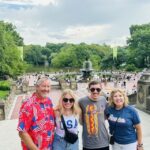
At Bethesda Fountain, the carriage stops close enough that you can take a short walk and get pictures. Bethesda is enormous at 26 feet high with a 96 feet diameter, designed by sculptor Emma Stebbins. You will also hear what the angel symbolism means, including references tied to fresh water, healing, purity, and peace.
Then there is Cherry Hill, also known as Friends Fountain. You get another short walk to grab memorable pictures, and it is also a place with benches and shade. People often use it as a relax-and-picnic spot, and you get views that include rowboats and nearby Bow Bridge.
If you care about photos, these are the stops where you will feel the most payoff. You are not just snapping from a moving carriage. You get a chance to reposition, frame, and breathe.
The Lake area, Sheep Meadow, and that long-running Central Park charm
As you roll past the Lake, you hear about how Central Park was designed for seasonal fun. The designers imagined the Lake would support ice skating in winter and boating in summer. Long ago, ice skating was a rare pastime for New Yorkers, and it drew crowds quickly. Even though skating on the Lake is a thing of the past, warm-weather boating traditions like rowboats and gondolas have lasted for over 150 years.
Another highlight along the route is Sheep Meadow. This part of the park has an unusual construction story. It was once rocky swampland, and transforming it took blasting rock and adding several feet of soil. Then, from 1864 to 1934, sheep grazed here during the day, going back to the Sheepfold at night, in what is now Tavern on the Green.
If you like your travel experiences grounded in something human, these stories make the park feel less like scenery and more like a living project that kept changing with New Yorkers’ needs.
A film-and-fact stop: Ghostbusters, Pinebank Arch, and the skyline view
Central Park is a set as much as it is a park, and this route leans into that.
You pass a building associated with the 1984 film Ghostbusters, where the film’s plot ties strongly to the location. It is the kind of stop that makes people go, I know that spot.
You also see Pinebank Arch, one of the five remaining original cast-iron bridges in Central Park. It overlooks the bridle path 11 feet below, and in winter, when trees are bare, you can look for views of the midtown skyline. Pinebank Arch is also famous because the movie Elf was filmed there.
These stops are a good reminder to slow down. When you connect the real architecture to the movies you recognize, you start seeing more detail, not less.
Columbus Circle and Heckscher Playground: big city edges and family energy
Near the tour’s bigger city connection, you reach Columbus Circle, which stands out for its central monument. It is also notable for the subway connections underneath and the clustered buildings around it, so you see how the park sits inside the city grid rather than floating away from it.
Then you pass Heckscher Playground, the oldest playground in Central Park and also the largest, at almost two acres. It has the usual playground equipment plus a water fixture and giant rocks for climbing. This stop gives families a clear sense of where kids can burn energy after the ride.
Animal welfare and allergy reality check
This company provides a fully licensed and regulated horse-drawn carriage service approved to operate in the park under NYPD oversight, with a focus on safety and animal welfare.
Still, you should take the warning seriously if you have a serious horse allergy. This ride is not recommended for that situation, since you will be close to the horses for the carrot feeding moment.
If you are comfortable around animals, you will probably love the included interaction. Carrot feeding is not just a gimmick. It is a short, memorable chance to connect with the horse while staying part of the group experience.
What to bring, plus how to get the best photos
Pack for short walks and waiting. Wear layers, even if it is sunny, since winter can switch fast. If it is cold, treat the blanket as great bonus gear, not a substitute for gloves if you get chilly hands.
Bring water. A simple tip that shows up in good days is to have something to sip, especially if you plan to keep walking in the park after the carriage ride.
For photos, plan to be ready at the stops where you get short walk time. At Bethesda Fountain and Cherry Hill, you will have a better chance to frame, not just shoot while rolling.
Also, if you care about images, lean into the driver help. The driver will take memorable pictures of your group, which is a relief if you are traveling with a friend who cannot be trusted to hold a camera steady.
Who this ride is best for, and who should skip it
This private carriage ride is a strong fit for couples who want romance without planning every turn. It also works well for families, especially when you want a manageable, kid-friendly route with moments like carrot feeding and easy photo stops.
It is also great for anyone who wants to see Central Park’s most iconic scenes without committing to a full day of walking and navigating.
You might skip it if you want a long marathon through the park, or if you are price-sensitive and your goal is only to view nature for hours. At $148 per group for about 40 minutes, it is a premium way to see the highlights, not a budget sightseeing hack.
Should you book this Central Park private carriage ride?
If your ideal Central Park day includes recognizable icons, planned photo pauses, and a calm ride with included carrot feeding and winter blankets, I think this is a smart booking. The private size keeps it comfortable, and the route focuses on what most people come to Central Park for.
Book it especially if you are traveling in winter or shoulder season and want a warm, guided way to see the park without freezing through your phone screen. Just go in knowing the time is about 40 minutes, so plan to enjoy it as a highlight reel, not a full-day replacement.
FAQ
How many people fit in the carriage?
The carriage can fit up to four adults max. It can also fit three adults and two kids under 12.
What is included in the price?
All fees and taxes are included. You also get a carrot for the horse, warm blankets in winter time, and the driver will take memorable pictures of your group. The tour is private for your group.
Is gratuity included?
No. Gratuity is not included, and you can tip cash or card.
How long is the ride?
The ride is approximately 40 minutes.
What language is the tour offered in?
The tour is offered in English.
What if the weather is bad?
This experience requires good weather. If it is canceled due to poor weather, you will be offered a different date or a full refund.
More Private Tours in New York City
More City Tours in New York City



More Tour Reviews in New York City


Not for you? Here's more nearby things to do in New York City we have reviewed








More Central Park Tours to consider.
 ★ 5.0Central Park Pedicab Guided ToursTickets from $387,108 traveller reviews
 ★ 5.0Private Central Park Pedicab TourTickets from $386,981 traveller reviews
 ★ 4.2Central Park Bike RentalsTickets from $92,528 traveller reviews
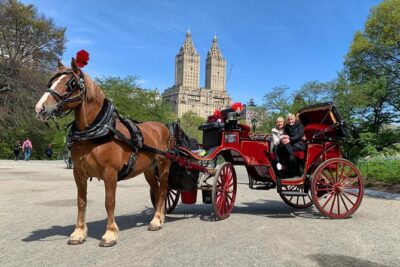 ★ 5.0Official NYC Horse Carriage Rides in Central Park since 1979 ™Tickets from $992,365 traveller reviews
 ★ 4.1Central Park Bike RentalTickets from $81,651 traveller reviews
 ★ 4.9Private Central Park Pedicab TourTickets from $401,637 traveller reviews
 ★ 4.7Central Park Bike RentalTickets from $91,509 traveller reviews
 ★ 4.0Carriage Ride in Central Park (VIP – PRIVATE) Since 1964™Tickets from $141,074 traveller reviews
More useful New York routes