
Review · CENTRAL PARK TOURS
Central Park Pedicab Tour with local Guide
Central Park feels smaller when you ride. This private Central Park pedicab tour turns a huge park into a smart, photo-friendly loop, with a local guide who points out movie locations, celebrity homes from the surrounding streets, and the park’s most recognizable corners. I love the built-in photo stops that keep you from rushing, and I also love the private, adjustable pace that lets you linger when something catches your eye. One consideration: some spots are quick exterior stops or brief pauses, so if you expect long inside time everywhere, you may feel a little time-pressed.
What makes this one work in real life is the comfort layer. You get blankets for cold weather and a cover if it rains, and guides help you get your shots so you are not stuck playing tripod roulette at every bridge. Names like Roman and MJ show up in guide feedback as the type who keep things warm, funny, and efficient, while still explaining what you are looking at.
Key highlights at a glance
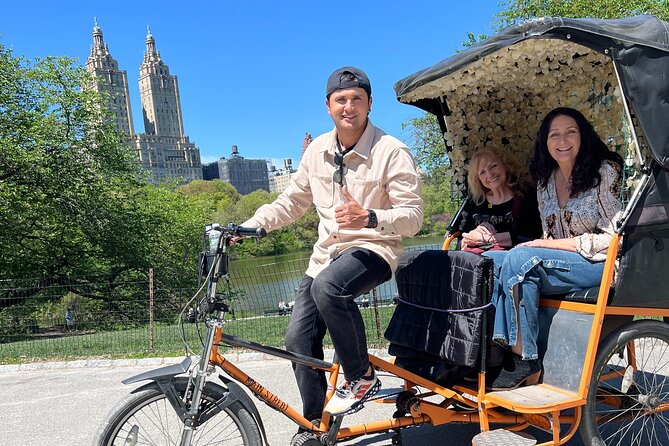
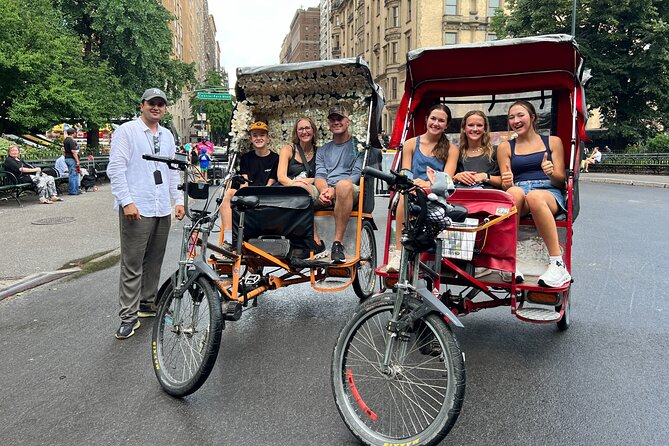
- Private pedicab, just your group, so you control the pace
- Frequent photo stops at the park’s most recognizable landmarks
- Movie location stories plus real park history behind the scenes
- Warmth on board with blankets and rain cover when needed
- Short passes and quick climbs for skyline views, without the full hike effort
Why a private Central Park pedicab beats trying to do it all on foot
Central Park is famous for making visitors feel like they should walk every inch. That is a nice idea until your legs start negotiating. A pedicab is the practical middle path. You cover ground fast, you still get the classic park views, and you do it in an eco-friendly way that fits the park’s vibe.
The private format matters more than you might think. When you are with a group, you lose time waiting and you end up taking photos from the wrong angles. With a private ride, you can ask for an extra minute at Bethesda Terrace or slow down at Strawberry Fields. You can also tell your guide what you care about most, history, film locations, or just the best viewpoints.
The best part for most people is that it gives you a clean orientation. After this tour, you usually feel confident going back on your own for a longer stroll, because you know where the major landmarks sit and how the park is laid out.
You can also read our reviews of more guided tours in New York City



Starting at the Sherman Monument, then building a plan around photo stops
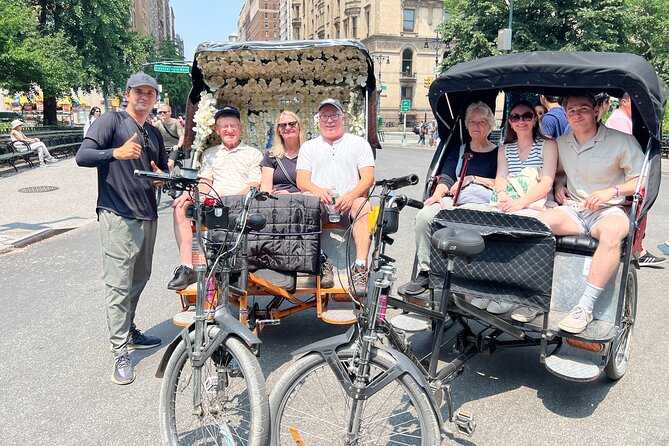
Your tour meets at the General William Tecumseh Sherman Monument near Doris C Freedman Pl. From there, you ride into the heart of Central Park with a guide who treats the route like a guided highlights reel, not a random drive.
Think of the time budget like this: you will spend less energy getting from A to B, and you will spend more energy actually looking. That makes the frequent photo stops feel worthwhile instead of interrupting the day. Your guide helps with positioning so you look good in pictures, and that sounds small until you are freezing near a famous bridge or trying to fit everyone into one frame.
Timing is also seasonal. If you visit in winter, the route can feel extra fun because Wollman Rink comes alive with skaters and skyline views. In warmer months, the park’s lawns and bridges look softer and more inviting, especially places like Sheep Meadow and Cherry Hill.
Central Park basics you will actually notice during the ride
Central Park was designed by Frederick Law Olmsted and Calvert Vaux and opened in 1858. The big idea was turning rough, swampy terrain into a true public retreat. That design philosophy shows up in how the park shifts from open views to winding paths, and why it feels like a world apart from Manhattan.
As you ride, you get the best benefit of this design. You see different kinds of scenery in a single day: formal architecture at Bethesda, calm water areas like Conservatory Water, romantic bridges such as Gapstow Bridge and Bow Bridge, and quiet pockets that feel separate from the crowds.
You also learn what to look for beyond the famous names. Your guide points out small design choices, like where the park’s straight promenade starts, or why certain structures feel like they belong there. It is not just trivia, it helps you understand why the park looks the way it does.
The cinematic core: Bethesda Fountain, Bethesda Terrace, and the sound-bounce arcade
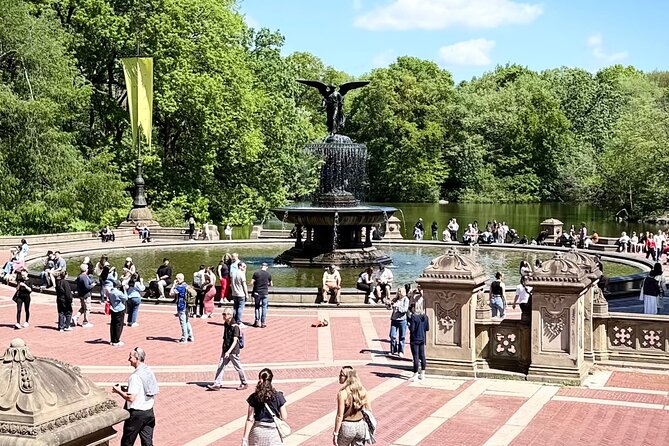
If you only catch one section of Central Park by pedicab, make it Bethesda. The ride brings you to Bethesda Fountain and the surrounding Bethesda Terrace area, often described as the heart of the park because it is the visual centerpiece.
You stop at the Angel of the Waters, with grand staircases leading up to the fountain. If you pay attention at the Terrace, you also get the acoustic arcade effect, a space musicians and artists like because the sound carries. That detail is the kind of thing you miss when you walk past without guidance.
Both Bethesda Fountain and Bethesda Terrace are tied to film and TV locations, and your guide uses those references to point out exact angles. You might connect this place to Home Alone 2, Enchanted, The Avengers, John Wick, and Gossip Girl, not because you are hunting for scenes, but because it gives you a mental map of what you are seeing.
A quick drawback: the stops are timed for photos and viewing. If you want a long sit-down moment on the stairs or to study every sculpture closely, you may need to return later on your own. Still, as an introduction, Bethesda is the best payoff.
Bridges and skyline viewpoints: Umpire Rock, Gapstow, and Bow Bridge
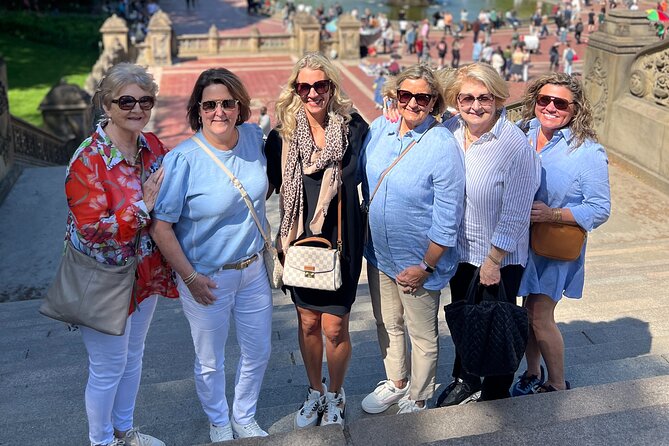
Central Park rewards your eyes, especially around its bridges. The tour includes a series of quick, high-impact photo spots where the skyline frames the park.
First up is Umpire Rock, a natural outcrop. It is not a long climb, but it gives sweeping views of Central Park South, and it is popular with kids because it feels like an adventure without being extreme. The nickname comes from how close it is to old baseball fields where umpires once stood during games. Even if you do not go higher than a few steps, it is a great place for a quick reset.
Then you hit Gapstow Bridge, one of the park’s most photographed spots, with views toward The Pond and the city behind it. In winter, it can feel especially magical with the skyline and colder light. You may recognize the vibe from films like Home Alone 2 and Cruel Intentions. Again, you are getting the angles that make photos look like movie stills.
Finally, Bow Bridge. It is a cast-iron arch that looks graceful in every season, and it is a favorite for proposals and photos. The bridge shows up in Spider-Man 3, Autumn in New York, Night at the Museum, and Manhattan, which your guide uses as an easy way to explain the location and why it looks so good on camera.



Quiet corners that feel very New York: the Carousel, chess and checkers, and a Victorian visitor spot
This tour is not only about the big Instagram names. You also get Central Park’s more playful and calm side.
You stop by the Central Park Carousel, which has delighted visitors since 1871. The current version was installed in 1951 and features 57 hand-carved horses. It has appeared in films like The Producers and The Spanish Prisoner, which is a fun way to understand why it still feels classic today.
Next comes the chess and checkers area, housed at a small stone cottage that opened in 1952. It is a quiet pause where you might find free games, and it offers a real local rhythm. This stop works well if you want your photos to include something more “park day” than “famous bridge.”
You also pass a Victorian-style cottage originally built in 1870 for milk and snacks to children. It now serves as a visitor center and gift shop, and the architecture alone makes it worth a short stop. Your guide ties it back to how the park served families in earlier decades.
The only real drawback here is that these are short stops by design. You get enough time for a look and photos, not enough for long exploring. If your idea of vacation is sitting and reading every plaque, you may want extra time on a second visit.
From water to culture: Wollman Rink, Conservatory Water, and Rumsey Playfield
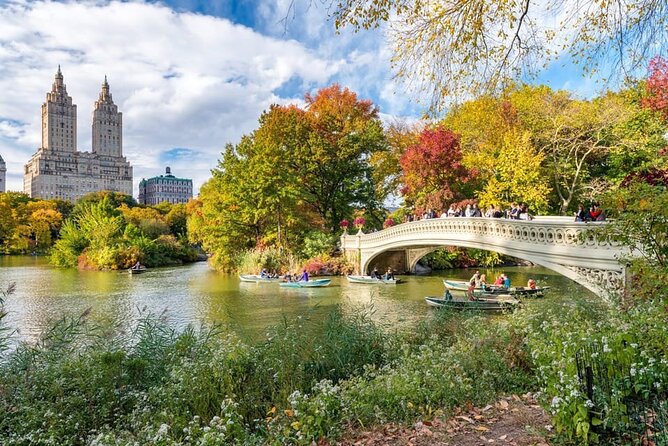
The route includes Central Park’s water and performance zones, which helps break up the day.
Wollman Rink is a big one. In winter it is filled with skaters, and the rink setting puts the Manhattan skyline in the background in a way that never feels like a generic skating rink. Films like Serendipity and Love Story are tied to this spot, and your guide often uses those references to help you spot what made it cinematic.
Then there is Conservatory Water, a reflecting pond where model sailboats glide on weekends. Nearby you will see whimsical touches like Alice in Wonderland and Hans Christian Andersen statues, and this is a family-friendly zone where photos feel light and sweet.
Rumsey Playfield is the cultural shift. It is an open-air venue known for concerts and performances, especially the SummerStage series in summer. If you happen to visit during an event period, the vibe changes quickly, but even without a show, it is useful to know where the action usually happens.
Romantic and reflective stops: Cherry Hill, Strawberry Fields, and Sheep Meadow
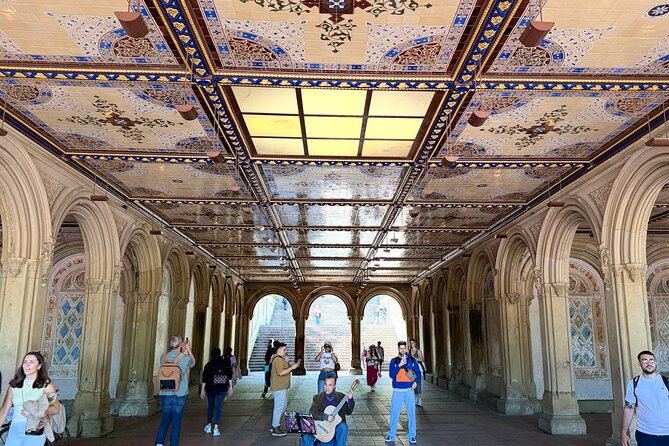
This part of the tour is where Central Park turns from landmarks into emotion.
Cherry Hill offers one of the park’s calmest lake views. In spring it is framed by cherry blossoms, but even outside peak bloom it is a strong viewpoint and a good place for quiet photos. It has appeared in movies like You’ve Got Mail and 27 Dresses, and your guide uses those connections to point out why the angle feels romantic.
Strawberry Fields is close to where John Lennon lived and tragically died. The centerpiece is the Imagine mosaic, a message of peace that people come back to year after year, leaving flowers and singing Beatles songs. It is a reflective stop, and it helps if you slow down for it rather than treating it like just another photo point.
Then Sheep Meadow, a 15-acre lawn that is one of the park’s most popular open spaces. It is built for picnics, sunbathing, reading, and general loafing, and it delivers a classic contrast between lush green and tall Manhattan buildings. Your guide may mention notable film use, like Ghostbusters and The Fisher King, which makes the meadow feel even more rooted in New York pop culture.
One nearby detail that adds context is Tavern on the Green. The building’s history connects to the old sheepfold built in 1870 by Calvert Vaux and Jacob Wrey Mould. The sheep were evicted from the sheepfold in 1934 under NYC Parks commissioner Robert Moses, and the location later went through visitor center use before reopening as a restaurant in 2014. You may not stop long enough for a full meal, but the story helps the place make sense.
Wildlife and famous dogs: the zoo pass, Balto, and why statues matter here
You get a quick stop near the Central Park Zoo, and importantly, it is pass-by rather than an admission stop. The zoo area is home to penguins, sea lions, and snow leopards, and your guide provides the history and the pop culture connections without asking you to queue or pay another ticket.
A short but memorable moment follows with Balto, the heroic Siberian Husky linked to a 1925 diphtheria outbreak in Alaska. Balto’s statue is one of the most touched statues in Central Park, and the story even inspired the animated film Balto from 1995. This stop is great for families because it hits both history and heart without feeling heavy.
The Dakota and Literary Walk: New York mood in a few careful turns
Two stops help you understand Central Park’s relationship with the city around it.
The Dakota is a world-famous building built in 1884. It is best known as John Lennon’s home and the site of his death in 1980. Architecture fans notice details quickly, and pop culture fans get that instant recognition. Your guide adds film connections like Rosemary’s Baby and Vanilla Sky, but what matters is the emotional weight and the clean view of the building’s presence on the park edge.
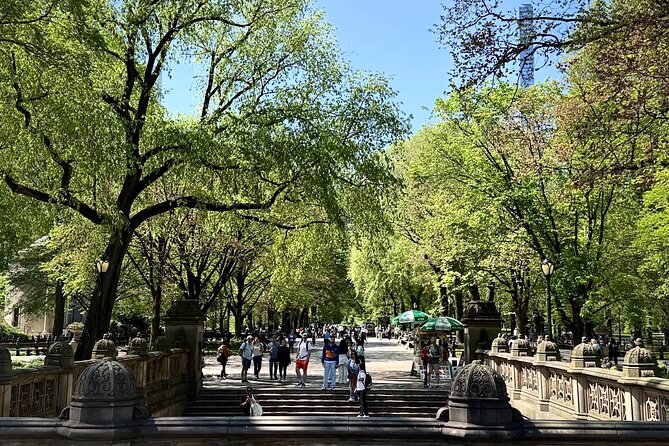
Next is Literary Walk, the only straight path in Central Park. It is a great promenade for strolling and social gatherings, lined with statues of literary figures including Shakespeare and Robert Burns. It shows up in films like Breakfast at Tiffany’s and Enchanted, so it becomes both a visual and a story stop. Your guide will point out what makes the straight layout so unusual in a park full of curves.
Two-hour add-ons if you want more than the standard highlights
Some attractions are labeled as part of the 2-hour option. If you choose the longer time, you add several iconic landmarks that feel like a bonus tour inside the tour.
You might pass the Metropolitan Museum of Art building area, including its original 1880 opening along Central Park’s eastern edge. The design connects to Calvert Vaux, and later expansions by Richard Morris Hunt and others shaped the museum into the giant it is today. Even without museum admission, it is a strong visual anchor.
Then the Jacqueline Kennedy Onassis Reservoir. It was built between 1858 and 1862 to increase receiving reservoir capacity, and the current irregular, curving shape is meant to harmonize with the park. It holds more than one billion gallons of water and once was the world’s largest man-made water body. Your guide keeps the tone light, but the scale is impressive.
Belvedere Castle is next if your timing allows. It is perched on Vista Rock, designed as a decorative folly with Gothic and Romanesque style elements, built by Calvert Vaux and Jacob Wrey Mould. The name means beautiful view, and that is exactly what you get from the observation deck area, with views toward Turtle Pond, the Great Lawn, and the Ramble.
Alice in Wonderland statue is a fun counterpoint. It was donated by George Delacorte in 1959 as a gift to children, and it sits as one of the park’s most recognizable playful icons. If you are traveling with kids, it often becomes the most satisfying photo.
Cleopatra’s Needle rounds out the history punch. It is the oldest outdoor monument in New York City, dating back more than 3,500 years. The obelisk was originally carved in Egypt, moved through Alexandria, and was later gifted to the United States, arriving in Central Park in 1881 between the Great Lawn and The Met. If you like ancient history, it is one of the most meaningful stops on the route.
The small but memorable extras: Heckscher Playground and Pinebank Arch
Two other stops can make your photos feel more personal.
Heckscher Playground is close to Central Park South between Sixth Avenue and Seventh Avenue. It is the oldest and largest of the park’s 22 playgrounds and opened in 1926. If you have kids, it is a good reminder that Central Park is not only for sightseeing, it is for everyday play.
Pinebank Arch is a hidden-by-comparison cast-iron bridge that blends into the rocky setting. It looks like it grows out of the surroundings, and its design reflects how Olmsted and Vaux prioritized harmony between architecture and nature. It is especially recognized from the holiday movie Elf from 2003, and your guide can often show you why it films so well.
How much is $55 really worth in New York terms
At $55 per person, the value depends on what you compare it to.
If you are doing this instead of trying to walk or constantly stop for ride shares between park sections, you are buying time and convenience. Central Park is large enough that a half-day can disappear quickly, especially if you want photos. With a pedicab, you get movement plus interpretation in one package.
You also get a private setup, meaning only your group participates. That is important in a city where many tours feel crowded and scripted. Add in practical comfort, blankets and rain cover, plus help with perfect pictures, and the $55 starts to feel less like a luxury and more like smart spending.
Where it may not be worth it is if you love long, unstructured wandering and you already know the park layout. If you are the type who wants to spend 3 or 4 hours on your own, a self-guided day can be cheaper. But if you want an efficient route with high payoffs per minute, this is priced like a good strategy.
Who should book this, and who might prefer something else
This tour is a great fit if you want:
- A quick orientation to Central Park’s top sights
- Plenty of photo stops without stress
- A local guide who connects history to what you are seeing
- A comfortable ride when it is cold or wet
It may not be ideal if:
- You want long museum time or extended interior visits during the ride
- You hate scheduled stops and prefer total freedom
- You only want one or two landmarks and nothing else
Families usually do well because the route includes playful stops like the Carousel and Balto, plus viewpoints like Umpire Rock that feel like an activity.
If you like film locations, you will probably enjoy the way your guide uses them. It is not random trivia, it helps you spot exact spots and remember them later.
Should you book this Central Park pedicab tour?
I think this is an easy yes for first-timers and for anyone who wants Central Park without the leg burn. The value is strongest when you want to maximize sights in limited time and when you appreciate a guide who improves your photos and keeps you comfortable with blankets.
Book it if you:
- Want a private, guided route with lots of photo stops
- Plan to visit in cooler weather and want comfort built in
- Want movie and celebrity home context around the park’s landmarks
Skip it if you:
- Want to do Central Park purely at your own pace with no planned pauses
- Plan to spend hours on museum interiors, because the tour does not include those admissions
If you can match your schedule to good weather, this is one of the most efficient ways to get the Central Park you came for.
FAQ
How long is the Central Park pedicab tour?
It runs for about 1 to 3 hours, depending on the option you book.
How much does the tour cost?
The price is $55.00 per person.
Is this a private tour?
Yes. It is private, and only your group participates.
What language is the tour offered in?
The tour is offered in English.
Where does the tour start and end?
It starts at the General William Tecumseh Sherman Monument at 764 Doris C Freedman Pl, New York, NY 10019, USA, and it ends back at the meeting point.
What is included in the price?
All fees and taxes are included, plus a fully guided tour, photo stops at iconic spots, help with taking great pictures, fun facts and local stories, and blankets in cold weather and cover if it rains. The pedicab is private and comfortable.
What is not included?
Hotel pickup and drop-off are not included.
Do I need a printed ticket?
No. You get a mobile ticket.
Is the tour refundable if weather is bad?
The experience requires good weather. If it is canceled due to poor weather, you will be offered a different date or a full refund.
Can I bring a service animal?
Service animals are allowed.
More Guided Tours in New York City


More Tours in New York City


More Tour Reviews in New York City

Not for you? Here's more nearby things to do in New York City we have reviewed








More Central Park Tours to consider.
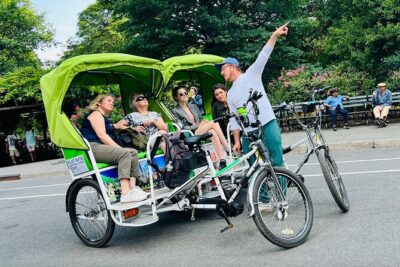 ★ 5.0Central Park Pedicab Guided ToursTickets from $387,108 traveller reviews
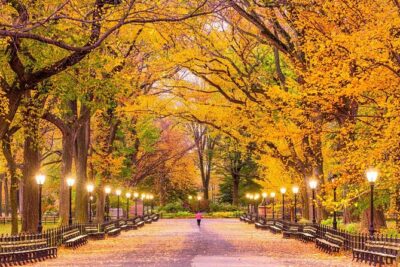 ★ 5.0Private Central Park Pedicab TourTickets from $386,981 traveller reviews
 ★ 4.2Central Park Bike RentalsTickets from $92,528 traveller reviews
 ★ 5.0Official NYC Horse Carriage Rides in Central Park since 1979 ™Tickets from $992,365 traveller reviews
 ★ 4.1Central Park Bike RentalTickets from $81,651 traveller reviews
 ★ 4.9Private Central Park Pedicab TourTickets from $401,637 traveller reviews
 ★ 4.7Central Park Bike RentalTickets from $91,509 traveller reviews
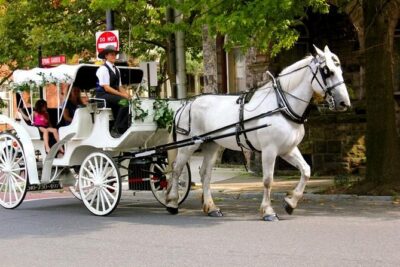 ★ 4.0Carriage Ride in Central Park (VIP – PRIVATE) Since 1964™Tickets from $141,074 traveller reviews
More useful New York routes