
Review · MANHATTAN TOURS
Explore the Ruins of a Forgotten City in the Middle of Manhattan
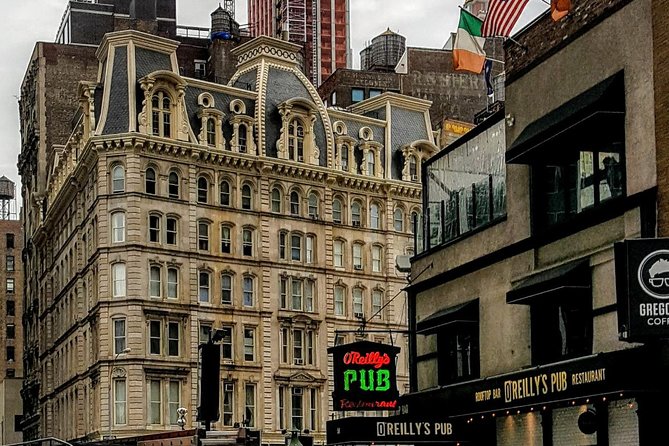
Madison Square has more layers than you think. This tour turns the blocks around Flatiron Building into a walkable timeline, from the Gilded Age to music business to the Tenderloin era. I especially like the small group setup, capped at 5, so you can ask questions without shouting over crowds.
I also like how Rob connects architecture to everyday life. You get a guided, street-level read of building styles and uses, plus a file of old photos to help you picture what stood here before.
One drawback: this is an outdoors walking tour with limited indoor time, so you will want to dress for good weather and plan on being on your feet for 2-3 hours.
Key reasons you’ll like this tour
- Max 5 people means more conversation and faster help figuring out what you are seeing
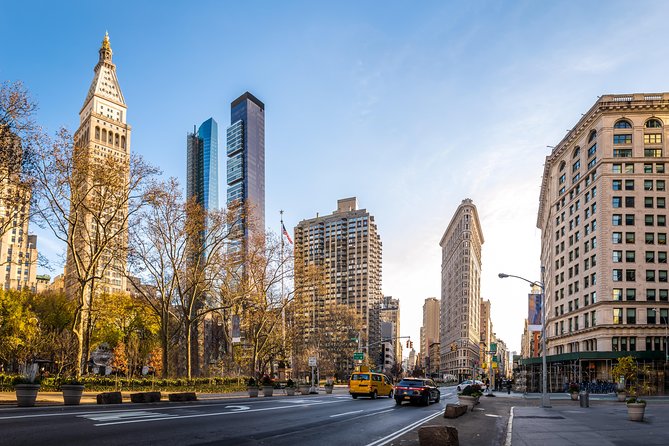
- Rob (the guide) is praised for being friendly, flexible, and intensely into the story behind the streets
- Old photo file helps you match today’s facades to earlier street scenes
- Architecture decoding gives you a practical way to read Fifth Avenue, Sixth Avenue, and Broadway
- A grown-up mix of eras, including the Tenderloin area, with context instead of just shock value
A small-group walk that reads Manhattan like a street map
This is a guided historical and architectural walking tour in Manhattan, starting at the Flatiron Building on 5th Avenue. It runs about 2 to 3 hours, in English, and the group stays small, with a maximum of 5 travelers. The price is $59 per person, and you are not paying extra admission at the stops, since the itinerary is built around free lookouts and street-level history.
For me, the best value in this kind of tour is not the number of famous buildings. It is the way a good guide helps you notice patterns. Here, Rob focuses on how New York grows block by block, then changes its mind again, and again, until the streetwall starts looking like a collage.
If you like history, architecture, and city life stories, this walk will make your next Manhattan stroll feel smarter. You will start spotting dates, styles, and business types like clues on a map. And because it is a small group, the pace stays human.
You can also read our reviews of more city tours in New York City



Flatiron Building, the Gilded Age fashion center you can still feel
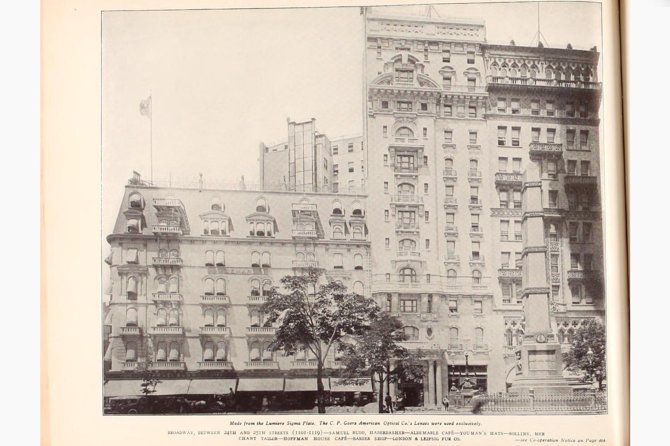
The tour’s first stop is the Flatiron Building, and the approach is more than sightseeing. You get a quick setup on how this neighborhood became a fashionable, world-class center between the 1860s and the 1920s. Then you learn why Madison Square mattered in the bigger city story.
Why this works: the Flatiron is an icon, but it can also turn into background wallpaper if you do not know what the surrounding area was doing. Rob uses it as a starting point to explain the Gilded Age moment when Manhattan’s business, money, and social life clustered here.
Practical tip: even if you know the Flatiron photo, pay attention to what the guide points out around it. The point is learning what the building signaled, and what the neighborhood was becoming.
Madison Square Park, where class and money swapped roles
Next up is Madison Square Park, at the crossroads where Fifth Avenue, Broadway, and 23rd Street meet. This stop is where the tour leans into power and change. The park is described as a Gilded Age center for social, political, and cultural life, right as the economy surged into the Industrial Age.
The guide frames the shift in blunt, useful terms: older wealth and elite tradition were challenged by new industrial fortunes. Rob explains how this created a real social overthrow in the streets around you, not just a background economic story.
The other thing I like here is the emphasis on replacement. The tour does not pretend the old era perfectly survives. Instead, it helps you see how the buildings that replaced the previous wave still carry meaning, and why the neighborhood’s logic makes sense when you look at it in sequence.
Practical tip: Madison Square is a good place to take a breather, then reset your attention before the tour starts “decoding” building fronts along the avenues.
Fifth Avenue between 23rd and 18th, steel-frame lofts and publishing row
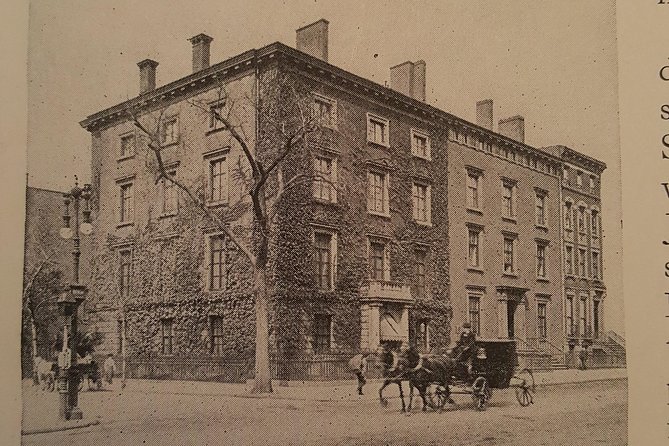
One of the most satisfying parts of this tour is the way it teaches you how to read Fifth Avenue in order. Rob walks the blocks between 23rd and 18th, decoding buildings as you go, focusing on what was built when, for whom, and how the uses changed.
Here, the tour gets specific about a “signature” New York building type: late 19th-century steel-frame manufacturing loft buildings, often wrapped in elongated Beaux Arts styling. That combination is a great lesson. It tells you New York’s architecture was not just decorative. It was also the framework for real industry and real commerce.
Then Rob brings in Paternaster Row, tied to publishers and publishing operations. You hear how this part of the street held offices for publishing, along with related trades like architects, textile manufacturers, and piano showrooms. The result is a very practical mental model: this was not just a wealthy address, it was also a business corridor with specific kinds of work happening behind formal facades.
Why you will care: once you learn what to look for, you will start noticing what a building likely did, not just what it looks like. That changes how you see the city the next day.
ABC Carpet and Home on Broadway, Ladies’ Mile at street level
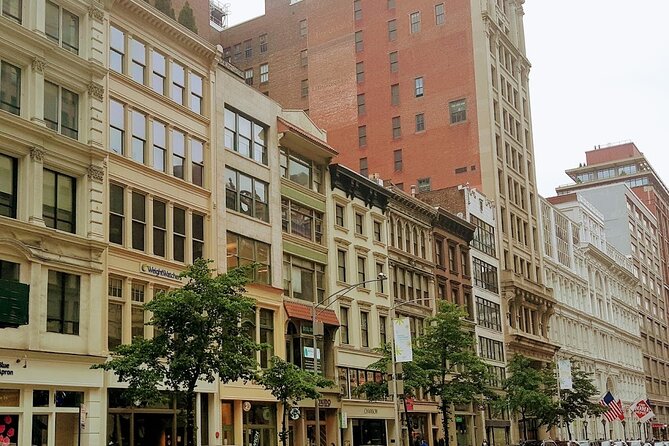
The tour swings to Broadway and includes ABC Carpet & Home, in the slice of Broadway between Madison and Union Square. The guide explains why this stretch mattered: Broadway only runs for six blocks there, and this area became a quiet heart, shielded from the usual chaos.
Rob connects the buildings here to the old carriage trade shopping culture. You learn about French Second Empire, Beaux Arts, and Neo-Classical architecture along this narrow and calmer corridor, and how women could step from carriages into shopping routines here.
One smart detail: the tour notes that this was a Ladies’ Mile Historic Shopping District area that did not have the elevated train nearby and did not even have grade-level horse car rails. That lack of transit clutter helped shape the feel of the street, and you can still sense the “street character” today.
A quick context moment also touches on how a former president’s life fits into the larger neighborhood story. The goal is to keep connecting people to place, not to treat landmarks as isolated objects.
Practical tip: look upward and also along the street line. This is a spot where details matter, because the architecture is doing subtle storytelling.




Sixth Avenue between 18th and 23rd, old department stores and the middle-class surge
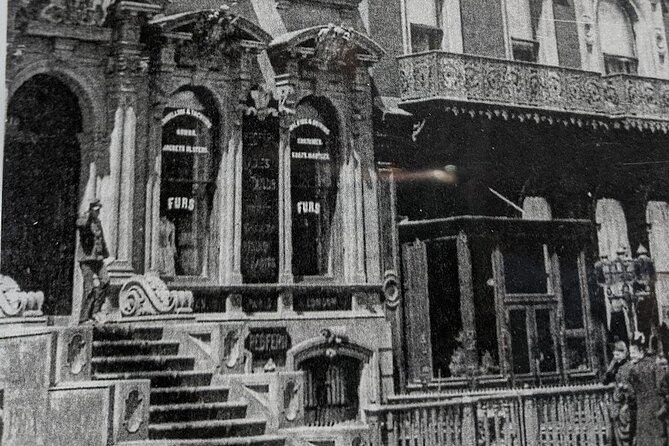
Sixth Avenue, also known as the Avenue of the Americas, is where the tour highlights a preserved strip of shopping buildings. Between 18th and 23rd Streets, Rob points out the department store era, when these blocks were filled with shopping energy and architectural statements.
This part of the tour focuses on how the middle class shaped the street, not only the wealthy. Some of these department store buildings held establishments that were still worthy of the carriage trade, which helps you understand New York’s social mixing. High-end and mass shopping were not strictly separated by geography.
Rob also makes space for the idea of “ruins” without being literal. You get architectural relics and remnants from earlier occupants, so you see how the city layers uses over time. The street becomes a timeline where older pieces survive in unexpected places.
Why it is worth the time: department stores are easy to forget once you assume retail is one thing everywhere. This walk shows you that each era built its own retail stage, with its own design priorities.
The Tenderloin side of 23rd Street, scandal, closeness, and what survives
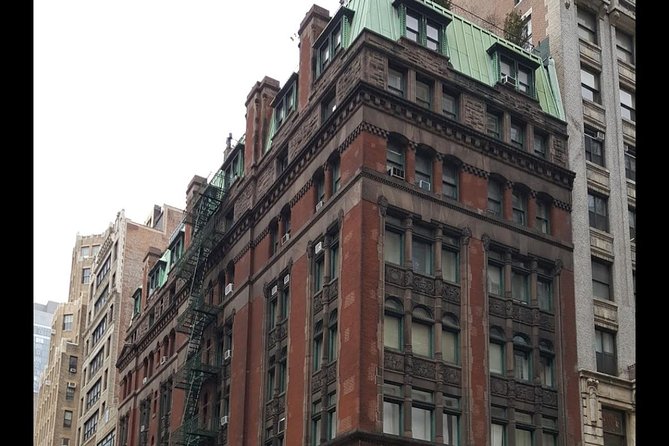
After crossing 23rd Street going north, the tour enters the old Tenderloin area, the adult entertainment blocks in a time before radio and television. This is a more uncomfortable section, and Rob treats it with historical context.
The key point here is contrast. The guide explains how adult venues, including saloons, brothels, and gambling halls, sat close to spaces that attracted the most respectable citizens. That closeness is part of the neighborhood’s real story, not just a sensational headline.
The tour also addresses preservation honestly. You learn that fewer buildings remain on this side of 23rd Street, in part because red light districts were not often preserved the way other areas were. The structures that do remain often reflect a mix of middle and lower-middle neighborhoods, plus large African American and Jewish communities.
For me, this stop is one of the most valuable because it shows how the city’s moral categories did not neatly map onto geography. You are seeing history as it actually was, messy and overlapping.
Practical tip: if you do not want adult entertainment history, you should still consider taking the tour, but go in knowing the guide will include frank context. It is handled as history, not as shock.
Tin Pan Alley near 28th Street, where American music got marketed
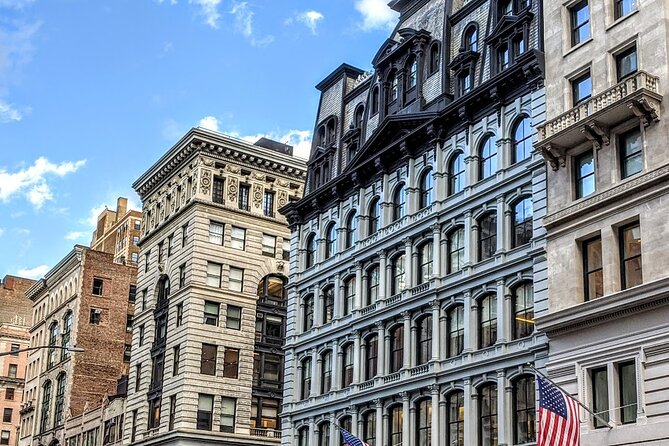
Tin Pan Alley is next, framed as one of New York’s newer historic districts. Rob focuses on a brief period when the heart of the American music industry concentrated into a handful of buildings along 28th Street between Fifth Avenue and Sixth Avenue.
This stop explains how sheet music proliferated and how popular music spread through marketing. You also hear about early promotion methods, often described as plugging, which connects business strategy to what became mainstream entertainment.
Why this belongs on an architecture walk: it reminds you that cities build industries, and industries build neighborhoods. Even if you never think about it, the streetfronts are part of a supply chain for culture.
Practical tip: take a moment here to look for any modern businesses that reference music or publishing. It can help you connect the story to what you see now.
Hotel Wolcott and the shifting streetwall at Broadway and Fifth
The tour crosses Broadway and heads to Fifth Avenue, where the feel changes quickly. Rob uses this transition as a lesson in New York’s social geography: move a few blocks, and the streetwall tells a different story.
Hotel Wolcott is one of the stops. You learn it was one of many fine Gilded Age hotels in the area, and that many of these properties have since been converted into SROs and city housing. That is a powerful theme for the whole tour. New York keeps buildings, but it often changes the people and purpose inside them.
This part of the walk also highlights how the city reuses prime real estate. You get a sense of continuity, even when the era has changed.
Waldorf Astoria site, Astor residences, and the Empire State building era
As the tour heads along the blocks near the Empire State Building, Rob points out the site connections that make this stretch feel like a compressed archive.
You hear about the original Waldorf-Astoria location, and before that, residences of Astor brothers. Then you connect it to the Empire State Building, described as the tallest building in the world for 40 years.
Even without stepping into any museum, this is a history lesson you can see. One block is tied to elite lodging. Another is tied to wealthy families and power. Another is tied to a technological and civic bragging point, the Empire State era.
The blocks between Empire State and Flatiron, New York’s Rosetta Stone effect
The final leg of the tour covers the blocks between the Empire State Building and the Flatiron Building. Rob describes them as a Rosetta Stone for New York history, meaning you can spot buildings from every era as you move uptown.
This is where the whole approach clicks. Earlier stops trained your eyes. Now you get to watch the “timeline” keep updating every few steps.
The walk ends back near Madison Square at a convenient point for the group. You are not left wandering with no direction, which matters in a city this big.
Tips to get the most from a 2-3 hour architecture walk
This tour is built for a moderate physical fitness level, so plan for steady walking and some standing for photos. Here is how I would set yourself up for a great experience:
- Wear comfortable shoes with good grip. Midtown sidewalks can be slick and uneven.
- Bring a charged phone for exterior shots. The tour is about what you can see.
- If you like asking questions, do it early. The group is small, so you will actually get responses.
- Pay attention to the old photo file. It helps you stop guessing and start recognizing patterns.
One more practical note from Rob’s style: he has shown flexibility with short breaks like grabbing coffee mid-walk when timing allows. If you need a quick reset, it is worth mentioning politely.
Who should book this tour, and who might skip it
Book this tour if you want:
- A small-group walk that teaches you how to read architecture in context
- City history that includes business, culture, and the not-so-pristine human side of neighborhoods
- A guide who connects buildings to people, and people to street-level change
You might skip it if you want only modern skyline views or a museum-style deep dive with lots of indoor time. This is a street walk. The payoff is in noticing what is usually ignored.
Should you book? My straight take
At $59 for 2 to 3 hours, the value is strong when you want a guided lens on a part of Manhattan that many people rush through. The small group cap and the fact that the guide uses old photo support are real perks, not fluff. Rob’s reputation for passion, friendliness, and flexibility also matters, because this kind of tour works best when the guide keeps the story moving.
If you like the idea of Manhattan as a living timeline, you will probably love this walk.
FAQ
How long is the walking tour?
It lasts about 2 to 3 hours.
What does the tour cost?
The price is $59.00 per person.
How many people are on the tour?
The tour is limited to a maximum of 5 travelers.
Where does the tour start?
You start at the Flatiron Building, 175 5th Ave, New York, NY 10010.
What language is the tour offered in?
The tour is offered in English.
Is a professional guide included?
Yes, it includes a professional guide.
Are tickets or admissions required for the stops?
The stops listed in the tour plan show admission ticket as free.
What if the weather is poor?
The experience requires good weather. If it is canceled due to poor weather, you will be offered a different date or a full refund.
Do I need a certain fitness level?
You should have a moderate physical fitness level, since this is a walking tour.
Can I cancel for a full refund?
Yes. You can cancel up to 24 hours in advance for a full refund. If you cancel less than 24 hours before the start time, the amount paid will not be refunded.
More City Tours in New York City



More Tour Reviews in New York City


Not for you? Here's more nearby things to do in New York City we have reviewed










More Manhattan Tours to consider.
 ★ 4.7Manhattan Helicopter TourTickets from $2997,076 traveller reviews
 ★ 4.8Manhattan Sightseeing Helicopter TourTickets from $2995,826 traveller reviews
 ★ 3.0JFK to Manhattan: One Way Shared Arrival TransferTickets from $313,687 traveller reviews
 ★ 4.5Circle Line: 2.5hr – Complete Manhattan Island CruiseTickets from $343,488 traveller reviews
 ★ 4.6From Manhattan: 4-Hour Dyker Heights Holiday Lights Bus TourTickets from $632,426 traveller reviews
 ★ 3.5Manhattan to JFK: One Way Shared Departure TransferTickets from $312,030 traveller reviews
 ★ 4.5The Manhattan Helicopter Tour of New YorkTickets from $2361,842 traveller reviews
 ★ 3.5Private Transfer from Manhattan to NYC Airports (JFK/EWR/LGA)Tickets from $361,683 traveller reviews
More useful New York routes