
Review · TOURS
Financial Crisis Tour with a Finance Professional
Wall Street makes sense when you walk it. This two-hour Financial Crisis Tour turns the 2008 collapse into a route you can see, not just read about, guided by Wall Street insiders with front-line bank experience. I also like that it connects the story to real places in the Financial District, so the buildings do some of the explaining. One heads-up, it is mostly outdoors with a moderate walk, so bring layers if it is windy downtown.
I like the teaching style here. Guides such as Emily, Ben, Jared, and James have been praised for explaining complicated ideas in plain language, including the kinds of products that powered the meltdown. You also get a clear thread to the movie The Big Short, which helps you connect the headlines to what actually happened.
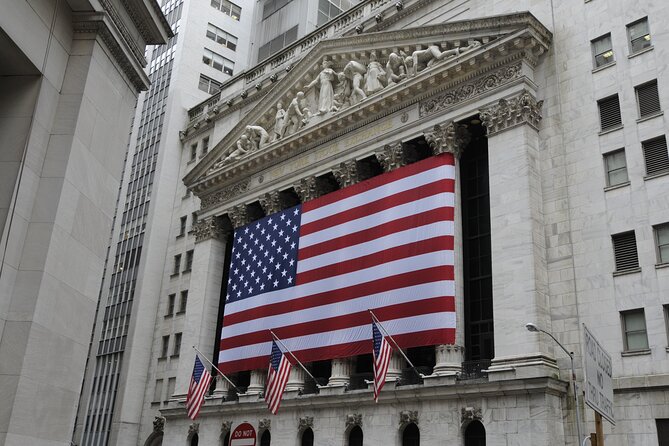
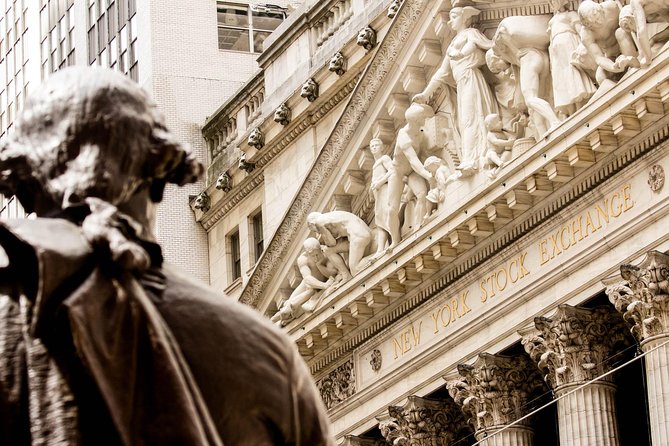
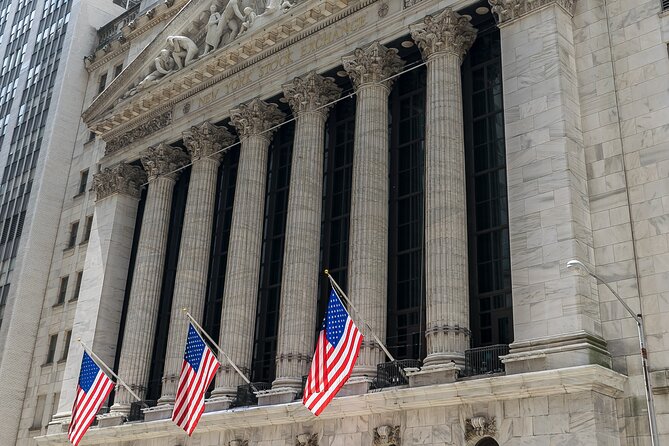
The only real limitation is access. The New York Stock Exchange is closed to visitors, so the tour does not go inside, and you have to treat the NYSE as a landmark you view from the outside.
Quick take before you go
- Finance pros, not textbook lectures, with real bank experience behind the stories
- Wall Street + Wall Street crash context in about two hours, with big names and plain explanations
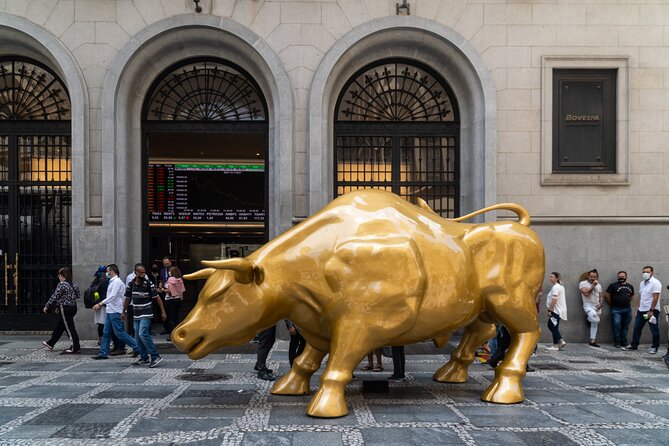
- Charging Bull photo stop plus major Financial District landmarks
- No NYSE interior access, because it has been closed since 2001
- Small group feel, with a maximum of 20 people
Why a 2008 Crisis Tour Works Best on Foot
If you want to understand the 2008 financial crisis, pictures help. But walking the Financial District makes it stick. You stand in the same downtown corridor where the action, the decisions, and the consequences all played out in real space.
This tour does not treat 2008 as one weird event. It frames it as the biggest financial crisis since the Great Depression, with the Great Recession as the aftermath you can feel in daily life. The guide keeps tying the story back to what you see on the street, from firms tied to the shake-up to the institutions that shaped the response.
I also like that the tour doesn’t just say what went wrong. It explains how markets work when risk is misunderstood, incentives get warped, and everything starts moving faster than people can sanity-check. If you have seen The Big Short, you’ll find the tour is a good bridge from movie scenes to the real-world mechanics behind them.
And yes, you’ll still have fun. You get a classic Charging Bull stop, with a photo break that is short but very much worth it.
You can also read our reviews of more tours and experiences in New York City.


Meeting at 22 Broad St and Ending Near 33 Liberty St
This is a straightforward downtown route. You meet at 22 Broad St, New York, NY 10005 and the tour ends near the Federal Reserve Bank, finishing around 33 Liberty St, New York, NY 10045. That end point is handy if you want to keep exploring Lower Manhattan afterward, since you are already near one of the key policy landmarks.
Timing is about two hours (approx.). That matters because it means you can fit it into a first or second day in New York without it stealing your whole morning or afternoon. The group size cap is 20 travelers maximum, which usually keeps the pace lively and makes questions easier.
Expect moderate walking. It is mostly outdoors, so you are dealing with weather like the rest of us. The route includes a chance to visit inside a few buildings, but most of the experience is street-level and sidewalk-based. If you like history, street scenes, and city detail, this setup is ideal.
Wall Street Stop: Behind the Facade of the 2008 Collapse
The tour starts by sending you into the narrow streets where the Financial District vibe is all angles and momentum. Your first major stop is Wall Street, with a focus on what the collapse looked like from the inside.
This is where the guide earns their money. You’re not just hearing generic crash talk. You learn the names and dynamics tied to the shake-up period, including firms like Lehman Brothers and Bear Stearns. The tour also touches on how traders could make enormous money during the boom phase, then how the same financial system flipped when it started failing.
What I like about this stop is that it gives you cause and effect without drowning you. The guide helps you connect big headlines to what was happening in decision-making rooms, trading floors, and bank leadership. If you have ever wondered why a crisis can snowball so fast, this is the part that makes the mechanics feel real.
One practical note: this stop is listed as free admission. So you can focus on the walking, the storytelling, and the landmarks, without adding costs.
Charging Bull: A Quick Photo With a Loud Symbol
After the Wall Street storytelling, you get a short break at Charging Bull. It is a 15-minute stop, built for photos and quick context.
Here’s why it matters in a crisis tour. The Charging Bull is more than a tourist pose. It has become a symbol of the economy itself, and the guide uses it as a visual checkpoint. You move from the weight of 2008’s failures to the idea of ambition, markets, and risk appetite that shaped the years leading up to the crash.
If you’re going with kids or teens, this stop is also a mental breather. It keeps the tour from turning into nonstop facts, and it gives you a chance to re-center before the next institutions.
New York Stock Exchange Is Closed, So You Read the Street Instead
One big part of your expectations has to be correct. The tour does not go inside the Stock Exchange. The NYSE has been closed to visitors since 2001.
That might sound like a letdown. In practice, it changes the way you experience the lesson. You learn from the exterior context and the surrounding institutions, which keeps the focus on what these places represent in the story of 2008 rather than on viewing trading floors.
During this walk, you still see key Financial District landmarks tied to the crisis era. The tour description specifically calls out stops such as the New York Stock Exchange area and the Federal Reserve, even though you do not enter the exchange itself. So you still get that “I’m here” feeling, you just do it without the ticket line and restricted interior spaces.
If you want an inside-the-exchange experience, you’ll need a different kind of access. But for most people, the street-level perspective plus a finance professional guide is a better match anyway, since you’re walking while the explanation is fresh.




Federal Hall and the Presidential-to-Policy Connection
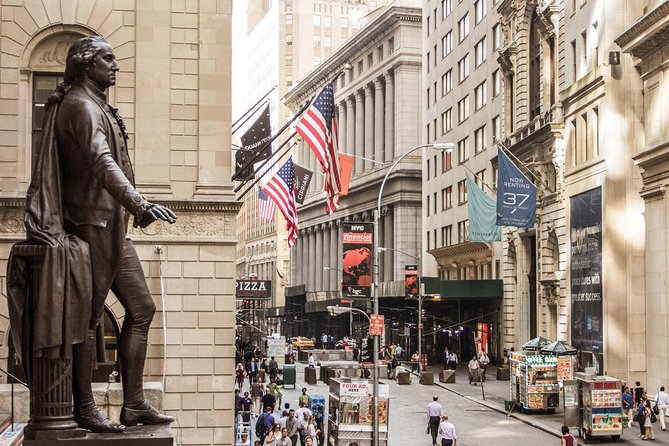
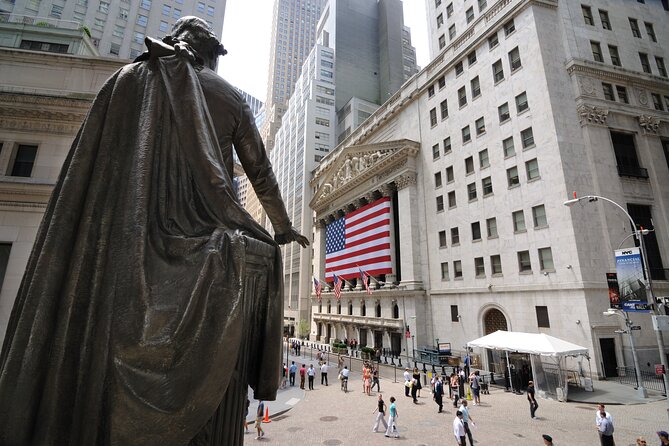
The tour continues to Federal Hall, one of the iconic Lower Manhattan landmarks. You spend about 20 minutes here.
The historical anchor is clear: this is where George Washington became President. That fact matters because it sets up a theme you’ll keep seeing in how the guide talks about 2008. Financial crises are not only market math. They are also policy choices, government response, and public accountability.
From Federal Hall, the story naturally points forward to the institutions that shape economic outcomes. The tour then ends near the Federal Reserve Bank, so you finish your walk right at the kind of place that gets mentioned when people ask why things calmed down, or why they did not.
If you like history that connects to modern life, this is a strong pairing. You are not just learning the past, you are seeing how power and policy sit inside the same downtown geography as the finance world.
How Wall Street Insiders Teach the 2008 Story
The core selling point is the guide. This tour is led by a professional and entertaining guide with financial industry experience. That matters because the 2008 crisis has a lot of moving parts, and guides who have lived the world can explain it without turning it into a jargon parade.
I especially like the way this tour has been described for clarity. Several guides have been praised for making complex concepts easier to grasp. One guide experience stood out for simplifying complicated investment instruments, including products such as CDOs and CDWs. Even if you don’t know those terms, the goal is understanding, not homework.
You’ll also notice a teaching style that keeps people involved. Some guides have been praised for engaging groups through questions and conversation instead of doing a monologue. That makes a big difference for mixed groups, like families with teens, people new to finance, and folks who already work in banking.
Language is another small but real factor. The tour is offered in English, and guides have been described as sensitive to English being a second language for some participants, speaking clearly and concisely.
And if you’re the type who likes a little humor to keep heavy topics manageable, that also shows up in how guides lead the walk.
Price and Value: Is $59 a Fair Trade?
At $59 per person, this tour is a budget-friendly way to get a guided crash-course in one of the most important modern economic stories. You are paying for three things that are hard to DIY.
First, you’re paying for expertise. The guide isn’t just repeating a script. The tour is built around financial industry experience from major-bank work.
Second, you’re paying for interpretation. The 2008 story is complex by nature. A good guide takes that mess and turns it into a sequence you can remember, tied to landmarks so your brain has something to anchor to.
Third, you’re paying for convenience. In about two hours, you cover key Financial District highlights you’d otherwise have to research and piece together yourself.
There is also a money-saving angle that people sometimes miss. The tour stops are listed with free admission, and the major limitation is only that the NYSE interior is not included, not that you have to buy extra entrance tickets for most stops.
One criticism you might see is that some people felt the price was a bit high for what they got. If that’s your concern, you can make it a simple test: go only if you genuinely want a guided explanation of the crisis, not just a quick photo walk.
What to Wear and How to Pace Yourself
Because this is mostly outdoors, dress for Lower Manhattan weather. In winter, it can feel colder than you expect once the wind hits downtown. Wear layers, and consider gloves if it’s chilly.
Footwear matters too. The route is built for walking between stops, with a narrow-street feel. Comfortable shoes make the difference between enjoying the story and rushing just to get warm.
The tour is mostly outdoor walking, with a chance to visit inside a few buildings. That means you can get variety, but you should not count on long indoor breaks. Plan as if you will be outside for most of the experience.
Who This Financial Crisis Walk Is Best For
This tour is a strong fit if you want:
- A first-timer friendly introduction to 2008 that still respects how serious it was
- A history-and-markets blend tied to the actual Financial District
- A guided experience if you like asking questions while you see the sights
It can work well for families too, especially if your group includes teens who want the story connected to real places. It also appeals to people who already have some interest in investing, since the guide style has been described as clear enough for novices while still covering real-world complexity.
If your goal is only to get inside famous buildings, you may feel limited. Since the NYSE is off-limits to visitors, this is not the “exclusive access” type of tour.
Should You Book This Tour?
If you want a practical way to understand 2008 while standing in the Financial District, I think this is a good booking. The value comes from the guide’s ability to translate a complicated crisis into a walkable story, and from the way the stops connect to institutions and landmarks you can recognize later.
Book it if you like:
- learning by walking through neighborhoods
- asking questions as you go
- understanding how markets and policy intersect
Skip it if you’re looking for an inside-the-NYSE experience or you hate outdoor walking in busy downtown weather. If that’s you, a different kind of history tour may fit better.
FAQ
How long is the Financial Crisis Tour?
It is approximately 2 hours.
How much does the tour cost?
The price is $59.00 per person.
Where do I meet the tour?
You meet at 22 Broad St, New York, NY 10005, USA.
Where does the tour end?
The tour ends near the Federal Reserve Bank, around 33 Liberty St, New York, NY 10045, USA.
Does the tour include entry into the New York Stock Exchange?
No. The tour does not go inside the Stock Exchange because it has been closed to visitors since 2001.
Is the tour in English?
Yes, the tour is offered in English.
How much walking is involved?
There is a moderate amount of walking. It is mostly an outdoor walking tour, with a chance to visit inside a few buildings.
How many people are in a group?
The tour has a maximum of 20 travelers.
Is there free cancellation?
Yes. Free cancellation is available up to 24 hours in advance for a full refund. If you cancel less than 24 hours before the start time, the amount paid is not refunded.
More Tours in New York City




More Tour Reviews in New York City
Not for you? Here's more nearby things to do in New York City we have reviewed





More Tours to consider.
 ★ 5.0Statue of Liberty and Ellis Island Tour: All OptionsTickets from $6913,571 traveller reviews
 ★ 5.0New York in One Day Guided Sightseeing TourTickets from $9913,166 traveller reviews
 ★ 5.0Central Park Pedicab Guided ToursTickets from $387,108 traveller reviews
 ★ 4.7Manhattan Helicopter TourTickets from $2997,076 traveller reviews
 ★ 5.0Private Central Park Pedicab TourTickets from $386,981 traveller reviews
 ★ 5.09/11 Memorial, Ground Zero Tour with Optional 9/11 Museum TicketTickets from $396,381 traveller reviews
 ★ 4.2Hop-on Hop-off Sightseeing Tour by Open-top BusTickets from $445,863 traveller reviews
 ★ 4.8Manhattan Sightseeing Helicopter TourTickets from $2995,826 traveller reviews