
Review · CENTRAL PARK TOURS
First Class Central Park Tour – Iconic Views & VIP Photo Moments
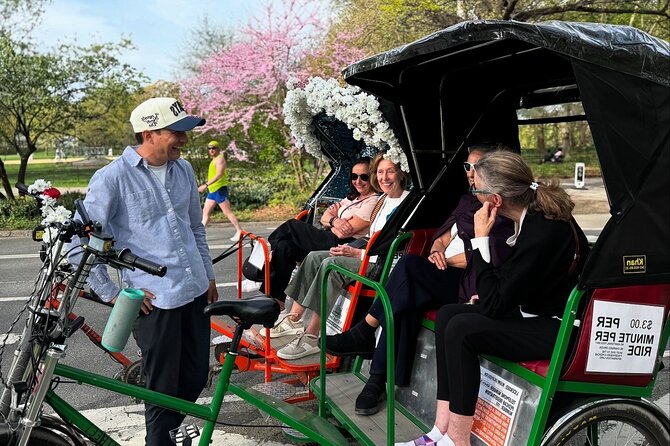
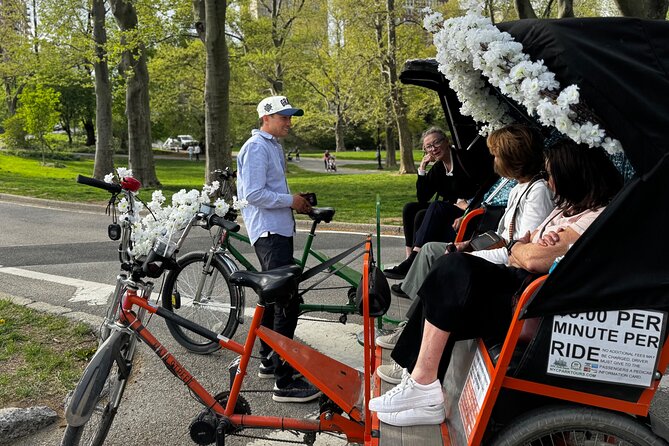
Central Park gets way easier when you roll up by pedicab. This private ride strings together classic landmarks, tucked-in corners, and photo-worthy moments, so you can cover a lot without tiring your feet. I especially like how the guide, Ricky, mixes big-name sights with small story details you would miss on your own.
I also love the comfort factor. You get seasonal touches that help in both hot and cold weather, plus Ricky is ready to help with photos at the exact spots that look best from the road.
The main drawback to plan around is the weather. The tour runs in good conditions, and if skies turn ugly you may need to switch dates or cancel.
Key highlights worth aiming for
- Private pedicab for your group only, so you can move on your timing instead of weaving through crowds.
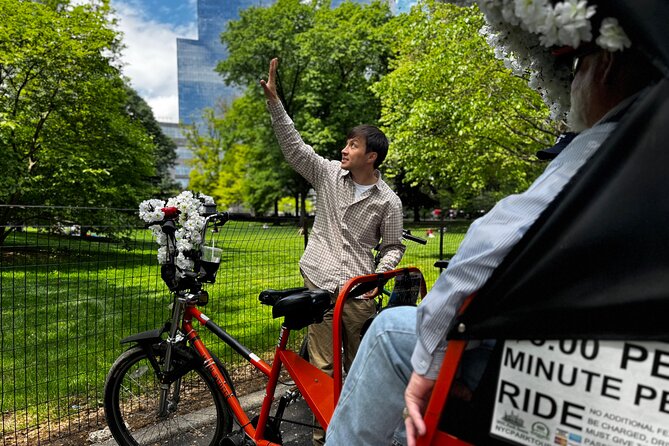
- Ricky’s story style, including history and pop-culture tie-ins that make the park feel like a movie set you can walk through.
- Photo assistance at iconic stops, so you are not trying to guess angles while your group is bouncing along.
- Year-round comfort, with shade in summer and blankets in winter.
- You hit many Central Park favorites in one loop, from Bethesda Fountain to Strawberry Fields, with bridges and water views built in.
First-class Central Park by private pedicab: fast, comfy, and photo-ready
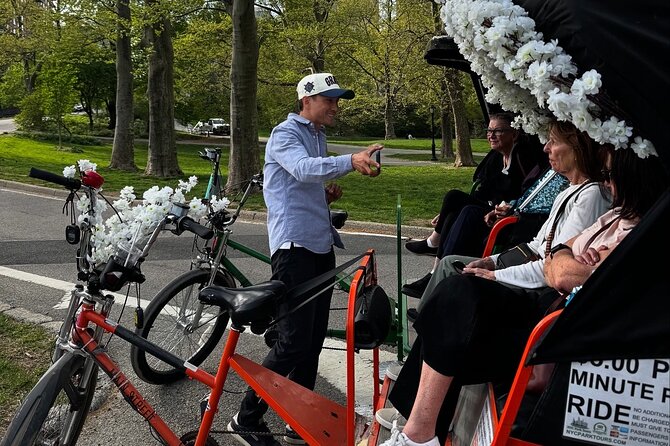
At $39.20 per person for a private experience, this tour is aimed at value through time. Central Park is big, and walking it all in one day turns into sore feet and missed landmarks. From the pedicab seat, you get that “how did we see so much” feeling without rushing.
The ride also feels less stressful than the usual sightseeing sprint. You are not sharing the vehicle with strangers, and the guide can slow down or speed up based on what your group cares about most. If you hate long waits or crowded group tours, the private setup is a real quality upgrade.
What makes it feel first-class to me is the small stuff you notice when you are actually there: seasonal comfort and photo assistance. In summer, you get shade. In winter, you get blankets. That means you spend more time looking at the park and less time fighting weather.
More NYC tours and experiences for the shortlist


Central Park core loop: Bethesda Terrace, The Lake, and Bow Bridge views
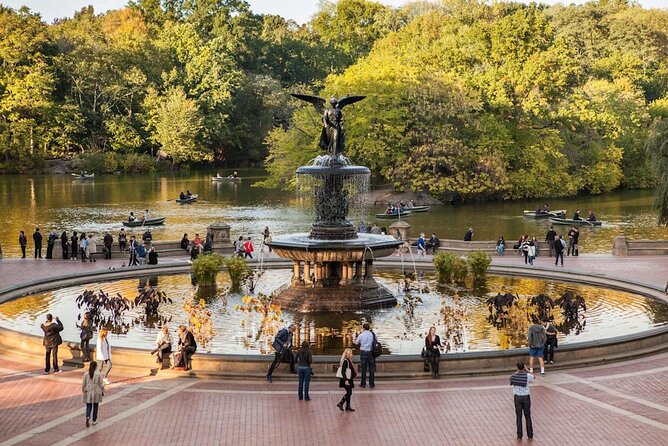
The backbone of the tour is the Central Park core near the Bethesda area, where the architecture and the water views do most of the work for you. Bethesda Fountain, Bethesda Terrace, and the surrounding viewpoints are the kind of places where a regular stroll often turns into a bottleneck. On pedicab, you can move past the worst of the traffic and get to the viewpoint you want.
Bethesda Fountain is one of the park’s most famous scenes for a reason. The centerpiece is The Angel of the Waters, designed by Emma Stebbins and unveiled in the 1870s. The sculpture is tied to the biblical Pool of Bethesda theme, and it is one of the first major public art commissions tied to a woman in New York City. If you like symbolism and details, this is a “look up and take a second” stop.
Right above it, Bethesda Terrace gives you the wide balcony feeling. The terrace has two levels and a view over the Lake, and the arcade ceiling is famous for Minton encaustic tiles. Those tiles were removed during renovation years ago and later restored with outside funding, then reinstalled. That restoration story matters because it explains why the ceiling looks like it belongs in a museum, not just a park walkway.
Then you glide toward The Lake, Central Park’s 20-acre centerpiece. It’s a natural break from crowds, with paths that wrap around the water and shady spots to pause. If you want a classic view without any extra effort, The Lake is where you get it. If you want action, rowboats are a common add-on from the Boathouse area, and the water makes everything feel calmer.
From there, Bow Bridge is where the tour turns romantic. The cast-iron bridge has that gentle bow curve, designed by Calvert Vaux with Jacob Wrey Mould, and it is a favorite filming location. It is also a strong photo target because you get the blend of greenery plus city edges in one frame. If you are traveling with a camera, this is one of your best bets for getting a clean shot without spending your whole day hunting angles.
Bethesda to Cherry Hill: fountains, terraces, and the tiling details
The tour keeps stepping you through Central Park’s greatest hits, but it does it with enough variety that it stays interesting even if you have seen photos before. After the Bethesda stop, you move toward Cherry Hill Fountain, a circular plaza feature built in the 1860s.
Cherry Hill originally served as a watering trough for horses, which sounds functional until you see the design. It has a granite dome, a bluestone basin, and decorative lamps, plus Minton tiles that match the park’s love of crafted surfaces. Over time, it became more of a pause-and-pose area, especially for people picnicking or grabbing a Lake view.
If you like architecture, this is the part of the day where you start noticing how Central Park feels engineered but still natural. The fountains and terraces are not random decoration. They are part of an overall design language that ties together sightlines, walking routes, and dramatic views.
The Mall and literary Central Park: straight-line charm and statue spotting
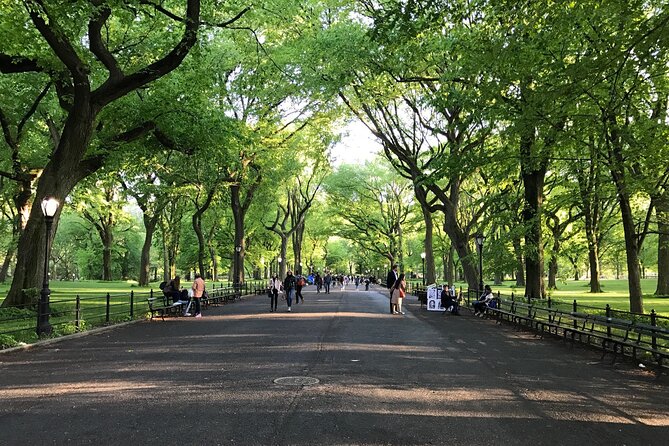
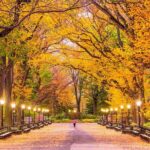
One of my favorite Central Park walk moments is The Mall, also called Literary Walk. It is the park’s only intentionally straight section, which means it gives you a different visual rhythm than the winding paths elsewhere. Tall elms form a canopy overhead, so even when the park is busy, the feel shifts to something calmer.
This is also a statue spot. The Mall earned the literary nickname for its writers’ monuments, including figures like William Shakespeare and Sir Walter Scott. If you enjoy reading and want a playful way to connect literature to place, this portion gives you an instant theme.
At the southern end, the Columbus statue ties into the park’s story of exploration and discovery. Even if you do not spend a long time reading plaques, the density of famous names makes it fun to “spot, pause, and photograph” in quick hits.
If you want to keep your energy up, this is a great section to enjoy from the pedicab seat first, then step out for a short walk only where the view is best.
Water breaks: Conservatory Water, The Pond, and Boathouse scenery
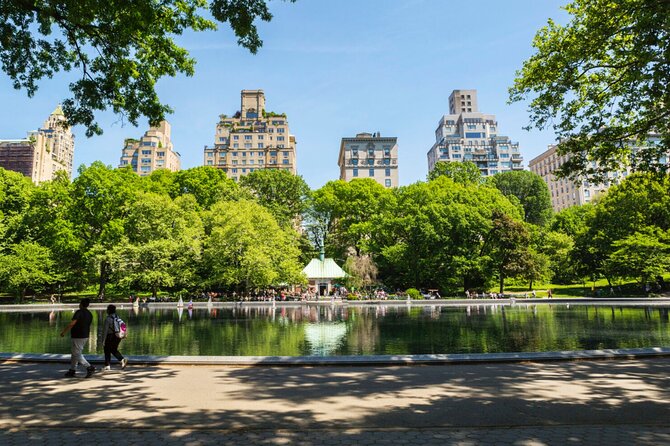
Central Park’s water stops are great because they slow the day down. Conservatory Water is a tranquil pond area near 74th Street known for model boat sailing. It is also popular with families, in part because of the cherry trees and seating nearby, and it includes statues tied to children’s stories like Alice in Wonderland and Hans Christian Andersen.
The Pond is another water highlight, famous from film, including the Home Alone 2 pigeon lady scene. The Pond sits within a landscaped area created as part of the original plan from the mid-1800s. The payoff here is the change of pace. You get a scenic stroll feel with wildlife moments, and photos come out naturally because the pond background adds depth.
If you want one more “New York postcard” stop, the Boathouse is a strong choice. It has been used in multiple films, and it sits by the Lake with year-round dining and heated outdoor seating. Even if you are not eating, the view from the water side gives you that cinematic edge.
More NYC tours and experiences for the shortlist



Bridges and photo targets: Gapstow Bridge, Pinebank Arch, and winter skater views
Central Park is full of bridges, but a few are so recognizable they basically act like landmarks. Gapstow Bridge is one of them. It is built with stone arches and ivy coverage, and it frames views over The Pond with the Midtown skyline in the background. It also tends to deliver a classic “turtles and ducks nearby” kind of atmosphere, which is exactly what you want when you are looking for a park scene that still feels alive.
Pinebank Arch is a quieter bridge moment. It is a cast-iron structure that blends into the rocky outcrops, with delicate, lace-like ironwork. The main reason it works on a tour is that it gives you variety. You go from grand fountains and terraces into something more intimate, often with a softer background of greenery.
Then there is Wollman Rink, the winter centerpiece. Opened in the 1950s and named for a major donor, it sits in a setting that turns skating into a skyline photo moment. Even if you are not a skater, it is a good “seasonal Central Park” stop because it is different depending on the month. In winter, it feels like a classic New York tradition. In other seasons, you still get the structure and park context.
Family classics and big-story statues: Carousel, Chess, Dairy House, Zoo, and Balto
If you are traveling with kids, or you just enjoy whimsical stops, this part of the route keeps the energy up without turning into a theme park. The Central Park Carousel is a standout. It traces back through multiple versions, with the current carousel installed in the mid-1900s as the park’s fourth iteration. The horses are hand-carved and hand-painted, and the design is widely recognized as one of the finest early 20th-century carousels in the US.
Right nearby in spirit is the Chess & Checkers House. It is an octagonal brick structure built in the early 1950s with 24 game tables. It is perfect for a quick break because people tend to gather there for casual strategy and conversation, and it fits the park’s rhythm of quiet play.
The Dairy House is another sweet stop, originally part of the park’s plan as a refreshment spot and later restored into a visitor center. The Gothic cottage look makes it feel like a storybook building, and it gives you practical park info in a charming setting.
For animal lovers, the Central Park Zoo is a must-see within the park. It began in the 1860s and became the city’s first official zoo in the 1930s. A major shift came in the late 1980s when exhibits moved toward more natural habitats. If you care about conservation-style presentation, this zoo is managed by the Wildlife Conservation Society and is organized into zones that include places like penguins and polar exhibits.
Then you have Balto, the sled dog statue tied to the 1925 Serum Run to Nome. This stop is powerful even if you only know the basics. It is a real story of a life-saving mission through extreme winter conditions, and the statue placement turns it into a moment of reflection in the park.
Rumsey Playfield, the Falconer, Daniel Webster, and Sheep Meadow wide-space payoff
Some Central Park stops are about meaning and mood more than specific sights. Rumsey Playfield is one of those. It has a history connected to the Central Park Conservancy and the SummerStage program, and it went through transformations from a restaurant structure into a glamorous nightclub era, then into a sports field for older children.
The Falconer statue is another mood-setting stop. It was donated in the late 1800s and shows a falconer releasing a bird into flight, designed by sculptor George Blackall Simonds. It works for photos because the statue’s pose and the surrounding greenery create a dramatic, natural contrast.
If your group likes American history, the Daniel Webster Monument is a strong add. It honors Webster, a statesman known for oratory on the US Constitution, and the statue was commissioned and donated as a tribute in the 1870s.
Then there is Sheep Meadow, the big open lawn area near the park’s southern end. It is an instant “exhale” space. The backdrop of the Manhattan skyline gives you that classic wide view, and it is a place for picnicking, reading, or just letting your legs rest for a bit.
Strawberry Fields, the Dakota, Alice in Wonderland, Cleopatra’s Needle, and the Met area
Some icons feel like they belong to New York City beyond the park. Strawberry Fields is one of them. It is dedicated to John Lennon and anchored by the Imagine mosaic. The area is designed as a living tribute, and it draws visitors for reflection, music, and quiet moments. The name ties back to Lennon’s Strawberry Fields Forever, and the overall feeling is peaceful even when you are sharing the space with other admirers.
The Dakota is another “this is New York” moment. It is the landmark building at the corner of 72nd Street and Central Park West, and it has had famous residents over the years, including John Lennon and Yoko Ono. Lennon’s death outside the building adds gravity to the stop. If you have ever seen the building in film, this is where the screen memory becomes real.
For something whimsical and interactive, Alice in Wonderland statue delivers. It is donated in the late 1950s and designed for kids to climb on and touch. It shows Alice with the giant mushroom and key characters from the story. It is less about reading history and more about creating a fun pause in a serious city.
If you stay for the longer option, Cleopatra’s Needle is the history shock you might want. It is an ancient obelisk dating back more than 3,500 years and originally carved in Egypt. It was moved across the Atlantic and dedicated in Central Park in the late 1800s. The hieroglyph-covered surface makes this one of those “I did not expect this to feel so big” stops.
Right near that is the Metropolitan Museum of Art. The museum’s original building opened in the early 1880s, and its design ties back to park architect Calvert Vaux. The scope of the museum is huge, with works spanning 5,000 years and more than 2 million pieces. Even if you do not go inside, the museum’s scale and setting make it part of the Central Park experience because it is right there at the edge of the park.
Jacqueline Kennedy Onassis Reservoir and Belvedere Castle: panoramic finish energy
To end your day with views, you need elevation and open sightlines. The Jacqueline Kennedy Onassis Reservoir delivers that. It was built in the late 1850s to early 1860s as additional capacity for the city’s receiving reservoir. The reservoir’s footprint and size were designed to harmonize with the park, and it is massive in scale, holding more than one billion gallons.
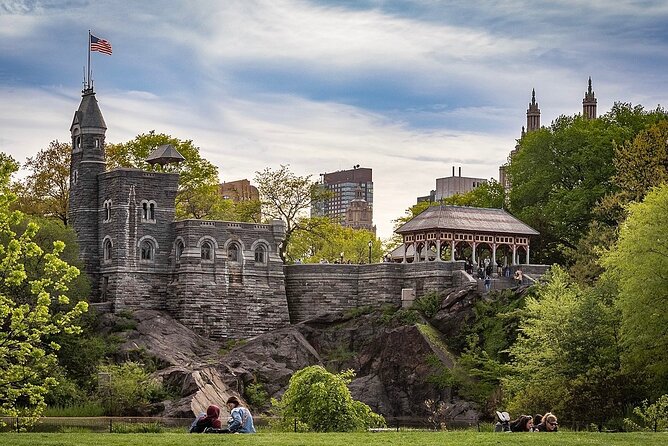
Then Belvedere Castle brings the “beautiful view” feeling in a literal way. This whimsical Gothic-Romanesque folly sits on Vista Rock and was designed in the 1860s. It also has an official weather station function that dates back to the early 1900s, so it is both charming and practical.
The big reason it matters on a tour is the observation deck views over Turtle Pond, the Great Lawn, and the Ramble. If you want a last set of photos that looks different from fountains and bridges, this is the one.
Price and value: when $39.20 makes sense for your day
This tour costs $39.20 per person, and the value comes from how it bundles speed, comfort, and guide time. You are paying for access to a private pedicab ride plus a local host who shares stories while you move. Central Park costs no money to enter, but the guide’s time and the transport can be worth it when you are short on energy or time.
Where I see the best fit is groups who want to see a lot without turning the day into a leg workout. Families with kids, first-timers who want anchors like Bethesda and Bow Bridge, and couples who care about photo moments all tend to get more value out of a private ride than a slow walk.
What to do before you go: getting the best photos without stress
Start with one simple plan: pick your top three “must shoot” moments before you arrive. In most Central Park loops, those are the spots like Bethesda Fountain, Bow Bridge, and the Strawberry Fields memorial area, because they are recognizable and photogenic.
Then think about timing. The tour duration ranges from 1 to 3 hours, and that changes how much standing around you will do. If you want a relaxed pace with plenty of photo stops, lean toward the longer option. If you want an efficient highlight hit, the shorter ride is enough to get you to the major icons.
Dress for the season because you will feel the wind and shade shift as you move. The good news is you get blankets in winter and shade in summer, so you can stay comfortable during pauses and photo moments.
Should you book this private Central Park pedicab tour?
Book it if you want a Central Park day that feels organized, comfortable, and designed for photos. The private setup, Ricky’s story approach, and the mix of icons plus calmer corners like the Pond and The Lake makes this a strong choice for first-timers and families.
Skip it only if you love slow wandering and do not want any structure at all. Central Park is free and beautiful to explore on your own, but if your goal is to see a lot with less effort, this pedicab tour does exactly that.
FAQ
Where do we meet for the tour?
You’ll meet at 1415 6th Ave, New York, NY 10019, USA. The activity ends back at the same meeting point.
Is this a private tour or shared experience?
This is a private activity. Only your group will participate.
How long is the tour?
The duration is approximately 1 to 3 hours.
What is included in the tour price?
The tour includes a private pedicab experience, a local host, scenic stops, seasonal comforts (shade in summer, blankets in winter), and photo assistance.
Are attraction admission tickets included?
For Central Park (Stop 1), admission ticket is included. Other listed stops state admission is free, such as Wollman Rink, Gapstow Bridge, The Mall, Bethesda Fountain, Bethesda Terrace, Cherry Hill, The Lake, Bow Bridge, and more.
What is not included?
Tipping is not included. Hotel pick-up and drop-off are also not included.
What happens if weather is bad?
This experience requires good weather. If it’s canceled due to poor weather, you’ll be offered a different date or a full refund.
More VIP Experiences in New York City



More Tours in New York City





More Tour Reviews in New York City
Not for you? Here's more nearby things to do in New York City we have reviewed




More Central Park Tours to consider.
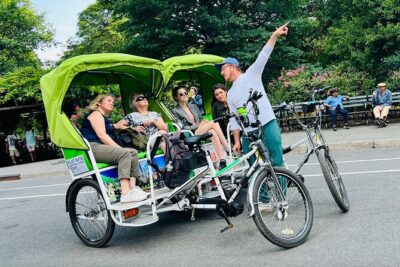 ★ 5.0Central Park Pedicab Guided ToursTickets from $387,108 traveller reviews
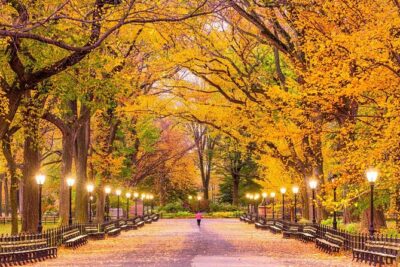 ★ 5.0Private Central Park Pedicab TourTickets from $386,981 traveller reviews
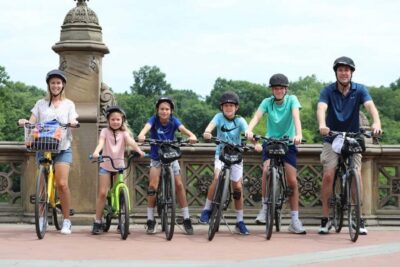 ★ 4.2Central Park Bike RentalsTickets from $92,528 traveller reviews
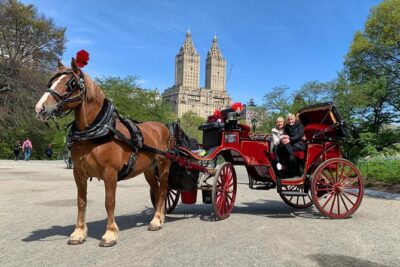 ★ 5.0Official NYC Horse Carriage Rides in Central Park since 1979 ™Tickets from $992,365 traveller reviews
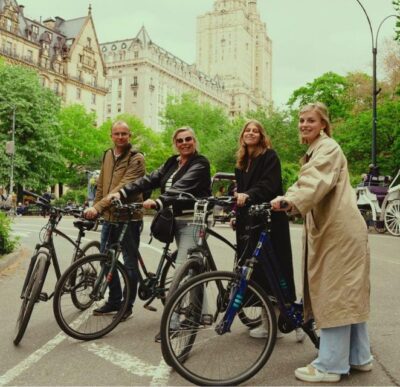 ★ 4.1Central Park Bike RentalTickets from $81,651 traveller reviews
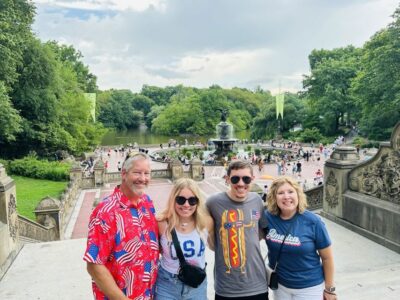 ★ 4.9Private Central Park Pedicab TourTickets from $401,637 traveller reviews
 ★ 4.7Central Park Bike RentalTickets from $91,509 traveller reviews
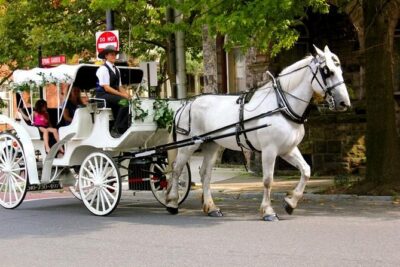 ★ 4.0Carriage Ride in Central Park (VIP – PRIVATE) Since 1964™Tickets from $141,074 traveller reviews
More useful New York routes