
Review · NEW YORK CITY TOURS
Journey Park NYC
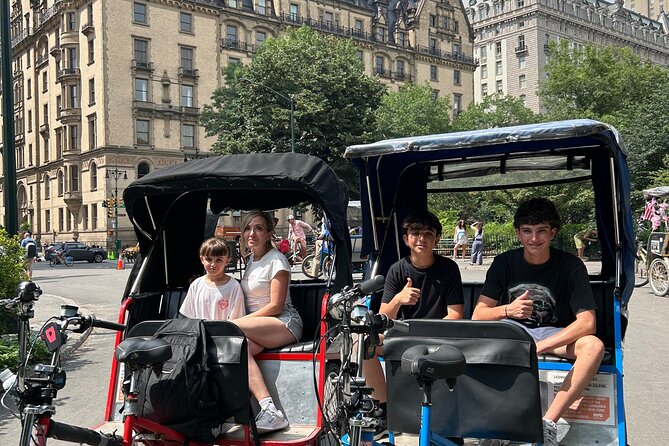
Central Park can be a lot, fast. This private pedicab ride keeps you comfortable while you hit many of the park’s most famous spots. You get a local guide who explains what you’re seeing, from landmarks to movie locations, with less walking fatigue.
I like the easy pace and the fact that you can cover far more ground in a 1 to 3 hour window than you would on foot. I also really appreciate the private pedicab comfort, including warm blankets in winter, so the ride feels practical even when the weather turns.
The main thing to watch is the good weather requirement, since the tour is meant to run outdoors. Also, the meeting point is very specific, and one past guest noted the location can be confusing at first, so plan to arrive early and double-check you’re at the right spot.
Key things to know before you ride
- Private pedicab, less walking: You stay seated most of the time, then step out briefly for photos and key viewpoints.
- Expert guide storytelling: Expect clear explanations about landmarks and even film tie-ins tied to what you pass.
- Classic Central Park icons included: Bethesda area, Bow Bridge, Strawberry Fields, Belvedere Castle, and more are part of the route.
- A lot of free stops: Many sights are noted as admission ticket free, so you can spend money on your own food, not entry fees.
- Winter comfort gear: Warm blankets are included when conditions are colder.
- Seasonal options: Wollman Rink is only open during the late October to early April window.
Why a private pedicab works so well in Central Park
Central Park is huge, and on a tight schedule you can lose hours just moving between major sights. A pedicab lets you get your bearings fast and still enjoy the park instead of just power-walking it.
This is also a small-group setup. It’s private, meaning it’s only your group, so you can move at a pace that feels right and ask questions without feeling rushed.
And because it’s led by a local expert, the ride turns into something more than sightseeing. You’re not just staring at pretty scenery, you’re getting context for what each landmark is and why it matters.
You can also read our reviews of more tours and experiences in New York City.



Getting your bearings: Carousel, Chess & Checkers, and classic film stops
The route starts in a way that helps you orient quickly. You’ll cruise through the park and make short, timed stops that keep the trip moving, including a look at the Central Park Carousel.
The Central Park Carousel is a big one for history and for pure fun. It dates to 1908, and it’s known for having 57 hand-carved horses and two chariots, so it feels like a real piece of old New York charm rather than just a modern attraction.
Next up, the Chess & Checkers House is a good break from the flow of walking. Built in 1952, it sits under a wooden trellis and is surrounded by 24 game tables, so it’s the kind of place where you can watch people play or join in if you like.
The tour then builds in movie-ready photo moments. Wollman Rink (late October to early April) is a great seasonal stop if you’re in town during winter, and it has popped up in films like Serendipity and Home Alone 2. Gapstow Bridge is another quick hit, with a rustic stone look covered in vines and a track record in movies like Home Alone 2 and Gossip Girl.
Practical tip: when you stop at these tighter points, keep your phone or camera ready. The best shots often happen in the couple of minutes you have, not after you’ve finished fumbling for a lens cap.
Zoo, Balto, and the park’s storybook corners
Central Park Zoo sits in the southeastern part of the park, and it’s part of this ride for a reason. Even if you do not plan to linger long, it gives you a clear sense of how the park mixes nature and attractions in one footprint.
Near that area, you’ll also see the Balto Statue. It honors the sled dog Balto, credited with helping deliver a life-saving diphtheria serum to Nome, Alaska in 1925. It’s one of those moments where you look up from the scenery and suddenly New York connects to a much bigger real-world story.
If you like playful, whimsical touches, you’re in the right zone. Rumsey Playfield is one of the park areas that feels more active, with a playground and a SummerStage concert venue when the season is right.
And as you keep moving, the park’s famous character statues start to show up. One standout is the Alice in Wonderland Statue, a bronze scene of Alice sitting on a mushroom with characters like the Cheshire Cat and the White Rabbit. Even if you’re traveling without kids, it’s a fun pause because it feels like Central Park is in on the joke.
The Lake and Conservatory Water: where the pace can slow down
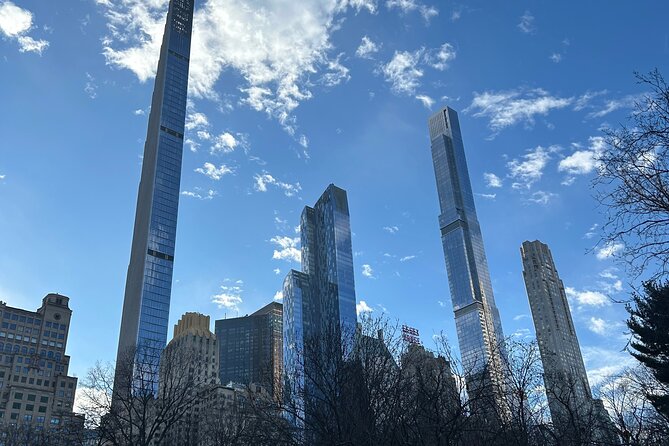
Some Central Park routes only hit big monuments. This one also includes calmer, scenic pockets that make the park feel less like a checklist.
Conservatory Water, also known as the Model Boat Pond, is a peaceful spot for watching or racing miniature sailboats. It’s also close to the Alice in Wonderland and Hans Christian Andersen statue area, which means you can combine a stroll with a quick photo cluster.
Then there’s the Central Park Boathouse. It’s both a restaurant and an event space, originally opened in 1874, with the current building dating to 1956. Even if you do not eat there, it works as a scenic viewpoint because it sits right by the water.
From there, you reach the Lake itself, a 20-acre body of water described as the heart of Central Park. You can stroll the shoreline, and the Loeb Boathouse is where rowboats are rented, so it’s a natural “pause and watch” zone.
Finally, Bow Bridge is one of the most recognizable photo moments in the park. It’s an elegant cast-iron bridge completed in 1862, spanning across the lake, and it’s a frequent filming location.
Practical tip: if you’re traveling during peak photo times, ask your guide for the cleanest angles. With a pedicab, you can reposition quickly, while walking tours often get stuck in one viewpoint.
Bethesda Terrace and Cherry Hill: classic Central Park postcard moments
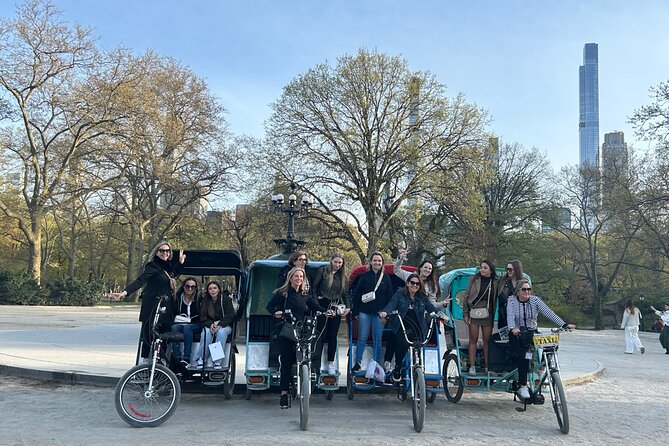
The center of the park is where the scenery gets instantly familiar. Bethesda Terrace and the area around Bethesda Fountain are built for that feeling.
Bethesda Fountain is famous for the Angel of the Waters statue, and it symbolizes healing and renewal. The terrace gives you a grand two-level platform view over the fountain and surrounding park, so even a short stop can feel like a proper “wow” moment.
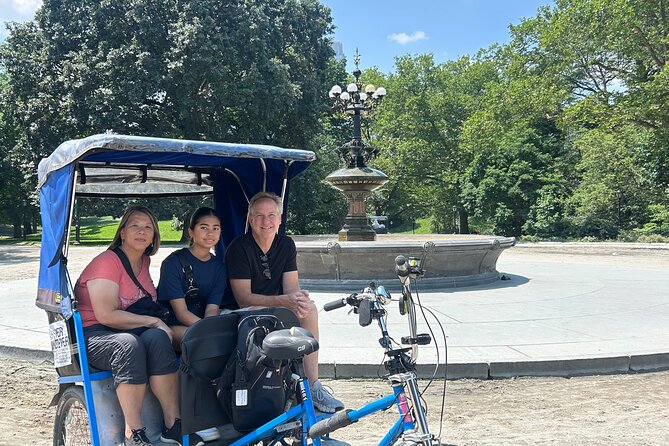
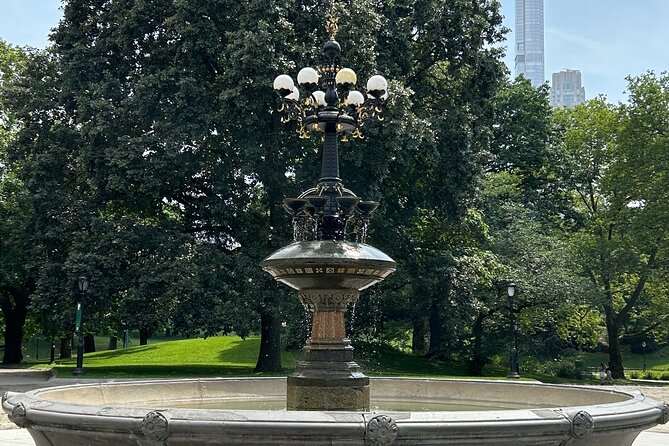
Close by is Cherry Hill, a charming area just west of Bethesda Fountain. It features a circular plaza and a fountain that was originally designed in the 1860s as a watering trough for horses. It’s also named for cherry trees that once flourished there, which makes the name feel earned rather than random.
If you want quiet, the surrounding areas support it. You’re in open space with big sightlines, and you can take in the park’s scale instead of just the individual attraction.






Belvedere Castle, Strawberry Fields, and the Upper Westside feel
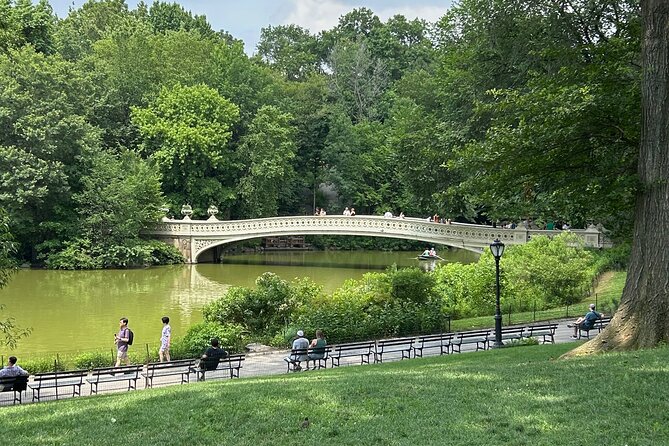
As you head toward the middle and northern sides of Central Park, the scenery shifts from formal terraces to elevated viewpoints.
Belvedere Castle is a strong stop if you want a skyline-adjacent view of the park. Designed by Calvert Vaux and Jacob Wrey Mould in 1867, it was originally a decorative folly and later turned into an observation spot with exhibits. It has also served as the official weather station for Central Park since 1919, which adds a neat practical twist to what looks like a scenic structure.
Then comes Strawberry Fields, dedicated to John Lennon. It’s a 2.5-acre memorial named after the Beatles song Strawberry Fields Forever, and the center includes the iconic Imagine mosaic. It’s a calm stop where the park feels reflective rather than purely recreational.
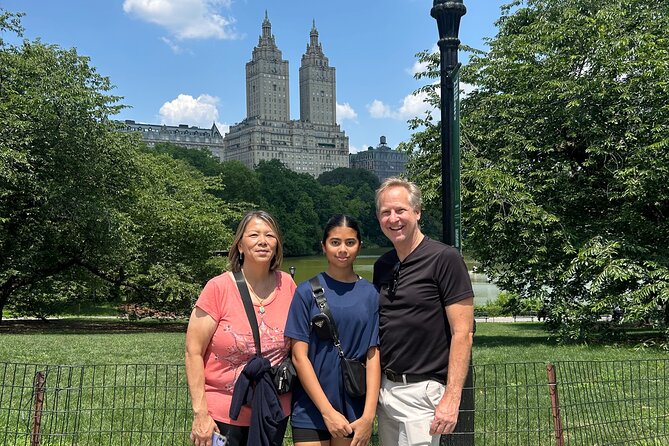
You’ll also pass or pause near The Dakota. It’s a historic building on the Upper West Side, built between 1880 and 1884, and it’s known for being the residence of John Lennon before his murder outside the building in 1980. Even if you do not know the architecture details, the location is a powerful anchor for why this area feels so famous.
Cleopatra’s Needle, the Met steps, and iconic skyline anchors

Some parts of this ride function as visual anchors, helping you understand how the park sits inside the city grid.
Cleopatra’s Needle is a classic example. It’s a 69-foot-tall red granite obelisk, originally erected in Heliopolis around 1450 BCE, and gifted to the United States in 1881. It’s one of only three similar obelisks still remaining, with counterparts in London and Paris, which gives you an easy way to place it globally.
Right along the eastern edge, the Metropolitan Museum of Art is part of the route. The Met is one of the largest art museums in the world, and the museum’s grand steps are an iconic photo backdrop. If you’re museum-curious, this stop helps you see the scale of what’s next door to the park.
Then you loop toward the reservoir and other broad viewpoints. The Jacqueline Kennedy Onassis Reservoir spans 106 acres and was built as part of the city water supply system between 1858 and 1862. Today it’s a popular walking and jogging area, and it offers scenic views back toward the Manhattan skyline.
Sheep Meadow, Tavern on the Green, and park-life favorites
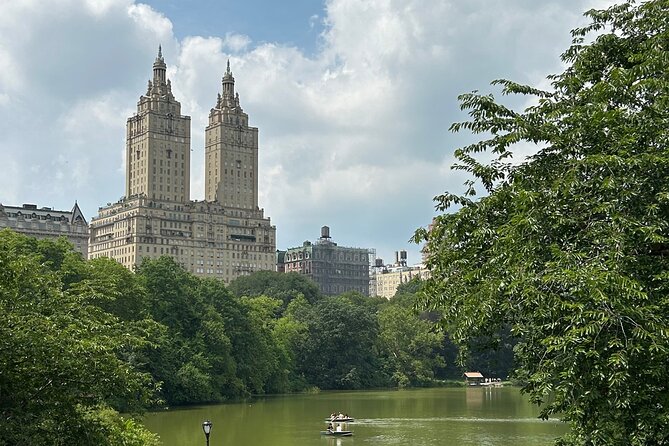
Central Park isn’t only monuments. It’s also where locals spread out, rest, and people-watch, and this ride touches that side.
Sheep Meadow is a great example. It’s a 15-acre open space in the southern part of the park, known for picnics and sunbathing, with skyline views in the mix. If you want a slice of park life rather than only landmarks, this is where the vibe shifts.
You’ll also pass Tavern on the Green. It began as a sheepfold in 1870 and became a restaurant in 1934. After renovations, it reopened in 2014, so it feels both historic and current.
For families, there’s Heckscher Playground, the oldest and largest playground in Central Park. Opened in 1926, it’s filled with play equipment like swings, slides, and climbing structures, so it’s a natural “let kids burn energy” stop.
And for the “small but charming” angle, keep an eye out for Pinebank Arch, a rustic stone arch built to blend into the landscape. It’s a popular photo opportunity and a good reminder that not every famous Central Park moment is huge or loud.
Neighborhood wraparound: Upper East Side and Upper West Side perspectives
This tour doesn’t isolate you inside the park bubble. It also points you toward the neighborhoods that shape what you see around it.
The Upper East Side is known for its brownstones, upscale residences, and cultural institutions, with the Met and Central Park nearby. The area also connects to Madison Avenue shopping and high-end dining, so it’s a good mental bridge if you’re trying to understand where the park sits in Manhattan life.
The Upper West Side is described as more family-friendly and arts-forward, with spots like the American Museum of Natural History and Lincoln Center nearby. It’s close to Central Park and comes off less frantic than areas that feel more like constant traffic.
This matters because Central Park can feel like a self-contained world when you’re walking alone. With the pedicab approach, you see how it connects outward to the streets, which helps you plan the rest of your day.
Price and value at $32 per person
At $32 per person, you’re paying for three things at once: a private pedicab ride, expert guide time, and the convenience of stepping out for multiple timed stops without losing your legs.
Value jumps when you compare what you would do on your own. If you’re trying to hit Bethesda, Bow Bridge, Strawberry Fields, and Belvedere Castle in a single outing, you’d normally spend a lot more time moving around. Here, the transport is part of the sightseeing, and that saves you energy for whatever comes next.
Also, multiple stops are noted as admission ticket free, which helps keep your total day costs more predictable. Just keep in mind that not every attraction on the planet is free, and some Central Park experiences have their own fees. This ride mostly keeps you outside and moving, so your day expenses are less likely to balloon.
Timing and who this tour suits best
The duration is listed as 1 to 3 hours, which makes it flexible for different travel styles. If you arrive early and want a quick orientation, it can work well as a first-day Central Park move. If you’re tight on energy or traveling with kids, the “sit, ride, step out, repeat” format keeps things manageable.
It also makes sense if you care about context. If you enjoy hearing why places are famous, the guide adds that layer, including film location notes for several iconic spots.
Who should skip it? If you love long, self-paced walks and want to stop every time you see something interesting, you might find a fixed route limits you. But if you want the highlights with guidance, this is a smart way to get there.
Should you book Journey Park NYC?
I’d book it if you want a comfortable, private way to see a lot of Central Park without turning the day into a workout. The route hits major landmarks and also includes quieter, scenic pockets like Conservatory Water and the Model Boat Pond area.
I’d think twice if your plan depends on perfect timing in bad weather. The experience requires good weather, and parts of Central Park change dramatically with the seasons, including Wollman Rink being open only from late October to early April.
FAQ
How long is the Journey Park NYC pedicab tour?
It runs about 1 to 3 hours.
How much does the tour cost?
The price is $32.00 per person.
What language is the tour offered in?
The tour is offered in English.
Where does the tour start?
The tour starts at 57 W 57th St, New York, NY 10019, USA.
Is pickup or drop-off included?
No, pickup and drop-off are not included.
Is this a private tour?
Yes, it is private, meaning only your group participates.
What ticket type do I receive?
You get a mobile ticket.
What should I know about weather?
The tour requires good weather. If it is canceled due to poor weather, you will be offered a different date or a full refund.
Are service animals allowed?
Yes, service animals are allowed.
Are warm blankets provided in winter?
Yes, warm blankets in winter are included.
Can I cancel and get a full refund?
Yes. You can cancel up to 24 hours in advance for a full refund. If you cancel less than 24 hours before the experience starts, you will not receive a refund.
More Tour Reviews in New York City
Not for you? Here's more nearby things to do in New York City we have reviewed










More New York City Tours to consider.
 ★ 4.7SUMMIT One Vanderbilt TicketsTickets from $4751,195 traveller reviews
 ★ 4.7Empire State Building Tickets – Observatory & MuseumTickets from $4725,757 traveller reviews
 ★ 4.6Statue of Liberty & Ellis Island with FerryTickets from $1918,683 traveller reviews
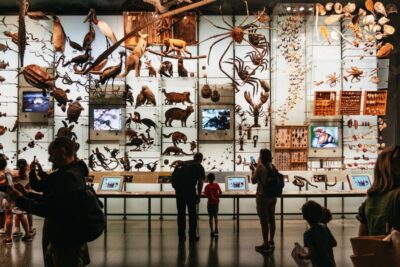 ★ 4.5American Museum of Natural History TicketTickets from $3715,447 traveller reviews
 ★ 5.0New York in One Day Guided Sightseeing TourTickets from $9913,166 traveller reviews
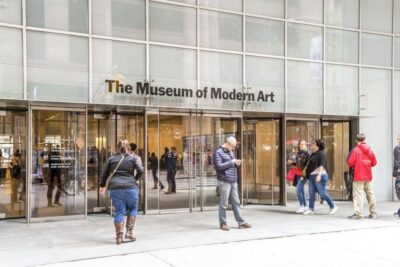 ★ 4.6Museum of Modern Art (MoMA) Entry TicketTickets from $3012,540 traveller reviews
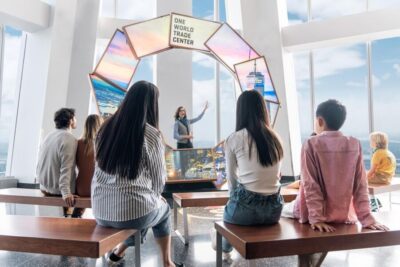 ★ 4.7One World Observatory Skip-the-Line TicketTickets from $3012,329 traveller reviews
 ★ 4.7New York CityPASS®: Save up to 41% at 5 Top AttractionsTickets from $15410,548 traveller reviews