
Review · MANHATTAN TOURS
Lower Manhattan Tour: The Remnants of Dutch New Amsterdam!
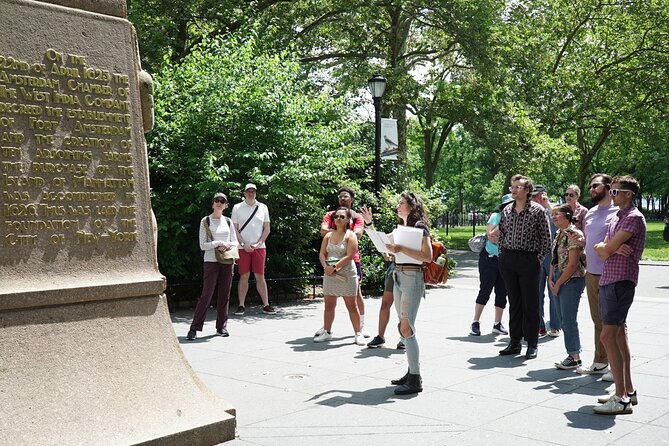
Dutch New Amsterdam still peeks through. This Lower Manhattan walking tour traces how New York began, then shows you what’s left of the Dutch era right in today’s Financial District. I really like the small group size (max 10), which keeps the pace calm and questions coming, and I also like the ear pieces that help you catch every detail without craning your neck. You’ll get different guide voices too, from Mandy to Richard to Gabbie, all bringing the stories to street level.
The one drawback is simple: you’re on your feet for about 3.5 hours in a dense area, so if you hate long walks or cold weather waits, this may feel like a lot.
Key things I’d highlight before you go

- Small group, max 10 keeps it relaxed and more personal than the big-van style tours.
- Licensed guide + ear pieces mean you hear the story clearly, even in a busy corridor.
- Dutch New Amsterdam focus gives you context for Lower Manhattan that most self-guided strolls miss.
- Major landmarks with a twist: NYSE, the Fearless Girl viewpoint, and the bull at the end.
- Stone Street and off-Wall-Street stops add texture beyond the obvious money streets.
- Free admission at listed stops helps your budget stay cleaner at $39 for the whole walk.
Dutch New Amsterdam still matters in today’s Lower Manhattan

Lower Manhattan can feel like a blur of towers, traffic, and hurried commutes. This tour slows that down on purpose. Instead of treating the Financial District like a single, modern block, you get a story arc that connects the street names, public spaces, and key institutions back to early New York, when the Dutch left their fingerprints on how the city formed.
I like that the tour keeps its eye on outcomes you’ll actually notice later. After you’ve walked this route, you’ll look at Bowling Green and think beyond a pretty park. You’ll also understand why people talk about the Dutch period when they’re explaining how New York became New York.
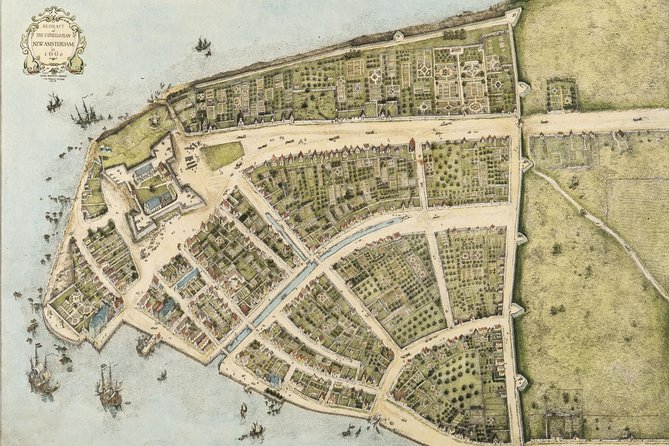
And it’s not just “facts on a timeline.” You’ll hear how the harbor shaped development, which gives the area more meaning than an Instagram sweep. The guide also brings in maps and ways of recreating the 17th-century town, which helps you picture the city’s earlier scale.
You can also read our reviews of more tours and experiences in New York City.



Starting at the National Museum of the American Indian
The tour begins at the National Museum of the American Indian, and that opening matters. It sets a tone that New York’s story is bigger than one European chapter. You start there with a short stop, about 15 minutes, so you’re not stuck waiting around while others wander.
Practically, it’s a smart start for an afternoon walk. You can regroup easily near a major cultural site, and once you’re moving, the rest of the route stays in the same part of Lower Manhattan, south of Wall Street.
Another small plus: the stop is listed as free. So you’re not juggling extra ticket decisions before you even get into the “old New Amsterdam” part of the walk.
Bowling Green: the name, the Dutch, and the why-now feeling
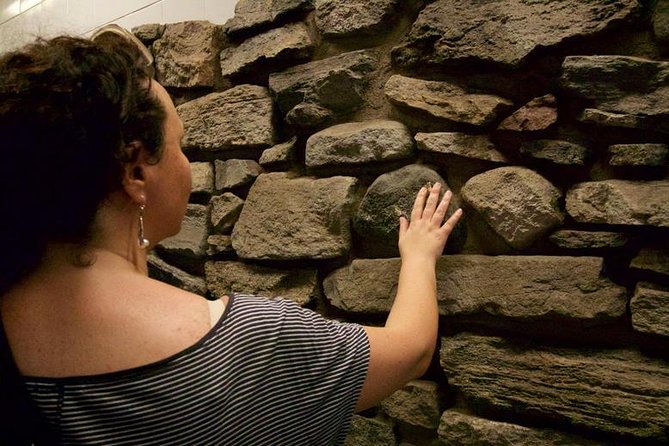
Next up is Bowling Green, one of the city’s oldest public spaces. This is where you start connecting names and history. The guide explains how Bowling Green got its name and why it mattered to the Dutch.
Here’s what you should expect as the tour turns from general city overview into Dutch-era specifics. You’ll likely hear about daily life, how power and public space worked, and why this area served as a meaningful anchor point. Even if you’ve passed Bowling Green a hundred times, this is the kind of stop where the story changes how the place “reads.”
Time is about 15 minutes, which is just enough. You get the context without turning it into a long lecture. And because it’s early in the route, you can ask questions while your head is still in set-up mode, not already tired.
NYSE and the Fearless Girl viewpoint
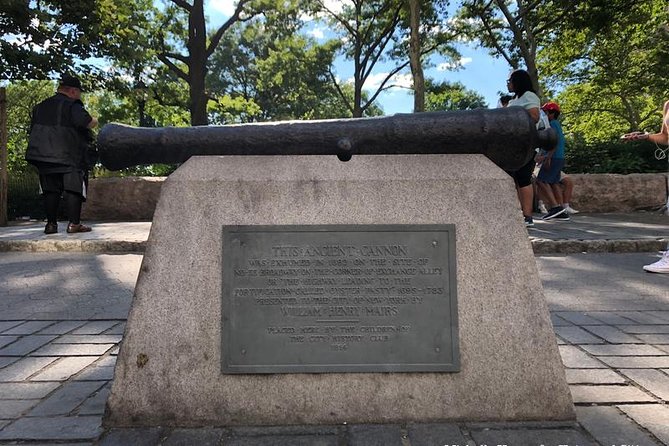
From Bowling Green, the tour moves toward the New York Stock Exchange. You’ll spend only about 5 minutes here, so this is not a sightseeing marathon. Instead, it’s more like a guided orientation, where the guide uses the modern landmark to point back toward older city patterns.
Then you’ll walk by the Fearless Girl statue, with the key detail that she’s now facing the NYSE. That directional element helps you understand how visitors move through this space today, and how the guide interprets the symbolism in the city’s money district.
Because the stop is short, you’ll get the big ideas fast. If you want more time for photos in front of the NYSE, you may need to do it on your own before or after the tour, since the guide is moving the group along.
The bull finish: where the story lands
The tour ends at the famous bull. This matters because it’s an emotional landing pad for most people. You spend the earlier part learning how the Dutch era shaped the start of the city, and then you close in on a symbol that screams finance and momentum.
It’s a clever pacing trick. You’re not winding down in a random side street with nothing to look at. You’re arriving at a landmark where people already gather, so the ending feels satisfying and visible.
Also, the tour is designed to loop back. It says the activity ends back at the meeting point, so you’re not left trying to figure out a “where do I go now” problem once you’ve finished the Dutch New Amsterdam story.






Stone Street: a slower step back in time
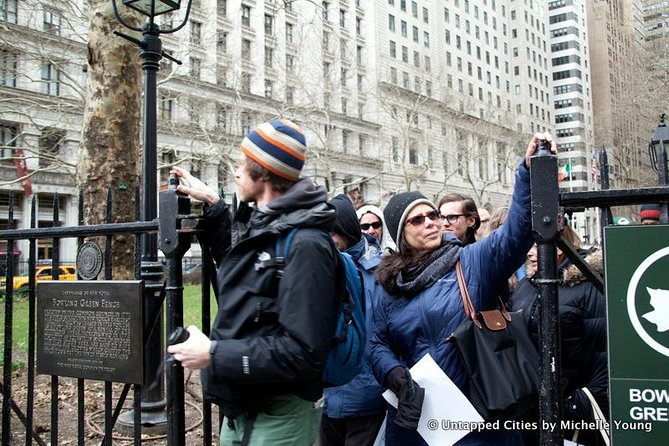
After you’ve hit the Wall Street gravity, you step into Stone Street. The tour describes it as a gem hidden in the middle of the Financial District, and the whole point is the contrast.
This is where you’re likely to feel the difference between just seeing tall buildings and actually walking a place that still carries older city vibes. The guide uses this stretch to help you imagine what the area felt like earlier, so the Dutch-era story becomes more than dates.
You’ll get about 15 minutes here. That’s enough for orientation, a few photos, and a couple of story beats before the tour pushes you back out into the money streets.
Wall Street plus off-street “hidden” context
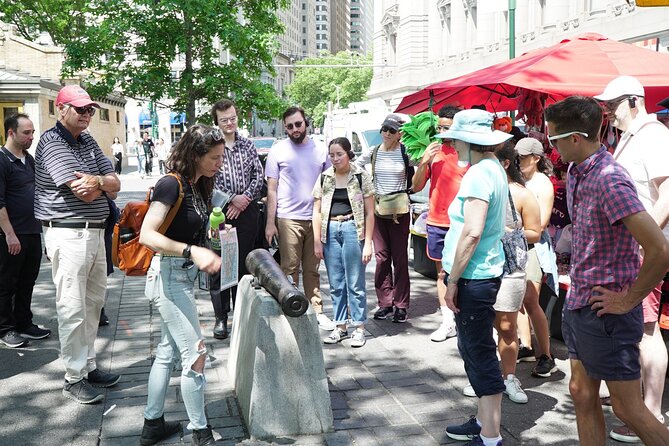
Wall Street gets its own stop, with about 15 minutes set aside. But the most useful part is how the guide treats it. You’re not just looking at the street name and major buildings. You’re exploring hidden gems on and off Wall Street, in other words, using side pockets of the area to build the bigger picture of how the city grew.
This is also a strong moment for questions. If something about Dutch influence, early settlement patterns, or the harbor connection doesn’t click yet, you still have time to ask while the guide is actively in interpretation mode.
One thing I like for value is that the tour stays focused within lower Manhattan south of Wall Street. You’re not crisscrossing the city for every stop. That keeps the time for walking purposeful, and it keeps you from spending half the tour negotiating subway transfers.
Lower Manhattan wrap-up: the harbor story that ties it together
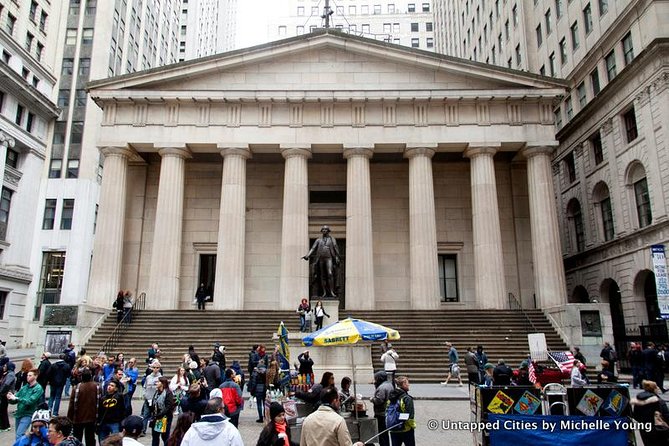
The route includes longer walking segments labeled as covering lower Manhattan, plus an additional stretch that focuses on how New York became New York. The exact stops along the way aren’t framed like a museum checklist, but the themes are clear: the harbor’s role and the bigger transformation of the city.
This part is where you start seeing connections. You’ll connect the existence of key trading areas, the logic of early settlement, and why the city’s layout and public spaces evolved the way they did. It’s also where the guide’s map-style explanation tends to pay off, since earlier stops gave you landmarks to anchor the story.
If you’re the type who likes history but gets impatient with long speeches, this portion is still built for movement. You’re not stuck waiting in one spot. You’re walking while ideas get organized in your head.
What the best guide work looks like on this tour
Several different guide names show up in the tour experience, and the consistent pattern is storytelling that feels connected to real places. Mandy is repeatedly praised for making old New Amsterdam come alive and for using maps and materials to recreate a 17th-century town. Richard is noted for being a native Manhattan local and for checking in to see how the group is doing while still giving detailed commentary at each stop. Gabbie is singled out for enthusiasm and for showing places that people did not realize existed.
That matters because the tour’s subject is easy to get wrong if the guide just lists dates. Here, the guides seem to focus on translating the past into street-level meaning. You’ll feel that in how each landmark gets a reason to exist in your mental map.
One more practical plus: the ear pieces. In a dense, noisy downtown, you’ll hear the guide without constantly turning and shouting over traffic. That makes the whole experience easier on your attention span.
Price and value: $39 for 3.5 hours of guided street history
At $39 per person for about 3 hours 30 minutes, you’re paying for two things: a licensed guide who can connect the Dutch origin thread across multiple stops, and equipment that helps you hear well.
If you’re comparing this to self-guided walking, the value is time. Getting the Dutch context right takes research. Getting it wrong takes less time than getting it right. This tour tries to save you that effort and gives you a coherent route in one go.
Also, the total number of stops is tight enough that you do not feel dragged through a half-day of “almost there” wandering. It’s south of Wall Street the whole way, so you spend most of the time walking between story points rather than guessing where to go next.
One note: the tour is booked fairly in advance on average. If you want a specific day or want to avoid sold-out slots, it helps to plan ahead.
Pace, comfort, and who should book
This tour suits you best if you like history, photos, and learning while walking. It’s also a good pick if you already know NYC basics and want a sharper lens on the city’s early roots.
It’s especially friendly for people who want a break from crowded group tours. The maximum group size is 10, so you get that small-group feel. Families can usually participate, and the tour lists that most travelers can join. Service animals are allowed too.
Your comfort checklist is straightforward:
- Wear shoes you can walk in for several hours.
- Expect urban noise and wind in lower Manhattan.
- Bring a layer, because the route stays outdoors for most of the time.
If you’re expecting a museum-heavy day with long indoor exhibits, this isn’t that kind of outing. This is a walking story built around landmarks, streets, and city symbolism.
Should you book the Remnants of Dutch New Amsterdam tour?
Book it if you want an organized, Dutch-focused explanation of how New York began, with a guide who uses the streets as a classroom. The pairing of major landmarks (Bowling Green, NYSE area, Wall Street) with smaller, character-filled spots like Stone Street is a strong combination.
Skip it or consider another option if you dislike long walks in city weather, or if you only want deep indoor stops. Also, if you’re looking for a broader survey of all immigrant waves and every chapter of NYC, this one is intentionally centered on New Amsterdam and Dutch remnants.
If you’re happy walking 3.5 hours and you want context you can carry with you all day, this is a solid value at $39, with ear pieces and a small group making it easier than many similar tours.
FAQ
How long is the Lower Manhattan Remnants of Dutch New Amsterdam tour?
The tour is about 3 hours 30 minutes.
Where does the tour start, and what time does it begin?
It starts at Bowling Green, New York, NY 10004, USA, with a start time of 2:00 pm.
How many people are on the tour?
The tour has a maximum of 10 travelers.
What’s included in the tour?
It includes a guided walking tour with a licensed NYC tour guide, and ear pieces are provided so everyone can hear the guide.
Is there an admission fee for the stops?
Admission is listed as free at the stops provided.
What is the cancellation policy?
You can cancel for a full refund up to 24 hours before the experience start time. If you cancel less than 24 hours in advance, the amount paid is not refunded.
More Tours in New York City




More Tour Reviews in New York City
Not for you? Here's more nearby things to do in New York City we have reviewed












More Manhattan Tours to consider.
 ★ 4.7Manhattan Helicopter TourTickets from $2997,076 traveller reviews
 ★ 4.8Manhattan Sightseeing Helicopter TourTickets from $2995,826 traveller reviews
 ★ 3.0JFK to Manhattan: One Way Shared Arrival TransferTickets from $313,687 traveller reviews
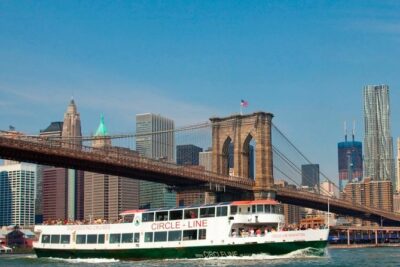 ★ 4.5Circle Line: 2.5hr – Complete Manhattan Island CruiseTickets from $343,488 traveller reviews
 ★ 4.6From Manhattan: 4-Hour Dyker Heights Holiday Lights Bus TourTickets from $632,426 traveller reviews
 ★ 3.5Manhattan to JFK: One Way Shared Departure TransferTickets from $312,030 traveller reviews
 ★ 4.5The Manhattan Helicopter Tour of New YorkTickets from $2361,842 traveller reviews
 ★ 3.5Private Transfer from Manhattan to NYC Airports (JFK/EWR/LGA)Tickets from $361,683 traveller reviews
More useful New York routes