
Review · NEW YORK CITY TOURS
New York City: Art Deco and Architecture Landmarks Tour
Midtown turns into a guided picture book when you look up. This tour walks you through the Art Deco backbone of Manhattan and pairs big icons with street-level details you would miss on your own, plus historic photos to anchor the stories.
Two things I really like: you get to see both exteriors and interiors, including a few carefully preserved lobbies, and the route is packed so you cover multiple architectural styles in just 150 minutes. One thing to consider is that it is a walking tour, so comfortable shoes matter, especially if you are sensitive to crowds around Midtown’s busiest blocks.
Key reasons this tour scores high
- Small-group pace with lots of question time, so you can slow down when something catches your eye.
- Historic photos as context, which helps the buildings click beyond pretty facades.
- Interior lobby moments, not just exterior selfies.
- A focused Art Deco route through Midtown, from Bryant Park and 42nd Street to Rockefeller Center.
- A guide-led approach to looking upward, where the real decoration lives.
How the guide teaches you to see Art Deco in Midtown
Art Deco in New York is easy to enjoy from street level. It is harder to truly read. This tour leans into the second part, teaching you where to look, what to notice, and how to connect the ornament to the era that made it.
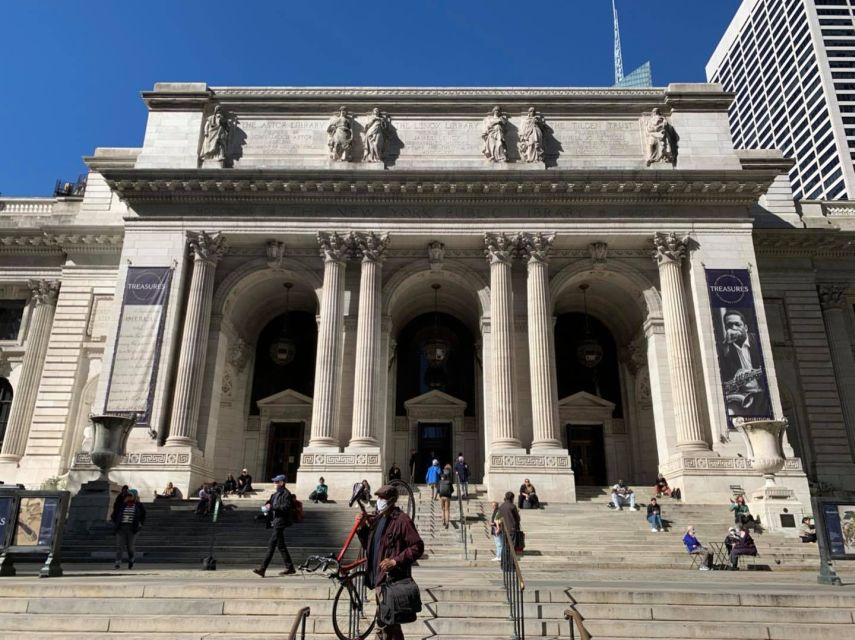
You will get historic context along the walk, including photo references that place the buildings in time. You also hear how landmarking laws took shape, which matters because it explains why many of these structures still feel intact today. Even if you are not a law nerd, it gives you a practical framework for why preservation became a real movement, not just a nice idea.
Most guides running this tour keep the commentary tied to what you can see right now. If your guide is someone like Jeremy or Robin (names that show up often), expect a lot of street-smart explanations, plus thoughtful answers when you ask questions on the spot. The vibe is part walking tour, part architecture lesson, with humor when the details get nerdy.
You can also read our reviews of more city tours in New York City



Bryant Park start: where the route finds its rhythm
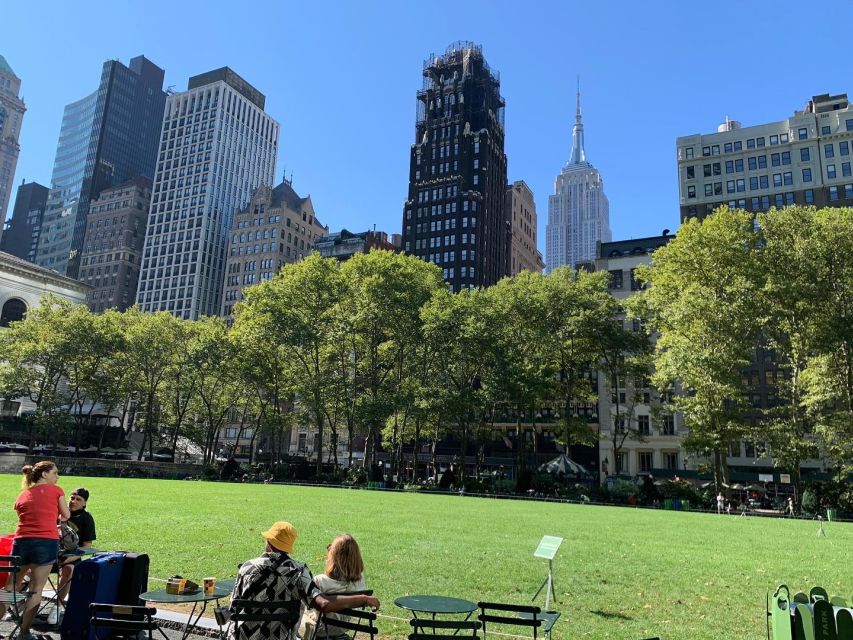
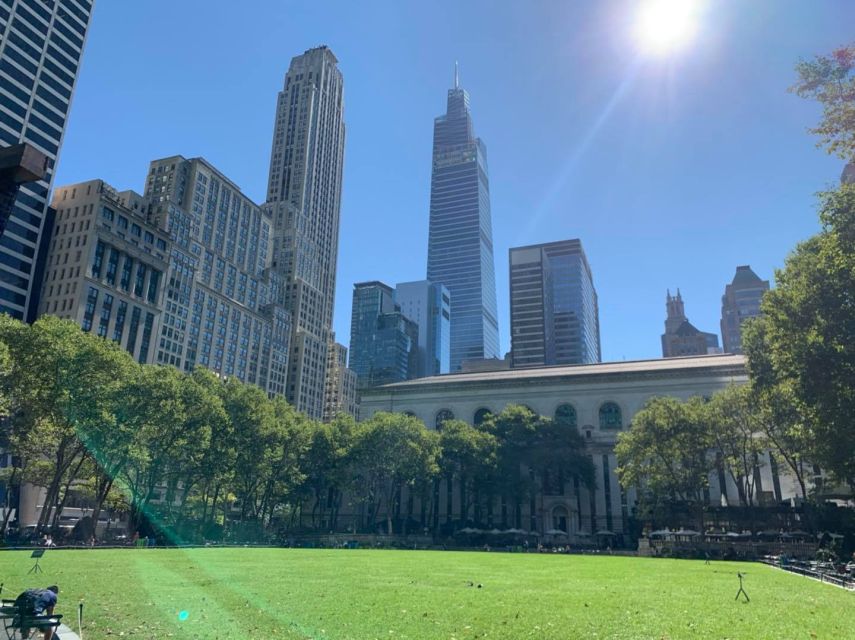
The tour begins around Midtown’s gravity well, near Bryant Park. This is a smart choice because Bryant Park gives you breathing room before the architecture gets intense. You start with views and orientation, then head into the design story that Midtown tells in layers.
You will likely spend a short block time on photo and sightseeing moments nearby, then settle into Bryant Park itself. Think of this as the moment the guide turns on the architecture filter in your brain. Before you hit the famous corners, you learn what Art Deco generally signals visually, like how the buildings use bold vertical lines, stylized forms, and decorative setbacks to create drama.
Bryant Park also helps you understand the practical side of Midtown. Buildings do not exist in a vacuum. They connect through sightlines, street widths, and pedestrian flow. Once you know where you are standing, the rest of the tour feels less like a checklist and more like a walk through a real city.
42nd Street and the Empire State Building perspective shift
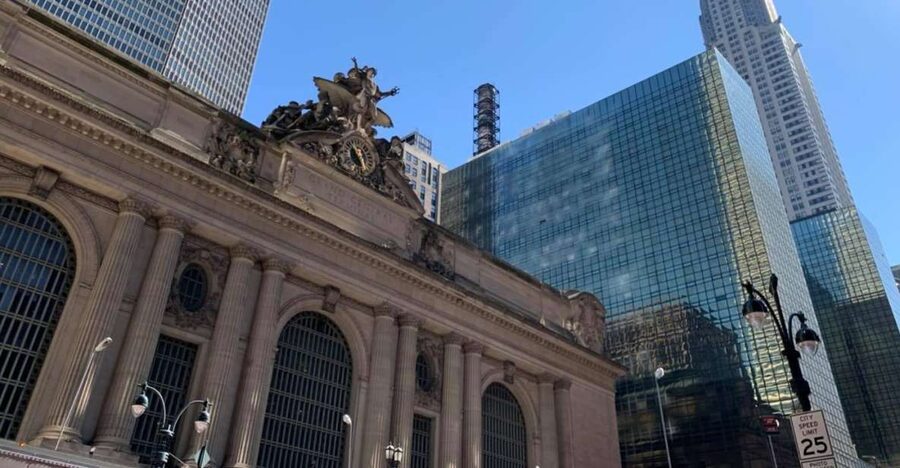
After Bryant Park, you move into the 42nd Street area, where Midtown starts stacking landmark after landmark. This portion is where the tour becomes truly efficient. You spend time walking and visiting buildings along the corridor, with multiple chances to stop, look up, and take photos.
You also get a unique perspective on the Empire State Building. The key is not just seeing the tower, it is learning how to interpret it relative to the other architecture around it. Art Deco does not mean one single look. This stretch of Midtown shows the style beside related classics like Beaux-Arts, so the differences feel real instead of abstract.
The tour includes historic buildings along 42nd Street, and the guide points out decorative elements at street level and above. Here is the trick you should use even after the tour: when you see one detail, look for the next one above it. Many of the most interesting motifs live higher than you naturally aim your phone camera. The guide helps you train that habit fast.
Chrysler Building stop: angles, symbolism, and why details matter
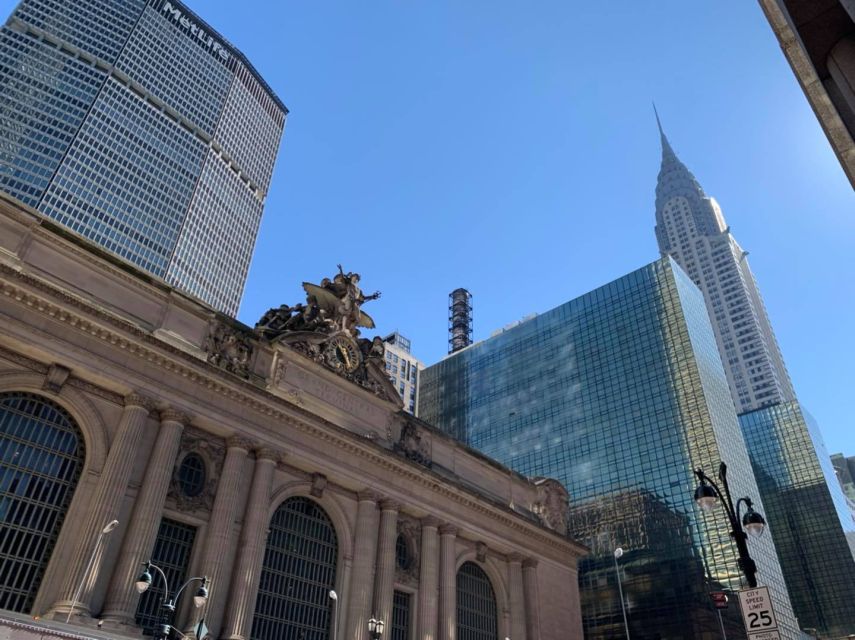
The Chrysler Building is the superstar everyone expects. The better part is how the tour makes it feel more than a famous skyline photo. You will get a dedicated stop with both viewing and guided explanation, so you can slow down long enough to see why the building earned its reputation.
This is the moment to look for the Chrysler Building’s crown and how the structure signals motion and industry through design. One of the standout teachable details is how the guide can connect decoration to the era’s car culture, including attention to the Chrysler Building figure often described as a bulldog. When someone points this out, the sculpture stops being random and starts being a design statement.
You will also have time to take photos, but the guide will keep steering you away from only the most obvious angles. If you only photograph the tower from the street, you miss how the building reads as a whole composition. Plan on pausing several times during this stop, even if you see people racing for the same perfect shot.
Grand Central Terminal: the interior stop that resets your eyes
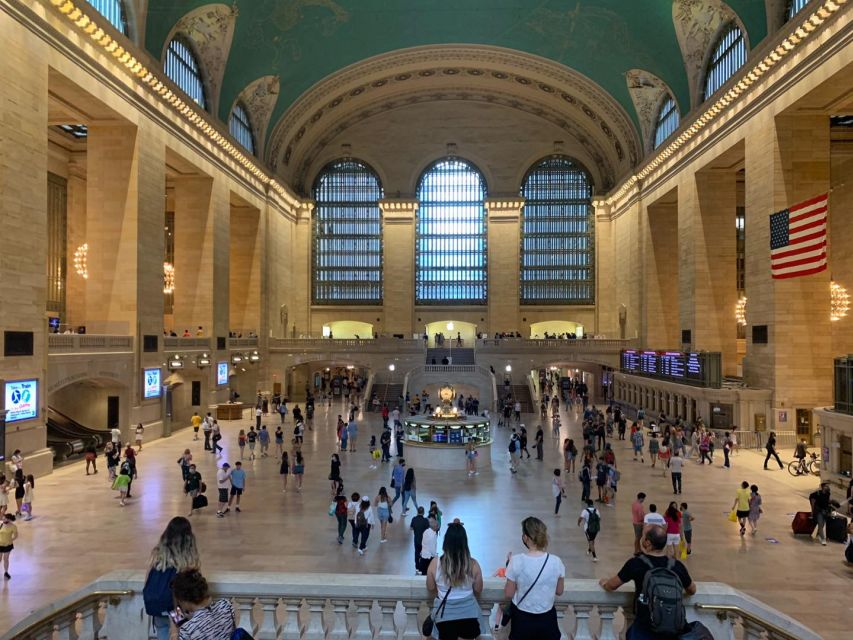
Grand Central Terminal is not just a place to pass through. It is a place where the architecture grabs you by the collar. This tour gives it a proper moment, with a visit inside one of the world’s largest train terminals and one of Midtown’s most beautiful interior spaces.
You get about an hour-like feeling compressed into a shorter window, with the guide pointing out what makes Grand Central work as design. The biggest value here is comparison. Earlier you are focused on exterior Art Deco language. Inside Grand Central, you see how mid-century grandeur and earlier influences shape the experience of a public building.
If you enjoy architecture more than sightseeing checkboxes, this stop is the one that helps you feel why these buildings matter to daily life. Grand Central is still functioning. That means you are experiencing design as a living system, not a museum artifact. Even if you only have a short time in Midtown, you leave with a mental snapshot of how the city’s grand spaces were built to impress and guide people.




5th Avenue hidden favorite to Rockefeller Center finish
After Grand Central, the tour keeps moving up toward 5th Avenue and then to Rockefeller Center. This is where you get a broader Midtown sweep and the payoff of a route that is more than just the biggest names.
The guide includes a favorite Art Deco treasure on 5th Avenue. You will not just be told where it is, you will be shown what to look for and how to understand the decorative choices. That is the difference between seeing a building and learning its design language.
Rockefeller Center is a fitting finish because it puts scale into perspective. The area feels like a transition from individual landmark focus to a more urban, civic view of architecture. By the time you reach Rockefeller Plaza, you have mentally “mapped” the style across multiple stops, so the final cluster feels less like a final destination and more like the end of a story.
If you want a practical add-on after the tour, I like pairing it with a higher viewpoint such as Top of the Rock, so you can connect what you saw up close with what you can see from above.
Value check: $40 for 150 minutes of real architecture time
At $40 per person for about 150 minutes, this tour lands in a sweet spot for Midtown. It is not free, but you are buying something you cannot easily replicate solo in a short window: a guided route that hits major landmarks plus lesser-known stops, and an explanation that turns decoration into context.
What makes the price feel fair is the mix:
- You see multiple iconic buildings you came for in the first place.
- You also get access moments to preserved interiors like lobbies, which often require more effort on your own.
- The guide adds layers like landmarking laws and historic photo references, so the visit becomes educational rather than just scenic.
The biggest reason value can dip is if you hate walking or you want a long, slow museum-style pace. This tour is built for mobility and smart stopping points, not for lingering for an hour inside one single building.
Who should book this Art Deco and Architecture Landmarks tour
This is a strong fit if you:
- Love architecture and want to learn how to spot design details quickly.
- Want Midtown landmarks without spending your whole day planning where to go.
- Appreciate interior moments, not just exterior skyline views.
It is also a good choice for first-timers who feel overwhelmed by Midtown. The tour gives you structure, so you leave with a clearer mental map of how Art Deco, Beaux-Arts influences, and preservation all connect in this part of New York.
If you are a casual visitor who only cares about one or two iconic buildings, you might prefer a shorter, single-site plan. But if you want a satisfying overview that still feels specific and detailed, this is one of the better uses of a half-day.
Should you book it?
Yes, I would book it if your goal is to understand Midtown’s architecture in a short time. The biggest win is the combination of design teaching plus real stops, including interiors like preserved lobbies and a serious Grand Central moment.
Book it especially if you plan to keep exploring after, because once the guide has trained your eyes, you will start spotting Art Deco details on your own during the rest of your trip. Bring comfortable shoes, wear layers, and be ready to look up.
FAQ
How long is the Art Deco and Architecture Landmarks tour?
The tour runs for 150 minutes.
Where do I meet the guide and where does the tour end?
Meet your guide in front of the Whole Foods store on 6th Avenue. The tour finishes at Rockefeller Plaza, New York, NY 10112.
Is food or drink included?
No. Food and drink are not included.
What is included in the price?
The tour includes a tour guide and a small-group tour.
What should I bring?
Bring comfortable shoes.
Is the tour wheelchair accessible and in English?
Yes, it is wheelchair accessible, and the live tour guide speaks English.
Will the tour run in bad weather?
It takes place rain or shine, but it will be cancelled due to severe weather.
Can I cancel for a refund, and is pay later available?
Free cancellation is available up to 24 hours in advance for a full refund. Reserve now & pay later is also offered.
More City Tours in New York City



More Tours in New York City



More Tour Reviews in New York City


Not for you? Here's more nearby things to do in New York City we have reviewed











More New York City Tours to consider.
 ★ 4.7SUMMIT One Vanderbilt TicketsTickets from $4751,195 traveller reviews
 ★ 4.7Empire State Building Tickets – Observatory & MuseumTickets from $4725,757 traveller reviews
 ★ 4.6Statue of Liberty & Ellis Island with FerryTickets from $1918,683 traveller reviews
 ★ 4.5American Museum of Natural History TicketTickets from $3715,447 traveller reviews
 ★ 5.0New York in One Day Guided Sightseeing TourTickets from $9913,166 traveller reviews
 ★ 4.6Museum of Modern Art (MoMA) Entry TicketTickets from $3012,540 traveller reviews
 ★ 4.7One World Observatory Skip-the-Line TicketTickets from $3012,329 traveller reviews
 ★ 4.7New York CityPASS®: Save up to 41% at 5 Top AttractionsTickets from $15410,548 traveller reviews