
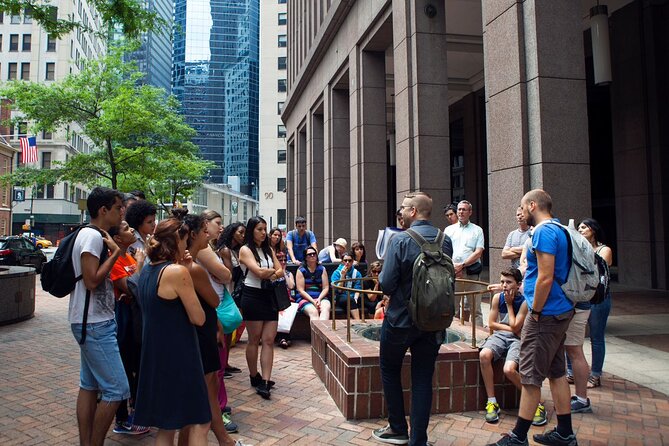
Review · NEW YORK CITY TOURS
New York City Slavery and Underground Railroad Tour
New York’s slavery story feels uncomfortably close. On this 2.5-hour walk, you follow the African-American Freedom Trail through Lower Manhattan, with the kind of context that brings people like Frederick Douglass into sharper focus. I love how the tour points you to African Burial Ground and explains why it matters, not just what it is. One thing to factor in, though, is that this is a lot of standing and listening at street corners, and some areas can be blocked or under construction.
What makes it work is the storytelling from the guide, and I’ve seen standout performances from guides such as Ludie and Sean, plus enthusiastic guides like Maia and Maya. The group stays small, up to 30 people, and you get a mobile ticket so you can move without extra fuss. I also like that you start at a clear anchor point near public transit, then end at the African Burial Ground area where the emotional weight lands.
Key things you’ll notice on this NYC tour
- A Lower Manhattan route tied to escape, abolitionists, and survival
- African Burial Ground stops the conversation at the right moment
- Wall Street history connected to enslaved labor and early colonial walls
- Foley Square’s Triumph of the Human Spirit adds a strong public memorial layer
- Guides often bring visuals and personal teaching style, not just dates
- Exterior sightseeing means you’ll spend time walking, not museum-hopping
Why this Underground Railroad walk matters in New York City
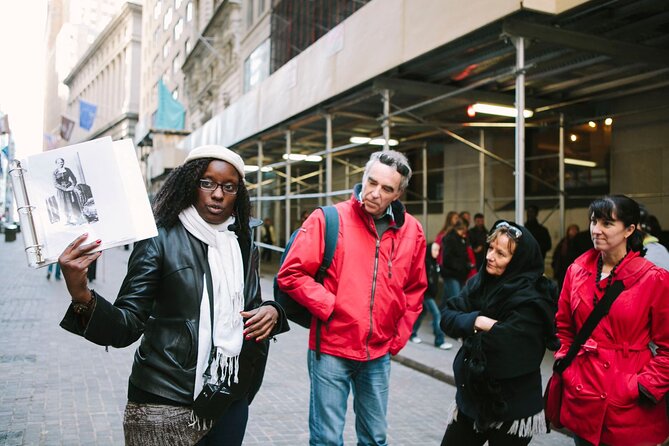
This is not the kind of tour that treats slavery as a distant topic. The Underground Railroad is usually described like it happened far from major cities, but New York was deeply involved, and that is the point of this walk. You’ll hear how escape routes and safe spaces were part of a real network, supported by abolitionists and allies, and used by enslaved people seeking freedom.
You also get something New York usually does well, if you know where to look. The tour connects big landmarks to the smaller, harder truths: what enslaved people built, where they were sold, and how public spaces grew around decisions made in their absence of freedom. That link is what turns the walk into more than trivia.
Two practical benefits stand out for me. First, the guide gives you names and themes you can hang onto, instead of a scattershot list of sites. Second, the route is laid out so you’re seeing the geography of Lower Manhattan as part of the story, not just moving between attractions.
You can also read our reviews of more city tours in New York City



Price and time, what $49 gets you for 2.5 hours
At $49 per person for about 2 hours 30 minutes, this is a value play if you want guided context. You’re paying for interpretation, not entrance fees, and that matters here because many stops are exteriors. The tour includes a local guide plus slavery in historical context, New York’s role in slavery, and Underground Railroad history.
There’s also a good “cost vs. payoff” angle. Some stops are free, and the walking route covers multiple famous corners of Manhattan in one go. You’re not just buying access to one site, you’re buying a guided thread that connects several locations that most people would otherwise treat separately.
The one caution is that your time is fixed. This is a walking tour with limited time at each point, so if you’re the type who wants long museum reading sessions, you may feel rushed. Still, the structure works well because it pushes you forward while your attention is fresh.
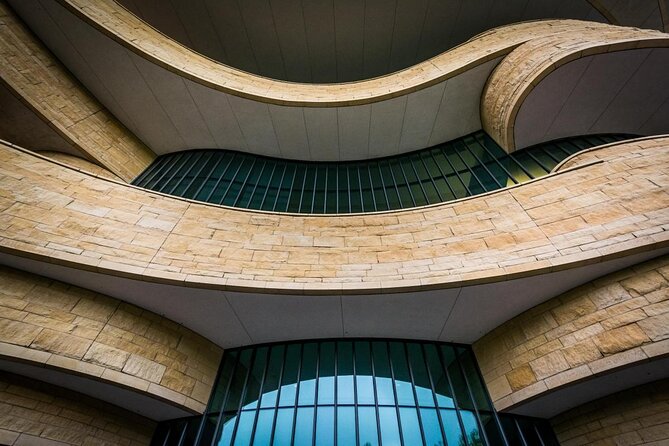
Getting started at Bowling Green, National Museum of the American Indian (exterior)
You meet outside the National Museum of the American Indian in Manhattan, with the start point at 1 Bowling Green. From there, the tour begins as a Lower Manhattan orientation, which is helpful if you’re not already familiar with the area.
Even though stop 1 is an exterior visit, the location is a strong opener. The Alexander Hamilton Custom House building sits right in your line of sight, and the tour uses that setting to widen the lens from one topic to the systems behind it. You learn why New York grew into a trade and commerce hub, and how that growth connects to the broader story of slavery.
Time at this stop is around 10 minutes, and admission is not included. Practically, that means you should be ready to listen more than look up close at exhibits at this moment.
What I like: this start gives you a reference point so the rest of the walk feels like a route you can picture later. What I’d advise: arrive a few minutes early, and dress for the first part of the cold if you’re doing this in winter. The itinerary is outdoors-heavy.
Battery Park and Fort Amsterdam, seeing the city before Ellis Island
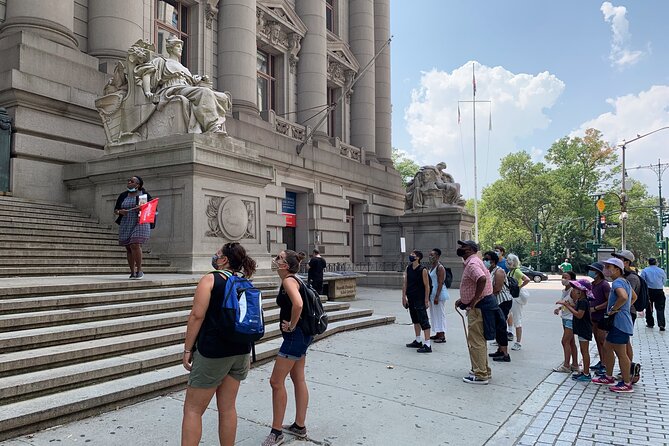
Next up is Battery Park for about 10 minutes. The emphasis here is on New York before the Statue of Liberty and Ellis Island became the headline. You’ll hear that for more than 200 years, The Battery was a major arrival gateway, with newcomers coming by sea long before later immigration icons took over the story.
The tour then pushes you back further into colonial Manhattan, including references tied to Fort Amsterdam, the first settlement. The point is not to confuse you with dates. It’s to show that New York’s earliest urban landscape shaped opportunities and dangers for everyone, including enslaved Africans and the people who exploited them.
This stop also helps you understand why the Underground Railroad story in New York doesn’t live in one hidden basement. It lives in streets, waterfront-adjacent spaces, and the city’s changing geography.
A minor drawback: Battery Park can be windy and open. If the day is rough, the standing time can feel longer than you expect, so consider bringing a hat and gloves you can actually wear while walking.
Fraunces Tavern exterior, Revolution-era setting with an unsettling thread
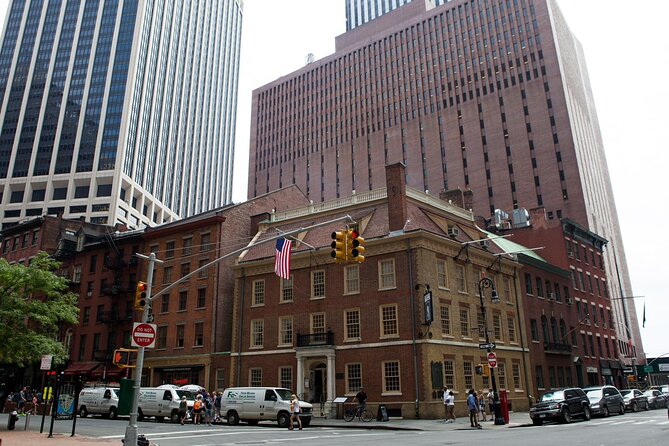
Fraunces Tavern Museum is next, again as an exterior visit for about 15 minutes. The tour uses the location’s Revolutionary-era significance as a backdrop, but it doesn’t let you stop at the familiar American history angle.
Instead, the guide uses the setting to point out how slavery and freedom were tangled in the era people often romanticize. You get the sense that the founding story was not clean and separate from human bondage. That connection can feel heavy, but it also makes the city’s history more honest.
Admission is not included for this stop, which makes sense given it’s primarily an exterior look. Your time is mostly about listening and orienting.
If you’re thinking of pairing this tour with a later meal, this is a good stop for a mental reset. You’re in the part of Lower Manhattan where dining options are easy to find, and your brain will appreciate a change from facts to food.





Wall Street and the old wall (1685–1699), why finance shows up in the slavery story
Wall Street is the tour’s biggest “wait, really?” moment for a lot of people. The guide brings you to the place where an actual wall existed from 1685 to 1699, and the tour’s central point lands with force: the former location of the Wall was built by enslaved people.
The heart of it is not blaming a single street. It’s showing how power works across time. You’ll walk through the financial district and learn how the early infrastructure of New York was connected to exploitation and forced labor.
You’ll also hear about those escaping slavery hiding while en route to free states, with abolitionist help. That is the Underground Railroad lens, applied to the modern geography you probably already think you know.
The time here is about 30 minutes, which is longer than most stops. Expect more story density and more names and themes. This is where the guide’s teaching style matters a lot.
Practical tip: if you start to feel overwhelmed, look up at buildings when your ears need a break. The tour is outdoors, and it’s easier to absorb the narrative when you take small visual pauses.
Foley Square, the Triumph of the Human Spirit memorial stop
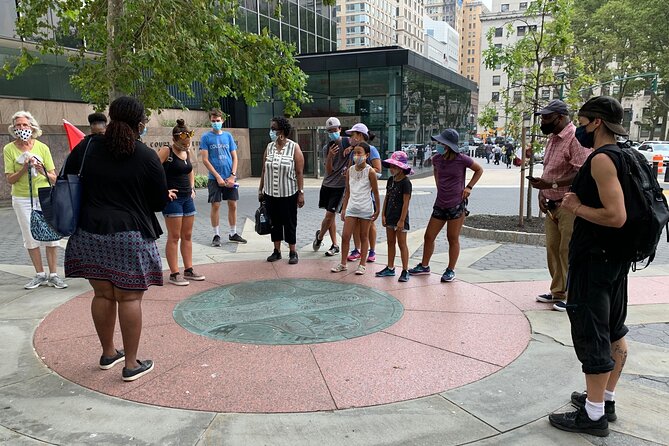
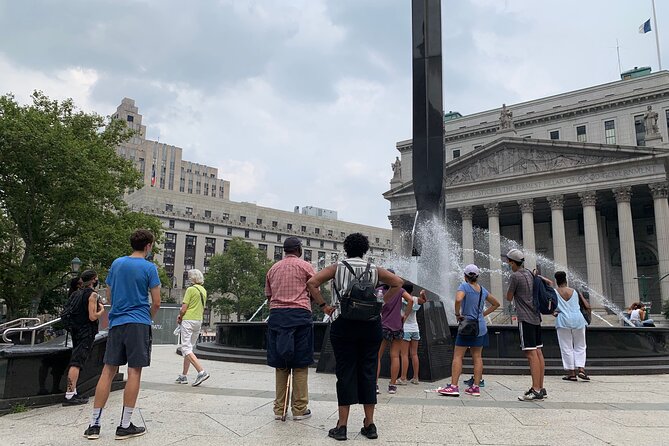
Foley Square is next, for around 15 minutes, and it includes a stop at a sculpture called the Triumph of the Human Spirit. Admission is free here, and the tour uses this public artwork to keep the story grounded in remembrance.
This is one of the spots where the tour shifts from “systems and movement” to “what we remember in public space.” You’ll learn how the presence of enslaved people in New York is honored in the symbolism of the area.
I like this stop because it gives you a moment to breathe while still staying in the emotional lane the tour is building. It also helps you connect the Underground Railroad story to a modern city that visibly carries memorial markers.
African Burial Ground National Monument, the stop that changes how you see the city
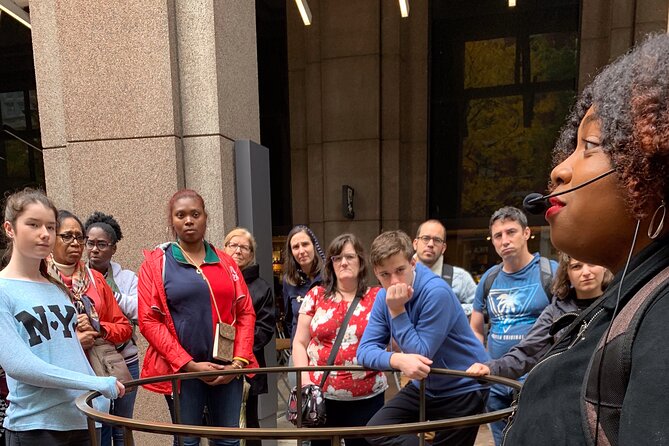
The African Burial Ground National Monument is the tour’s emotional center. You spend about 10 minutes at the site, and admission is free.
This is the oldest and largest known excavated burial ground in New York documenting the lives of enslaved people. The guide also points out the meaning behind symbols carved into the monument, and that interpretation can be the difference between a quick look and a lasting memory. Sean’s explanations of symbolism were singled out by guests, and it fits what this place demands from a guide: careful context.
A lot of people describe this stop as solemn and powerful, and that matches what the site feels like in person. Even if you’re not a “monument person,” you’ll likely slow down here.
What to consider: this is still a walking tour, so you don’t get hours on site. It’s enough to leave an imprint, but not enough for deep museum-style reading if you’re the kind who needs time to fully process details.
The former site of the first African-American church, the ending that lands
After the African Burial Ground, the tour continues on foot to the former site of the first African-American church in New York, which was also one of the stops on the Underground Railroad. The tour ends at 290 Broadway, near the monument area.
This ending matters because it ties freedom networks to community spaces. Churches and organized community life were not side stories. They were part of survival and help.
If you’re walking out feeling raw, that’s normal. The guide’s job is to connect the dots, and the last stretch is where the story becomes human, not abstract.
What to bring, and how to handle all the standing
This tour requires moderate physical fitness, and it’s outdoors with multiple stops. Even though time per stop is short, the format means you’re often standing while the guide talks.
So I suggest planning for comfort:
- Wear comfortable shoes (you’ll be on sidewalks and corners for hours).
- Layer up, because Lower Manhattan weather can flip fast.
- If it’s cold or windy, bring a hat that fits under your hood or scarf.
Sound can also be an issue outdoors. One guest asked for a microphone because they could barely hear. The provider responded that they would make sure the guide has amplification. Still, don’t assume perfect audio at every moment. Try to position yourself where you’re not far from the guide, and keep your expectations realistic for street-corner speaking.
Also, some areas may be blocked off or under construction on certain days. If you care most about seeing every exact detail, know that you might get less sight access on a given day, even if the guide still shares the story.
When this tour is the right fit, and when to choose something else
This is a strong choice if you:
- want a guided New York City slavery tour focused on the Underground Railroad route through Manhattan
- like history that connects sites to people, not just dates
- enjoy walking tours where you learn the geography as you go
- want an outing that feels meaningful, not just scenic
It may feel less ideal if you:
- hate standing for long stretches (the story is mostly delivered on the move)
- want lots of indoor time at museums
- need full control over pace, because the group timing is structured
I also think it suits both visitors and locals. One local guest loved seeing familiar parts of NYC from a different lens. That’s a good sign the tour isn’t only for first-timers.
Should you book this NYC slavery and Underground Railroad tour?
Yes, if you want a guided path through major Lower Manhattan sites that directly connect slavery, abolitionists, and the Underground Railroad. For $49, you get a guided storyline that covers multiple important locations, plus the kind of interpretation that helps you understand what you’re seeing and why it matters.
Book it especially if you plan to spend limited time in Manhattan. This is an efficient way to get bearings fast and turn landmarks into a coherent picture. And because the tour is English-language and capped at 30 people, you’re more likely to get clear group attention than on huge, rushed walks.
My one “think twice” note: if you’re very sensitive to cold or standing outdoors, check the weather closely. The experience requires good weather, and it has been canceled due to forecasts of hazardous walking conditions. If the day is rough, your comfort will shape how much you take in.
If you want a tour that changes how you see New York, this one is worth your time.
FAQ
Where does the tour start and end?
The tour starts outside the National Museum of the American Indian at 1 Bowling Green, New York, NY 10004, and it ends at African Burial Ground National Monument, 290 Broadway, New York, NY 10007.
How long is the tour?
The duration is about 2 hours 30 minutes.
What is the price per person?
The price is $49.00 per person.
Is admission included for each stop?
Some stops are exterior visits or note that admission tickets are not included (for example, the National Museum of the American Indian exterior visit and Fraunces Tavern exterior). Foley Square and African Burial Ground are listed as free.
What language is the tour offered in?
The tour is offered in English.
What is included in the tour?
It includes a local guide and content covering slavery in historical context, New York’s role in slavery, history of the Underground Railroad, and stops tied to African Burial Ground, Fraunces Tavern, and the site of New York’s first slave market.
Is hotel pickup included?
No. The tour does not include hotel pickup and drop-off.
Is the tour affected by weather?
Yes. The experience requires good weather, and if it’s canceled due to poor weather, you will be offered a different date or a full refund.
Can I get a full refund if I cancel?
Yes. You can cancel up to 24 hours in advance for a full refund. If you cancel less than 24 hours before the experience starts, it is not refunded.
More City Tours in New York City



More Tours in New York City



More Tour Reviews in New York City


Not for you? Here's more nearby things to do in New York City we have reviewed












More New York City Tours to consider.
 ★ 4.7SUMMIT One Vanderbilt TicketsTickets from $4751,195 traveller reviews
 ★ 4.7Empire State Building Tickets – Observatory & MuseumTickets from $4725,757 traveller reviews
 ★ 4.6Statue of Liberty & Ellis Island with FerryTickets from $1918,683 traveller reviews
 ★ 4.5American Museum of Natural History TicketTickets from $3715,447 traveller reviews
 ★ 5.0New York in One Day Guided Sightseeing TourTickets from $9913,166 traveller reviews
 ★ 4.6Museum of Modern Art (MoMA) Entry TicketTickets from $3012,540 traveller reviews
 ★ 4.7One World Observatory Skip-the-Line TicketTickets from $3012,329 traveller reviews
 ★ 4.7New York CityPASS®: Save up to 41% at 5 Top AttractionsTickets from $15410,548 traveller reviews