
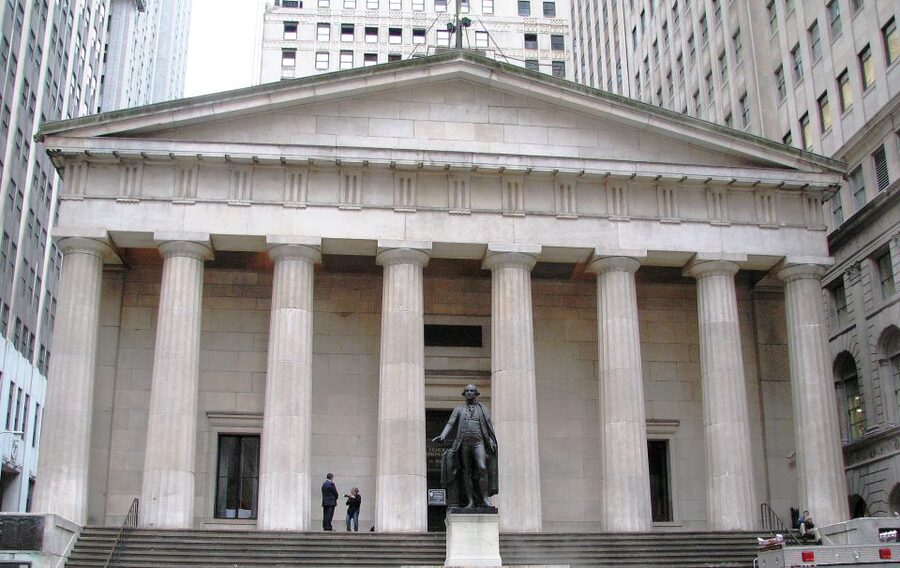
Review · NEW YORK CITY TOURS
New York: Hamilton and Washington Revolutionary Walking Tour
You leave with your head full of both Washington and Hamilton. I like the live, staged Declaration of Independence reading and how the tour traces the story from political drama to real consequences, including the Battle of Brooklyn and Washington’s hard retreat. One thing to consider: it’s a tight 3 hours, so this is focused storytelling, not a broad survey of every Revolutionary War thread.
This walk is built for people who want history with momentum. You get guided stops tied to famous names, but the guide also explains the human stakes behind them, from early protests to the birth of a new government.
If you go in expecting a fast “checklist” tour, you may feel slightly rushed. If you go in ready to ask questions, you’ll probably come out hungry to learn more about the whole Revolutionary era.
Key highlights worth circling
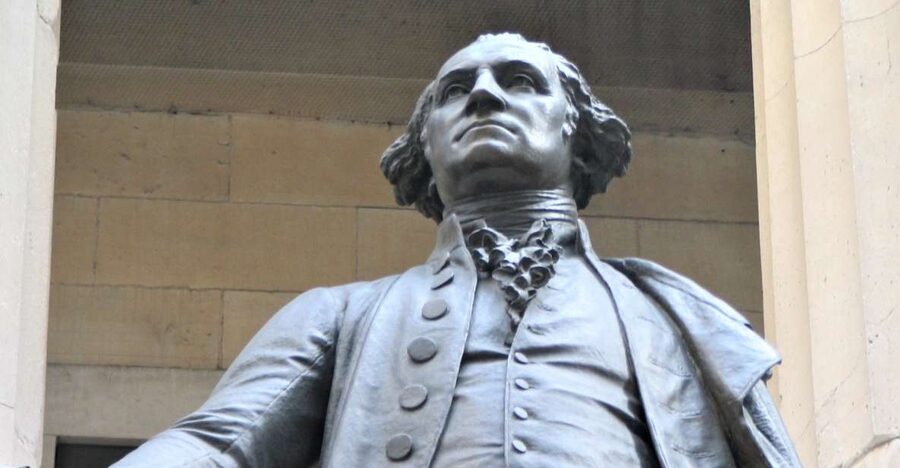
- A dramatic reenactment of the Declaration of Independence reading on July 9, 1776
- The Battle of Brooklyn, Washington’s daring retreat, and what followed
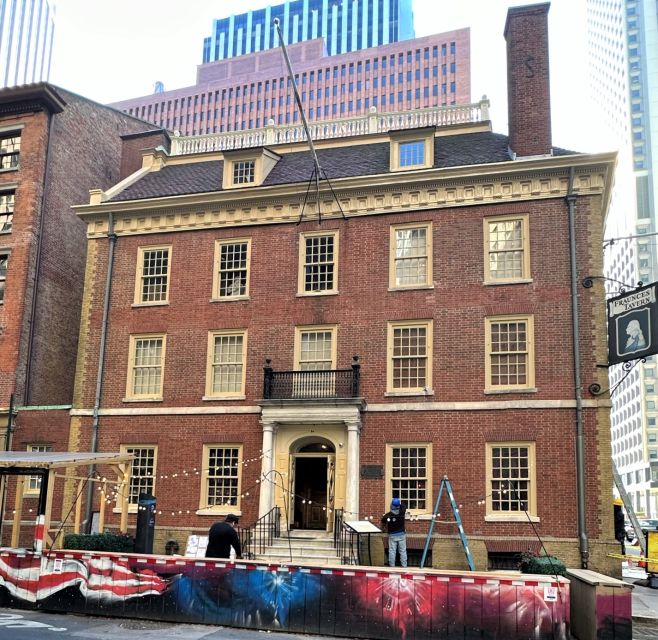
- Fraunces Tavern and Washington’s moving farewell to his officers
- Washington’s presidency paired with Hamilton’s ambitious financial plan
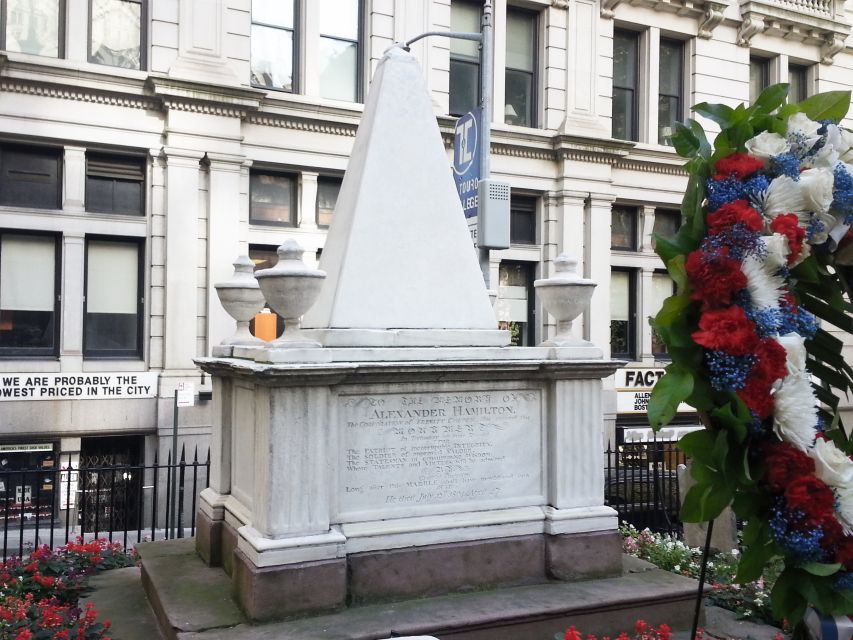
- A visit to the resting place of Alexander Hamilton and Eliza Schuyler Hamilton
Getting started at Bowling Green: the Hamilton U.S. Custom House area
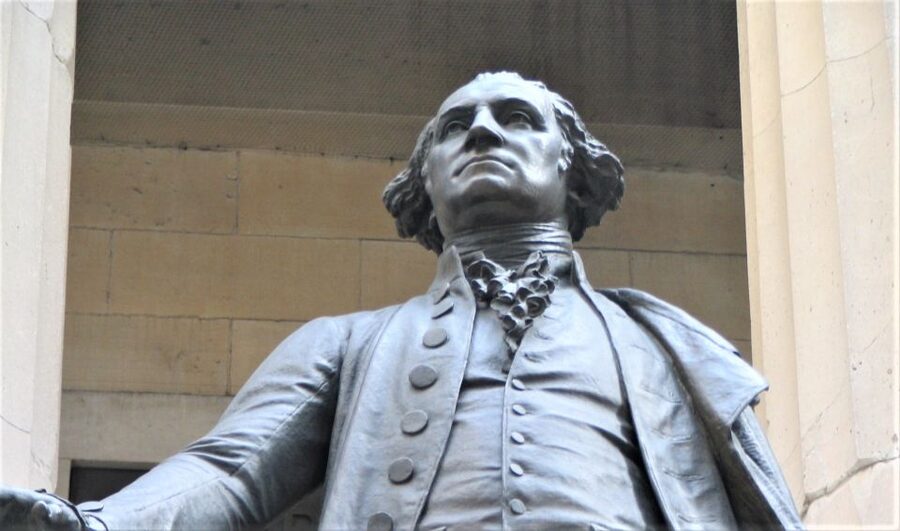
The tour meets on the steps of 1 Bowling Green, at the Alexander Hamilton U.S. Custom House and the National Museum of the American Indian. This is a great launch point because Bowling Green sits right in the story zone where New York started shifting from colonial port toward something new and federal.
A walking tour works best when you have your bearings early. Here, you start with a site named for Hamilton himself, which helps the guide frame what you’re about to learn: how one ambitious thinker helped shape the economic future of the young country, and how Washington’s leadership set the stage for that future.
Also, since this is Lower Manhattan, the pace makes sense. You’ll be moving through areas where you can connect politics, war, and personalities without needing a bus or subway.
You can also read our reviews of more walking tours in New York City



The Declaration of Independence reenactment you can actually feel
One standout moment is the rousing reading of the Declaration of Independence on July 9, 1776. This kind of staging can be hit-or-miss on some tours, but the way this one is presented is designed to help you understand not just what was said, but why it mattered.
The Declaration wasn’t a page you read quietly. It was a statement meant to rally, justify, and challenge the status quo. When you hear it performed as part of the walking narrative, the words start to act like they did in the 1770s: as fuel. You’re not just memorizing dates. You’re experiencing the emotional pitch that pushed ordinary people to take extraordinary risks.
If you’re a fan of the political theater around America’s founding, you’ll likely love this part. Even if you are more into the war than the speeches, this reenactment gives the war context quickly.
Battle of Brooklyn and Washington’s retreat: where strategy meets tragedy

From there, the tour moves into one of the most intense Revolutionary War episodes in New York. You’ll hear about the devastating Battle of Brooklyn and Washington’s daring retreat.
What I appreciate about including this battle in a walking format is that it turns a “textbook event” into a chain of decisions. You can feel how the stakes escalated fast, and how one hard outcome forced Washington to pivot instead of simply regrouping.
This also matters because the battle helps you understand the emotional whiplash of the era. Early optimism could flip into real loss overnight. That pattern shows up again and again in political history, and the tour makes it easier to track.
If you want a tour that focuses on big names but does not forget the cost behind the names, this section is a strong match.
Fraunces Tavern farewell: the emotion after the fighting
Next up is Fraunces Tavern, the famous stop tied to Washington’s farewell to his officers. The highlight here is the moving quality of the moment, not just the celebrity of the location.
Washington’s story can be told like a list of actions. The farewell helps the guide connect those actions to a personal toll. When you hear about how he addressed his officers, it gives you a human lens for the larger political arc.
This is also a smart tour design choice. You’re not only learning about battles and plans. You’re getting a scene where leadership shows up as relationship, gratitude, and restraint. That emotional pacing makes the rest of the walk land better.
Washington’s presidency meets Hamilton’s financial plan
After the wartime and farewell moments, the tour shifts gears into what often gets treated as “the boring parts,” but shouldn’t. You’ll learn about Washington’s presidency and Hamilton’s ambitious financial plan.
This pairing is especially useful. Washington represents legitimacy and the problem of holding the new country together. Hamilton represents the hard work of building systems that make that legitimacy practical. Put together, they show you why the early United States was not just a political idea. It was a daily administrative challenge.
If you love cause-and-effect history, this section gives it to you. Hamilton’s financial approach wasn’t abstract. It was about funding, stability, and the ability to keep commitments. Washington’s leadership wasn’t just ceremonial. It shaped whether the government could function when pressure hit.
And if you’ve ever wondered why Hamilton still shows up in pop culture so often, this part gives you a grounded sense of the real ambition behind the headlines.






Hamilton, rivalry energy, and the political stakes of New York
The tour also incorporates the Hamilton and Burr rivalry, which is a natural bridge between Hamilton’s rise and the political tensions that followed. You get the sense that the story of the founding is not tidy. It’s filled with competing visions, personal ambition, and the stress of building something while under scrutiny.
Even without turning the walk into a courtroom drama, the rivalry is useful because it explains why Hamilton’s financial plan and political influence mattered beyond policy. When power is concentrated and contested, it affects everything.
I like this because it keeps you from treating history as museum glass. The founding era becomes more like a live conflict of ideas that kept evolving.
The Hamiltons in rest: ending at their gravesite
The last big emotional marker is the resting place of Alexander Hamilton and his wife Eliza Schuyler Hamilton. Ending here works well because it brings the story full circle from ambition and public action to legacy.
It also reminds you that history has a private side. Hamilton’s work affected national outcomes, but Eliza’s life and partnership are part of the same human story. The tour’s inclusion of both of them helps you hold onto that balance instead of reducing Hamilton to a single legend.
This stop is likely to be quieter than the reenactment or battle talk. That quiet is useful. It gives you a place to absorb what you learned, and to notice how the founding era still has physical anchors right in the city.
The guide factor: professional historian, period visuals, and story pacing
This isn’t sold as a casual stroll. You get a professional licensed New York City tour guide and historian with a Master’s degree in American history. That matters because the guide is not only delivering facts. You’re also getting context and interpretation, which is what keeps a 3-hour tour from feeling like a list.
The tour also emphasizes gripping stories and vivid period images. That combination helps a lot. When you’re walking past modern buildings, your brain needs help translating the past into something real. Period images and clear storytelling make that translation easier.
It’s the kind of format where you might find yourself asking follow-up questions after the tour ends, because one answer tends to create two new ones.
Price and value: is $47 for a 3-hour walking tour worth it?
The price is $47 per person for 3 hours. On paper, that’s not cheap for a walking tour. But it can still be good value if you care about how history is explained and if you want to get something you can’t easily piece together from a map.
Here’s where the value comes from:
- You’re paying for a guide with a Master’s degree in American history, not just local trivia.
- You’re getting multiple “anchor moments” in one route: Declaration reenactment, Battle of Brooklyn, Fraunces Tavern farewell, Washington presidency, Hamilton’s financial plan, and the Hamilton resting place.
- The tour includes period images and story structure that ties everything together fast.
If you’re the type who learns best from guided narrative and you enjoy connecting political motives to battlefield outcomes, $47 can feel very reasonable.
If you’re only interested in one specific stop, you may wonder if the rest of the material is more than you need. Still, the tour’s strength is exactly that mix: war, politics, money, and legacy.
What to wear and how to plan for weather and walking
This tour runs snow, rain, or shine, and it lasts 3 hours, so plan for time on your feet. Bring comfortable shoes and weather-appropriate clothing.
That’s not just “be comfortable” advice. In a tour like this, the energy depends on whether you can keep your focus while moving. Cold hands and sore feet can turn a great story into endurance.
Also note: pets are not allowed. If you’re traveling with one, you’ll need to make other plans.
Who this tour is best for
This is a great fit if you:
- Like the Revolutionary era and want a guided, story-driven route through it
- Know the Hamilton basics and want the real historical framing behind the names
- Enjoy connecting speeches and policies to what happened next on the ground
- Prefer a focused 3-hour experience rather than a long day of wandering
It might be less ideal if you want purely archaeological, hands-on, or museum-style history. This tour is interpretive. It’s about how events connect and how people made choices under pressure.
Should you book the Hamilton and Washington Revolutionary Walking Tour?
I’d book it if you want a lively, guided walk that treats the founding story like it still has consequences. The Declaration reenactment, the emotional hit of Fraunces Tavern, and the pairing of Washington and Hamilton give you a satisfying arc that’s hard to reproduce on your own in the same amount of time.
I’d think twice only if you’re expecting a broad, everything-you-need guide to the entire Revolutionary War. At 3 hours, the tour goes deep on the Washington-Hamilton thread and a few key turning points, not every topic.
If that focus sounds like your kind of history, this one is an easy yes.
FAQ
Where is the meeting point for the tour?
Meet on the steps of 1 Bowling Green, known as the Alexander Hamilton U.S. Custom House and the National Museum of the American Indian.
How long is the Hamilton and Washington Revolutionary Walking Tour?
The tour lasts 3 hours.
How much does the tour cost?
The price is $47 per person.
Is the tour only available in good weather?
No. The tour runs snow, rain, or shine.
What should I bring?
Wear comfortable shoes and weather-appropriate clothing.
Are pets allowed on this tour?
No, pets are not allowed.
More Walking Tours in New York City



More Tours in New York City




More Tour Reviews in New York City



Not for you? Here's more nearby things to do in New York City we have reviewed











More New York City Tours to consider.
 ★ 4.7SUMMIT One Vanderbilt TicketsTickets from $4751,195 traveller reviews
 ★ 4.7Empire State Building Tickets – Observatory & MuseumTickets from $4725,757 traveller reviews
 ★ 4.6Statue of Liberty & Ellis Island with FerryTickets from $1918,683 traveller reviews
 ★ 4.5American Museum of Natural History TicketTickets from $3715,447 traveller reviews
 ★ 5.0New York in One Day Guided Sightseeing TourTickets from $9913,166 traveller reviews
 ★ 4.6Museum of Modern Art (MoMA) Entry TicketTickets from $3012,540 traveller reviews
 ★ 4.7One World Observatory Skip-the-Line TicketTickets from $3012,329 traveller reviews
 ★ 4.7New York CityPASS®: Save up to 41% at 5 Top AttractionsTickets from $15410,548 traveller reviews
More useful New York routes