
Review · NEW YORK CITY TOURS
NYC Underground Subway Private Walking Tour
There are subway secrets under your feet. This private, guided walk strings together major landmarks and lesser-known station spaces, from City Hall Park remnants to old Chambers Street ghosts. You also spend a big chunk of time on the 6 train, turning a normal commute into a moving classroom.
I especially like two things about this tour. First, it is led by a native New Yorker guide who mixes facts with real subway instincts. Second, the stops are designed so you are not just looking at signs, you are seeing specific station areas you might otherwise miss.
The main drawback to plan for is comfort and access. You spend time standing, it can be hot, and you will not enter abandoned areas in a legal way, so some dramatic-looking spots are mostly viewed as you pass through or from public areas.
Key Points You Should Know Before You Go

- Private tour, only your group: You get a guide focused on your pace and questions.
- Most stops are in publicly accessible stations: You are not hunting around for restricted spaces.
- A long 6 train segment: About 1.5 hours is spent riding while learning subway history.
- Subway fare is extra: Bring a MetroCard for at least one swipe.
- Named guides like Justin and Richard are praised: Past guests highlight strong enthusiasm and patience.
- Good for history buffs, but expect standing: The tour starts with some early waiting, and summer can feel rough.
NYC Subway Secrets in Public Stations, Not Restricted Places
This is not a typical sightseeing walk where you hop from one museum door to another. Instead, you follow a story through subway infrastructure you can actually see in everyday station areas. That matters, because it keeps the tour practical. You are not stuck with the wrong kind of expectations about what is accessible underground.
The tour is built around the idea that New York City’s subway did not start as an Instagram backdrop. It started as a system with ambition, engineering problems, and politics, and you get to watch how that thinking shows up in station design and city layout. Even if you have used the subway for years, you will still notice the difference between what you normally rush past and what a guide points out.
And yes, you are going underground, but the emphasis stays on public, legal viewing. The dramatic abandoned-station angle is part of the story, but it is handled in a way that respects restrictions.
You can also read our reviews of more walking tours in New York City



Price and the Real Cost of a Subway History Lesson
At $156 per person for about 2 hours, you should treat this as a value-priced private experience, not a budget group tour. The big question is what you get for that money, and the answer is: time with a guide who can connect visible station details to how the system formed.
Two costs matter for your math:
- The tour price is $156 per person.
- The subway ride is not fully covered. A MetroCard is not included and the listing notes 1 swipe is needed.
That means the tour is not just “walk and listen.” You are also paying for an actual subway component, plus the guide work that explains what you are seeing while you are moving. For many visitors, that is exactly the right blend. You get context and motion, not only standing in one place for photos.
Also, the tour is private. If you are traveling as a couple, a small group, or a family that moves together, the price can feel more reasonable because you are paying for a focused guide time, not a seat in a larger mass tour.
Meeting at 200 Broadway and Getting Your Bearings Fast
You meet at 200 Broadway, New York, NY 10038 and the tour ends back at the same spot. That round-trip structure is convenient. It also helps you avoid the common stress of tours that scatter you across the city.
The starting point is described as being near what used to be the world’s tallest building. That matters more than it sounds. It sets the theme: this is a tour about how transportation and city growth evolved around major landmarks, not just a random subway route.
One review detail worth taking seriously: the beginning includes some waiting and standing before things settle into the longer ride. If you are sensitive to standing, plan to wear comfortable shoes and keep water handy.
City Hall Park: First Subway Station Origins and What You Can Still See
City Hall Park is the tour’s opening history stop. The big idea here is simple: you learn about the creation of the very first NYC subway station while looking at visible remnants in the park area.
This is a good way to start because it gives you a mental model for what you will see later. Instead of jumping straight to platforms, you begin with the origin point of the subway story. You also get a chance to orient your sense of place in Lower Manhattan.
What makes this stop work well for most people is the combination of discussion plus visible details. The time allocation here is listed as about 15 minutes, and the admission is free at the park level. You are not buying your way into an indoor site. You are learning where the system began, then walking onward.
Walking Past City Hall, Tweed Courthouse, and the Municipal Building
After City Hall Park, you see New York City Hall again and discuss why it mattered to the subway’s creation. Then you work through a cluster of civic architecture around Lower Manhattan, including a walk by the Tweed Courthouse and a stop tied to the Municipal Building.
This segment is about more than photo stops. The guide connects the subway to the city’s decision-making culture. In practical terms, that helps you read the skyline like a map: government buildings, legal institutions, and major transit nodes all grew together.
The Municipal Building stop is short, around 10 minutes, but it fits the pacing of this tour. You are getting context without turning the day into a long, slow walk of “just another landmark.”
If you are worried that this will feel like only outside walking, it helps to know the tour shifts into more transit time soon after.
You can also read our reviews of more private tours in New York City






Union Square 14th Street Station: A Quick Hit With Purpose
Union Square is where the tour briefly zooms in on the 14th St Union Square Subway Station. The scheduled time here is only about 5 minutes.
So why include it at all? Stops this short are often placed to give you a specific reference point for the bigger subway story. You are likely meant to connect what you learned earlier about origins and civic development to what you are about to experience on the 6 train.
A five-minute stop is not a deep architectural lecture. It is a way to keep the narrative moving and to set you up for the main underground ride. If you are the type who wants to linger for photos, you might find the short timing a little tight, but it keeps the overall tour near the 2-hour mark.
The Big Moment: Riding the 6 Train for 1.5 Hours
The heart of this experience is the Subway 6 segment, with about 1 hour 30 minutes spent riding while learning. That is a huge portion of the tour, and it is also where the concept clicks for many visitors.
A subway ride is the perfect format for this kind of history tour because you are experiencing the system as it functions, not only as a static artifact. You feel how the line connects neighborhoods and how the city’s transit habits shape daily life. The guide turns that motion into a timeline.
It also explains why the tour works even for people who already know the subway basics. You still get new ways to look at stations and corridors you have passed a thousand times.
One thing to keep in mind: the crowd reality of the subway is real. You should expect standing at points and a moving environment. If you hate cramped transit spaces, this part might be the least comfortable section.
Chambers Street and the Abandoned-Station Angle: What You Should Expect
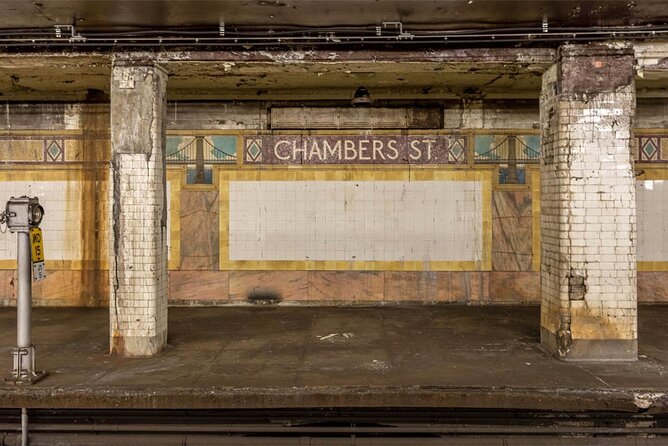
The tour includes a look at the “architectural ghosts” of the nearly forgotten, partially abandoned Chambers Street station, along with remnants tied to Union Station.
Here is the key expectation-setting piece: you should plan on viewing these spaces from public, legal access points rather than entering restricted abandoned areas. One review response notes that the guide is not allowed by state and city law to enter abandoned stations legally.
What that means in your day-to-day experience is simple: some of the most dramatic visuals come from passing by or from the access you are permitted to use, not from walking deep inside. If you are hoping for a long, slow exploration of derelict tunnels, you may feel underwhelmed.
Still, the inclusion is valuable because it adds texture to the story. The subway is not only what is operating today. It is also what was planned, built, and sometimes replaced or retired.
Guides Who Bring the Subway to Life
The best praise in the reviews centers on the guides. Names like Justin and Richard come up, and guests repeatedly mention enthusiasm, patience, and the ability to point out things people have walked past for years.
I think this is the real difference-maker between a mediocre transit tour and a memorable one. A subway system is huge, and without a guide, it is too easy to look at everything and notice nothing. With the right guide, you get a mental list of what to watch for: station cues, civic connections, and the way the system’s original logic still shows through.
One review also flagged that a guide may speak fast and not repeat questions. That is a fair consideration. If you are the kind of person who processes slowly or likes lots of back-and-forth, it may help to come with a couple of prepared questions and ask early if you need things repeated.
How to Prepare: Comfort, Timing, and What to Bring
Because this tour mixes outdoor walking with underground time, you should dress for both. In summer, it can get hot underground, and one review specifically called out heat as a problem.
Practical preparation tips:
- Wear shoes you can stand in for a while.
- Bring a light layer, since subway temperatures can vary.
- Plan for the subway crowds during the 6 train ride.
- Bring a MetroCard for at least one swipe since it is not included.
Also note you can choose from several tour times throughout the day. If heat is an issue for you, pick a cooler part of the day when you can.
Service animals are allowed, and the tour is described as near public transportation, which usually helps with getting to the start point at 200 Broadway.
Who This Tour Fits Best (and Who Might Want to Skip It)
This is a strong match if you love:
- Transit history and city development
- Seeing the subway as infrastructure, not just a way to get somewhere
- A focused private guide experience
It is also a good fit for people who want a short time commitment. The duration is about 2 hours, so you can slot it into a day without losing half the trip to travel.
You might want to consider another option if you:
- Hate standing for long stretches
- Are very sensitive to summer heat
- Want guaranteed access to abandoned areas inside, rather than public, legal viewing
The tour stays in publicly accessible station areas. That is a plus for safety and legality, but it does mean you should not expect to roam freely in abandoned spaces.
Should You Book This NYC Underground Subway Private Walking Tour?
If you like the idea of turning a subway ride into a guided history lesson, I think this one is worth considering. The strongest selling points are the private format, the fact that all stops are publicly accessible, and the high praise for guides like Justin and Richard who bring patience and enthusiasm to the story.
The decision comes down to your comfort expectations. If you can handle standing and you do not mind that some dramatic abandoned-station views are brief or limited by legal access, you will likely get a lot out of it. If you want a slow, hands-on exploration of abandoned tunnels, you may find the experience narrower than you hope.
For the right traveler, though, this tour does a great job of helping you read the subway like a real city artifact, not just a transit line.
FAQ
How long is the NYC Underground Subway Private Walking Tour?
The tour runs for approximately 2 hours.
Is the tour private?
Yes. It is a private tour/activity, and only your group participates.
Where do we meet, and where does it end?
You meet at 200 Broadway, New York, NY 10038, USA. The tour ends back at the same meeting point.
Do I need to pay for subway rides during the tour?
Yes. A subway ride cost is not included, and you should have a MetroCard for 1 swipe.
Are the tour stops accessible to the public?
Yes. All stops are in stations that are publicly accessible.
Does the tour offer different start times?
Yes. There are several tour times throughout the day.
What if I need to cancel?
You can cancel for free up to 24 hours in advance for a full refund. If you cancel less than 24 hours before the start time, the amount you paid will not be refunded.
More Walking Tours in New York City



More Tours in New York City





More Tour Reviews in New York City




Not for you? Here's more nearby things to do in New York City we have reviewed












More New York City Tours to consider.
 ★ 4.7SUMMIT One Vanderbilt TicketsTickets from $4751,195 traveller reviews
 ★ 4.7Empire State Building Tickets – Observatory & MuseumTickets from $4725,757 traveller reviews
 ★ 4.6Statue of Liberty & Ellis Island with FerryTickets from $1918,683 traveller reviews
 ★ 4.5American Museum of Natural History TicketTickets from $3715,447 traveller reviews
 ★ 5.0New York in One Day Guided Sightseeing TourTickets from $9913,166 traveller reviews
 ★ 4.6Museum of Modern Art (MoMA) Entry TicketTickets from $3012,540 traveller reviews
 ★ 4.7One World Observatory Skip-the-Line TicketTickets from $3012,329 traveller reviews
 ★ 4.7New York CityPASS®: Save up to 41% at 5 Top AttractionsTickets from $15410,548 traveller reviews
More useful New York routes