

Review · HISTORICAL TOURS
The Story Behind NY’s Evolving Skyline An Architectural Journey Through History
NYC changes fast, but the buildings explain why. This on-demand architectural journey blends a narrated video with a self-guided walk so you can learn what you are looking at, then keep exploring on your own schedule. It starts with the city’s Dutch-era harbor story and tracks how styles and city planning shaped today’s skyline.
I like that the tour is built to help you read the city, not just admire it. You learn to spot architectural designs and building materials, and you also get the bigger picture on how urban planning affects neighborhoods, parks, and public transportation. That mix is exactly what makes it useful for first-timers and locals who think they already know most of the “where.”
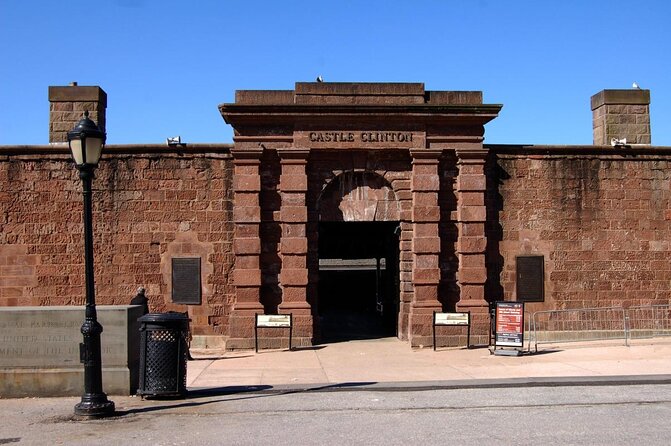
One drawback to plan for: it is self-guided, so you need a bit of initiative to pause, look up, and follow the route from Castle Clinton National Monument through to 20 Hudson Yards.
Key things that make this architectural tour work
- Self-guided pace with an on-demand video you can watch, then walk
- A downloadable document so you can carry addresses and reminders on your device
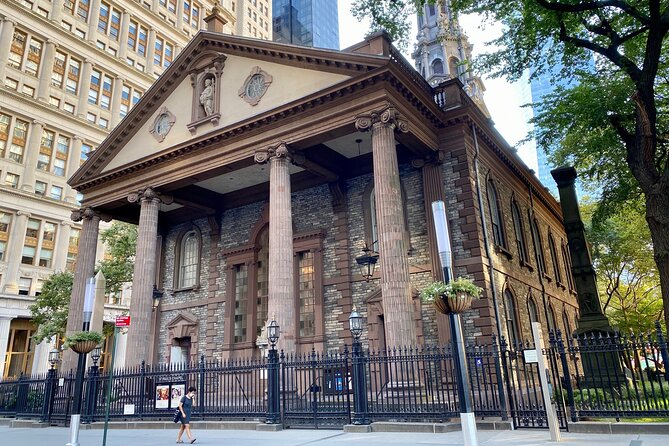
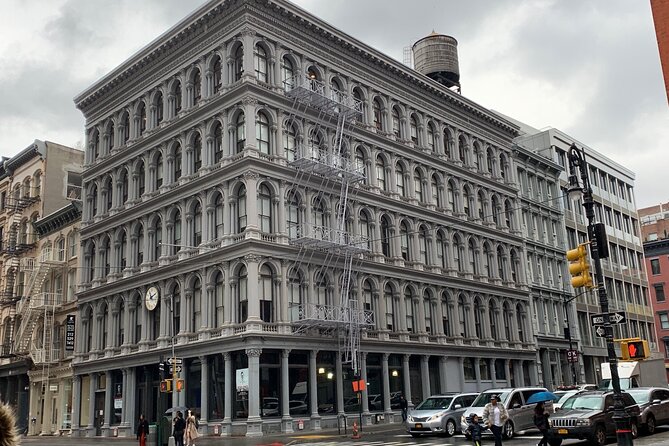
- Clear architectural style trail, from Georgian and Federal to Queen Anne and modern skyscrapers
- Street-level “how to look” tips for identifying designs and materials
- City planning context like zoning and why landmarked neighborhoods matter
- A strong start and finish point, free admission at Castle Clinton and an easy landing near Hudson Yards shops and restrooms
Why NYC’s changing skyline is easier to understand this way
If you have ever wondered why Manhattan looks like it was built in layers, this tour gives you the map. NYC’s skyline is not one single “style.” It is a long chain of decisions made by builders, architects, and planners across centuries, often right next to earlier work. When you understand that timeline, the city’s mix of shapes and materials stops feeling random.
What I appreciate most is that the tour teaches you how to interpret what you see. You are not only learning names or dates. You are learning how to recognize design cues, then connect them to the era that produced them. And because the experience is designed for walking, you get the payoff of spotting those cues as you go.
You also get the planning side, which is where most “skyline tours” get thin. The tour frames skylines as outcomes of zoning, the needs of people who live and work side by side, and what happens when old neighborhoods get protected as landmarked areas. That is how you go from “cool buildings” to “now I get the logic.”
You can also read our reviews of more historical tours in New York City



How the on-demand video + self-guided walk fits real travel time
This is built around an on-demand video and a self-guided walking format, so you are not locked into a fixed group schedule. You can use your own rhythm, pause when you want, and then walk when you are ready to translate the lessons into real street views.
You also get a mobile ticket, which keeps things simple once you are in the flow of travel. And you can download a document of the virtual tour to your device, which is a big deal in New York. When you are walking, you want quick references, not a phone search marathon every time you stop at a corner.
The experience runs about 1 hour 58 minutes for the full arc, so it fits nicely as a “learning block” inside a busy day. It is short enough that you can still do classic NYC stuff afterward, but long enough to make the neighborhoods feel more connected than a checklist of sights.
Castle Clinton National Monument: the waterfront origin point you can actually visit

The starting anchor is Castle Clinton National Monument at 10 Battery Park. The tour frames NYC’s story from the moment Henry Hudson sailed into the harbor, which helps you understand why the waterfront mattered from day one. From there, the narrative shifts into an architectural timeline, walking you through how the city’s styles evolved over roughly 400 years.
The big value here is the way the tour sets up cause and effect. When a port city grows, the buildings follow. Trade and commerce push development, then later the waterfront begins shifting from industrial use toward recreation, neighborhood by neighborhood. The tour also highlights how public and private partnerships create new destinations, which is key to understanding why today’s waterfront feels so different from older NYC eras.
Castle Clinton is listed as free admission, so you can start your day without adding another ticket line. That matters because the tour’s theme is “history you can see,” and Castle Clinton is one of those places that makes the opening feel real, not abstract.
Reading 400 years of architectural styles while you walk
One of the most useful outcomes of this experience is learning what to look for. The tour teaches you how to identify architectural designs and building materials, then ties those visual clues to the historical era that produced them. Once you learn that pattern, you start noticing details you used to overlook, like how ornament shows up differently depending on the period.
Here are the style eras specifically called out in the tour, which you can use as a mental checklist while you scan facades and rooflines:
- Georgian
- Federal
- Greek Revival
- Romanesque Revival
- Italianate
- Renaissance Revival
- Gothic Revival
- Queen Anne
- Neo-Classical
- and then the modern period leading to the skyline you see today
A practical tip: don’t try to label every building like you are doing homework. Instead, pick one building at a time and focus on two clues, like roof shape and window rhythm, then match it to the era categories you learned. The tour helps you do this in a way that feels more like observation than memorization.
I also like that the pacing is designed to keep you oriented. The narrative is described as methodical and organized, which means you are less likely to feel lost while you move between sections. If you are the type who gets distracted by street noise, this structure helps.
Zoning, landmarking, and why planning shows up in your view
A lot of architecture talk skips the rules. This tour does not. It connects what you see to how the city governs growth. You get an explanation of how zoning shapes what gets built, and why the needs of people who work and live nearby matter when skyscrapers rise.
You also hear how landmarked neighborhoods factor into the picture. That’s important in NYC, where preservation and change are always negotiating with each other. When you understand that, you stop thinking of “old vs new” as a simple good or bad story. Instead, you see it as a set of trade-offs, budgets, legal protections, and long-term planning decisions.
The tour also brings in how these planning choices ripple into everyday life, including parks and public transportation systems. That is the part that tends to make architecture feel relevant. A skyline is not just about height. It is about who can reach jobs, where people gather, and how neighborhoods remain livable as the city densifies.
And yes, you may run into those extra “wait, how did that work?” planning ideas that make the city feel less like luck. One example mentioned in the experience is air rights, the kind of concept that explains why development can expand even when land footprint stays constrained. If you like explanations for how the sausage gets made, this will land well.





The walk’s finishing point: Hudson Yards and a modern “future” lens

Your guided storyline ends at 20 Hudson Yards, which is a helpful landmark all by itself. Hudson Yards is where you can see the “modern period” face of NYC’s evolution at full volume. Ending here also reinforces the tour’s idea that the skyline is still an active project, not a finished museum piece.
The area around 20 Hudson Yards is also noted as a solid practical stop for shopping, restaurants, and restrooms. That is not a small detail in New York. When a tour ends with real options nearby, you can keep your day going without turning your final hour into logistics.
What you should expect at the end is a shift in emphasis. Earlier parts of the story build the “how NYC got here.” The finish gives you a “where it goes next” frame, including references to zoning and how development balances the present needs of residents and workers.
Who should do this tour, and who might not love it
This experience is a strong fit if you want to see NYC like a detective, not just like a tourist. It helps a lot if you:
- are curious about architecture and how styles change over time
- like context, especially for how zoning and planning affect what gets built
- want a tour that works for both first-time visitors and New Yorkers
- enjoy learning in a structured way, with a narrative that stays organized
It is also a good option if your schedule is tight. The near two-hour length and on-demand flexibility make it easier to slot in than a full-day tour with fixed start times.
If, however, you only want a fast highlight tour with lots of visible stops and minimal reading or pausing, this might feel a little more “active” than you expect. It is self-guided, which means you have to participate to get the full value.
Value check: $25 per group for nearly two hours of built-in context
At $25.00 per group (up to 15), the price is far more interesting than it looks at first glance. If you are traveling solo, you still get a thoughtful value, because you are paying for a structured learning experience plus a reusable guide you can download to your device. That can turn one walk into several “aha” moments across multiple days.
If you are traveling with friends or family, the group price can make it a low-cost way to keep everyone engaged. Architecture talk can sometimes be hit-or-miss with mixed interests, but this tour aims to keep it practical by teaching you what to look for and why planning matters. That tends to work better than pure monument hunting.
Duration is also part of the value. For nearly two hours, you get a long historical arc and planning context, not just a quick skim of building names.
Should you book this Architectural Journey Through History?
Book it if you want NYC to make sense visually. This is one of those experiences that helps you connect centuries of architectural styles to the city’s real rules, like zoning and preservation. The starting point at Castle Clinton is free, and the finish near Hudson Yards gives you a clean landing with practical amenities.
Skip it only if you want a purely guided, step-by-step walk with no self-directed component. This works best when you are willing to stop, look up, and use the downloadable guide as you go.
If you like learning that sticks, and you want your next stroll through New York to feel smarter, this is a solid choice.
FAQ
How long is the Architectural Journey Through History?
The tour runs about 1 hour 58 minutes.
What is the price?
It is $25.00 per group, for groups up to 15 people.
Is this tour guided by a person in real time?
No. It is an on-demand video experience paired with a self-guided walking tour. It is listed as private, so only your group participates.
Where does the tour start and end?
It starts at Castle Clinton National Monument, New York, NY 10004, USA, and ends at 20 Hudson Yards, New York, NY 10001, USA.
Is there an admission fee at the first stop?
Castle Clinton National Monument is listed as free admission for the stop shown.
Do I get a ticket on my phone?
Yes. It includes a mobile ticket.
Can I download anything to help during the walk?
Yes. A document of the virtual tour can be downloaded to your device.
Is this tour suitable for most people?
Most travelers can participate. Service animals are allowed.
Is it near public transportation?
Yes, it is near public transportation.
When do I get confirmation after booking?
Confirmation is received at the time of booking.
Can I get a refund if I cancel?
No. This experience is non-refundable and cannot be changed for any reason.
More Historical Tours in New York City



More Tour Reviews in New York City



Not for you? Here's more nearby things to do in New York City we have reviewed












More Historical Tours to consider.
 ★ 4.5American Museum of Natural History TicketTickets from $3715,447 traveller reviews
 ★ 4.6Starship Landmark 90 Minute Sightseeing CruiseTickets from $343,666 traveller reviews
 ★ 4.5Starship Landmark 90 Minute Sightseeing CruiseTickets from $342,073 traveller reviews
 ★ 4.0American Museum of Natural History Admission TicketTickets from $371,931 traveller reviews
 ★ 5.0Top Rated Brooklyn Half-Day Food, History & Culture Tour via busTickets from $189758 traveller reviews
 ★ 4.7Speakeasy Drinks and Prohibition History TourTickets from $36474 traveller reviews
 ★ 5.0The Original Greenwich Village Food & Cultural Tour Since 1999Tickets from $99254 traveller reviews
 ★ 5.0The Speakeasy Adventure: A Tipsy Trip Through HistoryTickets from $38220 traveller reviews
More useful New York routes