
Review · NEW YORK CITY
The Story of Grand Central Terminal: An Art And Engineering Marvel
Grand Central hides more than trains. This virtual tour uses visuals and a guided talk to walk you through Grand Central Terminal’s story, from early transportation to how New Yorkers commute today. You also get a way to plan your in-person visit with a self-guided walking tour download.
What I like most is the way the talk connects facts to the places inside the building, so you are not just watching, you are figuring out where things are. I also love the myth busting approach, including the straight answers about what almost happened to the terminal, and how it was saved, plus what renovations changed over the past century.
One consideration: this is mainly a pre-visit learning experience. You will not get a live, real-time walkthrough with a guide standing next to you in the terminal the way you would on an in-person tour.
Key things you’ll notice right away
- You get a pre-visit map of the mental picture, so Grand Central makes sense before you arrive
- Kitt Garrett’s narration is built around a clear timeline and storytelling that keeps moving
- You learn the near-demolition story and how it was addressed, not just postcard facts
- You download a mobile self-guided walking tour, with locations you can aim for later
- You get behind-the-scenes style details, including changes in the neighborhood over time
- You can use the photo stops idea to turn the visit into a simple memory project with Tripcast
A Virtual Grand Central Lesson That Actually Preps You
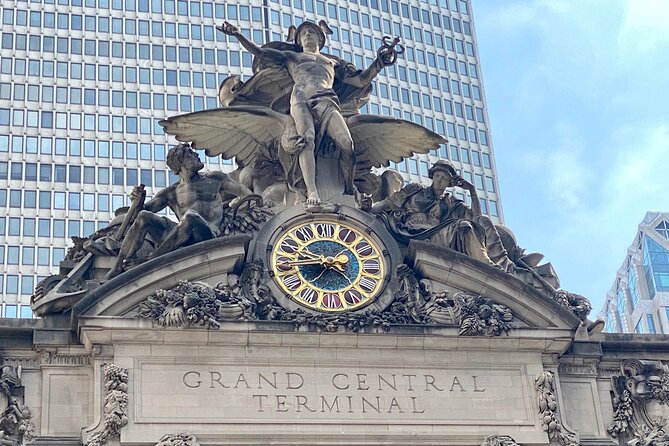
Grand Central Terminal can feel like a giant blur at first. Signs, tracks, crowds, and hurry. This virtual experience helps you slow that down by giving you a story you can hold onto before you step inside.
The format is a virtual talk and tour delivered through a video experience, paired with a downloadable guide you take to the terminal. That combo matters. The video gives context. The self-guided portion helps you put the context into the right rooms, corners, and visual details when you visit.
You are also not stuck doing this alone. It is set up as a private activity for your group, and it is designed to work even if you are not a New York superfan. If you like architecture and how cities function, you are going to get a lot out of it.
You can also read our reviews of more tours and experiences in New York City.



What the Story Covers, From Horse and Carriage to Suburbs
The core theme is transportation history, told through Grand Central’s role in New York’s daily life. The talk moves from the early days of getting around, including the era of horse and carriage, and then follows how local commuting evolved into the way people travel to work and into the suburbs.
That storyline is valuable because it explains why Grand Central looks the way it does and why it matters beyond trains. It is not just a pretty station. It is a city machine for moving people, built in an era when rail travel defined geography and time.
By the end, the experience is designed to help you decide whether to include Grand Central in your itinerary, and how much time you should plan for the self-guided walking portion afterward. That is practical. Many tours leave you with facts, but no time plan. This one tries to give you a decision.
The Art and Engineering Angle That Makes the Building Make Sense
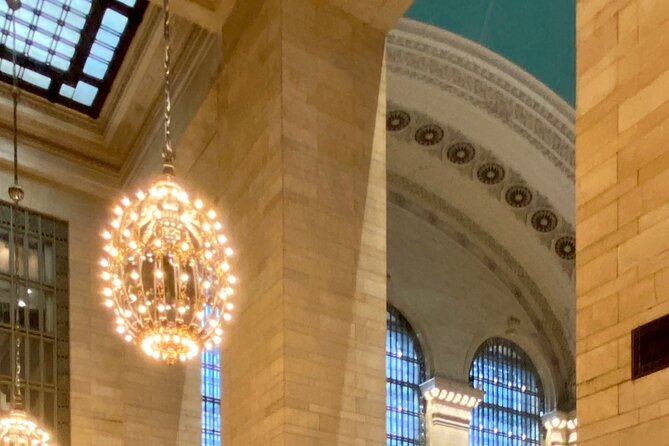
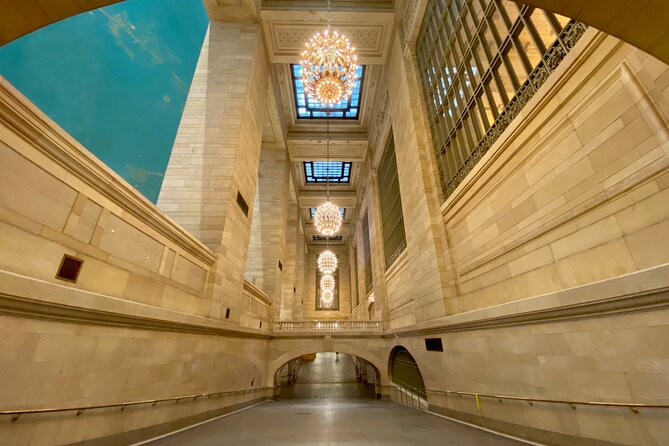
You will learn how Grand Central Terminal is both a design work and an engineering work. The “art and engineering marvel” framing is not just marketing language. It is about seeing how the building’s layout, scale, and construction choices helped support heavy daily use.
A big part of what you get is the sequence of changes. The tour covers how renovations have taken place over the past 100 years, so the terminal you see today is presented as the result of continuous upgrades, not a static museum piece. When you walk in later, that helps you read what you are looking at. You start spotting areas as transitions, fixes, and adaptations.
I also like how the tour treats the terminal as a living part of the city, including the surrounding neighborhood changes. That helps you avoid the common problem of seeing Grand Central like an isolated landmark. It is right in the flow of New York life.
The Near-Demolition Story, and Why It Changes Your Visit
One of the most engaging parts of the experience is the story of how the terminal was almost demolished, and who stepped in to save it and how. That kind of plot twist is fun, but it is also useful.
When you learn that a building can be threatened, you stop taking it for granted. Later, you can stand in the terminal and feel the difference between “old” and “protected.” It also explains why certain features and renovations became priorities once preservation and public value took the lead.
This is the kind of story that makes you look longer. You start noticing details you usually ignore when you are just trying to get from point A to point B.
Myth Busting with Visuals, Including Old and New Comparisons
The virtual experience uses a timeline approach and emphasizes accuracy. Multiple people highlight the value of the storytelling and the way it corrects misconceptions, in a way that still feels clear instead of lecture-like.
A key strength is the use of historic pictures and comparisons with what exists now. That matters for you because Grand Central has layers. If you do not know the layers, you can walk past major ideas and miss them.
Instead, the tour’s visuals help you connect eras. You start to understand what has changed in the terminal and in the neighborhood, and why those shifts happened. One example from the surrounding area story is mention of the new Summit opening next door in One Vanderbilt, which gives you a concrete recent-change reference to look for when you are in the area.






Using the Mobile Self-Guided Walking Tour Inside Grand Central
This is where the experience becomes more than a video. You download a self-guided walking tour to your mobile device, and the idea is that you use it during your in-person visit.
That download is important because it turns vague inspiration into specific action. You are not left thinking, “That was cool, I should remember where to go.” You have a structure and a way to locate the places the video references.
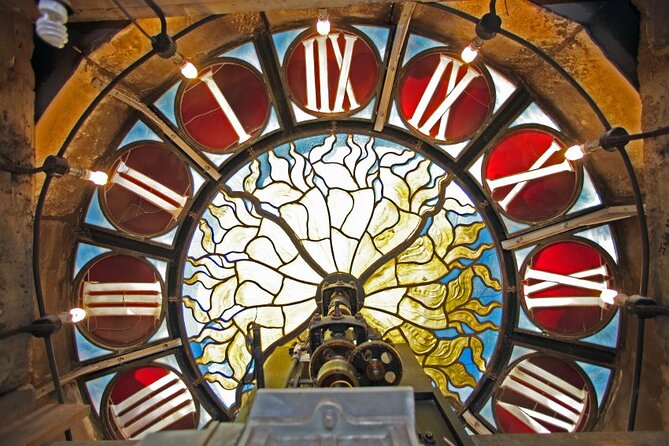
The experience also positions you to seek out secrets inside the terminal. You are guided during the virtual tour to areas where those secrets exist, so the self-guided portion becomes a matching game: you look at a space, then you connect it back to what you learned.
If you like a simple photo challenge, there is also an idea of photo stops included in the materials, along with the possibility to use Tripcast to upload photos and create a memory book. Even if you do not go that far, planning photo stops forces you to slow down and see more.
How Long It Takes, and How to Fit It Into Your NYC Plan

The virtual portion is listed at about 1 hour 38 minutes. That is a sweet spot. It is long enough to develop a timeline, but not so long that it feels like a full-day commitment.
Here is how I think about using that time effectively. If you are planning a first visit, watch the virtual tour before you go. Then, when you arrive, spend your in-terminal time using the downloaded walking tour so your learning turns into real orientation.
If you already know Grand Central basics and you mainly want a deeper look, the virtual format still works. It gives you the “why” behind the building and helps you spot elements you might otherwise skip. Either way, you are using your on-site time better.
Price and Value: Why This Works for Groups
The price is $25.00 per group, up to 15 people. That grouping detail is the real value story.
If you are traveling solo, you still pay the group price, but practically speaking, you can lower your per-person cost by booking with friends. Even for a small group, the cost can come out to less than many live guided options, while giving you the flexibility of watching on your schedule.
Also, the deliverables matter here. You are not only getting the talk. You are also getting a mobile self-guided walking tour download. So you are paying for both learning and a practical tool for your actual visit.
Just note the format: it is a virtual experience. If what you want most is an in-person guide leading you through the terminal in real time, you might find this less satisfying. But if you want a smart prep and a structured self-guided visit, the value is strong.
Who Should Book This Virtual Grand Central Terminal Tour
This tour fits best if you want one of these outcomes:
- You are a history or architecture fan and you like a clear timeline
- You want to understand the building’s role in New York transportation, not just admire it
- You are planning your first visit and want to get oriented faster
- You prefer self-guided movement inside a major landmark, but want a guide for what to notice
It may be less ideal if your top priority is a live walking guide who answers questions on the spot throughout the terminal. This experience is built around a video talk plus your own pace during the self-guided part.
A Couple Things to Know Before You Push Book
A few practical notes that affect your decision:
- You are given a mobile ticket, and the tour runs as a private activity for your group.
- Service animals are allowed, and the start point is listed at 70 E 42nd St in New York City, with the activity described as near public transportation.
- The experience is shown as available daily during the listed window, with hours displayed as 12:00 AM to 11:30 PM.
- One important downside for planning: it is non-refundable and cannot be changed for any reason, so book when you are sure.
Should You Book This Grand Central Terminal Virtual Tour?
If you are on the fence, here is my take. Book it if you want to walk into Grand Central with context and a game plan. The strong points are the in-depth timeline, the myth busting accuracy, and the practical self-guided walking tour download that helps you find the right spots once you are there.
Skip it if you want a purely in-person guiding experience inside the terminal and you do not care much about history, engineering, and how commuting evolved. In that case, you may prefer an on-site guided tour instead.
Either way, this is a smart way to spend an hour and change so your real-world visit is better, not just louder.
FAQ
How long is the virtual tour?
It runs about 1 hour 38 minutes (approx.).
What is the price for this experience?
It is $25.00 per group, up to 15 people.
Is there a self-guided walking tour included?
Yes. You can download a self-guided walking tour to your mobile device.
Where does the experience start?
The start location is 70 E 42nd St, New York, NY 10165, USA. The activity ends back at the meeting point.
Is this a private tour?
Yes. It is a private tour or activity, and only your group participates.
Does it allow service animals?
Yes, service animals are allowed.
What is the cancellation policy?
This experience is non-refundable and cannot be changed for any reason.